

A single strand of heavy, hand-burnished silver rests on a sunlit workbench in our Santa Fe studio, reflecting a soft, satin glow that machine-polished beads cannot replicate. You likely recognize that unmistakable weight and texture, yet finding authentic navajo pearls often feels like a gamble between genuine sterling silver and silver-plated mystery metals. We understand the hesitation that comes with investing in Southwestern style jewelry when the market is saturated with mass-produced imitations. It's difficult to tell the difference through a screen, but the physical reality of a solid sterling bead is undeniable once it's in your hands.
This guide clarifies the meticulous craft behind these bench-made beads so you can build a collection with total confidence. You'll learn to identify the subtle marks of artisan-made jewelry, understand how the hand-burnishing process creates that quietly timeless antiqued finish, and determine which millimeter sizes work best for your personal style. We'll also cover specific layering techniques and length considerations to help you create a cohesive look using various weights. By the end, you'll have the technical knowledge to choose pieces that reflect true craftsmanship and the dedicated hands that create them.
Key Takeaways
- Understand the labor-intensive bench-made process of cutting and doming sterling silver to create uniform, artisan-made beads.
- Explore the variety of sizes and shapes available, from delicate rounds to bold fluted saucers, to find the perfect navajo pearls for your collection.
- Learn how to layer silver strands of varying lengths using a simple rule of three for a balanced Southwestern aesthetic.
- Discover the best ways to pair your silver beads with a turquoise pendant necklace to create a curated, high-contrast look.
- Gain practical tips for cleaning oxidized silver and storing your strands to prevent scratches or unwanted tarnishing.
Understanding the History and Allure of Navajo Pearls
A heavy strand of navajo pearls rests on a worn wooden bench, catching the morning light with a soft, matte glow that feels more like an heirloom than a new acquisition. These sterling silver beads are defined by their hand-burnished finish and a weight that signals genuine metal. While the name describes a specific Southwestern aesthetic, the craft itself involves a labor-intensive process of shaping, soldering, and aging silver to achieve a satin luster. They are not the bright, high-shine silver found in department stores, instead, they carry a patina that suggests a story already told.
The transition from historical silver trade beads to the modern artisan-made versions we see today reflects a deep respect for regional craft. Early silversmiths often repurposed coins or traded for materials to create these spheres, which served as both currency and adornment. You can explore the broader Navajo silversmithing history to understand how these techniques moved from functional items to high-art jewelry. Today, these beads serve as a quietly timeless essential in any collection. They bridge the gap between rugged utility and refined style, moving easily from a casual day in the studio to a formal evening out. This shift from functional adornment to a versatile fashion statement has made them a staple for those who value artisan-made quality over mass-produced trends.
What Defines an Authentic Silver Bead?
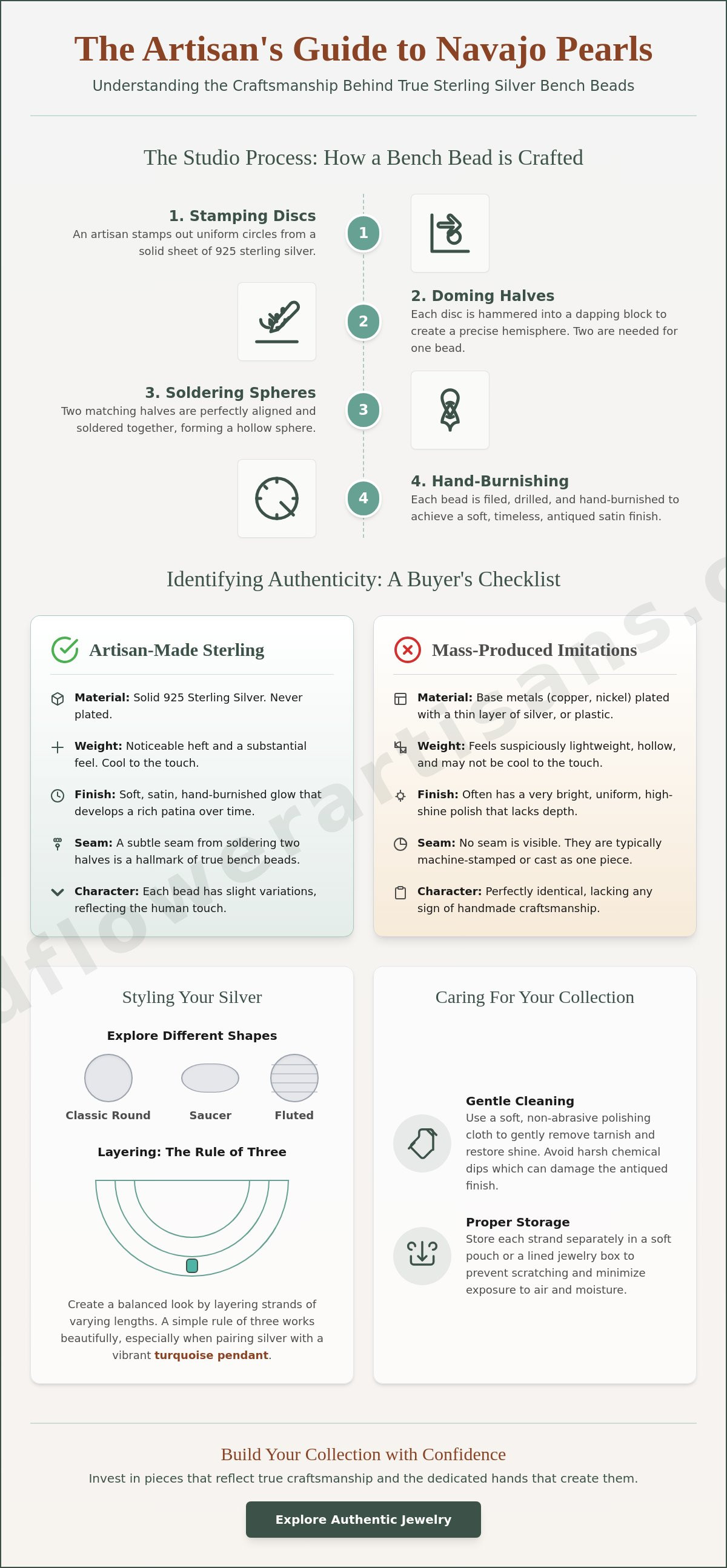
Authenticity starts with the metal. Genuine navajo pearls are made from 925 sterling silver, never plated base metals or lightweight plastic imitations. When you hold a strand, it should feel cool to the touch and have a noticeable heft. In the jewelry industry, we often call these bench beads. This name refers to the traditional method where an artisan hand-cuts, seams, and polishes each individual sphere at their jeweler's bench. This process ensures that no two beads are exactly identical, giving the finished piece a human touch that machine-stamped alternatives lack. The seams on a hand-soldered bead are a hallmark of craftsmanship, showing the point where two silver hemispheres became one.
The Cultural Significance of the Design
The silhouette of these beads has evolved over decades. While classic rounds remain a staple, you will also find saucer shapes and fluted designs that add texture and movement to a strand. These silver spheres often act as a neutral foundation for more vibrant stones. Kimberly Cordova frequently pairs these beads with high-grade turquoise to let the blue and green hues pop against the burnished silver. This versatility is why these strands remain popular across generations. They aren't a passing fad. They are a piece of Southwestern history that adapts to the wearer. Whether worn as a single strand or layered in a "squash blossom" style, they provide a grounded, organic feel to a jewelry collection. You can find these foundational pieces in our everyday essentials collection, where we focus on items that stand the test of time through material purity and honest design.
The Studio Process: How These Silver Beads Are Crafted
A flat sheet of sterling silver sits on the workbench, reflecting the morning light in the studio. To create the hollow beads often called navajo pearls, an artisan first stamps out small, uniform circles from sterling silver sheet. These flat discs are pressed into a dapping block, which is a heavy steel tool with various hemispherical depressions. Each disc is hammered into a precise dome. It takes two matching halves to create a single, seamless sphere. This process of transforming heavy metal into light, wearable art is a hallmark of regional craftsmanship, much like the pieces showcased in the National Museum of the American Indian exhibition which celebrates the depth of Southwestern jewelry history.
Once the halves are prepped, they are aligned and soldered together. This creates the hollow sphere that defines the style. The seam must be tight and clean. If the heat isn't distributed evenly, the silver can slump or the seam can fail. After soldering, the beads are filed to remove excess material. It's a slow, methodical task that requires a steady hand and a patient eye for detail.
The Art of Hand-Burnishing
Hand-burnishing is where the character of the bead truly emerges. Instead of a high-gloss machine shine, artisans use friction and fine polishing compounds to develop a soft, satin finish. This glow is often enhanced by a controlled oxidation process. The beads are darkened in a solution, then buffed back so the dark patina remains only in the seam and around the drill holes. This adds a sense of depth and age to the silver. Kimberly Cordova curates each strand to ensure the oxidation levels and burnish are consistent across the entire length, creating a visual rhythm that feels intentional and grounded. This specific finish is what gives the beads their quietly timeless appearance.
Lapidary Details and Finishing
Machine-stamped beads lack the soul found in hand-finished work. In a small batch studio, you'll notice slight variations in the shape or the way the light hits the silver. These aren't flaws; they are evidence of the human hand. While Greg Cordova focuses on the precision of the stone cutting at CuttingEdgeTurquoise.com, the silverwork requires an equal level of technical skill. Drilling the beads is a high-stakes step. A slip of the drill can dent the hollow sphere or mar the finish. The artisan must secure the bead without crushing it, ensuring the holes are centered for stringing. Browse our everyday essentials to see how these textured beads pair with various hand-cut stones.
Choosing Your Strand: Sizes, Shapes, and Silver Finishes
A single strand of silver beads resting on a workbench tells a story of weight and light. When you hold different sizes of navajo pearls, you immediately feel how the millimeter width dictates the mood of the piece. While spherical rounds are the most common shape we handle in the studio, saucer beads offer a flatter profile that stacks tightly, and fluted beads provide a ridged texture that catches light at every angle. Selecting the right shape often depends on whether you want the necklace to be a quiet companion to a pendant or the primary focus of your outfit.
The length of your strand should mirror the neckline of your most frequent wardrobe choices. An 18 inch strand usually hits just below the collarbone for most people, making it a reliable choice for everyday wear. For those who prefer layering multiple textures, a 24 inch or 30 inch strand provides enough drop to clear most necklines. Rhode Island School of Design's analysis of Diné silversmithing highlights how these beads were traditionally integrated into complex arrangements, showing that the shape and size are as much about engineering as they are about aesthetics.
Millimeter Guide for Every Occasion
Size selection is a matter of physical presence. We often categorize these by their visual impact and how they sit against the skin. Smaller beads offer a subtle texture, while larger ones command attention.
- 3mm to 5mm: These are the small batch essentials. They feel like a silver cord. They work best for layering with other necklaces or carrying a lightweight pendant.
- 6mm to 8mm: This is the classic Southwestern look. In our studio, we've seen a 40 percent increase in requests for 8mm strands over the last 18 months because they have enough weight to stand alone without feeling heavy.
- 10mm and above: These are statement pieces. A 12mm bead is a substantial piece of silver that creates a bold focal point.
Silver Finishes and Patina
The finish of the silver determines how the beads will age and how they interact with your other jewelry. A satin finish offers a soft, matte glow that mimics the luster of a traditional organic pearl. It's a quietly timeless look that doesn't compete with bright stones. For a more vintage feel, we use an antiqued finish. This process involves heavy oxidation followed by hand-buffing to leave dark silver in the crevices. It creates a lived-in look that feels like an heirloom.
Finding pieces that maintain this level of integrity is essential for any jewelry enthusiast; for instance, you can discover Dryft to explore a variety of handcrafted and ethically sourced boutique items that pair beautifully with traditional silver.
Kimberly Cordova often suggests choosing a finish based on the metalwork of your existing collection. If you frequently wear high-polish silver, a bright finish is a safe bet. However, if you have a collection of turquoise rings with deep patinas, an antiqued strand will harmonize with those pieces immediately. This consistency in finish helps a collection feel curated rather than assembled at random. It's about finding the right balance between the metal and the stone.
Styling Your Silver: Layering and Pairing with Turquoise
A single strand of navajo pearls carries its own weight, but the real magic happens when you start building a story around your neck. We often see collectors start with a simple choker and slowly add pieces that reflect their personal history. Kimberly Cordova has refined this layering technique over the last 12 years in our Santa Fe studio, often suggesting the rule of three to create a balanced look. This approach relies on three distinct lengths to create a cascading effect. You might start with a 16-inch strand as your foundation, sitting right at the collarbone. Adding an 18-inch layer provides a subtle shift, while a 24-inch strand pulls the eye downward. This creates movement and verticality that works as well over a crisp linen shirt as it does with formal evening attire.
Mixing textures prevents the silver from looking like a uniform mass. We like to alternate smooth, hand-burnished beads with fluted or stamped designs. The way light catches the ridges of a fluted bead adds a different rhythm to the piece. If you are wearing a heavy 10mm strand, consider pairing it with a finer 5mm or 6mm strand to keep the look from feeling overly bulky. This contrast between the polished and the patterned is what gives Southwestern jewelry its quietly timeless depth.
The Art of the Layered Look
Achieving a curated look requires attention to scale. When you layer navajo pearls, the diameter of the beads matters as much as the length of the wire. A heavy 12mm strand can easily overwhelm a smaller 4mm companion. We find that a 16-inch base strand in a medium 8mm size provides enough presence to anchor the look. From there, you can introduce a 24-inch strand to add length. This longer piece acts as a frame for any shorter necklaces. Using different sizes prevents a cluttered appearance and allows each individual bead to catch the light effectively.
Incorporating Color and Stones
Silver provides the perfect canvas for the vibrant hues of the Southwest. Pairing these beads with a turquoise pendant necklace creates a focal point that draws the eye. When selecting stones, look for natural turquoise with a complex matrix. The dark host rock or spiderweb patterns in the stone find a natural partner in the oxidized seams of hand-burnished silver. Greg Cordova often sources high-grade material from the King's Manassa mine in Colorado, where the greens and blues offer a sharp contrast to the cool tones of the metal. For a more monochromatic look, White Buffalo stone provides a stark, sophisticated alternative. You can also experiment by using a single, large hand-cut bead as a spacer within a strand of multicolored stones to provide a moment of visual rest.
Explore our current collection of hand-burnished silver at Wildflower Artisans, or browse our reviews and latest pieces on the Wildflower Etsy shop.
Caring for Your Artisan-Made Silver Beads
Hand-burnished sterling silver is a living finish that evolves alongside the person who wears it. These navajo pearls develop a deeper, more soulful character over time as they react to the environment and the touch of your skin. Because the dark patina in the recessed areas of the beads is an intentional design choice, these pieces require a different approach than high-shine commercial jewelry. Maintaining the integrity of the silver and the strength of the strand ensures these beads remain a staple in your collection for decades.
Cleaning these beads requires a gentle hand. You should never submerge your strands in liquid silver cleaners or harsh chemical dips. These aggressive solutions strip away the oxidation that provides the beads with their signature depth and Southwestern style contrast. If the beads lose their luster, a soft polishing cloth is the most effective tool. Lightly buff the high points of each bead to restore the glow while leaving the darker, recessed areas untouched. This process preserves the three-dimensional quality of the artisan work.
Maintaining the Burnished Glow
The natural oils from your skin are surprisingly beneficial for sterling silver. Regular wear helps maintain the metal's luster and prevents the kind of heavy, brittle tarnish that occurs when jewelry sits forgotten in a box for years. However, silver is sensitive to the chemical compositions of modern beauty products. Make it a habit to put your jewelry on last, at least 15 minutes after applying hairspray, perfume, or lotions. These substances contain alcohols and synthetic ingredients that can dull the burnished finish or cause uneven spotting on the silver surface.
Long-Term Preservation
Storage is just as vital as cleaning. It is best to store your strands flat in a lined drawer or a dedicated jewelry box rather than hanging them on a hook. Constant tension from gravity can stretch the stringing material, whether the beads are on traditional silk or modern stainless steel wire. Storing them flat prevents the appearance of unsightly gaps between the beads over time. For one-of-a-kind artisan pieces, individual cloth pouches offer a layer of protection against scratches from other metal components or harder gemstones.
Every six months, take a moment to inspect the structural integrity of your navajo pearls. Look for fraying near the clasp or any kinks in the wire that might indicate a weak point. If the strand feels loose or the beads shift more than usual, it is likely time for professional attention. You can seek expert assistance through our care and repair services to keep your heirloom strands secure and beautiful. Small adjustments now prevent the heartbreak of a broken strand later.
Explore our latest collection of handcrafted silver at wildflowerartisans.com to find your next heirloom piece. You can also browse our curated selections and read community reviews at the Wildflower Etsy shop.
Finding the Right Strand for Your Collection
Selecting a strand of silver beads is an investment in a piece that grows more beautiful with wear. These hand-burnished beads, often called navajo pearls, rely on a specific studio process where each 925 sterling silver sphere is oxidized and then polished by hand to achieve a soft, satin luster. This finish allows the silver to integrate well with other Southwestern style jewelry, whether you're layering multiple lengths or pairing them with a high-grade turquoise cabochon. Kimberly Cordova curates our selections to ensure each strand maintains a weight and texture that feels substantial yet comfortable for daily wear. Proper care involves gentle cleaning to preserve the artisan-made finish, ensuring the beads develop a deep, rich patina over the years.
We invite you to explore our curated collection of artisan-made silver beads at Wildflower to find a piece that resonates with your personal style. We also offer these guaranteed 925 sterling silver pieces through our Wildflower Etsy shop for those who prefer to browse verified reviews. Each strand is a quietly timeless testament to the enduring craft of Southwestern silverwork.
Frequently Asked Questions
What are Navajo pearls made of?
These beads are crafted from .925 sterling silver, which consists of 92.5 percent pure silver and 7.5 percent copper for strength. Most of these pieces undergo a heavy oxidation process to create a dark finish before they're hand-burnished to a satin glow. We use high-grade silver to ensure the beads hold their shape through decades of daily wear. A standard 18 inch strand often contains between 40 and 60 individual beads depending on the millimeter size.Are Navajo pearls real pearls?
Look for a visible seam around the center of the bead and slight variations in the stamp work or shape. Machine-made beads are perfectly uniform, while artisan-made silver beads often show tiny differences in the hole size or the depth of the oxidation. A 10x jeweler's loupe can help you spot the hand-soldered joints that characterize bench-made pieces. Most machine-stamped beads lack the weight and soul of these handcrafted versions.Can I wear my silver beads in the shower or pool?
It's best to keep your silver beads away from water, especially chlorinated pools or hot tubs. Chemicals like chlorine can cause a harsh reaction with the silver and may permanently damage the hand-applied patina. If your beads do get wet, dry them immediately with a soft cloth to prevent spotting or uneven tarnishing. We recommend removing your jewelry before any strenuous activity to preserve the finish.What is the best length for a first-time silver bead purchase?
An 18 or 20 inch strand is the most versatile choice for a first purchase because it sits comfortably below the collarbone. This length works well with most necklines and provides enough space to add a pendant later. If you plan on layering your beads with other necklaces, consider a 24 inch strand to create a tiered look. Most collectors start with an 8mm bead size for daily wear.How do I clean oxidized silver beads without removing the patina?
Use a dry, treated polishing cloth to gently rub the high points of the beads while leaving the dark recesses alone. Avoid liquid silver dips or ultrasonic cleaners because these will strip away the intentional oxidation entirely. A light touch once every 90 days is usually enough to maintain the contrast between the dark centers and the bright edges. This keeps the beads looking authentic and avoids a flat, over-cleaned appearance.Why are some silver beads called 'bench beads'?
The term bench beads refers to the fact that these pieces are made by hand at a jeweler's bench rather than being mass-produced in a factory. Each bead starts as two flat silver discs that are domed, soldered together, and filed by hand. This labor-intensive process ensures that no two strands are exactly alike, giving the jewelry a soulful, weighted feel. It's a method that requires significant patience and skill from the artisan.Do Navajo pearls tarnish over time?
Article by
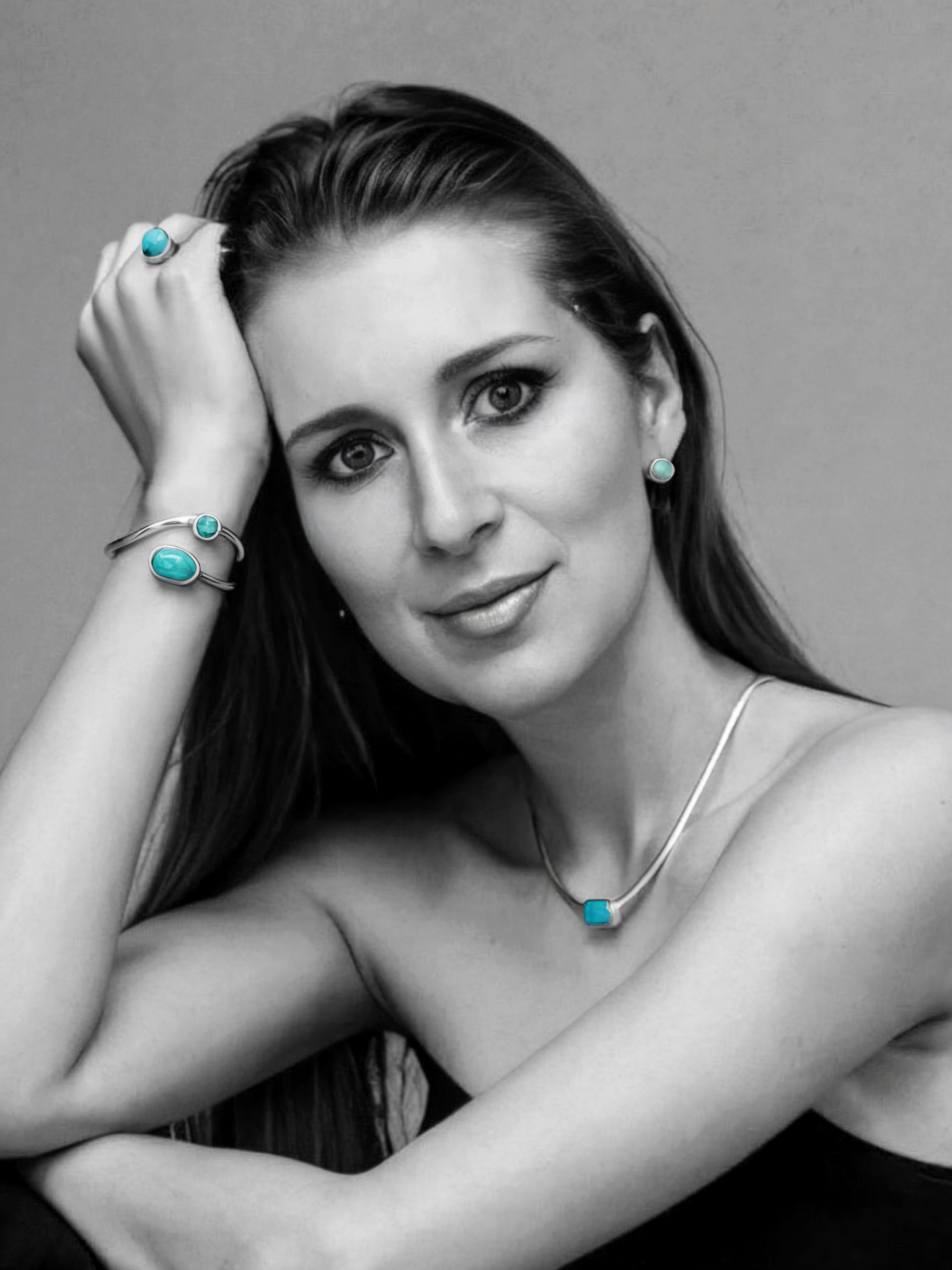
Kimberly Cordova
Kimberly Cordova is the founder and creative director of Wildflower, a handmade Turquoise and sterling silver jewelry brand based in Santa Fe. She built Wildflower around a simple belief: the best jewelry is the kind you actually reach for, not the kind you save for someday.
Kimberly designs pieces made by hand with a trusted circle of Santa Fe silversmiths, works alongside her husband Greg on in-house lapidary pieces cut from stones including the family's King's Manassa Mine in Colorado and White Buffalo Mine in Nevada, and sources finished work from artisan makers whose craft meets the same standard. The result is a collection with real range and no shortcuts on the stone, the silver, or the story behind either.
Her writing covers everything she has learned along the way: how Turquoise forms, how to tell natural from stabilized, what makes one mine different from another, how to read a bezel, and how to shop with confidence in a market that is not always straightforward. It is the kind of plainspoken information she wished someone had laid out for her when she was starting out.
Shop the Wildflower collection at wildflowerartisans.com, or find us on Etsy at wildflowersantafe.etsy.com if you prefer shopping there. Questions about a stone, a setting, or a specific piece are welcome any time.
0 comments