

A large turquoise stone doesn't just sit on the hand. It commands the space around it. When you slide on a heavy silver band set with a hand-cut cabochon, the weight and color immediately shift the balance of your style. You might feel a bit of uncertainty about whether a bold piece looks right or if it might clash with a wedding band. Whether you are selecting a signature piece for yourself or searching for a meaningful gift, deciding what finger should a man wear a turquoise ring on is a matter of matching the scale of the stone to the proportions of the hand.
At Wildflower Artisans (Wildflower), we believe that jewelry should feel intentional and grounded rather than like an afterthought. You will gain the confidence to style a Southwestern style piece by understanding how to select a placement that feels intuitive for daily life. We will explore how different fingers affect the visual impact of the ring, how to balance it with other jewelry, and what you need to know about protecting the stone and silver during regular wear. This guide ensures the ring remains a cherished part of a collection for years to come.
Key Takeaways
- Modern Southwestern style prioritizes personal balance over rigid rules, allowing you to choose a placement that feels intuitive for your hand.
- When deciding what finger should a man wear a turquoise ring on, the index and pinky fingers offer the most visibility for showcasing a bold, artisan-made piece.
- Learn how to pair a turquoise band with a traditional wedding ring or use a unique setting as a distinctive alternative to gold.
- Heavy stones and wide shanks find a sturdy foundation on the middle finger or thumb, providing stability for larger cabochons.
- Understand how the scale of the bezel setting and the height of the stone affect your daily comfort and the long-term wear of the silver.
Deciding which finger to wear a turquoise ring on depends on your personal comfort and the scale of the stone.
There are no rigid rules for ring placement in modern Southwestern style, so the choice depends on the scale of the stone and your daily activities. Most men find that a larger ring feels more natural on a larger finger or the non-dominant hand to maintain a sense of physical and visual balance. When you are looking at hand-cut pieces, you will often see the term cabochon. A cabochon is a stone that has been shaped and polished into a smooth, domed surface rather than being cut with flat facets like a diamond. This traditional cut highlights the intricate matrix and spiderweb patterns found in high-quality specimens.
Understanding the history and cultural significance of turquoise helps explain why these pieces often carry more weight than standard gold bands. Because these stones are often set in heavy sterling silver with a thick bezel, the physical size of the ring should dictate where it sits. If you are wondering what finger should a man wear a turquoise ring on, start by considering which hand you use for heavy tasks. A large stone can feel cumbersome on your dominant hand if you spend your day writing or working with tools.
To better understand this concept, watch this helpful video:
The role of hand balance in jewelry
Visual weight is just as important as physical weight. If you wear a wedding band on your left hand, placing a bold turquoise ring on your right hand creates a pleasing symmetry. You want to avoid a cluttered look where multiple heavy pieces compete for attention on the same hand. If you prefer wearing several rings, try pairing a detailed artisan-made piece with a simple, slim sterling silver band on a different finger. This approach ensures the turquoise remains the focal point without overwhelming your grip or looking gaudy.
Protecting the turquoise stone
Turquoise is a relatively soft stone, ranking between 5 and 6 on the Mohs scale of mineral hardness. This means it can be scratched or chipped if it strikes a hard surface. Wearing your ring on your non-dominant hand is a practical way to reduce the risk of accidental damage during the day. Natural stones, which are untreated and prized for their authentic color, require even more care than stabilized varieties. By being mindful of which hand is more active, you can protect the bezel and the stone's surface. For more tips on keeping your jewelry in top condition, you can review our guide on care and repair.
The pinky and index fingers are the most common choices for a statement turquoise ring.
These fingers sit at the edges of the hand, providing maximum visibility for a bold stone without interfering with the movement of adjacent fingers. When you are deciding what finger should a man wear a turquoise ring on, these outside positions often feel the most natural for a piece that is meant to stand alone. Historically, the symbolism of rings suggests that these fingers are often reserved for markers of status or personal identity. In Southwestern style, the index finger is a traditional choice for the most prominent, large-scale stones in your collection. At Wildflower, we often see men gravitate toward these placements because they allow the full character of a hand-cut stone to shine without feeling crowded.
Styling the index finger
The index finger is a powerful choice for rings that feature long, oval stones. These shapes follow the natural line of the finger, creating a balanced look that doesn't feel forced. Because this finger is larger, it provides ample room for a wide bezel and intricate silver accents. If you have a stone with a heavy matrix or a complex spiderweb pattern, the index finger allows these details to be seen clearly by others. It is a confident choice for men who want their ring to be a primary focal point. The weight of the silver is distributed across a larger surface area, making it surprisingly comfortable for daily wear during active tasks.
The subtle appeal of the pinky ring
Pinky rings offer a different kind of sophistication. This placement is best suited for smaller cabochon stones or low-profile signet-style settings. A smaller ring on the pinky creates a refined look that doesn't overwhelm the rest of your hand. Men often choose darker, moodier stones for this finger, such as deep blue Kingman or the earthy greens of Royston turquoise. These small batch pieces feel grounded and traditional. A pinky ring is also less likely to get in the way of your grip, making it a great option for those who are new to wearing bold jewelry.
If you are looking for a piece that fits these specific styles, you can explore our full collection of artisan-made rings to find the right scale for your hand. Using the outside fingers ensures your ring doesn't rub against other jewelry. It also protects the silver from unnecessary friction. Whether you choose the bold presence of the index finger or the quiet confidence of the pinky, the goal is to find a placement that feels like a natural extension of your own style.
Wearing a turquoise ring on the ring finger can complement or replace a wedding band.
The ring finger offers a traditional foundation for jewelry, but it often brings up questions about wedding etiquette. Many men ask what finger should a man wear a turquoise ring on when they want to incorporate Southwestern style into their daily wardrobe without overshadowing a wedding band. If you already wear a band on your left hand, placing a turquoise piece on your right ring finger creates a balanced, intentional look. This placement is particularly effective for larger stones because the ring finger provides more stability than the pinky while remaining less intrusive than the index finger.
Turquoise as a wedding band alternative
In many Southwestern style traditions, a simple turquoise band is a meaningful alternative to a standard gold or platinum wedding ring. If you are choosing a piece for daily wear, we recommend looking for a stabilized stone. While we value the raw beauty of a natural stone at Wildflower, a stabilized cabochon is often better equipped to handle the constant contact and moisture that a wedding ring endures. A wide shank, which is the part of the ring that wraps around the finger, provides a grounded and masculine appearance. This extra width helps distribute the weight of the silver, ensuring the ring doesn't spin or feel top-heavy during your day.
Managing the right-hand ring finger
The right ring finger is a common home for family heirlooms or one-of-a-kind artisan pieces. This placement allows you to wear a larger stone than you might choose for a traditional wedding band on the left hand. However, you should pay close attention to the height of the setting. The bezel is the silver rim that holds the stone in place. A low bezel is usually more comfortable on this finger because it prevents the stone from rubbing against your middle finger or catching on pockets. To pull the entire look together, consider balancing your ring with a watch on the same wrist or a turquoise cuff bracelet on the opposite arm. This creates a cohesive aesthetic that feels curated rather than accidental. By choosing a lower profile for your stone, you ensure that the ring remains comfortable even when you are gripping tools or shaking hands. Deciding what finger should a man wear a turquoise ring on often comes down to this balance between the visual statement and the physical reality of your daily tasks.
The middle finger and thumb offer a sturdy foundation for wide bands and heavy stones.
The middle finger is often the strongest digit on the hand. This makes it a natural anchor for heavy silver work and the most substantial stones in your collection. When you are deciding what finger should a man wear a turquoise ring on, this central placement offers physical stability that smaller fingers simply cannot provide. It's particularly well suited for stones like White Buffalo, and you can explore more about Greg Cordova's lapidary work and mine ownership for these unique materials. A matrix refers to the host rock remains found within a stone, appearing as dark veins or patches that reveal how the stone formed.
Centering a ring on the middle finger
A ring placed here provides immediate symmetry to the hand, balancing the visual weight between your thumb and pinky. This position is the best choice for wide shanks that might feel too restrictive or bulky on your ring or index fingers. We find that one-of-a-kind turquoise rings featuring natural, untreated stones often look most at home here. The middle finger allows for a larger bezel without crowding the knuckles, ensuring that even substantial hand-cut pieces remain comfortable for all-day wear.
The modern thumb ring
Choosing the thumb is a bold, unconventional move. It has gained popularity as men's jewelry trends shift toward more expressive styles. Thumb rings work exceptionally well with wide, flat sterling silver bands that sit flush against the skin. When considering what finger should a man wear a turquoise ring on, the thumb is an excellent choice for low-profile cabochon settings. This prevents the stone from snagging on your pockets or gear. Because the thumb is in constant motion, the comfort of the inner band is paramount. You want a piece that feels smooth against the skin and doesn't pinch when you grip objects.
If you're ready to find a piece with the right presence for these larger fingers, you can browse our collection of handcrafted rings to see our latest small batch arrivals. Matching the scale of the stone to the strength of the finger creates a look that feels both powerful and grounded.
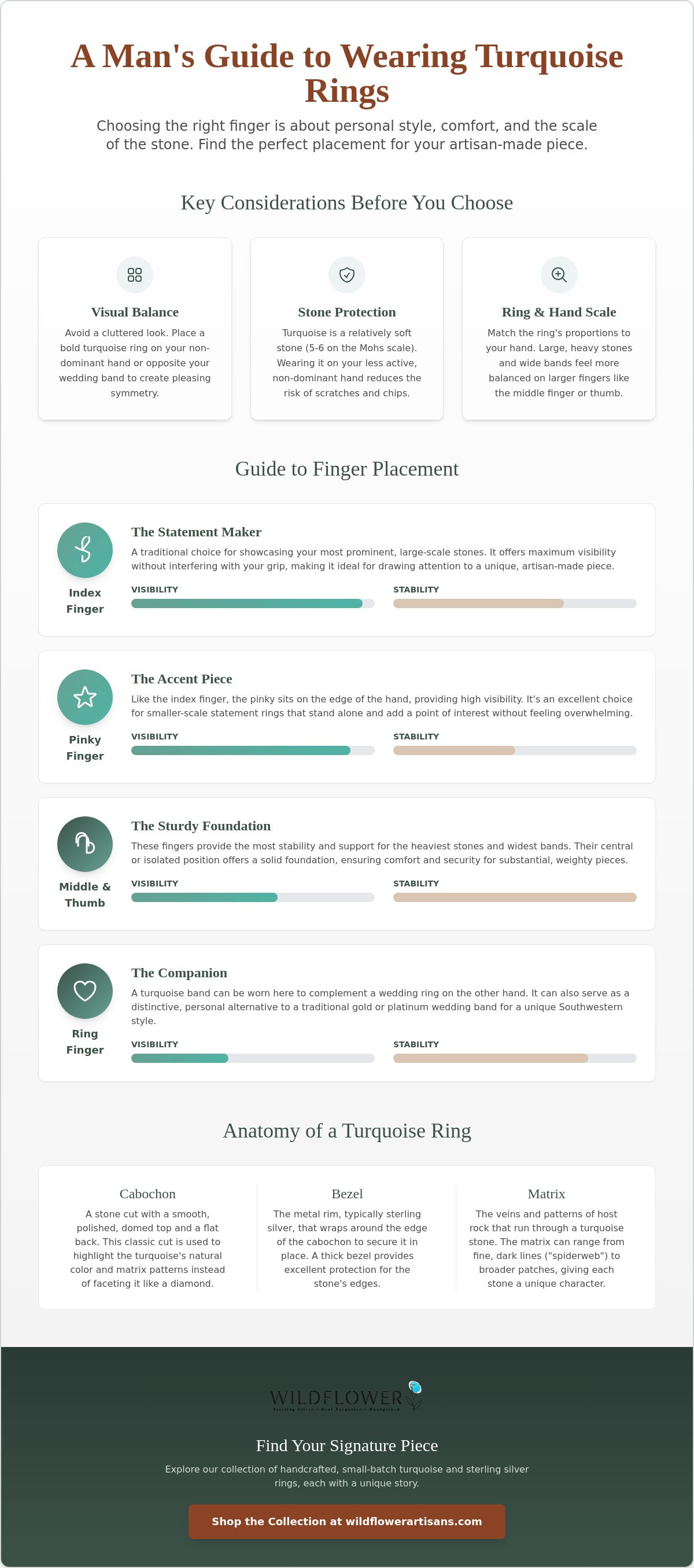
Choosing a ring based on band width and cabochon scale ensures a comfortable fit.
Deciding what finger should a man wear a turquoise ring on depends heavily on the physical architecture of the jewelry. A wide shank is more than a stylistic choice; it's a functional one that spreads the weight of the silver across the finger to prevent the ring from biting into the skin. If you are choosing a ring for a finger with a larger knuckle, like the middle finger, a tapered band that is wide at the top but narrower at the bottom can offer the best of both worlds. Greg Cordova often cuts stones with a specific profile to enhance the wearer's comfort, ensuring the cabochon doesn't sit too high or feel top-heavy. You can learn more about Greg Cordova's lapidary work and mine ownership to see how his hand-cut techniques prioritize the relationship between the stone and the hand.
The importance of the shank and bezel
Stability is the main goal when wearing a heavy artisan-made piece. A split shank provides a broader base for the bezel, which keeps the stone from tilting toward the pinky or index finger. This is a common issue with larger stones, and a well-designed shank solves it without adding unnecessary bulk. We also pay close attention to the finishing of the silver in our small batch studio. Smooth, hand-finished edges are essential to prevent the ring from catching on clothing or irritating the skin between your fingers. Our turquoise buying guide covers these technical aspects in more detail to help you find a piece that feels as good as it looks.
Selecting the right stone for your finger
Beyond fit, the origin of the stone dictates the visual weight of the ring. White Buffalo jewelry offers a high-contrast, black-and-white look that provides a clean, neutral alternative to traditional blue. For those who want the classic Southwestern style, natural stones from the Kingman mine are prized for their bright blue hues and fine spiderweb matrix. If you prefer earthier tones, Royston turquoise offers a range of greens and browns that feel deeply connected to the high desert landscape. The hardness of the stone, which varies by mine, should also influence your choice if you plan on wearing the ring every day. By matching the stone's character to your lifestyle and the specific finger you've chosen, you ensure the ring becomes a natural part of your daily routine.
Finding the right balance for your signature piece
Deciding on a ring's placement involves more than just aesthetics. It is about the physical harmony between the weight of the sterling silver and the unique scale of the stone. Whether you gravitate toward the bold presence of the index finger or the understated stability of the middle finger, the right fit should feel intuitive for your daily life. Finding the answer to what finger should a man wear a turquoise ring on is ultimately a personal journey between the wearer and the character of the piece.
At Wildflower, we prioritize the integrity of the materials, offering guaranteed authentic stones from known mines and small batch sterling silver settings. Each piece features hand-cut cabochons by expert lapidaries like Greg Cordova, ensuring that the stone's matrix and color remain the focal point. Browse our collection of artisan-made turquoise rings for men to find a piece that fits your style, or explore our curated selection at wildflowersantafe.etsy.com for additional unique finds if you prefer Etsy’s buyer protections. We hope this guide helps you wear your turquoise with confidence and a sense of grounded ease.
Frequently Asked Questions
Is it okay for a man to wear a turquoise ring on his pinky finger?
Yes, the pinky finger is a classic and comfortable choice for a man's statement ring. This placement allows a smaller cabochon or signet-style setting to stand out without competing with other jewelry on the hand. It is often the most practical spot for those who are active because it sits at the edge of the grip and is less likely to interfere with daily tasks.
What does a turquoise ring on the index finger mean for a man?
A turquoise ring on the index finger serves as a bold focal point and traditionally suggests a sense of confidence or authority. Because the index finger is one of the most visible digits, it provides an excellent stage for hand-cut stones with intricate spiderweb matrix patterns. This placement is ideal for larger, vertically oriented stones that follow the natural line of the finger and hand.
Should I wear my turquoise ring on my left or right hand?
You should choose the hand that feels most balanced, though many men prefer the non-dominant hand to protect the stone from accidental impacts. If you are deciding what finger should a man wear a turquoise ring on while already wearing a wedding band, the right hand is a common choice. This creates a pleasing symmetry and ensures your artisan-made silver doesn't rub against other metal bands.
Can I wear a turquoise ring with a wedding band?
Yes, you can absolutely wear a turquoise ring alongside a wedding band by placing it on the opposite hand or a different finger. Some men even choose a simple turquoise band to serve as their primary wedding ring, which is a common practice in Southwestern style. If worn on the same hand, ensure the bezel height is low enough that the two rings don't clank together during movement.
How do I choose the right size turquoise ring for my thumb?
Selecting a thumb ring requires a focus on the inner band's comfort and the specific size of your knuckle. Since the thumb moves more frequently than other fingers, a wide, flat shank is often the best choice for physical stability. We recommend measuring the widest part of the thumb knuckle to ensure the ring slides on easily but stays secure once it sits at the base.
Does the color of the turquoise change which finger I should wear it on?
The color of the stone doesn't strictly dictate the finger, but it can influence the visual weight and focus of your hand. Bright blue stones, like those from the Sleeping Beauty mine, draw significant attention and look excellent on the index finger. Earthier, green-toned stones from mines like Royston often feel more grounded on the pinky or middle finger, where they complement the natural tones of the skin.
What is the best way to care for a turquoise ring worn daily?
The best way to care for a daily turquoise ring is to keep it away from harsh chemicals and remove it during heavy physical labor. Turquoise is a porous stone, so it can absorb oils, lotions, or soaps which might change its color over time. A simple wipe with a soft, dry cloth after wearing is usually enough to keep the sterling silver and the stone in top condition for years.
Are there specific ring styles that work better for men with large hands?
Men with large hands generally look best in rings with wide shanks and substantial stones that match the physical scale of their digits. A thin band can look disproportionate on a larger hand, while a heavy small batch setting with a large stone provides a more balanced appearance. Wide-split shanks are particularly effective for providing stability and comfort on larger middle or index fingers.
Article by
Kimberly Cordova
Kimberly Cordova is the founder and creative director of Wildflower Artisans, a handmade Turquoise and sterling silver jewelry brand rooted in Santa Fe. She built Wildflower around a simple belief: the best jewelry is the kind you actually reach for, not the kind you save for someday.
Kimberly designs pieces made by hand with a trusted circle of Santa Fe silversmiths, works alongside her husband Greg on in-house pieces with stones he cuts, both from the family's King's Manassa Mine in Colorado and White Buffalo Mine in Nevada and from rough he sources from other mines, and curates finished work from artisan makers whose craft meets the same standard. Turquoise leads the collection, joined by White Buffalo, Wild Horse, Lapis Lazuli, Spiny Oyster, and other genuine semi-precious stones. The result is a collection with real range and no shortcuts on the stone, the silver, or the story behind either.
Her writing covers everything she has learned along the way: how Turquoise forms, how to tell natural from stabilized, what makes one mine different from another, how to read a bezel, and how to shop with confidence in a market that is not always straightforward. It is the kind of plainspoken information she wished someone had laid out for her when she was starting out.
Browse the collection at wildflowerartisans.com. Questions about a stone, a setting, or a specific piece are welcome any time.
0 comments