

A genuine piece of turquoise is a fragment of the high desert sky held in place by the weight of the earth. At Wildflower Artisans (Wildflower), we see these stones as more than just ornaments. They are stories written in copper and aluminum phosphate over millions of years. You might have felt a pull toward a specific cabochon or a silver bezel, yet found yourself questioning if the material was truly authentic or merely a mass-produced imitation like dyed howlite. It's a common concern for those who appreciate Southwestern style but want to avoid the distraction of metaphysical myths. When we discuss the Properties and Meaning of the Stone, we focus on the tangible beauty of its chemistry and the intentional work of the lapidary artist who cut it.
We believe that knowledge is the foundation of confidence. In this guide, you will learn to identify the physical characteristics that distinguish high-quality turquoise from common semi-precious stones. We will clarify the technical language of the studio, from the intricate patterns of a spiderweb matrix to the necessity of stabilization in certain softer specimens. By understanding the specific histories of famous mines and the nuances of the artisan's process, you can move past the confusion of the marketplace. You deserve to feel certain that the jewelry you choose is a genuine reflection of natural beauty and skilled craftsmanship.
Key Takeaways
- Understand how mineral composition and the Mohs scale define the Properties and Meaning of the Stone in artisan jewelry.
- Learn to evaluate the matrix of a cabochon to determine its rarity and how host rock patterns influence the visual narrative of a piece.
- Discover how specific mine origins like Kingman or Royston provide a pedigree that impacts the authenticity of Southwestern style collections.
- Gain practical tips for identifying genuine turquoise by observing hand-cut imperfections and checking the surface temperature of the material.
- Recognize the importance of a stone-first design philosophy where the artisan respects the natural slab to preserve its organic integrity.
What defines the properties and meaning of the stone in Southwestern jewelry?
The properties and meaning of the stone are found in its geological signature and the intentional work of the artisan. Physical traits like mineral composition and hardness establish its durability, while the meaning is rooted in the stone's rare origin and the narrative it carries from the mine to the finished piece.
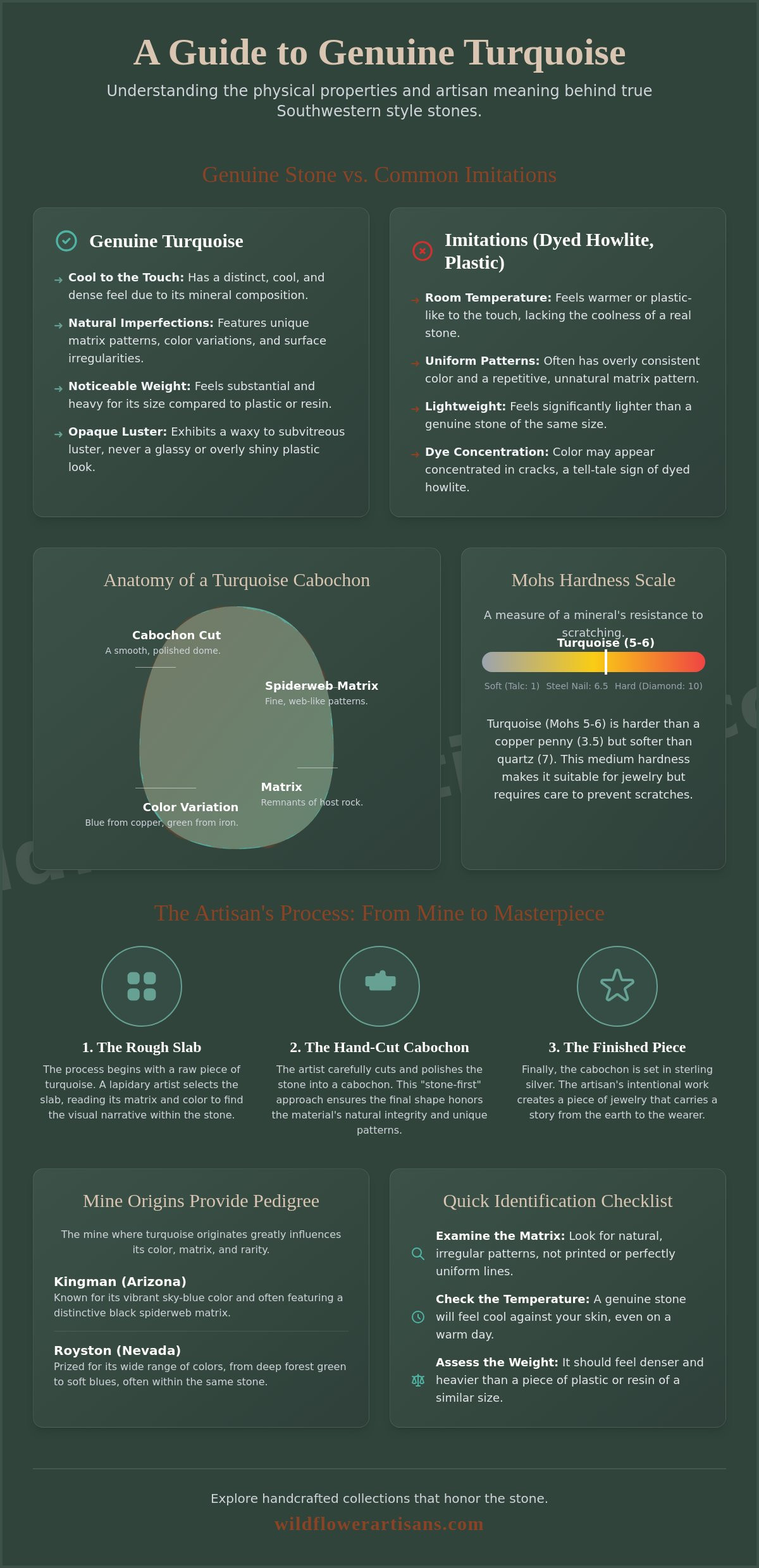
Turquoise is a hydrated phosphate of copper and aluminum. Its Turquoise mineral properties include a Mohs hardness of 5 to 6, making it a delicate yet resilient choice for jewelry. Natural color variations range from the deep greens of iron rich deposits to the robin's egg blues of copper heavy veins. These tangible facts allow a collector to distinguish a genuine investment from mass produced plastic or dyed howlite. Genuine stones feel cool to the touch and possess a weight that imitations simply can't replicate.
To better understand the significance of these materials in Southwestern style, watch this helpful video:
Distinguishing physical properties from metaphysical claims
At Wildflower Artisans (Wildflower), we choose to focus on the tangible story of the earth. We don't make metaphysical or healing claims because we believe the stone's physical reality is beautiful enough. Whether we are working with malachite or lapis lazuli, our focus remains on the artisanal quality of the material, ensuring that every bezel we set honors the stone's natural form. One key term you will encounter is the cabochon. This is a stone that has been shaped and polished into a smooth, rounded form rather than being faceted like a diamond. This cut allows the natural patterns and colors of the stone to take center stage without the distraction of synthetic sparkle.
The role of the artisan in defining meaning
A lapidary artist acts as a translator for the earth's history. When Greg Cordova or our other skilled partners select a rough slab, they aren't just looking for size. They are looking for a visual narrative within the matrix or the intricate spiderweb patterns. Small batch production ensures that each stone is treated with respect. Understanding the Properties and Meaning of the Stone involves looking beyond the surface to the very hands that cut the cabochon. A hand-cut stone retains more of its character than one processed in a factory. This intentionality is what gives a piece its soul. You can explore the specific histories of the places our stones come from on our stone origins page. Knowing if a stone came from the Kingman mine or the Royston mine changes how you see the piece. It moves the jewelry from a simple accessory to a piece of history. This connection between the mine and the finished bezel is what defines authentic Southwestern style.
How do physical properties like the matrix and Mohs scale affect value?
The value of an artisan piece is determined by the interplay of a stone's geological rarity and its physical resilience. When we examine the Properties and Meaning of the Stone, we find that the host rock patterns and the mineral's position on the Mohs scale dictate both its market price and its longevity in your collection.
Color saturation is a primary driver of value. While deep, consistent blues are often prized in global markets, Southwestern style collectors frequently look for the character provided by the matrix. This host rock material, which can include limonite, quartz, or pyrite, creates the intricate veining that makes each hand-cut stone unique. Clarity also plays a role, though in the world of turquoise, clarity refers more to the absence of muddy or washed out colors rather than transparency. For a deeper look at these grading elements, you can review the GIA Turquoise Quality Factors which serve as a benchmark for gemologists worldwide.
Understanding the matrix and spiderweb patterns
The matrix is the fingerprint of the mine. In stones from the Royston or Kingman mines, you might see bold chocolate brown or golden yellow veins winding through the blue or green host. A spiderweb matrix is particularly sought after. This occurs when the host rock forms thin, delicate lines that resemble a web across the surface of the cabochon. Because these patterns are a result of specific geological pressure, they are impossible to replicate in mass produced imitations. If you find yourself drawn to these intricate natural narratives, you might enjoy exploring our latest small batch jewelry arrivals.
Durability and the Mohs scale
Durability is a practical necessity for any piece intended for daily wear. Turquoise typically falls between 5 and 6 on the Mohs scale, which measures mineral hardness. To protect these stones, we often use a bezel setting. This silver rim wraps around the stone, shielding the edges from impact. Below is a brief comparison of how turquoise sits alongside other common semi-precious stones:
| Stone Type | Mohs Hardness |
|---|---|
| Malachite | 3.5 to 4 |
| Lapis Lazuli | 5 to 5.5 |
| Turquoise | 5 to 6 |
Stabilization is another factor that influences both durability and value. This process involves infusing porous stones with a clear resin to harden them and preserve their color. While natural, untreated turquoise is the rarest and most expensive, stabilized stones are a practical choice for many jewelry styles. We believe that understanding the Properties and Meaning of the Stone requires transparency about these treatments, ensuring you feel confident in the authenticity and the expected wear of your purchase.
Do different mines change the meaning of the stone?
The mine of origin is the most significant factor in determining the pedigree and artisanal value of a stone. Each geographic location imprints a unique geological signature that cannot be replicated, turning a simple mineral into a finite piece of history. When we explore the Properties and Meaning of the Stone, we're looking at a map of the earth's past. A stone from the Kingman mine often carries a vibrant, sky-blue clarity that reflects the Arizona horizon. In contrast, a cabochon from the Royston mine might show a sprawling landscape of deep greens and watery blues. When a mine closes, the stones that remain become heirlooms. Their rarity increases because the source has gone quiet, leaving only the existing pieces to tell the story of that specific soil.
The legacy of King's Manassa and White Buffalo
Some stones carry a legacy that is tied to a single family or a specific patch of earth. King's Manassa turquoise is celebrated for its rich green hues and the warm, gold-toned matrix that winds through the host rock. These stones possess an earthy sophistication that feels deeply rooted in the Colorado landscape. We also frequently work with White Buffalo, a stone that is technically a different mineral but is often grouped with turquoise in Southwestern style jewelry due to its similar physical properties. It offers a stark, poetic contrast of white and black that creates a bold visual narrative. Much of the beauty in these pieces comes from Greg Cordova’s lapidary work, as he possesses the skilled hand necessary to process these specific materials without losing their natural character.
Why mine-specific sourcing matters
Knowing exactly where a stone was pulled from the earth is the best defense against the uncertainty of the modern marketplace. It ensures that your jewelry isn't made from mystery materials or dyed plastic imitations. This transparency is the heartbeat of our stone-first philosophy. In our studio, we don't start with a silver design and look for a stone to fit. Instead, we let the stone dictate the bezel. We respect the natural slab, the jagged edges, and the irregular weight. By building the sterling silver around the stone's organic shape, we preserve the largest possible amount of its natural properties. This method honors the stone as the protagonist of the piece. It invites you to appreciate the Properties and Meaning of the Stone as an unrepeatable gift from a specific coordinate in the desert.
How can you identify genuine properties in Southwestern style pieces?
Identifying genuine properties requires a combination of sensory observation and technical scrutiny. You can verify authenticity by checking the stone's temperature, looking for hand-cut imperfections, and ensuring the material is secured by a traditional silver bezel.
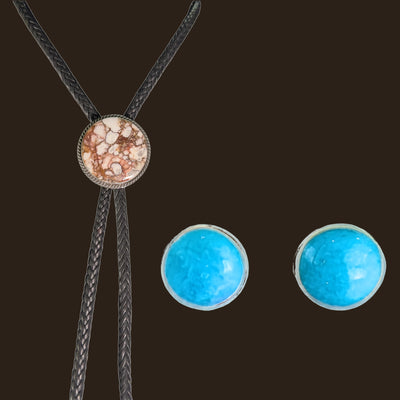
Identifying a genuine stone is a sensory experience. Hold a cabochon against your cheek or the inside of your wrist. It should feel cold. Real turquoise is a mineral with a specific density that holds a chill, whereas plastic or resin imitations will quickly warm to your body temperature. We often suggest looking for the tiny, beautiful imperfections that define a hand-cut stone. If a set of earrings looks identical in every swirl of the matrix, they were likely mass-produced in a factory rather than shaped by an artisan's hand. Surface variations are not flaws. They are the fingerprints of the earth. A genuine stone may have slight pits or an asymmetrical curve that follows the natural flow of the rough slab. These traits are essential when evaluating the Properties and Meaning of the Stone because they prove the material hasn't been ground down into a uniform, characterless shape.
Red flags for fake or imitation stones
Dyed howlite is the most common imposter in the marketplace. It's a naturally white stone with grey veining that absorbs blue dye quite easily, though you can often spot it by looking for dye that has pooled too darkly in the cracks of the matrix. You might also see "block turquoise." This isn't a stone at all, but rather a mixture of stone dust and resin pressed into a mold. It often feels lighter than real stone and lacks the varied luster of a natural mineral. A reliable way to test a seller's expertise is to ask for the specific mine name. An expert who understands the Properties and Meaning of the Stone will know exactly where their material was sourced. If they can't name the mine, it's often a sign that the material is commercial-grade or synthetic.
The importance of sterling silver pairing
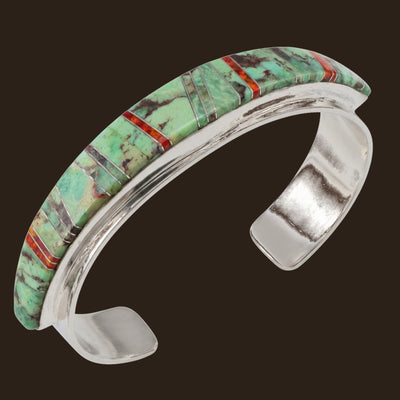
A quality stone deserves a quality home. Authentic Southwestern style pieces are almost always set in .925 sterling silver, which provides a substantial weight and a soft, reflective glow. Be wary of "mystery metals" or silver plating, which are often used to cut costs on jewelry containing inferior or fake stones. Look closely at how the stone is held. A genuine artisan piece uses a silver bezel to mechanically secure the cabochon. This rim of silver is pressed over the edges of the stone to keep it in place for a lifetime. If the stone looks like it is merely sitting on top of the metal without a lip of silver holding it, it may be held by glue alone. This is a common trait of costume jewelry that lacks durability. You can see the difference that intentional pairing makes by viewing our one-of-a-kind collections.
If you're ready to find a piece that is as authentic as its history, you can shop our artisan-made jewelry today. We take pride in ensuring every stone we set meets our standards for physical integrity and artisanal beauty.
Why does a stone-first philosophy matter for your collection?
A stone-first philosophy ensures that the jewelry design honors the natural geological formation rather than forcing it into a standardized mold. This approach preserves the physical Properties and Meaning of the Stone by allowing the unique character of the raw material to dictate the final artistic expression.
When we work in the studio, we treat each rough slab as a finished story waiting for a frame. Most commercial jewelry starts with a sketch and then hunts for a stone that fits a pre-determined hole. We reverse that process. By letting the stone's edges, weight, and matrix guide the silver work, we ensure that the largest possible amount of the material is preserved. This isn't just about efficiency. It's about respect for a resource that took millions of years to form. For a collector, this means owning something that mass production machinery simply cannot replicate. Every piece becomes a wearable fragment of earth history rather than a fleeting fashion accessory.
Appreciating the asymmetrical and organic
Perfect symmetry is often a telltale sign of a factory-made stone. When a machine grinds turquoise into a uniform oval, it often strips away the very character that makes the material valuable. Natural shapes tell a better story of the stone's journey from the mine to the workbench. You might find a cabochon with a slightly jagged side or a curve that mimics the canyon walls where it was found. These details are intentional. Artisan-made is the intentional crafting of a piece by a skilled human hand. By embracing these organic forms, we celebrate the beauty of the asymmetrical. It reminds us that nature rarely works in straight lines or perfect circles.
Building a collection with intentionality
Building a collection is a way to map your connection to the Southwestern landscape. Instead of buying pieces at random, we encourage you to look for stones from specific mines that resonate with you. Perhaps you're drawn to the cool, clear blues of the Sleeping Beauty mine or the mossy, gold-flecked greens of Royston. You can learn more about these locations on our about our mines page. Choosing with this level of detail adds a layer of depth to the Properties and Meaning of the Stone in your personal archive. Authentic stones age gracefully, too. Over decades, a stone may develop a unique patina as it interacts with your skin and the air. This evolution is a sign of authenticity and a reminder that your jewelry is a living part of your history.
We invite you to explore our latest small batch creations and find a piece that speaks to your own narrative by visiting our online jewelry studio. If you prefer the additional buyer protections offered by a larger marketplace, you can also browse a curated selection of our work at our Etsy shop (wildflowersantafe.etsy.com).
Selecting your next piece with confidence
Choosing a new cabochon for your collection should feel like a discovery rather than a transaction. You now have the tools to look beyond the surface of a stone and see the history written in its matrix and the skill in its bezel. By grounding your search in the Properties and Meaning of the Stone, you can move past the confusion of mass produced imitations and focus on the character of genuine Southwestern style. Whether it's the specific blue of a Kingman stone or the earthy green of a Royston, the right piece is the one that feels like a natural extension of your own story.
Explore our curated selection of artist-made sterling and turquoise jewelry to find a piece that speaks to your style. Every item in our studio is handcrafted in small batches using stones we guarantee are authentic and sourced from reputable mines. We are proud to be a family owned and operated business rooted in Santa Fe. If you prefer the buyer protections of a larger marketplace, our work is also available at wildflowersantafe.etsy.com. We hope you find a piece that brings you a sense of quiet wonder every time you wear it.
Frequently Asked Questions
What is the difference between natural and stabilized turquoise?
Natural turquoise is untreated stone that retains its original hardness and color exactly as it was pulled from the earth. Stabilized turquoise has been treated with a clear resin to fill its pores, which hardens the material and prevents the color from shifting over time. This process is necessary for many beautiful stones that are too soft to be cut into a cabochon without crumbling. We always disclose whether a stone is natural or stabilized to ensure you know exactly what you are buying.
Is turquoise a soft stone compared to other gems?
Turquoise is a relatively soft mineral with a Mohs hardness of 5 to 6, which means it requires more care than a diamond or sapphire. It sits between malachite, which is softer at a 3.5 to 4, and lapis lazuli, which is similar in hardness. Because it can be scratched by harder materials, we often set our stones in a protective silver bezel. This rim of sterling silver acts as a shield for the edges of the stone during daily wear.
What does the matrix in a turquoise stone signify?
The matrix is the remnant of the host rock that creates the intricate black, brown, or gold patterns seen within a stone. It signifies the specific geological environment where the stone formed, acting as a fingerprint for a particular mine. A spiderweb matrix is a fine, interconnected network of lines that is highly sought after by collectors. These patterns add a layer of visual depth that makes every hand-cut stone an unrepeatable piece of art.
How can I tell if my turquoise jewelry is authentic or dyed howlite?
You can identify genuine turquoise by its temperature and its unique imperfections. Real stone will feel cold against your skin, whereas plastic or resin imitations warm up almost instantly. Look for a matrix that has depth and variation. Dyed howlite often looks too uniform, with dye noticeably darker in the veins. Asking for a specific mine name is another way to verify that the seller understands the Properties and Meaning of the Stone they are offering.
Why do stones from different mines have such different colors?
Color variations are determined by the minerals present in the soil during the stone's formation over millions of years. Copper creates the vibrant blue hues found in Kingman or Sleeping Beauty turquoise, while iron results in the deep greens seen in Royston or King's Manassa specimens. Some mines produce a range of colors, but the specific mineral balance of a location creates a signature palette. This geographic diversity is why mine-specific sourcing is so important for authentic collections.
What is White Buffalo stone and is it actually turquoise?
White Buffalo is a white stone with a black matrix that is often grouped with turquoise, though it is technically a different mineral. It is found in the same regions of Nevada and is prized for its stark, poetic contrast. Greg Cordova’s lapidary work is often featured in our White Buffalo pieces, as he has a specialized eye for cutting these stones to highlight their best patterns. You can find more examples of his specific cuts at CuttingEdgeTurquoise.com.
Does the price of a stone always indicate its rarity?
Price is a strong indicator of rarity, especially for natural stones from mines that have long been closed. High-quality natural turquoise can cost between $50 and $200 per carat, with rare specimens from famous locations reaching $1,000 or more per carat. While the market value reflects the scarcity of the material, the Properties and Meaning of the Stone are also defined by the artisan's touch. A stone that has been carefully hand-cut will always hold more value than a mass-produced alternative.
How should I care for my sterling silver and turquoise jewelry?
To keep your jewelry in good condition, wipe it down with a soft, dry cloth and avoid using harsh chemical cleaners. Since turquoise is a porous mineral, it can absorb perfumes, lotions, and soaps, which may cause the color to change over time. Don't use ultrasound cleaners as the vibrations can damage the stone's structure. Storing your pieces separately in a dry place will prevent the silver from scratching the stone surface and help maintain the integrity of the bezel setting.
Article by
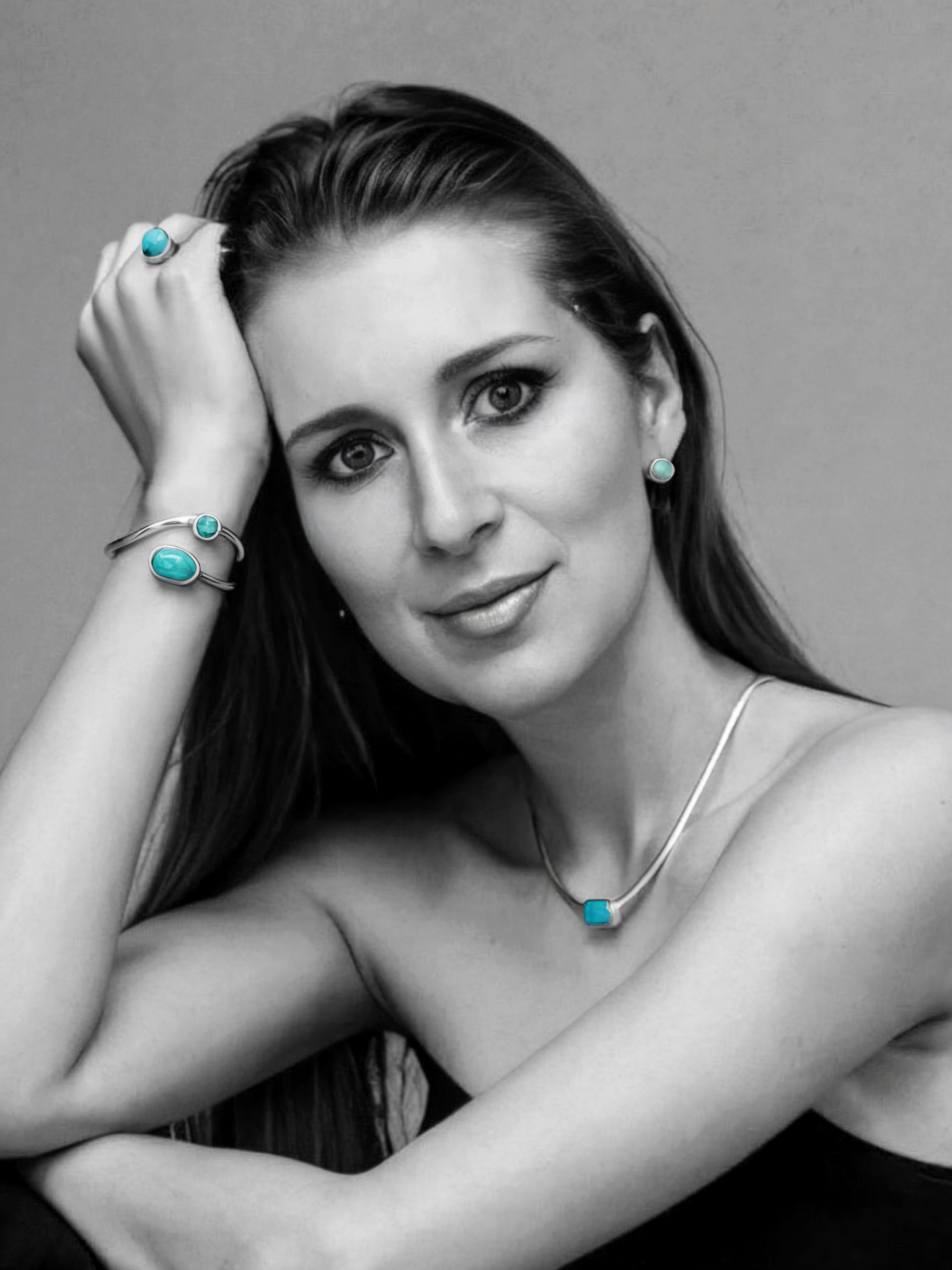
Kimberly Cordova
Kimberly Cordova is the founder and creative director of Wildflower Artisans, a handmade jewelry brand rooted in Santa Fe. Real turquoise, solid sterling silver, and a small line set in solid 14K gold. She built Wildflower around a simple belief: the best jewelry is the kind you actually reach for, not the kind you save for someday.
The collection is built three ways. Some pieces are made in-house, cut by her husband Greg from stones he sources himself, including rough from the family's King's Manassa Mine in Colorado and White Buffalo Mine in Nevada. Some are designed by Kimberly and fabricated by a trusted circle of Santa Fe silversmiths. And some are finished work she curates from artisan makers whose craft meets the same standard, because building a real collection means knowing when to make and when to look.
Turquoise leads, joined by White Buffalo, Wild Horse, Lapis Lazuli, Spiny Oyster, Black Onyx, Opal, and other genuine semi-precious stones. No shortcuts on the stone, the silver, or the story behind either.
Her writing covers everything she has learned along the way: how turquoise forms, how to tell natural from stabilized, what makes one mine different from another, how to read a bezel, and how to shop with confidence in a market that is not always straightforward. It is the kind of plainspoken information she wished someone had laid out for her when she was starting out.
Browse the collection at wildflowerartisans.com. Questions about a stone, a setting, or a specific piece are welcome any time.
0 comments