

A genuine turquoise pendant is less of an accessory and more of a geological narrative held in place by hand-wrought sterling silver. We understand the quiet frustration of seeing two seemingly identical blue stones with vastly different prices, or the worry that a vivid hue might be nothing more than dyed howlite. It's difficult to find your way through a sea of mass-produced imitations when you're simply looking for a piece that feels honest, heavy, and grounded.
You deserve a piece that tells a clear story of the land and the specific hands that shaped it. We'll show you how to evaluate artisan-made work by looking closely at stone origins, lapidary techniques, and the integrity of the silver craftsmanship. This guide explores how to identify specific mine characteristics, the importance of a well-seated bezel, and how to choose a durable cabochon that can withstand the beautiful, messy rhythms of daily wear.
Key Takeaways
- Learn to identify quality in a turquoise pendant by examining the cut of the cabochon and the precision of the bezel setting.
- Understand how mine-specific characteristics like matrix patterns and color depth determine the unique story and value of a stone.
- Distinguish between flimsy mass-produced settings and the substantial weight of handmade sterling silver craftsmanship.
- Discover how to choose between subtle everyday essentials and bold statement pieces that serve as the focal point of your collection.
- Gain confidence in identifying authentic Southwestern artistry to ensure your jewelry is a genuine, one of a kind piece.
Understanding the Anatomy of a Quality Turquoise Pendant
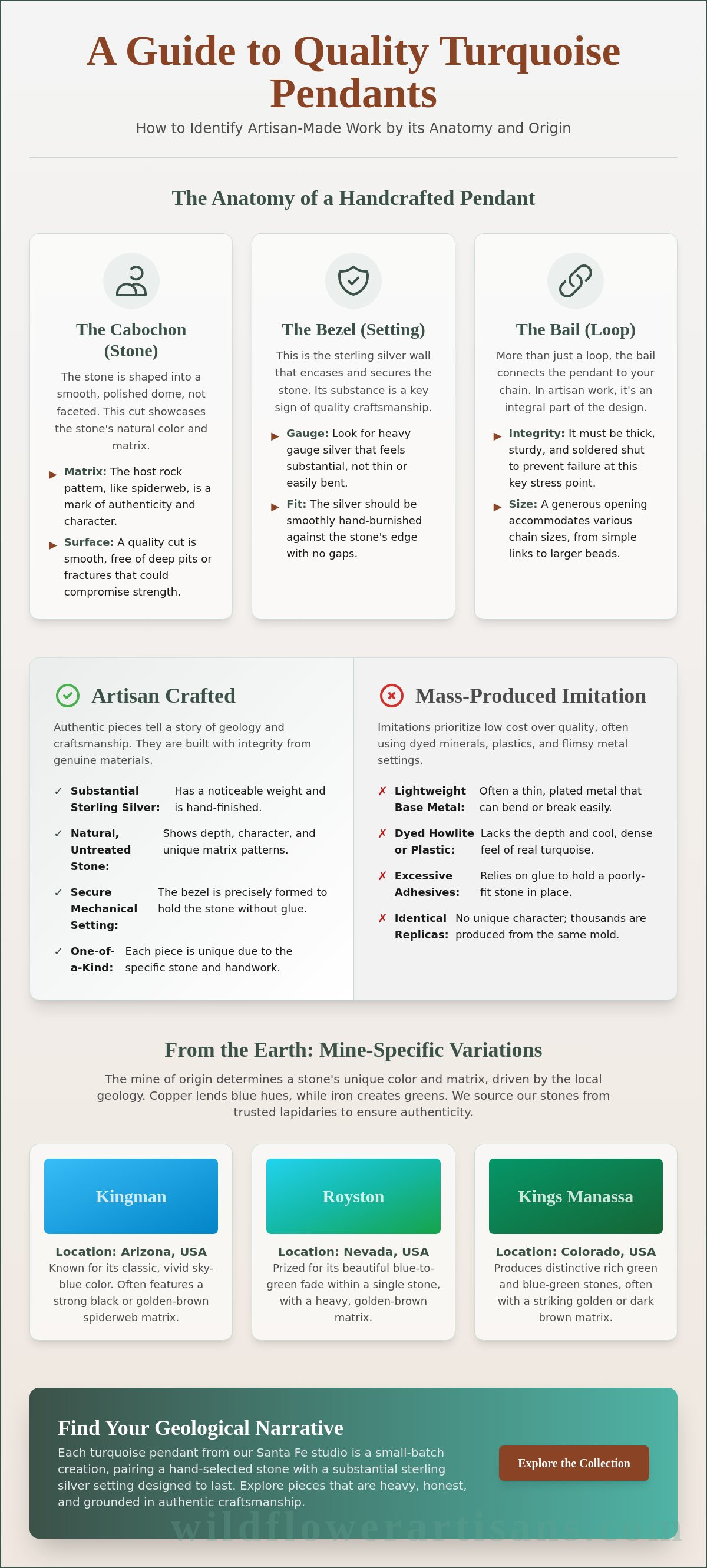
A turquoise pendant is a handcrafted marriage of natural mineral and sterling silver. While it might appear simple, a well-made piece consists of three primary elements: the stone, the bezel, and the bail. Each component must be executed with precision to ensure the jewelry survives daily wear. Understanding the foundational turquoise mineralogy and history helps you appreciate why certain stones require more careful housing than others. Artisan-made pieces prioritize the structural integrity of the sterling silver setting, ensuring the stone is held securely without the need for excessive adhesives.
To help you distinguish between genuine artisan work and common imitations, watch this helpful video:
The quality of a turquoise pendant often comes down to the thickness of the silver used. We look for a heavy gauge sterling silver that feels substantial in the hand. A thin, flimsy bezel can easily bend, which puts the stone at risk of cracking or falling out. When you choose a piece from a Santa Fe studio, you're usually buying a small batch creation where the artist has spent hours hand-burnishing the silver around the specific contours of the stone.
The Role of the Cabochon and Matrix
The stone in a high-quality pendant is almost always a cabochon. This is a gem that has been shaped and polished into a smooth, rounded dome rather than being cut with facets. Within these stones, you'll often find the matrix, which is the host rock that grew alongside the turquoise. While some prefer a clear, solid blue, a spiderweb matrix is highly prized for its intricate, thin lines of host rock that create a lace-like pattern. A well-cut cabochon should be smooth to the touch. It shouldn't have deep pits or fractures that could compromise the stone's strength over time.
Bails and Structural Integrity
The bail is the loop that allows the pendant to hang from a necklace. In handmade work, the bail is rarely an afterthought. It's often decorative, featuring hand-stamped patterns or unique shapes that complement the stone. It's important to ensure the bail is wide enough to accommodate various chain thicknesses or even larger beads like Navajo pearls. A sturdy bail is a sign of a professional maker who understands that the point of connection between the jewelry and the wearer is the most common point of failure. We make sure our bails are soldered shut and thick enough to withstand the friction of a moving chain.
Exploring Mine-Specific Stones and Natural Variations
Natural turquoise isn't a single shade of blue. It ranges from the vivid sky tones of the Kingman mine to the mossy, olive greens found in Nevada. These variations are determined by the specific minerals present in the ground where the stone formed. Copper creates bright blue hues, while iron or aluminum results in varied greens. This organic diversity is why a turquoise pendant can feel so individual. This appreciation for the stone’s variety is a hallmark of the history of Southwest silverwork, where artisans have long celebrated the unique character of each individual find.
We strictly exclude dyed howlite and synthetic "mystery" stones from our studio work. These mass-produced imitations are often just white minerals injected with blue dye to mimic the look of high-grade turquoise. They lack the density, weight, and soul of a genuine stone. When you look at a natural cabochon, you see depth and slight variations that tell a story of millions of years of geological pressure. These aren't defects. They're the markers of authenticity that collectors look for when they want a piece that is truly one of a kind.
Kings Manassa and Royston Varieties
Kings Manassa turquoise is known for its rich greens and golden brown matrix. It comes from a historic mine in Colorado that has produced some of the most distinct green stones in the Southwest. Royston stones are also highly sought after because they often feature a beautiful transition between blue and green within a single cabochon. These stones are increasingly rare as older mines become less productive. We frequently work with mine owner and lapidary Greg Cordova to source authentic material that retains its natural color and structural integrity. Because these stones are sourced in small batches, their availability is often limited to what the land yields each season.
White Buffalo and Wild Horse
While collectors often group them together, White Buffalo and Wild Horse are not technically turquoise. White Buffalo is a white dolomite with a stark black chert matrix, while Wild Horse is a magnesite characterized by creamy whites and reddish-brown patterns. They've become staples in Southwestern style jewelry because they offer a high-contrast, monochrome look that pairs beautifully with heavy sterling silver. We cut these stones into cabochons and set them using the same traditional bezel techniques as our blue stones. They provide a sophisticated alternative for those who appreciate the weight and feel of artisan-made silver but prefer a neutral palette.
If you're looking for a specific mine or color profile, you can browse our current artist-made jewelry to see these stones in person.
Evaluating Artisan Craftsmanship and Sterling Silver Settings
High-quality jewelry starts with the material. For a turquoise pendant, we use sterling silver. This alloy consists of 92.5 percent pure silver and 7.5 percent copper. It provides the necessary hardness to protect a stone while maintaining the luster silver is known for. You can feel the quality in the weight of the piece. A heavy gauge silver feels substantial in your hand. It doesn't flex or bend like the thin, stamped settings often found in mass-produced jewelry. When you evaluate a handmade turquoise pendant, look at the bezel first. This is the silver ribbon that surrounds the stone. In a professional setting, the bezel should wrap tightly around the stone without any visible gaps or uneven edges. If you see space between the silver and the turquoise, it's usually a sign of a rushed or unskilled process.
Small batch production ensures that every setting is tailored to the specific stone it holds. Because natural cabochons vary in height and shape, a one-size-fits-all approach doesn't work. We spend time hand-burnishing the silver around each individual stone to ensure it stays secure for decades. This level of attention is what separates a piece of jewelry from a work of art.
Bezel Styles and Decorative Details
Artisans use different bezel styles to change the character of a piece. A serrated bezel features fine, saw-tooth edges that add a delicate texture around the stone. Plain bezels offer a cleaner, more modern look that allows the natural matrix of the turquoise to take center stage. Many makers add decorative elements like twist wire, which looks like a tiny silver rope, or silver raindrops. These small silver beads are deeply connected to the history of Southwest silverwork. These details add visual weight and ensure that even simple designs feel intentional and finished.
Small Batch vs Mass Production
Small batch jewelry is made by a single artist in a studio rather than on an assembly line. This distinction matters because mass-produced pieces often use mystery metals or thin plating that eventually wears away to reveal copper or brass underneath. Artisan pieces are solid sterling silver. They're designed to be heirloom quality. Because they're made with high-quality materials, they can be maintained and restored through proper care and repair if the silver ever tarnishes or the stone needs attention. Buying small batch means you're investing in a piece that can be passed down rather than something that will end up in a drawer after a year of wear.
Selecting the Right Pendant Style for Your Collection
Finding the right turquoise pendant involves a balance between your personal aesthetic and the practicalities of your daily life. It is a choice that reflects your own narrative. Some look for a stone that mirrors the sky on a clear Santa Fe morning, while others prefer the earthy, grounded greens of the Nevada desert. Beyond the color, the physical presence of the jewelry matters. A well-made artisan piece should feel balanced. It should have enough weight to hang properly against your chest but remain comfortable for all-day wear. We often suggest that collectors consider the weight of the sterling silver housing as much as the stone itself, as a substantial setting ensures the piece won't flip or sit awkwardly while you move.
Choosing a piece involves finding a stone that resonates with you. You might find yourself drawn to the deep, intricate spiderweb patterns of a Royston stone or the clear, robin's egg blue of a Sleeping Beauty cabochon. This connection is what makes artisan jewelry so different from mass-produced items. You aren't just buying a product; you're selecting a geological specimen that has been carefully preserved in silver. Think about how the piece will interact with your wardrobe. A larger pendant might require a heavier chain or a set of Navajo pearls to look proportional, while a smaller piece is perfectly at home on a delicate silver cable.
Everyday Essentials and Minimalist Designs
Minimalist designs are often the most reached-for items in a jewelry box. Simple teardrop or round pendants are particularly versatile because they layer well with existing silver chains or leather cords. These everyday essentials transition easily from casual settings to more formal environments. If you prefer a subtle touch of color, a smaller cabochon set in a plain bezel is a perfect choice. These pieces focus on the raw beauty of the stone rather than elaborate silverwork, making them ideal for those who want a piece that feels like a natural extension of their daily style.
One of a Kind Statement Pieces
Statement jewelry serves a different purpose. These one of a kind pendants are often larger and feature rare stones from mines that are no longer in operation. When a mine is closed, the remaining stones become finite resources, making them highly prized by collectors. These pieces are usually more elaborate, featuring intricate hand-stamping, silver raindrops, or heavy, decorative bails. A statement turquoise pendant is an investment in both material and artistic history. These larger pieces act as a focal point, anchoring your entire look and serving as a testament to the skill of the artist who spent hours shaping the silver to match the stone’s unique soul.
Whether you need something subtle for the office or a bold piece for a special occasion, you can explore our current collection of artisan-made pendants to find your next heirloom.
The Wildflower Studio Process and Sourcing Philosophy
At Wildflower, the integrity of a turquoise pendant starts long before the silver is ever heated. It begins in the earth and continues through a direct, intentional connection between the raw mineral and the finished jewelry. We prioritize authentic stones and heavy sterling silver in every design we produce. This focus reflects our commitment to the Southwestern jewelry tradition. We believe you should know exactly where your stone was cut and who designed the setting. Transparency isn't just about ethics; it's about the story you carry with you when you wear a piece of the high desert.
Our studio operates with a steady, deliberate pace. We don't follow the frantic cycles of traditional retail. Instead, we let the materials dictate the timing of our work. When we find a particularly striking piece of rough turquoise, we wait for the right moment to transform it. This approach ensures that every piece leaving our Santa Fe studio is a vessel for emotion and a celebration of natural beauty. To maintain these standards, we follow a strict sourcing philosophy:
- We never use dyed howlite, "mystery metals", or synthetic stones.
- Every setting is crafted from solid sterling silver rather than plated base metals.
- We prioritize small batch or one of a kind production over assembly-line methods.
- We maintain clear records of stone origins and lapidary artists.
Lapidary Excellence with Greg Cordova
Many of our stones are expertly cut by mine owner and lapidary Greg Cordova. Greg's expertise is a cornerstone of our sourcing philosophy. Because he understands the geology of the mines he works, he knows how to bring out the best in every cabochon. The cutting process is a delicate art. It determines how the matrix and color are displayed in the final turquoise pendant. A poorly cut stone can hide the best features of the mineral. Greg's precision ensures that the spiderweb patterns and color depth are the focal point of the jewelry. His hands provide the first step in turning a raw mineral into a wearable narrative.
Curated and In-House Designs
Kimberly leads our in-house design process, focusing on the natural flow of the stone. She doesn't use mass-produced settings. Each bezel is hand-wrought to fit the specific cabochon Greg provides. This ensures the silver follows the unique geometry of the stone. In addition to our own studio work, we curate a small selection of artist-made pieces from other local creators. Every curated item must meet our strict standards for silver quality and stone authenticity. We look for pieces that show the hand of the maker, valuing the asymmetrical and the organic over factory perfection. You can explore our new arrivals to see the latest creations from our studio and the artists we support.
Find a Piece That Speaks to You
Choosing an authentic piece of Southwestern jewelry is about more than just color. It requires an eye for the intricate matrix of a natural cabochon and an appreciation for the weight of hand-wrought sterling silver. When you understand the difference between a flimsy mass-produced setting and the integrity of a small batch artisan piece, you can invest with confidence. A quality turquoise pendant is a geological narrative preserved through deliberate craftsmanship, ensuring you own a genuine part of history.
We invite you to explore our latest collection of handcrafted turquoise pendants at Wildflower. Our pieces feature authentic stones guaranteed and are shipped direct from our Southwestern studio. For those who prefer that platform, you can also find our current work at the Wildflower Etsy shop. We hope you find a stone that resonates with your own story and stays with you for years to come.
Frequently Asked Questions
How can I tell if a turquoise pendant is natural or stabilized?
Natural turquoise is untreated and remains in the same state it was when pulled from the ground. Stabilized stones have been infused with a clear resin to increase their hardness and preserve their color. You can often distinguish them by price and weight, as natural stones are much rarer and command a higher value. If a stone has an unnaturally uniform color and a very low price point, it is likely stabilized or even a dyed imitation like howlite.
What is the best way to clean my sterling silver and turquoise jewelry?
Use a dry, soft polishing cloth to gently remove tarnish from the sterling silver components. Never use ultrasonic cleaners, steam, or harsh chemicals on a turquoise pendant. Because turquoise is a porous mineral, it can absorb liquids and chemicals, which may permanently alter its color. If the stone needs cleaning, simply wipe it with a slightly damp cloth and dry it immediately with a soft towel.
Does the color of the turquoise indicate its quality or value?
Color is largely a matter of personal preference, though rarity drives the market value. While the clear blue of the Sleeping Beauty mine is highly prized, the deep greens and golden matrix of Kings Manassa stones are equally valuable to collectors. Quality is better measured by the stone's natural hardness and the lack of artificial enhancements. A hard, natural stone with a unique color profile will always be more valuable than a soft stone that required stabilization.
Why do some turquoise pendants have brown or black veins in them?
These veins are called the matrix, which is the host rock that was present when the turquoise formed millions of years ago. These patterns are a hallmark of authenticity and help experts identify which mine the stone came from. A spiderweb matrix, characterized by thin, intricate lines of host rock, is particularly sought after by collectors. These markings are not flaws; they are the thumbprint of the earth that makes each cabochon one of a kind.
Can I wear my turquoise pendant every day without damaging it?
You can wear your jewelry daily if it is set in a sturdy, heavy gauge sterling silver housing. However, you must be mindful of the stone's porous nature and avoid exposing it to perfumes, hairsprays, or household cleaners. A properly crafted turquoise pendant with a secure bezel is designed for longevity. To keep it in peak condition, make it the last thing you put on in the morning and the first thing you take off at night.
What should I look for in a high-quality sterling silver setting?
Look for a substantial weight that feels grounded when you hold the piece. The silver should be thick enough to resist bending, and the bezel must wrap tightly around the cabochon without any visible gaps. Check the bail to ensure it is wide and sturdy enough to support the weight of the pendant over time. Artisan-made pieces from Santa Fe are often finished with hand-stamped details and clean solder joints that indicate professional craftsmanship.
Article by
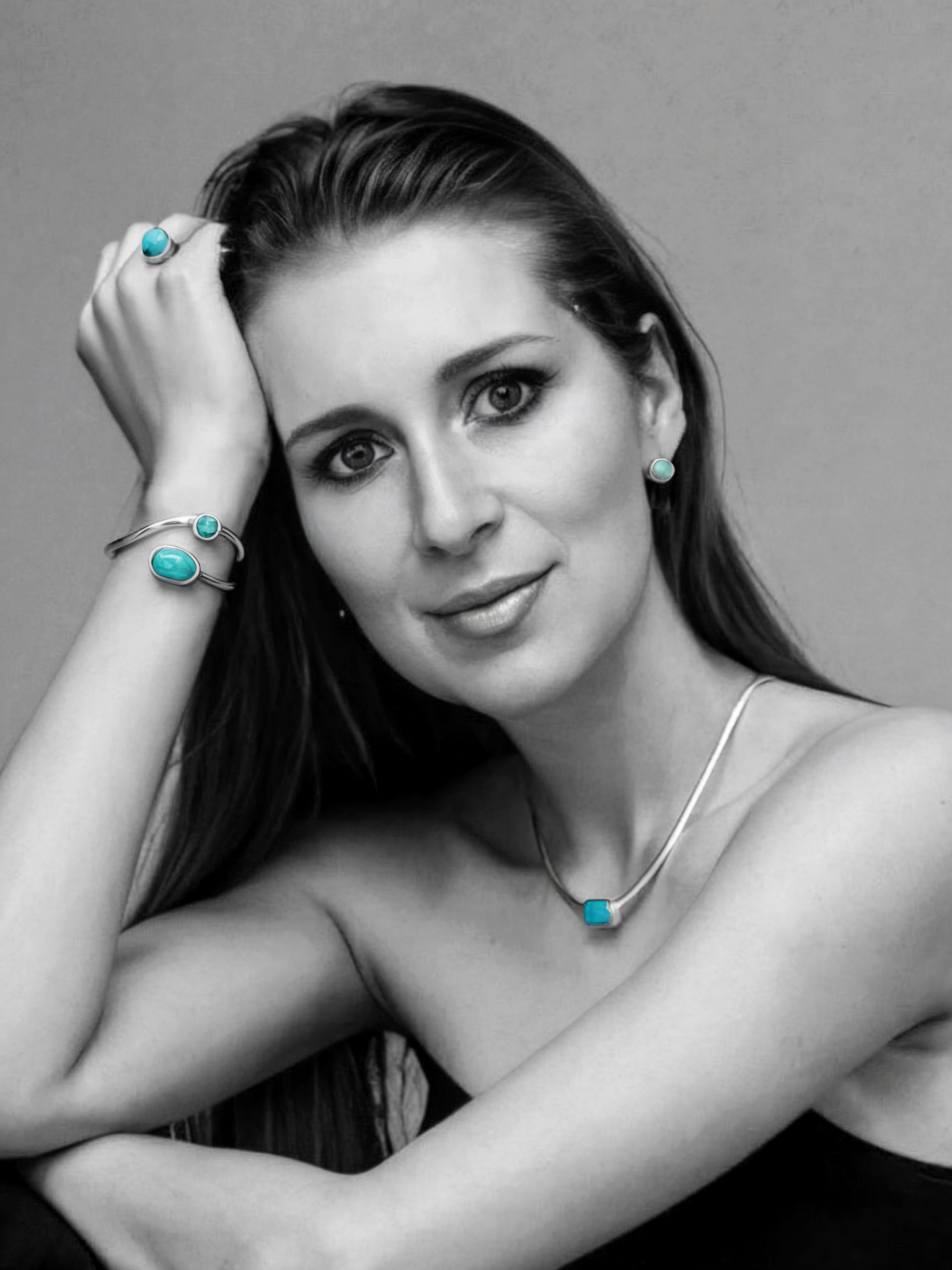
Kimberly Cordova
Kimberly Cordova is the founder and creative director of Wildflower, a handmade Turquoise and sterling silver jewelry brand based in Santa Fe. She built Wildflower around a simple belief: the best jewelry is the kind you actually reach for, not the kind you save for someday.
Kimberly designs pieces made by hand with a trusted circle of Santa Fe silversmiths, works alongside her husband Greg on in-house lapidary pieces cut from stones including the family's King's Manassa Mine in Colorado and White Buffalo Mine in Nevada, and sources finished work from artisan makers whose craft meets the same standard. The result is a collection with real range and no shortcuts on the stone, the silver, or the story behind either.
Her writing covers everything she has learned along the way: how Turquoise forms, how to tell natural from stabilized, what makes one mine different from another, how to read a bezel, and how to shop with confidence in a market that is not always straightforward. It is the kind of plainspoken information she wished someone had laid out for her when she was starting out.
Shop the Wildflower collection at wildflowerartisans.com, or find us on Etsy at wildflowersantafe.etsy.com if you prefer shopping there. Questions about a stone, a setting, or a specific piece are welcome any time.
0 comments