

A piece of turquoise is more than just a stone; it's a quiet conversation between the high desert soil and the hands of an artisan. We understand the hesitation that often accompanies the search for a genuine Santa Fe Southwestern Turquoise Jewelry Collection online, especially when the market is crowded with dyed howlite and mass-produced imitations. It's difficult to find pieces that feel as honest as the landscape they come from. Earthy textures, hand-wrought silver, and intentional design.
This guide explores the technical artistry, mine origins, and curation strategies behind an authentic Southwestern turquoise collection. At Wildflower Artisans, we've found that the most meaningful pieces are those where the stone's narrative is preserved through careful lapidary work. We'll share our perspective on the value of specific mines and the importance of a hand-cut cabochon. You'll learn how a bezel is more than a simple setting, acting instead as a frame for the matrix and character of the stone. We'll walk through the process of identifying small batch artisan work so you can find a reliable source that honors the spirit of the high desert.
Key Takeaways
- Learn how to distinguish genuine materials from imitations by focusing on sterling silver standards and specific North American mine sources.
- Discover how the origin of the stone dictates the color and matrix of your Santa Fe Southwestern Turquoise Jewelry Collection, from the rich greens of King's Manassa to sky-blue varieties.
- Understand the technical skill behind a hand-cut cabochon and how professional lapidary work increases the long-term value of your pieces.
- Get practical advice on building a personal collection by starting with everyday essentials and layering varied textures for a cohesive look.
- Explore the "Stone-First" philosophy used in our working studio to ensure every design highlights the natural character of the turquoise.
What Defines an Authentic Santa Fe Southwestern Turquoise Jewelry Collection?
An authentic Santa Fe Southwestern Turquoise Jewelry Collection is a reflection of the high desert itself, grounded in history and the tactile reality of the earth. We see it as a partnership between the mineral and the maker. This means moving away from the uniformity of mass production and embracing the slight irregularities that prove a human hand was involved. True Southwestern style is anchored by the presence of heavy silver work and stones sourced from specific North American mines, creating a weight and a presence that cheap imitations simply cannot replicate.
To maintain this integrity, a collection must strictly exclude mystery metals, plated silver, or materials like dyed howlite and magnesite. These are often used to mimic the look of more valuable stones, but they lack the density and the deep, storied matrix of the real thing. When you hold a piece of genuine turquoise jewelry, you're holding a piece of geologic time. It's a connection to the landscape that feels both ancient and immediate.
To see how these elements come together in the heart of New Mexico, watch this helpful video:
Identifying Genuine Materials in Southwestern Style
Authenticity starts with the chemical makeup of the piece. Sterling silver is a specific alloy containing 92.5 percent silver and 7.5 percent other metals, usually copper, to provide the strength needed for daily wear. Within these Native American jewelry traditions, the silver is often oxidized to highlight the intricate stamp work or textures. Natural turquoise refers specifically to stones that haven't been chemically altered or stabilized with resins. Every stone is held by a bezel, which is the thin silver rim that an artisan carefully folds over the edge of the stone to keep it secure without the need for glue.
The Role of Small Batch Artistry
Small batch production is the soul of our working studio. It ensures that every ring or pendant receives the individual attention it deserves, rather than being one of thousands on a factory line. This process allows the artisan to work with the unique shape of a hand-cut cabochon, preserving the natural matrix and color variations that make each piece one of a kind. You can learn more about what to look for in our turquoise buying guide. By focusing on intentionality, we create jewelry that feels personal and permanent.
Which Turquoise Mines Shape the Character of a Southwestern Collection?
The character of a Santa Fe Southwestern Turquoise Jewelry Collection is written in the geology of the mines themselves. Each location offers a distinct signature of color, hardness, and matrix pattern, which is the host rock that threads through the stone. It's the difference between the deep forest greens of one hillside and the clear sky blues of another. Understanding these origins helps you appreciate the cultural significance of turquoise and why certain stones are so highly prized by collectors. When we select stones for the Wildflower studio, we look for those that tell a clear story of their birthplace.
The Heritage of King's Manassa and White Buffalo
King's Manassa turquoise is particularly special to us because of its rich history and connection to the land. This family owned mine in Colorado produces a stone known for its vibrant greens and striking golden-brown matrix. Much of the Greg Cordova's lapidary work focuses on these specific stones, as he treats the raw material with a deep respect for its natural state. You can explore the stone origins for King’s Manassa to see how this material has shaped Southwestern style for generations. Alongside these greens, we often feature White Buffalo. While it's frequently grouped with turquoise in a Santa Fe Southwestern Turquoise Jewelry Collection, White Buffalo is technically a combination of magnesite and alunite. It's a rare, stark white stone with a sharp black chert matrix that provides a sophisticated contrast to traditional silver work.
Other Notable Mines in the Southwest
Collectors often look for the robin-egg blue of Sleeping Beauty turquoise, a mine in Globe, Arizona, that officially ceased turquoise mining operations in 2025 to focus on copper. This stone is famous for its solid color and lack of matrix, making it a finite and increasingly rare commodity in the 2026 market. In contrast, the Royston mine in Nevada is celebrated for its diversity. Royston stones often feature a beautiful spiderweb matrix of brown or gold, creating a complex visual texture. A spiderweb matrix is a fine, interconnected pattern of host rock that resembles a web. If you prefer more unconventional hues, Carico Lake turquoise offers a unique apple-green color that stands out in any display. Each mine tells its own story through the minerals it shares with the world.
Finding the right stone is a personal discovery. Whether you're drawn to the earthy depth of a Royston cabochon or the clean lines of a Kingman blue, the mine of origin is the heart of the piece. If you're ready to start your journey, you can explore our current artisan pieces to see these stones in their finished form.
How Do Lapidary Techniques and Sterling Silver Standards Influence Jewelry Value?
The value found in a Santa Fe Southwestern Turquoise Jewelry Collection is a balance between the rarity of the earth's minerals and the technical mastery of the artisan. While a stone's origin determines its base character, the lapidary artist's hands determine how that character is revealed. An artisan-made piece isn't just an accessory; it's a testament to the patient process of shaping raw stone into a finished cabochon. When assessing the quality of a collection, we look at several technical factors:
- The rarity and mine origin of the turquoise stone.
- The complexity and balance of the matrix patterns.
- The gauge and weight of the sterling silver foundation.
- The precision and smoothness of the hand-cut bezel.
A cabochon is a stone that has been shaped and polished into a smooth, rounded form rather than being cut with facets. In our studio, we look for hand-cut stones that honor the natural flow of the material. This often means leaving the matrix intact. The matrix consists of the host rock remaining within the turquoise, creating unique patterns that act as a geological fingerprint. Among collectors, a spiderweb matrix is highly sought after. Spiderweb matrix is a fine, interconnected web of host rock that spreads across the surface of the stone like a delicate lace, significantly increasing the desirability and value of the piece.
The Art of the Cabochon and Bezel
An artisan-cut cabochon follows the natural shape of the rough stone to minimize waste and preserve as much of the original material as possible. This approach requires a refined aesthetic eye to decide which part of the stone should be highlighted. Once the stone is shaped, it's set into a bezel. A bezel is the silver rim that holds a stone securely in place. A high-quality bezel should be smooth and tight against the stone without visible gaps or jagged edges. This level of precision is only achieved through hand-sawing and individual attention, ensuring the stone remains protected for years of wear.
Sterling Silver and Structural Integrity
The silver work in a Santa Fe Southwestern Turquoise Jewelry Collection provides the structural foundation for the stone. We use heavy gauge silver because it offers the weight and durability expected in high-quality artisan pieces. This thickness allows for deep, intentional stamping and hand-sawing that won't warp over time. To add depth, we often use oxidization to highlight stamped details. This process darkens the recessed areas of the silver, creating a vintage look that mimics the natural patina of age. To keep your pieces looking their best, you can visit our care and repair page for silver maintenance tips. Proper care ensures that the structural integrity of the silver remains as steadfast as the stone it carries.
How Do You Curate a Personal Santa Fe Southwestern Turquoise Jewelry Collection?
Curating a collection is a slow, intentional process that mirrors the way a landscape changes over time. You don't need to acquire every style at once. Instead, focus on pieces that resonate with your personal aesthetic and the rhythm of your daily life. A well-rounded Santa Fe Southwestern Turquoise Jewelry Collection should feel like a natural extension of yourself, balancing quiet, everyday items with bold, expressive statements. By choosing pieces with different mine origins and silver textures, you create a visual narrative that is uniquely yours.
Layering is a key strategy for building depth in your collection. You might pair a polished silver band with an oxidized cuff to highlight the contrast between light and shadow. Similarly, mixing the sky-blue tones of Kingman turquoise with the earthy greens of a Royston stone adds a sophisticated level of color theory to your daily wear. This approach moves away from the "matching set" mentality of mass-produced fashion and toward a more curated, artisanal look that values the individual character of each stone.
Building Your Ring and Earring Foundation
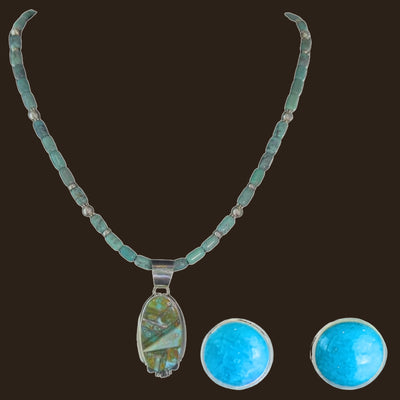
Rings are often the most intimate part of a collection because they remain in your line of sight throughout the day. They serve as small, tactile reminders of the earth's beauty. You might start with a simple sterling silver band or a single-stone setting that highlights a specific mine's character. You can explore our collection of rings to see how the varied matrix patterns of different mines influence the final design. For earrings, we recommend choosing pieces that are lightweight enough for comfort while still featuring high-quality, hand-cut stones. Turquoise stud earrings or small dangles are excellent starting points that transition easily from a morning conversation to an evening gathering.
Choosing Statement Cuffs and Bolo Ties
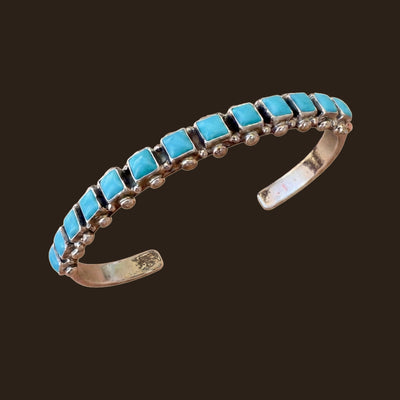
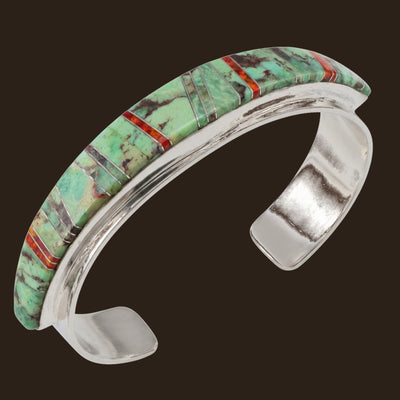
Once you have established a foundation, look for a centerpiece that anchors your collection. A statement piece is a significant, high-impact item that draws the eye and defines the overall aesthetic of your jewelry. A turquoise cuff bracelet is a traditional staple that carries a certain weight and presence on the wrist. It can be worn alone as a focal point or stacked with thinner silver bangles to create a layered, textured look. For those seeking something beyond the traditional necklace, bolo ties offer remarkable versatility. They work equally well for formal occasions or as a casual accent over a denim shirt, making them a unique choice for all genders. We often suggest looking at one-of-a-kind pieces when you are ready to find that singular, career-defining centerpiece for your Santa Fe Southwestern Turquoise Jewelry Collection.
Ready to find a piece that speaks to you? Shop our artisan-made jewelry to start your curation today.

How Does the Wildflower Studio Create its Southwestern Jewelry?
Wildflower operates as a working studio where a Stone-First philosophy guides every design, ensuring that the natural character of the turquoise dictates the final form of the silver work. This approach prioritizes the technical artistry of the lapidary over mass-produced uniformity. By starting with the stone, we ensure that every Santa Fe Southwestern Turquoise Jewelry Collection we produce remains an authentic representation of the materials we respect.
Our process is a collaboration between the raw mineral and the maker. We don't use pre-cast settings or standardized stones. Instead, we work with the unique geometry of each hand-cut cabochon. This ensures that the silver work, from the bezel to the stamped details on the band, is built specifically for the stone it holds. It is a slow, deliberate method that values the narrative of the material as much as the skill of the artist.
From the Mine to the Studio
Greg Cordova’s expertise in both mining and cutting is the foundation of our work. He spends his time selecting rough material from the King’s Manassa and White Buffalo mines, focusing on the specific matrix patterns that collectors value. Greg Cordova’s lapidary work transforms this raw mine material into the polished stones that anchor our designs. You can learn more about these specific locations on our about our mines page. Because Greg is involved from the earliest stages of the process, he can handle the turquoise with a level of respect that a commercial cutter might overlook. He understands the hardness and the history of the vein, which allows him to produce a cabochon that retains its natural character.
Guaranteed Authenticity and Direct Connection
While Greg focuses on the technical cutting, Kimberly curates the Santa Fe Southwestern Turquoise Jewelry Collection to ensure every piece meets our studio’s standards for authenticity and wearable design. This studio-to-customer model is an intentional choice. It eliminates the middleman and ensures that we have full control over the quality of the sterling silver and the stones we use. We provide a direct line of communication between the maker and the collector, which is often missing in larger retail environments. We encourage you to explore our new arrivals for the latest studio work. This direct connection ensures that every piece is guaranteed to be made with genuine materials and artisan techniques, providing you with a reliable source for authentic Southwestern style.
Preserving the Narrative of the High Desert
The journey of curating a Santa Fe Southwestern Turquoise Jewelry Collection is a path of discovery that leads from the raw earth to the finished bezel. We've looked at how the technical mastery of the lapidary reveals the hidden matrix within a stone and how sterling silver standards provide the necessary weight for a lasting piece. By understanding the specific heritage of mines like King's Manassa, you're able to build a collection that's both personally meaningful and technically sound. It's about finding those pieces that mirror the quiet, enduring beauty of the landscape.
Our work is artist-made in our Santa Fe studio and features stones directly sourced from the King's Manassa and White Buffalo mines. We provide guaranteed genuine sterling silver and natural stones in every design we offer. Explore the latest handcrafted pieces in the Wildflower shop or find our curated selection at wildflowersantafe.etsy.com for additional buyer protections. We're here to help you find a piece that truly belongs in your world.
Frequently Asked Questions
Is turquoise jewelry from Santa Fe always authentic?
No, the location of purchase doesn't guarantee that a piece is genuine. Many tourist shops sell mass-produced items made with block turquoise, which is a synthetic material created from plastic and stone dust. When you're building a Santa Fe Southwestern Turquoise Jewelry Collection, you should look for transparency regarding the specific mine origin and the artisan's hallmark. Authenticity is found in the studio's standards rather than a city's name.
How can I tell the difference between real turquoise and dyed howlite?
You can often identify dyed howlite by looking for unnatural color concentrations in the stone's cracks or performing a simple scratch test. Howlite is a naturally white, porous stone that absorbs blue dye easily, but the color rarely penetrates the entire stone. If the color looks too uniform or gathers heavily in the matrix lines, it's likely an imitation. Genuine turquoise has a consistent density and a color profile that is part of the stone's natural structure.
What is the most valuable type of turquoise in a Southwestern collection?
Value is driven by rarity and mine status, with stones from closed mines like Bisbee or Sleeping Beauty often commanding the highest prices. As of 2026, Sleeping Beauty turquoise has become significantly more valuable because the mine ceased turquoise operations to focus exclusively on copper extraction. High-grade natural stones with a rare spiderweb matrix are also highly prized. The value of your Santa Fe Southwestern Turquoise Jewelry Collection increases when you own pieces from these finite, non-producing sources.
Does sterling silver turquoise jewelry tarnish over time?
Yes, sterling silver naturally reacts with sulfur in the air to create a dark layer called tarnish. This is a normal process for 92.5 percent pure silver and doesn't indicate a lack of quality. You can manage tarnish by wearing your jewelry often, as the natural oils in your skin help prevent oxidation. For deeper cleaning, a soft polishing cloth is usually enough to restore the shine without affecting the stone's surface.
Can men wear Southwestern turquoise jewelry?
Southwestern style has a long history of being worn by all genders and is valued for its rugged, earthy aesthetic. Men often choose heavier pieces like wide cuff bracelets, large rings, or bolo ties that feature substantial silver work. The weight of the sterling silver and the natural character of the stones make it a versatile choice for anyone. It's about finding a piece that fits your personal scale and style.
What does the matrix in a turquoise stone represent?
The matrix represents the host rock where the turquoise originally formed over millions of years. It's essentially a geological footprint of the mine, appearing as patterns of brown, black, or gold host material. These patterns are part of the stone's narrative and prove that it's a product of nature rather than a factory-made imitation. Every matrix is unique, ensuring that no two pieces are ever exactly alike.
How should I store my artisan-made turquoise jewelry?
Store your jewelry in a cool, dry place away from direct sunlight and household chemicals. Turquoise is a porous stone that can absorb oils, perfumes, or hairspray, which might change its color over time. We recommend keeping each piece in a separate soft pouch to prevent the silver from scratching the stones. Avoid ultrasonic cleaners, as the high-frequency vibrations can damage the internal structure of the turquoise.
Is White Buffalo turquoise actually a type of turquoise?
No, White Buffalo is technically a combination of magnesite and alunite rather than turquoise. It's often grouped with turquoise because it is found in the same mining areas and worked by the same silversmiths using traditional techniques. It features a stark white body with a sharp black chert matrix. While it lacks the copper that gives turquoise its blue color, it remains a highly collectible stone in any Southwestern style display.

Article by
Kimberly Cordova
Kimberly Cordova is the founder and creative director of Wildflower Artisans, a handmade Turquoise and sterling silver jewelry brand rooted in Santa Fe. She built Wildflower around a simple belief: the best jewelry is the kind you actually reach for, not the kind you save for someday.
Kimberly designs pieces made by hand with a trusted circle of Santa Fe silversmiths, works alongside her husband Greg on in-house pieces with stones he cuts, both from the family's King's Manassa Mine in Colorado and White Buffalo Mine in Nevada and from rough he sources from other mines, and curates finished work from artisan makers whose craft meets the same standard. Turquoise leads the collection, joined by White Buffalo, Wild Horse, Lapis Lazuli, Spiny Oyster, and other genuine semi-precious stones. The result is a collection with real range and no shortcuts on the stone, the silver, or the story behind either.
Her writing covers everything she has learned along the way: how Turquoise forms, how to tell natural from stabilized, what makes one mine different from another, how to read a bezel, and how to shop with confidence in a market that is not always straightforward. It is the kind of plainspoken information she wished someone had laid out for her when she was starting out.
Browse the collection at wildflowerartisans.com. Questions about a stone, a setting, or a specific piece are welcome any time.

0 comments