

Estimates suggest that between 50% and 80% of jewelry sold as authentic Southwestern work in the United States is actually counterfeit. It's a frustrating reality for those who want to support genuine artistry but feel overwhelmed by the subtle differences between regional traditions. You deserve to know that the weight of the silver and the character of the stone in your hand are the result of intentional, small batch craftsmanship rather than a factory mold. Authenticity is felt.
This Guide to Different Native American Jewelry Styles by Tribe provides the clarity you need to distinguish between mass-produced pieces and true artisan-made silverwork. Details hold stories. We'll walk through the technical signatures of major Southwestern style traditions, explaining the difference between techniques like overlay and petit point while showing you how to appreciate the unique matrix of a genuine cabochon. By understanding these histories, you can move past the fear of buying fakes and begin building a collection of genuine turquoise pieces that carry a sense of place and purpose.
Key Takeaways
- Use this Guide to Different Native American Jewelry Styles by Tribe to recognize the technical signatures of regional Southwestern traditions.
- Identify the hallmarks of handcrafted silverwork, including the use of heavy gauges and the rhythmic patterns of steel hand-stamping.
- Learn to distinguish between different types of intricate stonework like mosaic inlay and petit point settings.
- Gain confidence in spotting authentic silver overlay by understanding how two layers of sterling silver are soldered together for a dimensional effect.
- Discover how a stone-first approach highlights the natural matrix and character of hand-cut cabochons from specific mines.
What defines the various Southwestern jewelry styles?
Southwestern jewelry is a living tradition that blends regional materials with distinct technical signatures. Most styles are categorized by three primary methods: heavy silverwork, intricate stonework, and textured overlay. While the history of Native American jewelry is vast, the modern appreciation for these pieces focuses on the tactile connection between the maker and the medium. Authenticity is found in the subtle details of a hand-wrapped bezel, the weight of a thick sterling silver cuff, and the unique character of natural stones. Each style tells a story of the high desert landscape and the specific materials available to the artisan at the moment of creation.
The role of materials in regional design
Silver was introduced to the Southwest in the mid-nineteenth century, fundamentally changing how artisans interacted with the earth's offerings. Before the arrival of silverwork, jewelry was primarily composed of shell, bone, and stone. Today, the choice of turquoise from specific locations like the Kingman or Royston mines often dictates the entire design of a piece. At Wildflower Artisans, we practice a stone-first philosophy. This means the artisan prioritizes the stone above all else, building the silver frame to accommodate the unique, asymmetrical shape of the cabochon. A cabochon is a stone that has been shaped and polished rather than faceted.
Distinguishing between handmade and mass-produced
Small batch jewelry carries a soul that factory-made pieces cannot replicate. When you hold an artisan-made piece, you can feel the deliberate nature of the work. Mass-produced items often use thin, hollow silver or "block" turquoise, which is essentially plastic and stone dust. Genuine Southwestern style jewelry features hand-cut stones and individual stamping patterns that show slight, beautiful variations. Look for a natural matrix or "spiderweb" patterns in the stone. These intricate lines of host rock are a signature of quality and origin. Authentic sterling silver will also develop a hand-finished patina over time, a soft glow that reflects the life of the wearer. This Guide to Different Native American Jewelry Styles by Tribe helps you navigate these nuances, ensuring your collection is built on genuine artistry rather than a fleeting trend. We believe that understanding the process is the first step toward a lifelong appreciation for these wearable treasures.
How does heavy silverwork characterize the Diné style?
The Diné style is defined by its focus on the silver itself, often featuring heavy gauges and bold hand-stamping. Artisans use steel stamps to create intricate patterns directly into the sterling silver, a technique passed down through generations to tell stories of the landscape and the elements.
Imagine the rhythmic sound of a hammer striking a steel stamp in a quiet studio. This process creates the deep, deliberate textures found on a thick sterling silver cuff or a substantial ring. Unlike the delicate filigree found in other regions, this style celebrates the physical heft of the metal. Sandcasting is another traditional method used here. It involves pouring molten silver into a mold carved from tufa stone, a porous volcanic rock. This results in a unique, slightly grainy texture on the finished piece that feels grounded and organic. This Guide to Different Native American Jewelry Styles by Tribe highlights how these pieces often feature a single, large turquoise cabochon as a centerpiece. A thick, sturdy bezel holds the stone in place, ensuring the hand-cut turquoise remains secure through decades of wear.
Because of the value and cultural significance of these pieces, the Indian Arts and Crafts Act provides essential protections for both the maker and the collector. It requires transparency about the artisan's background, ensuring that the story behind the silver is as genuine as the metal itself. When you hold a piece with this kind of weight, you can feel the history and the intentionality of the small batch process.
The significance of the Naja and Squash Blossom
The naja is a crescent-shaped pendant that often serves as the focal point of a squash blossom necklace. These pieces are characterized by their substantial weight and the use of hand-rolled silver beads, often called Navajo pearls. While older versions were sometimes quite large and heavy, contemporary designs focus on everyday wearability while maintaining traditional proportions. You can explore these balanced, artisan-made pieces in our curated jewelry shop.
Stamping and Repoussé techniques
Repoussé involves hammering the silver from the back to create a raised, dimensional design on the front. This adds a sculptural quality to the metal that catches the light beautifully. Hand-stamping adds texture and narrative to cuffs and rings, often representing elements of the natural world like rain, clouds, or mountains. The precision of the stamping is a hallmark of a highly skilled artisan. It requires a steady hand and a deep understanding of how sterling silver moves under pressure. Each mark is a permanent record of the maker's breath and focus.
What makes the stonework of the Zuni style so distinct?
The Zuni style is celebrated for its meticulous stonework, where the sterling silver serves primarily as a quiet frame for the vibrant gems. Unlike the heavy silver focus of the Diné traditions we explored previously, these pieces are defined by the precision of the stone cut and the harmony of the color palette. This Guide to Different Native American Jewelry Styles by Tribe highlights how artisans use tiny, hand-shaped stones to create patterns that resemble lace or intricate mosaics. It's a process that requires immense patience and a refined eye for symmetry, often resulting in pieces that feel delicate despite their complex construction.
In this tradition, the lapidary work is the star. Lapidary refers to the art of cutting, shaping, and polishing stones. While other styles might use a single large cabochon, Zuni-style jewelry often incorporates dozens of small, matched stones. This requires a high level of skill to ensure each stone fits its designated space perfectly. The overall effect is one of geometric precision and colorful storytelling through the natural world.
Understanding Inlay and Channel work
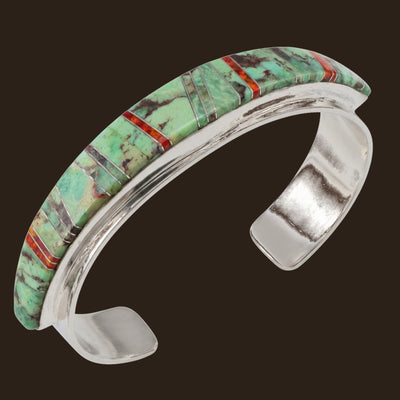
Inlay is a technique where stones are cut to fit perfectly together or within silver channels. Stone-to-stone inlay features gems cut so precisely they sit flush against each other without any silver dividers. It creates a seamless surface that feels like a single, smooth element under the fingertip. Channel inlay uses thin strips of silver to separate the various stones, creating a more structured, geometric mosaic. You'll often see a vibrant mix of turquoise, spiny oyster shell, and lapis lazuli in these designs. This level of Southwest Silverwork demonstrates a master-level command of both lapidary and metalwork. If you're looking to understand the value of these materials, our turquoise buying guide offers deeper insight into stone quality and identification.
The art of Clusterwork
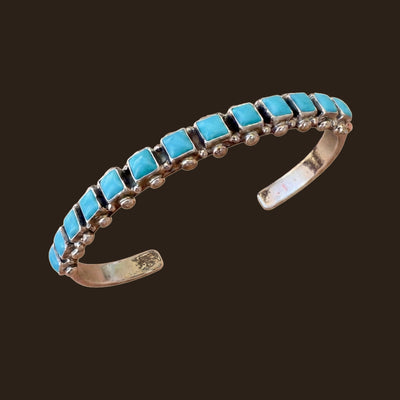
Clusterwork involves grouping dozens of small, similarly shaped stones around a central cabochon. This technique is often seen in large statement rings and cuffs, creating a flower or starburst effect that captures the light. Needlepoint and bird’s eye patterns are specific subsets of this style. Needlepoint uses stones that are pointed on both ends, while bird’s eye stones are small and round. Each tiny stone is held by a fine serrated bezel, which is a metal rim with small teeth that grips the stone securely while allowing its full color to show. These pieces are often surprisingly lightweight despite their visual complexity. The result is a refined aesthetic that remains deeply rooted in the artisanal traditions of the high desert.
How is the silver overlay technique used in Southwestern design?
A jeweler’s saw is a delicate tool, nearly as thin as a strand of hair, yet it is the primary instrument used in the silver overlay technique. This method creates depth through shadow rather than the height of a stone or the depth of a stamp. Silver overlay is a technique where two layers of sterling silver are used to create a dimensional, etched look. The top layer has a design cut out of it, much like a stencil, and is then soldered to a solid bottom layer with a torch. To create the dramatic contrast this style is known for, the recessed areas are typically darkened with oxidation. This chemical process provides a sharp, dark background against the polished top layer. This Guide to Different Native American Jewelry Styles by Tribe emphasizes that while other traditions may prioritize the weight of the metal or the color of the stone, this style focuses on the graphic power of the silver itself.
The soldering process is particularly delicate. The artisan must heat the entire piece evenly so the silver solder flows between the layers without melting the intricate cut-outs. If the heat is uneven, the layers may warp or the bond may fail over time. This is why small batch, handmade pieces carry a value far beyond mass-produced imitations. You can feel the integrity of the bond and the intentionality of the design when you hold the piece in your hand. It is a quiet celebration of precision and patience.
Matte finishes and symbolic textures
Artisans often use a matting tool to create a textured, non-reflective background in the recessed areas. This hand-applied texture adds a fine, sand-like grain that traps shadow and makes the polished top layer appear even brighter. The designs often mirror the geometric patterns found in regional pottery and basket weaving, such as rain clouds, lightning, or migration symbols. Because these pieces are generally sleek and lack high-profile settings, they are excellent choices for everyday wear. They offer a refined, modern aesthetic that feels grounded in history. You can explore these clean, graphic designs among our handcrafted Southwestern jewelry.
The precision of the saw-cut
Every design is hand-cut using a tiny jeweler’s saw. It is a slow, meditative process that requires a steady hand and perfect accuracy. A high-quality overlay piece will have smooth edges and a seamless bond between the two silver layers. You should not be able to see where one sheet ends and the other begins along the edges. This technique highlights the artisan’s ability to tell a story through the interplay of shadow and light. It is a testament to the patience required in an artisan studio, where the focus remains on the quality of the finish rather than the speed of the output. Each cut is a deliberate choice made by the maker to honor the silver.

Why does a stone-first philosophy matter for authentic jewelry?
A stone-first philosophy means the design process begins with the unique character of the turquoise cabochon. Rather than forcing a stone into a pre-made factory setting, the silver is built around the organic curves and colors of the earth's bounty. While this Guide to Different Native American Jewelry Styles by Tribe has explored technical signatures like heavy stamping or intricate inlay, the soul of every piece remains the stone. By prioritizing the stone, the jewelry becomes a one-of-a-kind piece of wearable art that cannot be replicated by a machine. Details matter. The stone leads the way.
In our studio, we believe that the lapidary work is just as important as the silversmithing. Lapidary is the art of cutting and polishing stones, a process that requires a deep understanding of mineralogy and aesthetics. Greg Cordova’s lapidary work focuses on highlighting the natural matrix and color of stones, often revealing the hidden beauty within a rough piece of turquoise. This approach ensures that the final piece is a celebration of natural, fleeting beauty. It's a meditative process. The artisan listens to the stone before the first cut is made.
From the mine to the studio
Owning the mines, such as the historic King’s Manassa, allows for total transparency in the quality and origin of the turquoise. When we know exactly where a stone came from, we can speak to its story with confidence. Greg Cordova is a master at hand-cutting turquoise stones to reveal their best spiderweb or matrix patterns. These patterns are the host rock that threads through the turquoise, creating a unique visual narrative for every cabochon. You can learn more about these specific locations and their unique geological signatures on our stone origins page. This direct connection from the earth to the bench is rare in an industry often filled with middle-men and mystery materials.
Curating for the modern collector
Wildflower focuses on pieces that balance traditional Southwestern techniques with a modern, intentional aesthetic. Kimberly’s curation ensures that every piece in the collection meets a high standard of authenticity and wearability. We understand that the modern collector wants jewelry that feels grounded in history but fits a contemporary lifestyle. Every item is guaranteed to be genuine, avoiding the fake stones and mystery metals common in mass retail. By focusing on small batch production, we maintain a level of quality that honors the materials and the wearer alike. This commitment to authenticity means you can build a collection of genuine turquoise pieces with the confidence that each one is a vessel for emotion and a celebration of the high desert landscape. We are honored to be part of your journey into the world of Southwestern style.
Building Your Authentic Collection
Finding a piece that resonates with you is about more than just aesthetics. It's about recognizing the intentionality behind every hand-stamped pattern and every meticulously cut stone. This Guide to Different Native American Jewelry Styles by Tribe has shown that authenticity is found in the physical weight of the silver and the unique, unrepeatable matrix of the stone. Whether you're drawn to heavy silverwork or the delicate precision of an inlay, the value lies in the human connection to the material. These pieces are not just accessories; they are vessels for the stories of the high desert and the rhythms of the studio.
Explore our latest collection of artisan-made sterling and turquoise to find a piece that speaks to you, or visit our Etsy shop for a curated selection of Southwestern style. Our work features guaranteed genuine sterling silver and stones like authentic King’s Manassa or White Buffalo turquoise, many of which are hand-cut by lapidary artist Greg Cordova. We hope these treasures bring a sense of grounded beauty to your everyday life and encourage you to appreciate the fine details of the handmade world.
Frequently Asked Questions
How can I tell if my turquoise jewelry is authentic?
You can often identify authentic turquoise by its temperature and the presence of a natural matrix. Real stones stay cool to the touch, while plastic imitations warm up quickly. Look for a hallmark on the silver and avoid block turquoise, which is just dyed stone dust and resin. If a piece lacks a signature or feels suspiciously light, it might be a mass-produced imitation rather than an artisan-made treasure.
What is the difference between inlay and overlay in silverwork?
Inlay involves fitting hand-cut stones into silver channels or directly against each other, while overlay uses two sheets of sterling silver. In an overlay piece, the artisan saws a design into the top layer and solders it to a solid base. The recessed areas are then darkened to create contrast. Inlay highlights the beauty of the gems, whereas overlay showcases the precision of the metalwork.
Why is some Southwestern jewelry much heavier than others?
The heft of a piece is usually determined by the gauge of sterling silver used in its construction. Regional styles like the Diné tradition favor thick, heavy silver that can withstand deep hand-stamping and daily wear. Other styles prioritize intricate stonework over metal volume, resulting in a lighter feel. This Guide to Different Native American Jewelry Styles by Tribe helps you appreciate why different regions choose specific weights.
Does all turquoise jewelry come from a specific tribe?
Southwestern jewelry isn't a monolith; it's a collection of distinct regional traditions. While certain techniques like silver overlay are hallmarks of specific areas, many modern creators draw inspiration from various methods. This Guide to Different Native American Jewelry Styles by Tribe serves as a roadmap to help you recognize the technical signatures that define these unique and diverse Southwestern style traditions.
What are Navajo pearls and how are they made?
These are hand-rolled sterling silver beads created by soldering two hollow domes together. After the seam is filed smooth, the beads are often oxidized and brushed to create a soft, aged patina. This process is time-consuming and requires a steady hand. The result is a substantial bead that feels grounded and carries a rhythmic, textured appearance when strung into a necklace.
How should I care for my handmade sterling silver jewelry?
Use a soft polishing cloth to maintain the glow of your silver and avoid getting your turquoise wet. Turquoise is a porous stone that can absorb oils, soaps, and perfumes, which might lead to a permanent change in color. Don't use ultrasonic cleaners or harsh chemicals. Storing your jewelry in a dry, cool place helps protect the original finish of the stones and the silver.
What does the term "matrix" mean when describing turquoise?
The matrix is the host rock that threads through the turquoise, creating dark veins or spiderweb patterns. These lines are composed of minerals like iron or manganese and are a signature of the stone's origin. Many collectors prefer a heavy matrix because it provides visual evidence that the stone is natural. You can see how Greg Cordova cuts stones to highlight these unique patterns in his specific lapidary work.
Is White Buffalo actually a type of turquoise?
White Buffalo isn't technically turquoise; it's a distinct stone composed of calcite and aragonite. It's found in specific regions in Nevada and is prized for its brilliant white color and black chert matrix. Because it's rare and beautiful, it has become a staple in Southwestern style jewelry. You can learn more about White Buffalo mine ownership and stone quality through Greg Cordova's specialized lapidary resources.

Article by
Kimberly Cordova
Kimberly Cordova is the founder and creative director of Wildflower Artisans, a handmade Turquoise and sterling silver jewelry brand rooted in Santa Fe. She built Wildflower around a simple belief: the best jewelry is the kind you actually reach for, not the kind you save for someday.
Kimberly designs pieces made by hand with a trusted circle of Santa Fe silversmiths, works alongside her husband Greg on in-house pieces with stones he cuts, both from the family's King's Manassa Mine in Colorado and White Buffalo Mine in Nevada and from rough he sources from other mines, and curates finished work from artisan makers whose craft meets the same standard. Turquoise leads the collection, joined by White Buffalo, Wild Horse, Lapis Lazuli, Spiny Oyster, and other genuine semi-precious stones. The result is a collection with real range and no shortcuts on the stone, the silver, or the story behind either.
Her writing covers everything she has learned along the way: how Turquoise forms, how to tell natural from stabilized, what makes one mine different from another, how to read a bezel, and how to shop with confidence in a market that is not always straightforward. It is the kind of plainspoken information she wished someone had laid out for her when she was starting out.
Browse the collection at wildflowerartisans.com. Questions about a stone, a setting, or a specific piece are welcome any time.

0 comments