

A heavy sterling silver ring feels different on your hand when you know the stone was cut from a specific vein of earth in the high desert. Most pieces found in large retail stores are mass-produced imports that use dyed howlite or plastic to mimic the look of the real thing. Finding genuine mens turquoise and silver jewelry requires a discerning eye for the weight of the metal and the unique matrix of the stone.
You likely want jewelry that feels grounded and masculine, acting as a quiet reflection of your character rather than a fragile accessory. We will show you how to identify handcrafted silverwork and tell the difference between natural stones and stabilized versions so you can find a piece with a real story. This guide explores the differences between various mines, the importance of durable construction, and how to spot the markers of true artisan quality.
Key Takeaways
- Learn how to evaluate quality in mens turquoise and silver jewelry by checking for heavy gauge sterling silver and a secure bezel setting.
- Explore how different turquoise mines influence the color and matrix of a stone, helping you choose a piece that fits a rugged aesthetic.
- Identify authentic Southwestern style pieces by looking for the sterling hallmark and understanding the physical characteristics of the stone.
- Gain confidence in styling turquoise rings or bolo ties by pairing a single statement piece with neutral, durable clothing.
- Discover the value of small batch jewelry where every stone is chosen for its character and its connection to the high desert.
What defines quality in men’s turquoise and silver jewelry?
High quality mens turquoise and silver jewelry is defined by the use of heavy gauge sterling silver and genuine stones that possess a distinct matrix. It's the weight of the metal and the precision of the hand-cut bezel that separates an artisan piece from a mass-produced accessory.
When you hold a piece of jewelry, you should feel the density of the silver. Many commercial items use thin, hollow constructions or mystery metals with plated finishes that eventually flake away to reveal copper or brass underneath. Authentic Southwestern style jewelry relies on solid silver to provide a masculine, grounded feel that lasts for decades. This level of craftsmanship is deeply rooted in the history of Southwestern Native American jewelry, where the focus has always been on the raw beauty of the earth's materials. Small batch production ensures that an artisan has personally inspected every bezel and polished every edge.
The difference between natural and stabilized stones
The word natural is reserved strictly for turquoise that remains in the exact state it was found in the ground. Untreated stones are rare and often more valuable because they're hard enough to be cut and polished without help. However, much of the turquoise used today is stabilized. This is a process where the stone is infused with a clear resin to make it more durable and keep the color from changing over time due to skin oils. For a deeper look at what to look for, our turquoise buying guide covers these nuances in detail.
Understanding the weight of sterling silver
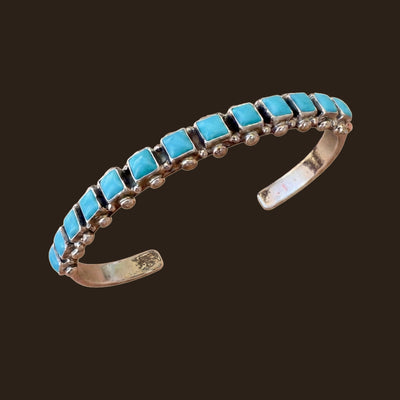
Sterling silver is a specific alloy made of 92.5 percent silver and 7.5 percent other metals, usually copper, to provide the strength needed for jewelry. For men's pieces, the gauge, or thickness, of the silver is vital. A thin ring can warp or crack under the pressure of daily work. We look for silver that feels substantial. A well-made ring or cuff should have a thick back plate and a sturdy bezel, which is the silver rim that holds the stone in place. Avoid pieces that feel light like a coin. Quality is something you can feel.
Which turquoise mines produce the best stones for men’s pieces?
The origin of a turquoise stone isn't just a label; it's the narrative of the piece. For mens turquoise and silver jewelry, the mine of origin dictates the visual weight and character of the accessory. While some collectors chase the clear, sky-blue look of the now-closed Sleeping Beauty mine, many men prefer stones that show the host rock, or matrix. This matrix provides a rugged, organic texture that feels more at home with leather, denim, and daily wear.
Different mines offer distinct visual signatures that make each piece a one-of-a-kind discovery. Choosing mens turquoise and silver jewelry based on its mine of origin ensures you're owning a piece with a real story rather than a generic stone. This connection to the land is a cornerstone of the history of Southwestern silverwork, where the materials were sourced from the very landscape the artists called home. Understanding these origins is a key part of becoming a serious collector and recognizing true quality.
King’s Manassa and the appeal of green turquoise
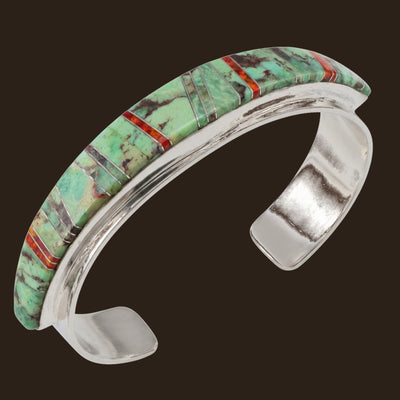
King’s Manassa turquoise is celebrated for its rich green hues and golden-to-brown matrix patterns. This stone is a centerpiece of our studio work, as we operate a claim and conduct small-scale mining at the King's Manassa mine in Colorado. These stones offer an earthy, grounded appearance that many find more subtle than traditional blue. It’s a favorite for those seeking a Southwestern aesthetic that feels connected to the high desert floor. You can learn more about this specific location on our King’s Manassa stone origins page.
Royston and the variety of the matrix
The Royston mine in Nevada is another legendary source, particularly for pieces that require a bit more visual grit. Royston stones are famous for their color shifts, often showing deep emerald greens and bright blues within a single cabochon. A cabochon is a stone that has been shaped and polished rather than faceted. These stones usually feature a heavy brown matrix that provides a rugged look, making them ideal for wide sterling silver cuffs or heavy rings. Seeing these color transitions in our Royston collection helps explain why this mine remains so popular with collectors.
If you're looking for a piece that tells a specific story, you can browse our current studio work to see these mine-specific traits in person. We focus on stones that represent the best of what these historic locations have to offer.
How do you identify authentic Southwestern artisan jewelry?
Identifying authentic jewelry requires looking for specific hallmarks, hand-wrought construction details, and the unique, irregular matrix found in genuine stones. True artisan pieces show the touch of the maker through hand-cut cabochons and intentional silverwork rather than the sterile perfection of factory molds.
A small stamp on the back of a pendant or inside a ring band often tells the first part of the story. Genuine mens turquoise and silver jewelry should carry a "925" or "Sterling" hallmark to verify its silver purity. While a hallmark alone doesn't guarantee a piece wasn't mass-produced, its absence is a significant red flag. We also suggest looking for an artist's signature or studio mark, which signifies accountability and a connection to a specific working studio. Authentic Southwestern style pieces aren't perfectly symmetrical like something popped out of a plastic tray. You might see tiny tool marks or slight variations in the stamping. These aren't flaws. They're the fingerprints of the person who sat at the bench to create it. Avoid pieces where the silver looks thin or the edges feel sharp and unfinished.
Examining the bezel and silver construction
A bezel is the silver band that wraps around the stone to hold it securely in place. In a studio setting, an artisan carefully shapes this band to match the unique curves of a hand-cut stone. Hand-wrought bezels often show slight, intentional variations that signify human hands were involved. If a stone looks like it was glued into a pre-cast, "one size fits all" setting, it likely lacks the durability and character of a true artisan piece. We prioritize construction that protects the stone for a lifetime of daily wear, ensuring the bezel is folded tightly over the edge of the cabochon.
Recognizing genuine stone characteristics
The matrix is the host rock that appears as veins or webbing within the turquoise. In natural stones, this pattern is irregular and unpredictable. If you see multiple pieces of jewelry with identical webbing patterns, you're likely looking at block turquoise or dyed plastic. Spiderweb turquoise features a fine, interlocking matrix that is highly prized by collectors for its complexity. Genuine stones also have a specific physical presence. They feel cool to the touch and carry a weight that plastic imitations simply can't replicate. Our care and repair guide explains how to maintain these natural materials so they stay beautiful for years. Understanding these details helps you avoid dyed howlite or plastic fakes that often flood the market.
How should men style turquoise rings and bolo ties?
Styling mens turquoise and silver jewelry is a matter of finding harmony between the bold character of the stone and the textures of your everyday wardrobe. The goal isn't to overwhelm your look but to let a single piece act as a quiet anchor. Turquoise and silver pair naturally with durable fabrics like heavy denim, worn leather, and earth-toned wools. If you're wearing a vibrant stone, keep your shirt neutral (think charcoal, tan, or deep navy). This allows the matrix and color of the stone to stand out without competing for attention. Usually, a single statement piece is more effective than wearing multiple large items at once. It's about letting the jewelry serve as a subtle reflection of your appreciation for the craft and the land it came from.
Wearing mens turquoise and silver jewelry shouldn't feel like you're putting on a costume. It's about finding pieces that sit comfortably alongside the things you already own. We often suggest starting with a single piece, like a ring or a cuff, and seeing how it integrates with your daily routine. The weight of the sterling silver should feel substantial but not restrictive. You'll find that as the silver develops a slight patina over time, it only looks better against rugged fabrics like canvas or aged leather.
Incorporating a bolo tie into a modern wardrobe
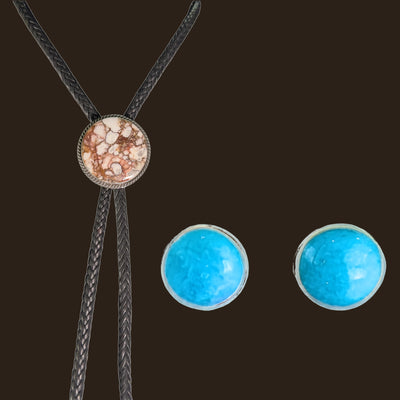
The bolo tie is a classic Southwestern accessory consisting of a braided cord, a decorative slide, and weighted metal tips. It doesn't have to be reserved for formal events. You can wear it with a crisp button-down for a polished, professional look, or you can loosen the slide for a more casual, relaxed appearance with an open collar. It's a versatile alternative to a traditional necktie that carries a lot more personality. The weighted silver tips are a small but vital detail, providing balance to the cord and preventing fraying over time. Our bolo tie collection offers various slide designs that highlight different turquoise mines and silver textures, allowing you to find a piece that matches your personal style.
Selecting a statement turquoise ring
A statement ring should be sized correctly so it doesn't rotate on your finger or feel top-heavy during daily wear. When you're choosing a piece, consider the stone shape. Oval, rectangle, and freeform cabochons each offer a different visual weight. A longer, rectangular stone can elongate the look of your hand, while a round or freeform stone often feels more organic and rugged. We often recommend a lower-profile bezel for men who work with their hands, as it's less likely to catch on surfaces. It's important to choose a shape that complements the proportions of your hand and feels balanced. You can browse our men’s rings collection to find a stone and setting that feels right for your lifestyle.
If you're ready to find a piece that fits your specific style, shop our current artisan collection to see what we've been working on in the studio.

Why choose small batch jewelry from the Wildflower studio?
Our philosophy prioritizes the stone first. This means the natural form of the turquoise dictates the final design of the silverwork. We don't use settings that are made to fit thousands of identical stones. If a cabochon has a specific curve or a rugged edge, the silver is hand-wrought around it to provide a secure and aesthetically pleasing home. This approach respects the millions of years it took for the stone to form in the high desert. It's a slower way of working, but it's the only way to ensure the integrity of the materials.
The lapidary expertise of Greg Cordova
Greg Cordova provides the technical foundation for our work through his expert lapidary skills. Lapidary is the art of cutting, polishing, and engraving raw stones into finished cabochons. Greg hand-cuts stones from his own mines or carefully curated sources, ensuring that the quality is controlled from the earth to the bench. You can learn more about Greg’s lapidary work and mine ownership at his dedicated site. His work ensures that every stone possesses the hardness and polish required for a lifetime of wear. He understands how to read a raw rock to find the most beautiful patterns hidden inside.
Kimberly’s curation and the stone-first philosophy
Kimberly curates the studio's collection with a specific eye for asymmetrical beauty and organic textures. She looks for the quiet stories within the matrix of a stone, focusing on pieces that feel grounded and authentic. The stone-first philosophy ensures that we never force a cabochon into a pre-made setting that doesn't fit its character. This meticulous approach ensures that every piece of men’s turquoise and silver jewelry is a balanced work of art. We find beauty in the irregular and the hand-cut, projecting a persona that is both humble and highly skilled. Each piece is a discovery rather than just a product.
Choose Jewelry with a Lasting Narrative
Finding the right mens turquoise and silver jewelry is about more than just aesthetics. It's about connecting with a piece that holds a story through its matrix and the weight of its silver. By looking for the sterling hallmark and prioritizing stones from specific locations like the King's Manassa or White Buffalo mines, you ensure your piece is authentic and durable. Quality resides in the details, from the hand-cut cabochons shaped by lapidary artist Greg Cordova to the intentional small batch designs created in our studio.
When you choose a piece that allows the natural form of the stone to dictate the design, you're investing in an accessory that reflects a grounded Southwestern aesthetic. These pieces are built for daily wear and grow more personal as they age alongside you. Explore our latest collection of artisan-made men’s jewelry to find a piece that speaks to your personal style, or visit our Etsy shop for additional buyer protections. We look forward to helping you find a piece that feels like a natural extension of your own character.
Frequently Asked Questions
Choosing high quality artisan jewelry requires an understanding of stone origins, silver construction, and proper maintenance. These frequently asked questions provide practical guidance for selecting and caring for pieces that reflect a grounded Southwestern aesthetic.
Is turquoise jewelry for men considered formal or casual?
Turquoise jewelry for men is versatile enough to be worn in both formal and casual settings. You can elevate a formal suit with a sleek ring or a well-fitted bolo tie to add a touch of Southwestern character. For a weekend look, a simple silver cuff or a rugged pendant pairs well with denim or leather jackets. The key is to choose a piece that matches the scale of your clothing and your personal comfort level.
How do I care for my sterling silver and turquoise jewelry?
Caring for your mens turquoise and silver jewelry involves keeping it away from harsh chemicals like soaps or colognes. Turquoise is porous. It can absorb oils and liquids, which might change its color over time. You should clean your silver with a soft polishing cloth but avoid dipping the stone in liquid silver cleaners. When you aren't wearing your jewelry, store it in a cool, dry place to prevent premature tarnishing.
What is the best way to find my ring size for a wide band?
It's often best to go up a half size when purchasing a wide band because they fit more snugly than thin bands. You can measure your finger using a professional sizing tool or visit a local jeweler for an accurate reading. Since your fingers can swell during the day or in warm weather, try to measure your size when your hands are at a normal temperature. This ensures the most consistent and comfortable fit for daily wear.
Will the color of my turquoise change over time?
Natural, untreated turquoise can change color over time as it reacts to skin oils, sunlight, and heat. This process, often called greening, is a mark of authenticity that many collectors appreciate. If you prefer a stone that maintains its exact hue forever, you might look for stabilized turquoise. These stones have been treated to seal the pores, protecting the color from environmental factors and ensuring it stays the same shade for years.
How can I tell if a turquoise stone is real or dyed howlite?
You can often identify dyed howlite by looking for color concentrations that pool in the cracks or matrix of the stone. If the blue looks too uniform or seems to sit only on the surface, it's likely a fake. Natural turquoise has color that runs deep and a matrix that is part of the host rock. Price is also an indicator. If a large stone is sold at an unusually low price, it is probably an imitation.
What does "matrix" mean in turquoise jewelry?
The matrix refers to the remnants of the host rock that appear as veins, spots, or webbing within a turquoise cabochon. These patterns are formed by minerals like iron pyrite, rhyolite, or quartz. A heavy matrix often gives mens turquoise and silver jewelry a rugged, earthy look that many find appealing. While some collectors prize clear stones for their pure color, the matrix adds a unique, natural narrative to every hand-cut piece.

Article by
Kimberly Cordova
Kimberly Cordova is the founder and creative director of Wildflower Artisans, a handmade Turquoise and sterling silver jewelry brand rooted in Santa Fe. She built Wildflower around a simple belief: the best jewelry is the kind you actually reach for, not the kind you save for someday.
Kimberly designs pieces made by hand with a trusted circle of Santa Fe silversmiths, works alongside her husband Greg on in-house pieces with stones he cuts, both from the family's King's Manassa Mine in Colorado and White Buffalo Mine in Nevada and from rough he sources from other mines, and curates finished work from artisan makers whose craft meets the same standard. Turquoise leads the collection, joined by White Buffalo, Wild Horse, Lapis Lazuli, Spiny Oyster, and other genuine semi-precious stones. The result is a collection with real range and no shortcuts on the stone, the silver, or the story behind either.
Her writing covers everything she has learned along the way: how Turquoise forms, how to tell natural from stabilized, what makes one mine different from another, how to read a bezel, and how to shop with confidence in a market that is not always straightforward. It is the kind of plainspoken information she wished someone had laid out for her when she was starting out.
Browse the collection at wildflowerartisans.com. Questions about a stone, a setting, or a specific piece are welcome any time.

0 comments