

What if a piece of jewelry could bridge the gap between a formal gala and a quiet evening by a desert campfire without ever feeling out of place? Many of us hesitate to reach for this classic accessory because we fear looking like a caricature. It's a common worry. You can master how to wear a bolo tie with a sense of modern intention that respects the weight of the silver and the story of the stone.
At Wildflower Artisans, we want to help you understand the technical and stylistic nuances of this Southwestern staple to elevate your jewelry collection. With New Mexico and Arizona recognizing the bolo as official state neckwear, the piece carries a legacy that is both historical and evolving. This guide covers the mechanics of the tension slide, the ideal cord length for your frame, and how to transition from a formal look to a relaxed statement necklace. Wildflower designs are meant for discovery, and these tips will ensure your jewelry feels grounded and authentic.
Key Takeaways
- Understand the anatomy of an artisan bolo tie, including how the tension slide works with the sterling silver bezel to create a functional piece of art.
- Learn how to select a high-quality piece by focusing on hand-cut stones and genuine materials to ensure your jewelry is authentic.
- Discover the best techniques for how to wear a bolo tie to achieve a balanced look that feels intentional rather than like a costume.
- Explore modern styling options that allow you to wear your bolo as a traditional necktie or a relaxed statement necklace for everyday wear.
- Find out how to properly care for both the silver setting and the leather cord to ensure your Southwestern jewelry remains a staple for years.
What is a bolo tie and how does it function?
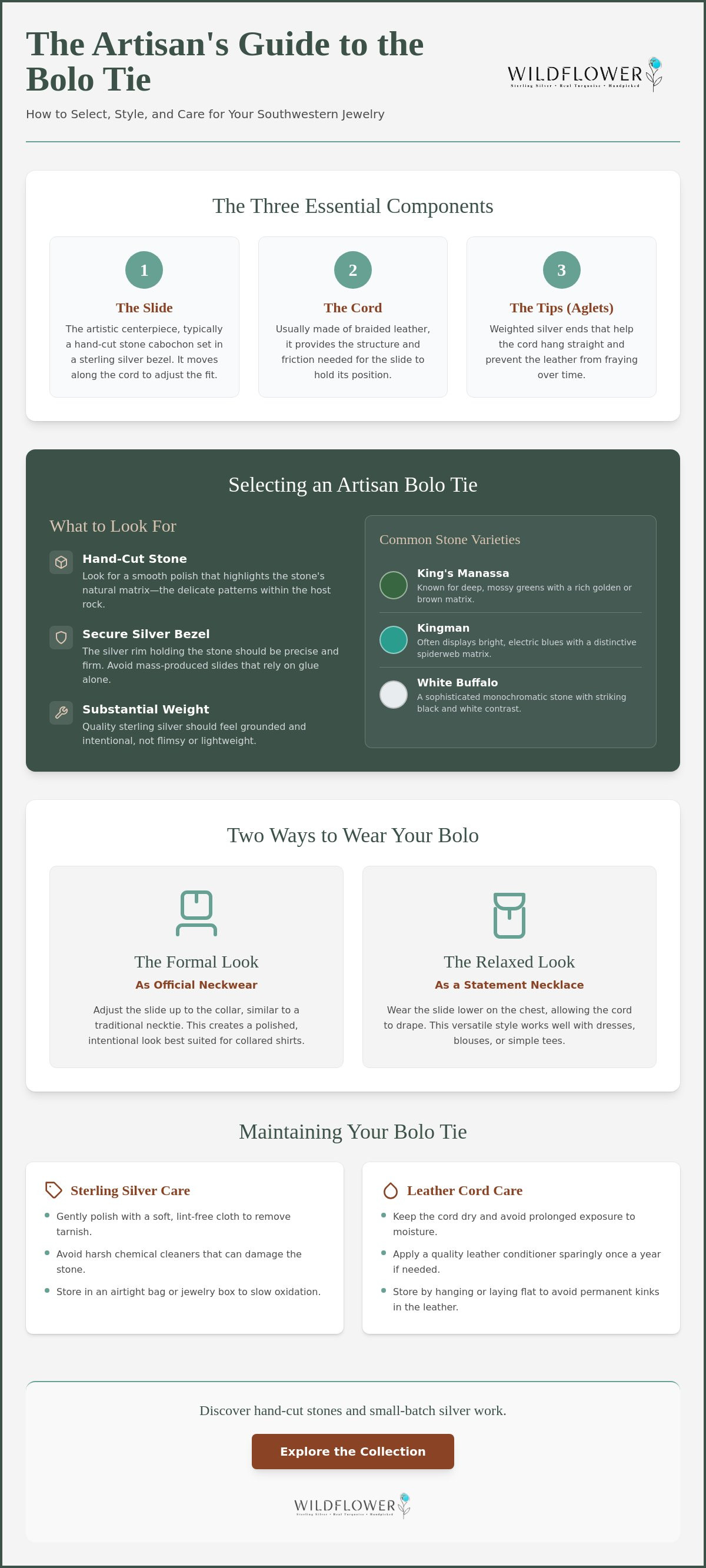
A bolo tie is a type of neckwear consisting of a braided cord fastened with a decorative slide that moves along the leather to adjust the fit. Unlike a traditional fabric tie that requires a knot, the bolo relies on a mechanical tension slide to hold its position at the collar or lower on the chest. It's a simple, functional mechanism that serves as a canvas for high-quality lapidary work and silver smithing.
In our studio, we see the bolo as a sculptural focal point. The slide is the artistic centerpiece, typically featuring a hand-cut stone cabochon secured in a sterling silver bezel. This slide isn't just for show; it acts as a movable anchor that allows the wearer to customize the look for different occasions. Watching the slide in motion can help clarify how to wear a bolo tie with different shirt styles.
To better understand this concept, watch this helpful video:
The three essential components of a bolo tie
Every quality bolo tie consists of the slide, the cord, and the tips. The slide is where the personality of the piece lives, often showcasing the intricate matrix of a natural Turquoise stone or the clean contrast of White Buffalo. The cord, usually made of braided leather, provides the necessary friction to keep the slide from slipping. Finally, the tips (or aglets) are more than just decorative ends. These weighted silver pieces help the cord hang straight and prevent the leather from fraying over time. At Wildflower, we offer a variety of handcrafted bolos that prioritize these durable, technical details.
The history of Southwestern style neckwear
The History of the Bolo Tie reveals a legacy rooted in the American West during the mid-20th century. It emerged as a regional alternative to the restrictive fabric ties found in urban fashion centers. Over the decades, it evolved from a simple utilitarian cord into a sophisticated form of wearable art. While it was once seen primarily as formal wear for the Southwest, modern artisans have refined the design. Today, these pieces are appreciated for their artisanal sophistication, utilizing high-quality sterling silver and hand-cut stones to create a look that is both grounded and intentional. Understanding this transition from function to art helps you feel more confident when deciding how to wear a bolo tie in a contemporary setting.
Selecting an artisan bolo tie for your collection
Selecting a bolo tie begins with a quiet appreciation for the stone. It's the soul of the piece. When you are considering how to wear a bolo tie, the first step is finding a cabochon that speaks to your personal aesthetic. You might be drawn to the deep, mossy greens and rich history found in King’s Manassa turquoise, or perhaps the bright, electric blues of a Kingman stone. Look closely at the matrix, which is the host rock that creates those delicate spiderweb patterns. A high-quality stone should have a smooth, hand-cut polish that highlights these natural variations rather than hiding them.
Beyond the stone, the silver work defines the longevity and character of the piece. A secure bezel, which is the silver rim that wraps around the edge of the stone to hold it in place, is essential. We recommend avoiding mass-produced slides that rely on glue alone. In our studio, we prioritize small-batch craftsmanship where the sterling silver has enough weight to feel substantial against the chest without causing fatigue. It should feel like a grounded, intentional anchor for your outfit.
Understanding stone varieties and origins
The origin of the stone adds a layer of narrative to your jewelry. For those who prefer a monochromatic palette, the striking contrast of White Buffalo stones offers a sophisticated alternative to traditional blue. Many of these pieces feature lapidary work by Greg Cordova, who focuses on preserving the unique character of every individual stone he cuts. Whether you choose a deep green or a stark white, the polish should be even and the setting should be precise. This attention to detail ensures the piece remains a focal point for years.
Cord materials and length considerations
The cord is the framework that supports the slide. Braided leather is the preferred material because its texture provides the necessary friction for the tension mechanism. This ensures the slide stays exactly where you place it. When deciding how to wear a bolo tie, consider the cord length. Most standard cords measure between 36 and 42 inches. A shorter cord creates a compact, traditional look at the collar. A longer cord allows the silver tips to hang lower on the torso, offering a more relaxed, modern silhouette. If you are ready to find a piece that fits your personal narrative, you can browse our collection of artisan-made jewelry to see these elements in harmony.
Adjusting your bolo tie for the perfect fit
Properly adjusting a bolo tie involves balancing the slide position with the tension of the cord. This ensures the centerpiece stays centered while protecting the integrity of the braided leather. Adjusting your jewelry is a quiet ritual that requires a bit of patience. It's about finding the perfect balance between the weight of the hand-cut stone and the drape of the cord. When you're learning how to wear a bolo tie, the process starts with the physical placement of the piece. Drape the leather around your neck, making sure it sits flat under the collar of your shirt. To move the slide without causing friction damage to the cord, hold both silver tips firmly in one hand to keep the leather taut. With your other hand, gently guide the slide to your desired height. Symmetry matters. The centerpiece should sit exactly between your collar points, creating a clean line that highlights the unique matrix of the stone.
Formal versus casual positioning
The height of the slide sets the tone for your entire look. For formal settings, you'll want to slide the centerpiece all the way to the top button of a closed collar. This creates a sharp, traditional silhouette that respects the history of the accessory. If you prefer a more relaxed atmosphere, wear the slide three to four inches below the collar and leave the top button open. This lower placement turns the piece into a bold statement necklace that feels more at home in a modern wardrobe. Experimenting with these proportions allows you to change the visual weight of your outfit in seconds. A lower slide often feels more approachable for those just beginning to explore how to wear a bolo tie in daily life.
Managing cord tension and slide mechanics
The longevity of your bolo depends on how you handle the tension mechanism. Avoid the temptation to yank the slide up or down. Moving it too quickly can wear down the leather, leading to fraying that is difficult to repair. Most artisan pieces feature a sterling silver tension clasp on the back of the slide. It's designed to grip the leather just enough to stay in place without slipping. If you notice the tips are hanging at different lengths, don't pull on the silver ends. Instead, adjust the cord position at the back of your neck until they are even. This simple habit protects the integrity of your handcrafted bolo tie and ensures the stones are always displayed with intention. Taking a moment to check the tension of the clasp ensures your sterling silver investment remains secure throughout the day.
Styling a bolo tie for feminine and modern wardrobes
Styling a bolo tie for women involves treating the piece as a versatile statement necklace that can be adjusted to suit different necklines and silhouettes. By repositioning the slide, you can transition the look from a formal collar accessory to a relaxed, long pendant.
For many women, the appeal of this accessory lies in its ability to act as a sculptural focal point that adapts to the wearer. When you are exploring how to wear a bolo tie in a contemporary way, think of the piece as an adjustable anchor for your outfit. A classic and professional approach involves pairing a vibrant Turquoise bolo with a crisp, white button-down shirt. This combination is a staple of Southwestern style that remains grounded and sophisticated. For those who prefer a more dramatic contrast, wearing a bolo over a simple black turtleneck allows the sterling silver bezel and the hand-cut stone cabochon to pop against the dark fabric. This creates a clean, intentional look that highlights the natural matrix of the stone. You can also experiment with layering by adding shorter sterling silver chains to the mix, which results in a curated, textured appearance that feels deeply personal.
Pairing with different necklines
The bolo tie is remarkably adaptable to various garment shapes. V-neck sweaters provide a natural frame for the slide, filling the open space with an artistic focal point that draws the eye. When wearing a dress, you might choose to position the slide much lower than you would with a collared shirt. This mimics the graceful drape of a long pendant necklace and offers a more relaxed, bohemian flair. You can explore our one-of-a-kind bolo ties to find a slide size and stone variety that complements your favorite seasonal necklines.
Mixing textures and materials
The beauty of artisan jewelry often comes from the interplay of organic materials. The braided leather cord of a bolo provides an earthy, grounded contrast to more refined fabrics like silk or linen. To create a cohesive visual narrative, consider matching the Turquoise in your bolo with other everyday essentials, such as small stud earrings or a slim cuff bracelet. We generally suggest letting the bolo tie remain the primary centerpiece of your ensemble. Over-accessorizing can sometimes distract from the craftsmanship of the slide. If you are ready to find a piece that resonates with your personal style, shop our collection of handcrafted jewelry to find a bolo that stands out as a unique addition to your wardrobe.
Maintaining the beauty of your silver and stone bolo
Caring for a handcrafted bolo tie requires a thoughtful approach that addresses two very different materials: sterling silver and organic leather. These pieces are built to last, but they aren't indestructible. When you understand how to wear a bolo tie as a long-term part of your collection, you realize that regular maintenance is what preserves the story of the stone. The sterling silver bezel that secures your cabochon will naturally develop a patina as it's exposed to the air. While some collectors appreciate this darkened look, a soft polishing cloth is the best tool for removing tarnish if you prefer a bright, mirrored finish. Always avoid chemical dips or abrasive cleaners. These can seep behind the stone setting and cause permanent damage to the mounting.
The braided leather cord is the most vulnerable part of the assembly. Leather is an organic material that reacts to its environment. It's essential to avoid getting the cord wet, as moisture can cause the fibers to swell, stiffen, and eventually crack. If you're caught in a sudden desert rain, dry the cord gently with a soft cloth and let it air dry away from direct heat. Storage is also a factor. To prevent the leather from developing permanent kinks or memory bends, store the bolo hanging up on a hook or laid flat in a jewelry drawer. This ensures the cord drapes naturally against your chest the next time you choose to wear it.
Cleaning and stone preservation
Turquoise is a porous stone, which means it can absorb oils, perfumes, and hair products. Never use ultrasonic cleaners or harsh detergents on your jewelry. If the stone looks a bit dull from dust or skin oils, a quick wipe with a slightly damp, lint-free cloth is all it needs. For more specific instructions on handling different stone varieties, you can review our care and repair guide. This resource provides deeper insights into protecting the natural matrix and polish of your artisan-made pieces.
When to replace the cord
Even with the best care, leather cords eventually show their age. Inspect the braid regularly, specifically the area where the tension slide moves up and down. If you see thinning, fraying, or loose strands, it's time for a replacement. Frequent wearers might find they need a fresh cord every few years to maintain the security of the slide. A new cord doesn't just look better; it provides the necessary friction to ensure the sterling silver centerpiece stays exactly where you want it. This simple update is the easiest way to refresh the look and function of your favorite Southwestern style accessory.
Embracing the narrative of Southwestern style
Mastering how to wear a bolo tie involves more than just sliding a centerpiece into place. It's a practice in honoring the artistry of the materials and the hands that shaped them. By understanding the mechanics of the tension slide and the importance of a secure bezel, you can wear these pieces with quiet confidence in any setting. Whether you choose a classic blue stone or the stark contrast of White Buffalo, the narrative of the jewelry remains rooted in the small batch techniques of our studio. We prioritize hand-cut stones from Greg Cordova and genuine turquoise from specific Southwestern mines to ensure every piece feels authentic. Our small batch, artisan-made sterling silver designs turn a simple accessory into a vessel for personal expression.
We invite you to discover our latest collection of handcrafted bolo ties at Wildflower, or you can explore a curated selection of our work at wildflowersantafe.etsy.com for additional buyer protections. Finding a piece that resonates with your personal story is a beautiful way to celebrate the organic beauty of the Southwest.
Frequently Asked Questions
Can a woman wear a bolo tie for formal events?
A woman can certainly wear a bolo tie to formal events as a sophisticated statement piece. It acts as a sculptural focal point when paired with a tailored blazer or a silk blouse. To maintain a formal appearance, keep the slide high at the collar. This styling choice highlights the hand-cut stone and sterling silver bezel while offering a refined alternative to traditional evening jewelry.
How long should a bolo tie cord be for my height?
Your bolo tie cord should be long enough so that the silver tips sit approximately three to four inches below the base of your breastbone. For individuals under 5 feet 10 inches, a 36 to 38 inch cord is usually sufficient. Taller wearers or those with a broader build often require a 42 inch cord to keep the proportions of the jewelry balanced and intentional.
Is it okay to wear a bolo tie with a t-shirt?
It is perfectly acceptable to wear a bolo tie with a t-shirt for a relaxed, contemporary aesthetic. This approach works best when you treat the piece like a long pendant necklace rather than formal neckwear. Position the slide lower on the chest to create a casual drape. This style allows the matrix of the stone to stand out against a simple cotton background.
What is the best way to store a bolo tie to prevent cord damage?
The best way to store your jewelry is to hang it from a hook or lay it flat to prevent the cord from developing permanent kinks. Braided leather has a memory; coiling it too tightly can ruin the drape. Keeping the cord straight ensures that when you learn how to wear a bolo tie, the piece sits flush against your shirt without unsightly bends.
Can I replace the leather cord with a different material?
While you can replace a leather cord with other materials, braided leather remains the technical standard for artisan jewelry. The texture of the braid provides the essential friction needed for the tension slide to stay in place. Smoother materials like silk or synthetic cords often lack this grip. This can cause a heavy sterling silver slide to slip down the chest during movement.
How do I know if the turquoise in my bolo tie is real?
You can identify real turquoise by looking for a unique matrix and a cool, stony temperature that plastic imitations lack. Genuine stones have organic variations in color and host rock patterns that are difficult to fake. If a stone feels unusually light or warm to the touch, it might be dyed howlite or plastic. Authentic pieces from mines like Kingman or Royston will show these details clearly.
Is it appropriate to wear a bolo tie to a wedding?
A bolo tie is an appropriate and polished choice for weddings, particularly those celebrating Southwestern style. It functions as a unique alternative to a fabric tie when the slide is positioned at the top of a buttoned collar. Choosing a piece with a high quality cabochon and sterling silver work ensures you look intentional while mastering how to wear a bolo tie for a formal event.
If you are planning a destination wedding or a luxury escape to the heart of the American West, The Russell Travel Team (Lightning Travel) can help you curate a bespoke itinerary that reflects the same attention to detail as your artisan jewelry.
What should I do if the slide on my bolo tie becomes loose?
If the slide on your bolo tie becomes loose, the tension clasp on the back likely needs a small adjustment. Most artisan slides feature a metal tab that you can gently press closer to the cord to increase the grip. If the leather cord has thinned or frayed from years of use, a cord replacement is the best way to restore the security and function of the piece.
Article by
Kimberly Cordova
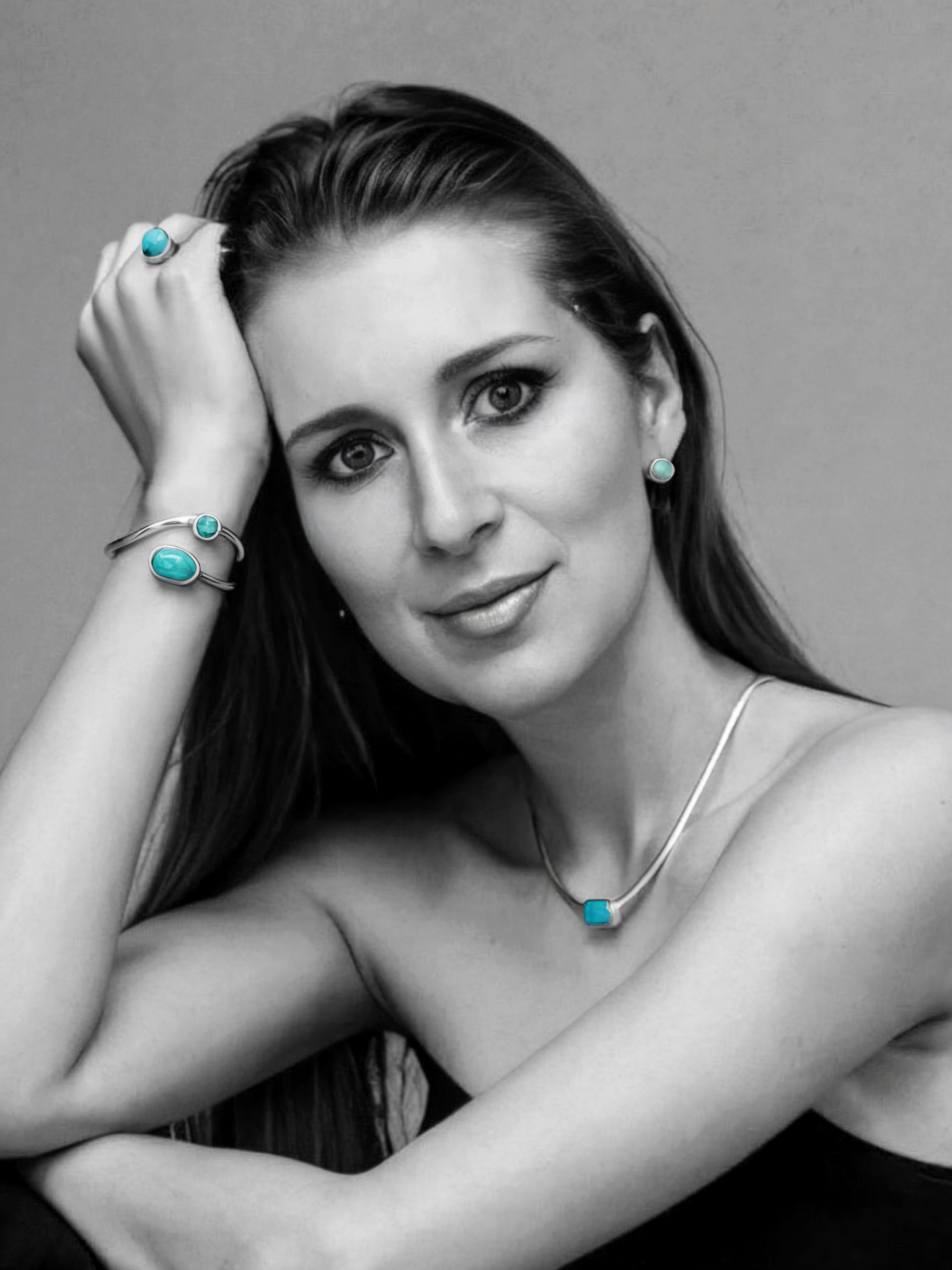
Kimberly Cordova is the founder and creative director of Wildflower Artisans, a handmade Turquoise and sterling silver jewelry brand rooted in Santa Fe. She built Wildflower around a simple belief: the best jewelry is the kind you actually reach for, not the kind you save for someday.
Kimberly designs pieces made by hand with a trusted circle of Santa Fe silversmiths, works alongside her husband Greg on in-house pieces with stones he cuts, both from the family's King's Manassa Mine in Colorado and White Buffalo Mine in Nevada and from rough he sources from other mines, and curates finished work from artisan makers whose craft meets the same standard. Turquoise leads the collection, joined by White Buffalo, Wild Horse, Lapis Lazuli, Spiny Oyster, and other genuine semi-precious stones. The result is a collection with real range and no shortcuts on the stone, the silver, or the story behind either.
Her writing covers everything she has learned along the way: how Turquoise forms, how to tell natural from stabilized, what makes one mine different from another, how to read a bezel, and how to shop with confidence in a market that is not always straightforward. It is the kind of plainspoken information she wished someone had laid out for her when she was starting out.
Browse the collection at wildflowerartisans.com. Questions about a stone, a setting, or a specific piece are welcome any time.
0 comments