

The high desert has a way of hiding its secrets, and turquoise is no exception. What if that striking sky-blue cabochon you hold is actually just a piece of dyed howlite or common plastic? It's a valid concern for anyone learning how to tell if turquoise is real, especially when drawn to the organic beauty of Southwestern style. You want a piece that carries the weight of the earth and a story of the seasons, a fragment of the sky captured in stone, rather than a mass-produced imitation. Finding the truth behind a stone requires a patient eye and a bit of artisanal knowledge.
We understand the quiet frustration of navigating a market filled with clever fakes and confusing terminology. You deserve to know exactly what you're wearing. This guide explores the nuances of professional sourcing and what a fair price looks like for quality material. We'll show you how to identify specific markers like a natural spiderweb matrix and tactile cues that separate genuine stone from resin. From simple visual tests to understanding the value of a small batch studio, you'll gain the confidence to identify authentic, handmade treasures that last.
Key Takeaways
- Identify the distinctive presence of a matrix and intricate spiderweb patterns that occur naturally in genuine stone.
- Use tactile methods like the fingernail test and temperature checks to learn how to tell if turquoise is real without damaging the piece.
- Differentiate between natural, untreated turquoise and stabilized stones to ensure you know exactly what you are buying.
- Find out how professional lapidary work and hand-set bezels serve as indicators of a trustworthy, artisan-made source.
What makes turquoise authentic?
Turquoise is a specific chemical alchemy. It's a hydrous phosphate of copper and aluminum. It forms in parched, arid landscapes where mineral-rich groundwater filters through volcanic rock and meets copper deposits. This slow, natural process creates the raw material that we eventually shape into a smooth, polished cabochon. Understanding how to tell if turquoise is real begins with recognizing that it isn't just a color. It's a geological record of a specific place and time. Authentic turquoise often begins as a soft, chalk-like mineral that hardens over thousands of years within the host rock.
The market is unfortunately flooded with imitations that lack the weight and soul of a genuine specimen. Learning how to tell if turquoise is real is essential because materials like dyed howlite or magnesite look remarkably similar to the untrained eye. These imposters are often mass-produced in factories rather than being carefully cut in a small batch studio. To better understand this concept, watch this helpful video:
The composition of a genuine stone
Genuine stones are naturally porous. Their Turquoise mineral properties determine their unique hue. Copper provides that striking sky blue, while iron or aluminum introduces shades of sage and forest green. On the Mohs scale, authentic turquoise sits between a 5 and a 6. It's durable enough for a daily ring but soft enough to require a careful hand during the lapidary process. At Wildflower, we prioritize transparency in our stone origins to ensure every piece is exactly what it claims to be. A real stone will feel solid and substantial, carrying a coolness that persists until it's warmed by your skin.
Common materials used in fake jewelry
Dyed howlite is the most frequent substitute. It naturally has grey or black veins that mimic a true matrix. When it's dipped in blue dye, it can be very convincing to a casual observer. Reconstituted turquoise is another hurdle. This involves taking turquoise dust or low-grade chalk, mixing it with resin and plastic, and pressing it into blocks. While it contains some mineral content, it isn't a natural stone. It lacks the subtle variations in color and texture found in earth-mined specimens. Plastic and glass are also used in mass-produced items, though they usually feel too light or too warm to the touch. These materials are often perfectly uniform, which is a significant red flag for anyone seeking the organic beauty of a genuine cabochon.
Visual signs of genuine turquoise matrix and color
The first step in learning how to tell if turquoise is real involves looking closely at the stone's surface. Nature rarely produces anything perfectly uniform. When you examine a genuine cabochon, you should see a narrative of its formation. This is often visible through the matrix, which is the remnant of the host rock where the turquoise grew over millennia. These veins of black, brown, or even golden yellow are not flaws. They are proof of a stone's organic origin. In mass-produced fakes, these lines are often painted on or stamped into plastic, resulting in a repetitive, flat appearance that lacks depth.
Understanding the matrix and spiderweb patterns
A spiderweb matrix is one of the most sought-after patterns in the world of Southwestern style jewelry. It consists of thin, intricate lines that crisscross the stone like a delicate net. This pattern is exceptionally difficult to replicate convincingly. In an authentic stone, these lines will be slightly recessed or have a different texture than the turquoise itself. You can often feel this transition with a fingernail. According to the GIA on turquoise quality, the value of a stone is heavily influenced by the balance and distribution of this matrix. If you are looking for stones with these distinct markers, you can explore our artist-made turquoise jewelry to see these variations in person.
Color depth and natural variation
Color is another vital clue. While we often think of turquoise as a single shade, real specimens range from a pale, milky sky blue to a deep, mossy forest green. A single cabochon might even show a soft gradient of these colors across its surface. This mottled look is a hallmark of authenticity. If a stone is a single, neon shade of blue without any variation, it's likely a synthetic material or dyed howlite. Authentic stones have a depth of color that seems to sit beneath the surface rather than sitting on top of it like a coat of paint. Real stones also age. Because they are porous, they can absorb oils from your skin, which may subtly shift the color toward green over many years.
Finally, look for small pits or organic irregularities. Even a high-grade, polished stone will often have tiny divots where the matrix meets the turquoise. These are not defects but signs of a stone that was cut from the earth rather than poured into a mold. If a piece feels too perfect, too smooth, or too light, trust your instincts. The weight and texture of a real stone are unmistakable once you've held a few genuine pieces in your hand.

How to tell if turquoise is real through non-destructive tests
Many online guides suggest using a hot needle or acetone to verify a stone. These destructive methods are useless when you're holding a finished piece of jewelry you've already purchased or are considering in a shop. You don't need to damage a stone to understand its nature. When shopping for jewelry, knowing how to tell if turquoise is real involves subtle, non-invasive observations that respect the integrity of the artisan's work. These tests rely on your senses and a bit of professional context rather than a hammer or a flame.
Tactile evaluation of the stone
The fingernail test is a reliable way to check a stone's surface. If the cabochon features a visible matrix, run your nail gently across the veins. You should feel a slight, nearly imperceptible catch where the stone meets the host rock. This indicates a natural transition between different minerals. Weight also tells a story. Real turquoise is denser and heavier than plastic. While glass imitations might mimic the weight and feel cool to the touch, they lack the specific, earthy texture of a mineral. A real stone will warm up slowly in your hand, retaining a grounded, substantial feel.
The price and sourcing connection
Market reality is a powerful tool for identification. Authentic stones have a consistent value based on turquoise quality factors like rarity, color, and hardness. If you find a large, vibrant cabochon for a price that seems too good to be true, it likely is. Quality turquoise is not a mass-market commodity, and recognizing a fair price is a practical way how to tell if turquoise is real. Asking for the specific mine of origin is another way to verify authenticity. You can consult our guide on stone origins to learn about the unique characteristics of different varieties we use in our Santa Fe studio.
Using a jeweler's loupe can reveal secrets hidden from the naked eye. Look closely at any cracks or matrix lines. In dyed stones, you'll often see dye pools. These are dark, concentrated spots where the pigment has settled into the stone's pores or fissures. Natural stones show a clean, consistent distribution of color. These simple, respectful checks provide peace of mind without ever risking the beauty of your jewelry. By focusing on these physical truths, you can build a collection of authentic, handcrafted pieces that carry the genuine spirit of the Southwest.
Natural vs. stabilized: Understanding turquoise treatments
Understanding the difference between natural and stabilized stones is a crucial part of knowing how to tell if turquoise is real. In our Santa Fe studio, we prioritize clear communication about these treatments. A stone is only truly natural if it is untreated and cut exactly as it came from the earth. Most turquoise on the market today has undergone stabilization, which is a widely accepted industry process. This involves infusing a porous stone with clear resin under high pressure to make it durable enough for daily wear. It is still real turquoise, but it has been reinforced to prevent it from crumbling or absorbing moisture.
Why stabilization is an industry standard
Raw turquoise is often quite soft, sometimes even chalky in its natural state. Without stabilization, these stones would be too fragile to survive the lapidary process or the rigors of being set in a sterling silver bezel. When Greg Cordova, a professional lapidary at Cutting Edge Turquoise, prepares a stone for us, he understands the balance between preserving the mineral's integrity and ensuring it can withstand the test of time. Stabilization also seals the stone. This prevents it from absorbing skin oils, perfumes, or lotions, which can cause an untreated stone to shift from blue to a dull green over several years. While stabilized stones are authentic, dyed or color-treated stones are less valuable. These often use chemicals to force a specific hue into a low-grade material, masking its true character.
The rarity of untreated natural stones
Untreated natural stones are the rarest specimens found in any mine. They are naturally hard enough to take a high polish without any chemical assistance. Because of this rarity, these stones command a significantly higher price point than their stabilized counterparts. They represent the purest expression of the earth's alchemy. However, owning an untreated piece comes with a responsibility to maintain its original beauty. These stones remain porous and sensitive to their environment. We always recommend reviewing our guide on jewelry care to ensure your untreated pieces remain as vibrant as the day they were handcrafted. Learning how to tell if turquoise is real requires recognizing these distinctions in treatment and value. Whether you prefer the rugged durability of stabilized stone or the rare purity of an untreated cabochon, knowing the history of your stone is essential.
If you are ready to find a piece that speaks to you, browse our latest collection of authentic turquoise jewelry.
Buying with confidence from artisan studios
The ultimate way to ensure authenticity is to look beyond the stone and at the hands that shaped it. In our Santa Fe studio, the journey from raw mineral to finished jewelry is transparent. When you understand the relationship between the lapidary and the jeweler, you no longer have to wonder how to tell if turquoise is real. Small batch production allows for a level of scrutiny that mass-market retailers simply cannot provide. We select each piece of rough material based on its unique character, ensuring that every cabochon tells a clear story of its origin.
The role of the lapidary in authenticity
A skilled lapidary does more than just grind stone. They act as a translator for the earth's history. Greg Cordova provides professional stone cutting insights that are vital for identifying high-quality material. When Greg cuts a cabochon, he follows the natural flow of the matrix and the hardness of the mineral. This process often reveals internal structures, like a tight spiderweb or a deep color gradient, that are impossible to fake with dyed plastics. By handling the lapidary work in-house or through trusted partners, we maintain a chain of custody that guarantees the stone's identity from the moment it leaves the mine.
Handcrafted details in Southwestern style jewelry
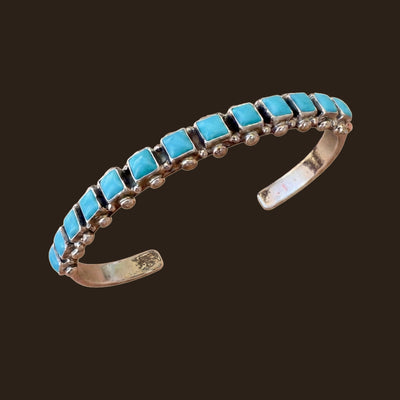
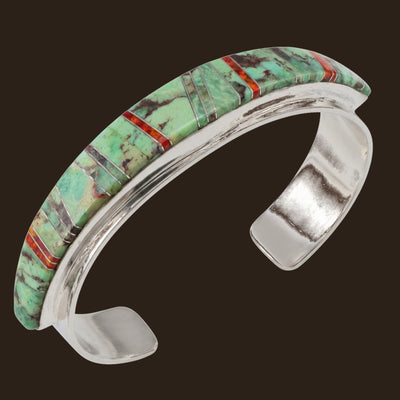
The silver work surrounding a stone is often as telling as the turquoise itself. In authentic Southwestern style pieces, you'll find a custom bezel setting that is perfectly tailored to the stone's unique, often asymmetrical shape. Mass-produced jewelry often uses pre-cast settings that force the stone to fit, which can lead to gaps or loose mounts. Look for the 925 mark on our sterling silver pieces as a baseline for quality. When Kimberly designs a new piece, she builds the silver around the specific nuances of the stone, highlighting its natural irregularities. You can browse our one-of-a-kind rings to see how these handcrafted details complement the varied textures of real turquoise.
Collectors often look for mine-specific information as a final hallmark of trust. Knowing whether a stone is from the Kingman mine or a rare vein of Royston adds a layer of verifiable history to your jewelry. This level of detail is a signature of artisan studios that value the narrative of the natural world over the speed of retail. By choosing to support small batch creators, you're investing in a piece that's as honest as the landscape it came from.
Finding a stone that speaks to you
Authenticity is found in the small, organic details. It lives in the slight catch of a fingernail on a natural matrix line and the cool, substantial weight of a cabochon in your hand. Once you've learned how to tell if turquoise is real, you can move past the confusion of gemstone terminology and focus on the unique character of the mineral. Genuine stones carry the narrative of the arid landscapes where they formed. They are asymmetrical, varied, and perfectly imperfect.
Trusting your senses and the transparency of the artisan's process allows you to collect with confidence. We invite you to carry a piece of that story with you. Every item in our studio features guaranteed authentic stones that are handcrafted in our studio through direct sourcing from known mines. We take pride in the heritage of our materials and the integrity of our work. It's a connection to the earth that mass-produced pieces simply can't replicate.
Visit Wildflower to explore our collection of authentic, artisan-made jewelry. May your next piece be a fragment of the desert sky that stays with you for a lifetime.
Frequently Asked Questions
Can you tell if turquoise is real with a hot needle?
A hot needle can detect plastic or wax imitations, but it is not a recommended test for finished jewelry. The needle will melt through resin or plastic, leaving a permanent mark and a distinct chemical smell. Real stone will not melt, but the intense heat can still cause a natural stone to crack or discolor. There are better, non-destructive ways to learn how to tell if turquoise is real without risking the integrity of the artisan's work.
What is the difference between turquoise and howlite?
Howlite is a separate mineral that is naturally white with grey or black veins. Because its matrix looks similar to real turquoise, it is frequently dyed blue and sold as a convincing imitation. You can often spot the difference by looking closely at the fissures; dye tends to pool in the cracks of howlite, creating darker spots. Authentic turquoise has a natural color depth that is consistent throughout the stone, whereas dyed howlite is only colored on the surface.
Does real turquoise change color over time?
Untreated natural turquoise will often change color over time as it absorbs oils from your skin or moisture from the air. This process usually shifts the stone from a bright blue toward a deeper, mossy green. While some collectors appreciate this organic aging, others prefer stabilized stones. Understanding this transition is a key part of knowing how to tell if turquoise is real. Stabilization seals the pores of the mineral, ensuring the cabochon retains its original hue for decades.
What does 'reconstituted turquoise' mean in jewelry?
Reconstituted turquoise is a man-made material created by grinding low-grade turquoise into a fine powder. This dust is then mixed with resin, plastic, and dyes before being pressed into solid blocks. While it contains some mineral content, it is not a genuine stone. It lacks the unique spiderweb patterns and matrix variations found in earth-mined specimens. We do not use reconstituted materials in our small batch studio, as they lack the soul of natural stone.
Is stabilized turquoise considered real?
Stabilized turquoise is real turquoise that has been treated with clear resin to increase its durability. This is an industry-standard process for stones that are naturally too soft or chalky to be used in jewelry. It is important to distinguish this from fakes; a stabilized stone is a genuine mineral, whereas plastic or dyed howlite is not. When Greg Cordova prepares stones for our collections, he often uses stabilization to ensure the jewelry can be worn every day. You can find more about his process at Cutting Edge Turquoise.
Why is some turquoise more green than blue?
The specific color of a stone is determined by the minerals present during its formation. Copper deposits create the iconic sky blue tones that many people associate with Southwestern style. When iron or aluminum is present in the ground, the stone develops shades of sage, lime, or forest green. Both colors are authentic. Many collectors prize green varieties from specific mines, such as Royston or Carico Lake, for their earthy and complex appearance.

Article by
Kimberly Cordova
Kimberly Cordova is the founder and creative director of Wildflower, a handmade Turquoise and sterling silver jewelry brand based in Santa Fe. She built Wildflower around a simple belief: the best jewelry is the kind you actually reach for, not the kind you save for someday.
Kimberly designs pieces made by hand with a trusted circle of Santa Fe silversmiths, works alongside her husband Greg on in-house lapidary pieces cut from stones including the family's King's Manassa Mine in Colorado and White Buffalo Mine in Nevada, and sources finished work from artisan makers whose craft meets the same standard. The result is a collection with real range and no shortcuts on the stone, the silver, or the story behind either.
Her writing covers everything she has learned along the way: how Turquoise forms, how to tell natural from stabilized, what makes one mine different from another, how to read a bezel, and how to shop with confidence in a market that is not always straightforward. It is the kind of plainspoken information she wished someone had laid out for her when she was starting out.
Shop the Wildflower collection at wildflowerartisans.com, or find us on Etsy at wildflowersantafe.etsy.com. Questions about a stone, a setting, or a specific piece are welcome any time.
0 comments