

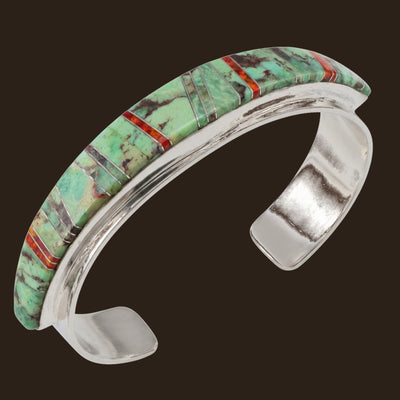
A heavy sterling cuff sits on the workbench, its surface cool and grayed with a soft patina that only comes with time. It is a quiet weight, one that feels substantial and honest against the palm of your hand. We know the sinking feeling of realizing a favorite piece is actually a mystery metal that turns your skin green or loses its luster after a few wears. Learning how to tell if silver is real 925 is about more than just squinting at a tiny stamp. It is about recognizing the physical character of the metal and understanding the narrative of the maker.
This guide offers a grounded approach to verifying your jewelry using sensory observation and reliable testing methods used in our Santa Fe studio. We will explain why the 925 mark represents a specific alloy of 92.5 percent silver and 7.5 percent copper, as established by the National Gold and Silver Stamping Act of 1906. You will learn to distinguish between small batch artisan work and mass produced imitations by looking for maker marks and weight. From the simple magnet test to the way silver conducts heat, we will help you build the confidence to identify authentic pieces that are built to last.
Key Takeaways
- Look for the 925 hallmark alongside a unique maker signature to confirm the piece meets the legal purity standard of 92.5 percent silver.
- Practice sensory observations for how to tell if silver is real 925, focusing on its distinct weight and the way it quickly warms to your touch.
- Use simple tools like a magnet or a soft white cloth to test for paramagnetic reactions and natural oxidation patterns at home.
- Distinguish genuine sterling from plated mystery metals to ensure your jewelry is safe for sensitive skin and built for long term wear.
- Identify the characteristics of artisan-made jewelry, where hand-cut stones and sturdy bezels signal a piece of quietly timeless value.
Understanding the 925 hallmark and maker signatures
The journey of learning how to tell if silver is real 925 begins with a small, essential lesson in metallurgy. Pure silver, often called fine silver, is a soft and yielding metal. While it possesses a beautiful luster, it lacks the strength to hold a heavy one-of-a-kind setting or withstand the friction of daily wear. To create jewelry that lasts for generations, we use sterling silver. This is an alloy made of 92.5 percent silver and 7.5 percent copper. The copper acts as a quiet anchor, providing the durability needed for a sturdy bezel or a thick cuff without sacrificing the metal's signature glow. It is the industry standard for a reason. It balances beauty with the resilience required for everyday life.
To better understand this concept, watch this helpful video:
Common silver hallmarks to look for
Most reputable smiths will mark their work with a tiny, indelible stamp. The 925 hallmark is the most recognized signal, though you might also see STERLING or STER impressed into the metal. These Silver hallmarks vary significantly by region and era. For instance, European pieces often carry historic symbols like the lion passant. In the United States, the National Gold and Silver Stamping Act of 1906 dictates that if a purity mark is used, it must be accurate and accompanied by a maker mark. It's helpful to remember that a stamp alone isn't a guarantee of purity. Some mass produced plated items carry a 925 mark to mislead buyers. Learning how to tell if silver is real 925 means looking for the presence of these stamps while remaining aware of their limitations.
The importance of the maker mark
A maker mark is the artist's signature. It is a small stamp, often initials or a studio symbol, that provides a direct link to the hands that forged the piece. Kimberly Cordova curates our collections with a deep respect for these marks because they represent accountability and provenance. When Greg Cordova cuts a high grade cabochon at Cutting Edge Turquoise, that stone requires a setting of equal integrity. A maker's mark ensures that the artisan stands behind the quality of both the metal and the lapidary work. In Southwestern style jewelry, these signatures are a badge of honor. They separate a thoughtful studio piece from a generic, mass produced item found in a big box store. These marks offer a quiet, timeless assurance that the work was done with intention. When you find a signature on the back of a pendant, you are holding a piece of someone's story. It confirms the silver is genuine and the construction is sound.
Sensory observation: the weight and feel of real silver
Pick up a piece of jewelry and let it rest in your palm. Your hands are often better judges than your eyes. Beyond the stamps we discussed, your own senses provide immediate feedback that a machine cannot always replicate. Learning how to tell if silver is real 925 often comes down to the physical presence of the metal. Sterling silver has a specific, comforting weight. It feels substantial without being cumbersome. When you handle a piece from a working studio, you should notice a cool, smooth texture that quickly adjusts to your body temperature.
Authentic silver is also odorless. If you notice a sharp, metallic scent similar to a copper penny or an old brass door handle, you're likely smelling the base metals beneath a thin layer of plating. This is a common red flag for mystery metals. Genuine sterling silver remains neutral to the nose, even when rubbed between the fingers to generate a bit of warmth. If you're browsing for a new addition to your collection, pay close attention to this lack of scent. It's a small detail that speaks volumes about the purity of the alloy.
Evaluating the weight of a piece
Sterling silver is a dense material. It has a specific gravity that is much higher than aluminum, tin, or most common base alloys. When you hold a heavy gauge silver cuff, it should feel anchored and solid. If a piece looks thick and chunky but feels strangely light, it's likely a plated imitation or a hollow casting. We find that substantial weight in a piece of jewelry indicates a quietly timeless investment that can withstand the rigors of daily wear for decades. This heft is particularly noticeable in rings and bracelets where the metal needs to be thick enough to secure a stone or hold its shape against the wrist.
Thermal and auditory clues
Silver is a master of heat transfer. It possesses the highest thermal conductivity of any metal. You can test this by placing a small piece of ice on a plain silver band or a coin. The ice will begin to melt almost instantly, as if it were placed on a warm stove, because the silver draws heat from the surrounding air and moves it directly into the ice. You can also listen to the metal. A plain sterling band will produce a clear, high pitched ring when dropped gently on a hard surface. This resonance is distinct from the dull, flat thud produced by lead or zinc alloys.
These tests require some nuance when you're examining artisan pieces. A turquoise ring with a heavy bezel won't ring the same way as a plain band because the stone and the setting dampen the vibration. However, the thermal test still works on the back of the shank or the flat surface of a pendant. While understanding silver hallmarks provides a legal foundation for authenticity, these sensory clues offer immediate verification. Learning how to tell if silver is real 925 is a skill best honed through handling quality work and paying attention to these quiet, physical truths.
Reliable at-home tests: how to tell if silver is real 925
Once you have handled the piece and checked for its physical character, you can move on to active testing. These methods help confirm your initial instincts without requiring an immediate trip to a jeweler. Understanding how to tell if silver is real 925 often requires a combination of these small, practical steps. We prefer non-destructive methods in our studio because they preserve the integrity of the artisan work and the stones. A single test rarely tells the whole story, but together they build a reliable picture of the metal's quality.
Performing the magnet test correctly
Grab a strong magnet. A common refrigerator magnet is usually too weak to be helpful, so we recommend using a neodymium magnet for a clear result. Silver is paramagnetic, which means it doesn't stick to a magnet. If your ring or pendant jumps toward the magnet with a sharp snap, it's a clear sign of a ferrous core like iron or steel disguised under a silver coating. This is a common shortcut used in mass produced imitation jewelry.
It's important to remember that this test isn't foolproof on its own. Many base metals like copper, brass, and lead are also non-magnetic. A piece might pass the magnet test but still be a clever imitation. We use it as a quick screening tool before looking closer at the oxidation and wear patterns. If the piece passes the magnet test, you can move on to checking how the metal reacts to its environment.
The oxidation and rub test
Silver is a living metal. It reacts with sulfur in the air to create a dark layer of tarnish over time. This isn't a flaw. It's actually a hallmark of authenticity that many artisans use to add depth to their designs. You can perform a simple rub test by taking a soft white cloth and firmly polishing a small area of the metal. If the cloth comes away with dark, gray, or black streaks, you're looking at the natural oxidation of real sterling silver. Authentic 925 silver will almost always leave this residue when polished.
Plated mystery metals often lack this specific reaction. They might stay bright and shiny right up until the thin layer of silver wears away to reveal a yellow or red base metal underneath. If you're maintaining a collection, you can find more details on keeping your pieces clean in our care and repair guide. This dark residue is the result of the silver molecules reacting with the cloth's friction and the atmosphere. It's a messy but honest sign of quality.
Finally, perform a visual inspection under a bright light or a jeweler's loupe. Look at the high wear points like the inner band of a ring or the edges of a clasp. If you see peeling, flaking, or a different color metal peeking through, it's a plated item. We strongly advise against using home acid test kits on handcrafted jewelry. These kits use nitric acid that can permanently scar the silver and ruin the finish of a hand-cut stone. Stick to these gentler methods to protect the value of your collection while you learn how to tell if silver is real 925.
Distinguishing sterling silver from plated and mystery metals
Counterfeit goods account for approximately 3.3 percent of global trade as of 2024, and many of these items are sold as pure silver when they are actually base metals. Learning how to tell if silver is real 925 is your best defense against these imitations. We often see people frustrated by jewelry that leaves a green stain on their skin or causes an itchy rash. This reaction happens when base metals like copper or brass, hidden under a thin silver wash, react with the acids in your skin. Mystery metals often contain nickel, which causes widespread allergic reactions, or lead, which is a health concern we strictly exclude from our Santa Fe studio. Kimberly Cordova curates our collections with a focus on these material truths, ensuring every piece is safe for sensitive skin.
The problem with plated jewelry
Plated jewelry is essentially a disguise. A microscopic layer of silver is electroplated over a cheaper core to give the appearance of precious metal. This layer is fleeting. It wears away at friction points like the inside of a ring or the back of a pendant. Unlike solid sterling, which is a consistent alloy throughout, plated items cannot be resized or easily repaired. If a jeweler applies heat to a plated ring, the thin silver skin will often blister or peel, revealing the yellow or red core beneath. This is why we focus on solid sterling construction. It's a material that can be polished, repaired, and passed down through generations without losing its integrity.
Southwestern style construction clues
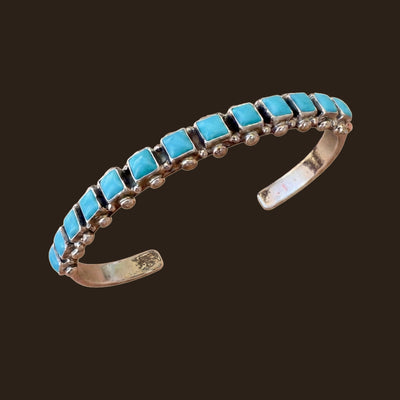
In Southwestern style jewelry, the construction itself tells a story of quality. Look closely at the bezel, the metal rim that holds a stone in place. On an artisan piece, this bezel is thick and hand-crimped around the stone to provide a secure, mechanical fit. Mass-produced mystery metals often use thin, flimsy settings or even glue to secure stones. Greg Cordova provides many of the high-grade stones we use, and these hand-cut cabochons require the stability of heavy gauge silver to stay protected.
A solid silver backplate on a pendant should feel smooth and substantial, not like a thin, stamped piece of tin. If the back of a piece is hollowed out or "scooped" to save on metal costs, it's a common sign of a mass-produced casting rather than a small batch studio creation. We believe the back of a piece should be as finished and honest as the front. If you want to avoid the risks of mystery metals, you can browse our collection of one-of-a-kind artisan pieces made with genuine sterling silver.
Why artisan-made quality is the ultimate proof
When you hold a piece of jewelry made by hand, you're holding the reputation of a specific person. While we've discussed how to tell if silver is real 925 through weight and thermal testing, the most reliable proof is the relationship between the maker and the medium. In a small batch studio, there's no room for mystery metals or plated shortcuts. Every bezel is filed and every shank is soldered by someone who understands the properties of sterling silver. This accountability ensures that the alloy used is exactly what it claims to be. Artisan jewelry is built to be a quietly timeless heirloom, intended to withstand the passage of years without losing its structural integrity.
The role of the lapidary in authenticity
The integrity of a piece begins long before the silver is polished. Greg Cordova handles the lapidary work for many of our pieces, often sourcing stones from his own mines or trusted colleagues. You can find more about these sources on our stone origins page. When Greg cuts a cabochon of natural, untreated turquoise, that stone deserves a setting of equal honesty. We believe that authentic stones belong in authentic sterling silver. A master lapidary knows the difference between a high-grade stone and a dyed imitation, and that same discerning eye is applied to the metal that secures it. By visiting Cutting Edge Turquoise, you can see the care that goes into preparing stones that are worthy of high-grade silver work.
Building a trusted collection
In a digital age where mass-produced imitations are common, buying directly from a known studio reduces your risk of encountering fakes. Kimberly Cordova focuses on design and curation where the provenance is clear and the materials are verified. When you choose one-of-a-kind artisan pieces, you're investing in a piece of jewelry that has been inspected at every stage of production. Don't be afraid to ask an artist about their materials or their studio process. A true smith is always happy to talk about the weight of their silver or the origin of their stones. This transparency is the ultimate guarantee of quality, providing a level of confidence that a simple numerical stamp can never fully match.
Handcrafted jewelry carries a specific energy. It's the result of hours spent at the bench, focusing on the curve of a wire or the seat of a stone. This process creates a bond between the object and the wearer that mass production simply cannot replicate. By focusing on these studio details, you aren't just buying jewelry. You're preserving a tradition of quality and ensuring that your collection remains authentic for a lifetime. When you understand the process, you no longer need to wonder how to tell if silver is real 925 because the quality of the work speaks for itself.
Building a collection with confidence
Identifying genuine pieces is a practice of observation and patience. You now have the practical tools for how to tell if silver is real 925 by checking for the quiet weight of the metal and the presence of a maker mark. These physical details bridge the gap between a mass produced imitation and a piece of jewelry that carries a real narrative. When you choose jewelry from a working studio, you aren't just buying a product. You're participating in a tradition of material honesty and craftsmanship that stands the test of time.
We invite you to explore our collection of authentic artisan-made jewelry featuring hand-cut stones by Greg Cordova at Cutting Edge Turquoise and curation by Kimberly Cordova. For those who prefer the reviews and protections of an established marketplace, we also maintain the Wildflower Etsy shop. Trusting your senses and knowing your maker ensures you don't have to settle for anything less than genuine quality.
Frequently Asked Questions
Does real 925 sterling silver tarnish over time?
Real sterling silver will definitely tarnish as it reacts with sulfur in the atmosphere. This dark patina is a natural chemical reaction and actually serves as a sign of authenticity. You can easily remove this layer with a soft polishing cloth to reveal the bright metal underneath. If a piece stays perfectly shiny for years without any maintenance, it might be plated with rhodium or made of a different metal entirely.
Can I use a magnet to tell if silver is real?
A magnet is a helpful screening tool because silver is paramagnetic and won't stick to a strong magnet. If your jewelry snaps to a magnet, it contains a ferrous core like iron or steel. However, this isn't a complete solution for how to tell if silver is real 925 since metals like brass, lead, and copper are also non-magnetic. You should always pair this with a weight or rub test.
What does a 925 stamp on jewelry actually mean?
The 925 stamp indicates that the metal is sterling silver, consisting of 92.5 percent pure silver and 7.5 percent copper. We use this specific alloy in our studio because pure silver is too soft to hold a stone securely or maintain its shape. The copper adds the necessary strength for a durable bezel or ring shank. It's the legal standard for quality silver jewelry in the United States.
Why does some silver jewelry turn my skin green?
Skin discoloration usually happens when the copper in a low quality alloy or a base metal core reacts with your body chemistry. While sterling silver contains a small amount of copper, it rarely causes this reaction unless you have a specific sensitivity. Most green skin issues come from plated mystery metals where the silver layer has worn away. High quality artisan pieces use consistent sterling silver to minimize these irritations.
How can I tell the difference between silver and silver-plated?
You can tell the difference by looking for wear at friction points and evaluating the weight of the piece. Plated items are often much lighter than solid sterling because they use less dense base metals. If you see a different color metal peeking through on the inside of a ring band or a clasp, it's a plated item. Solid sterling will show the same gray-white color even if it's scratched or deeply worn.
Is it possible for fake silver to have a 925 stamp?
It is very common for counterfeiters to apply a 925 stamp to silver-plated or base metal jewelry. A stamp is a legal requirement for honest makers, but it isn't a foolproof guarantee of purity on its own. This is why we emphasize checking for a maker mark and evaluating the construction of the piece. Authentic artisan work relies on the reputation of the studio rather than just a numerical stamp.
What is the ice test for silver and does it work?
The ice test works because silver has the highest thermal conductivity of any metal. If you place a piece of ice on a flat silver surface, it should begin to melt almost immediately as if the metal were hot. This happens because the silver pulls heat from the surrounding air and transfers it to the ice. It's a reliable at-home method for how to tell if silver is real 925 when testing plain bands or pendants.
Are all artisan-made pieces stamped with 925?
Most modern artisan pieces carry a 925 or Sterling stamp, but some very small or delicate handcrafted items might lack the space for a hallmark. In these cases, the maker mark or the specific style of the construction becomes your primary clue. We always recommend talking to the artist or studio about their materials if a stamp is missing. A reputable smith will be transparent about the metal they use in their small batch work.
Article by
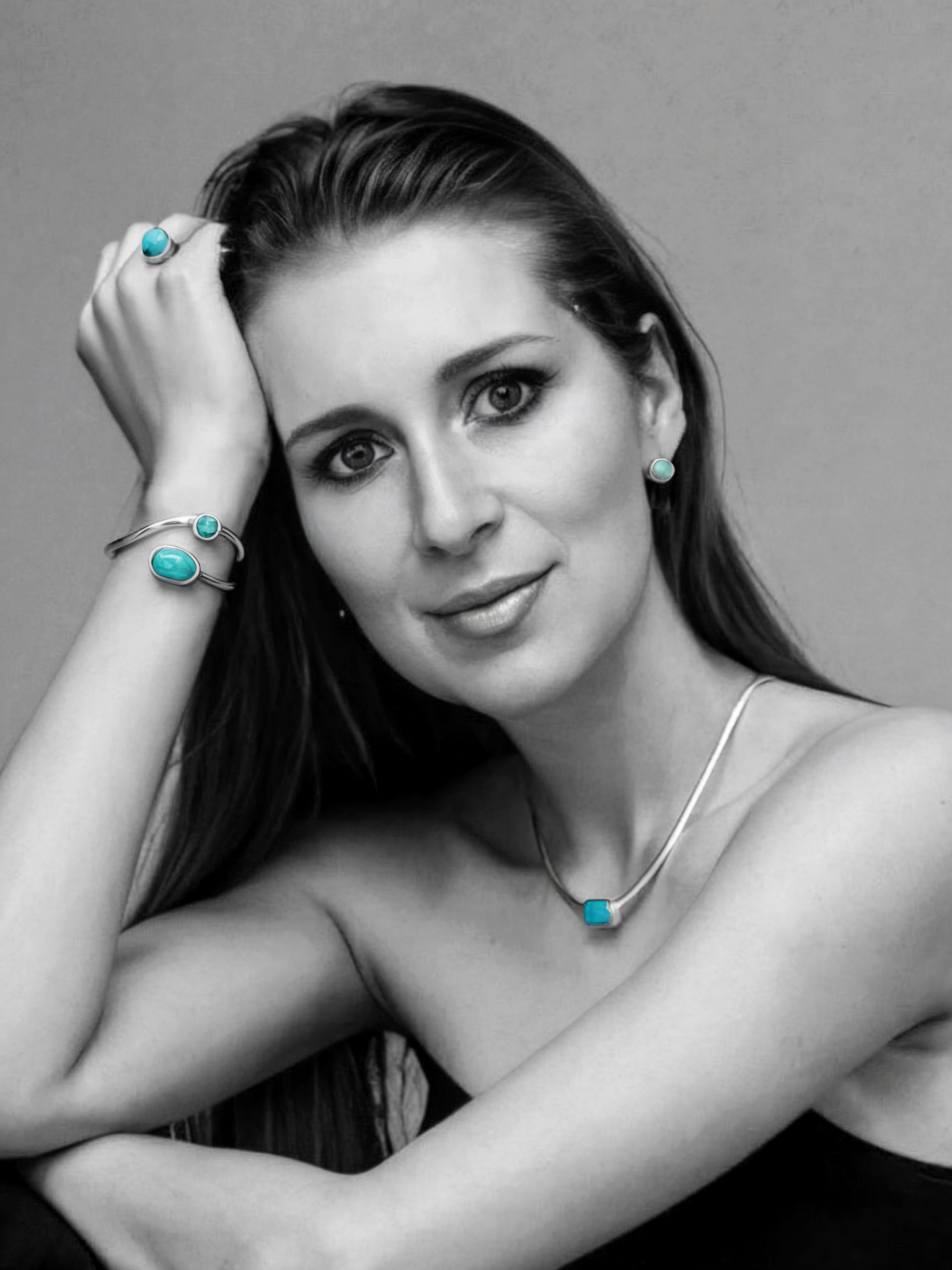
Kimberly Cordova
Kimberly Cordova is the founder and creative director of Wildflower Artisans, a handmade jewelry brand rooted in Santa Fe. Real turquoise, solid sterling silver, and a small line set in solid 14K gold. She built Wildflower around a simple belief: the best jewelry is the kind you actually reach for, not the kind you save for someday.
The collection is built three ways. Some pieces are made in-house, cut by her husband Greg from stones he sources himself, including rough from the family's King's Manassa Mine in Colorado and White Buffalo Mine in Nevada. Some are designed by Kimberly and fabricated by a trusted circle of Santa Fe silversmiths. And some are finished work she curates from artisan makers whose craft meets the same standard, because building a real collection means knowing when to make and when to look.
Turquoise leads, joined by White Buffalo, Wild Horse, Lapis Lazuli, Spiny Oyster, Black Onyx, Opal, and other genuine semi-precious stones. No shortcuts on the stone, the silver, or the story behind either.
Her writing covers everything she has learned along the way: how turquoise forms, how to tell natural from stabilized, what makes one mine different from another, how to read a bezel, and how to shop with confidence in a market that is not always straightforward. It is the kind of plainspoken information she wished someone had laid out for her when she was starting out.
Browse the collection at wildflowerartisans.com. Questions about a stone, a setting, or a specific piece are welcome any time.

0 comments