

A hand-cut cabochon of King's Manassa turquoise rests on a wooden workbench, its deep greens and golden matrix echoing the high desert floor after a rare rain. This stone is a fragment of the earth that carries a specific history from the mine to the artisan's hands. Learning how to choose a turquoise ring requires an eye for these geological details and an appreciation for the steady hands that shaped the silver.
It is understandable to feel a bit of hesitation when you see so many dyed howlite or plastic imitations sold as the real thing. We understand that the technical side of mine names and stone stabilization can feel overwhelming to a new buyer. This guide will help you distinguish genuine stones from clever fakes and select a handcrafted piece that reflects your personal style. We will cover the characteristics of famous mines, the importance of a secure bezel setting, and how to verify the technical value of your artisan-made jewelry.
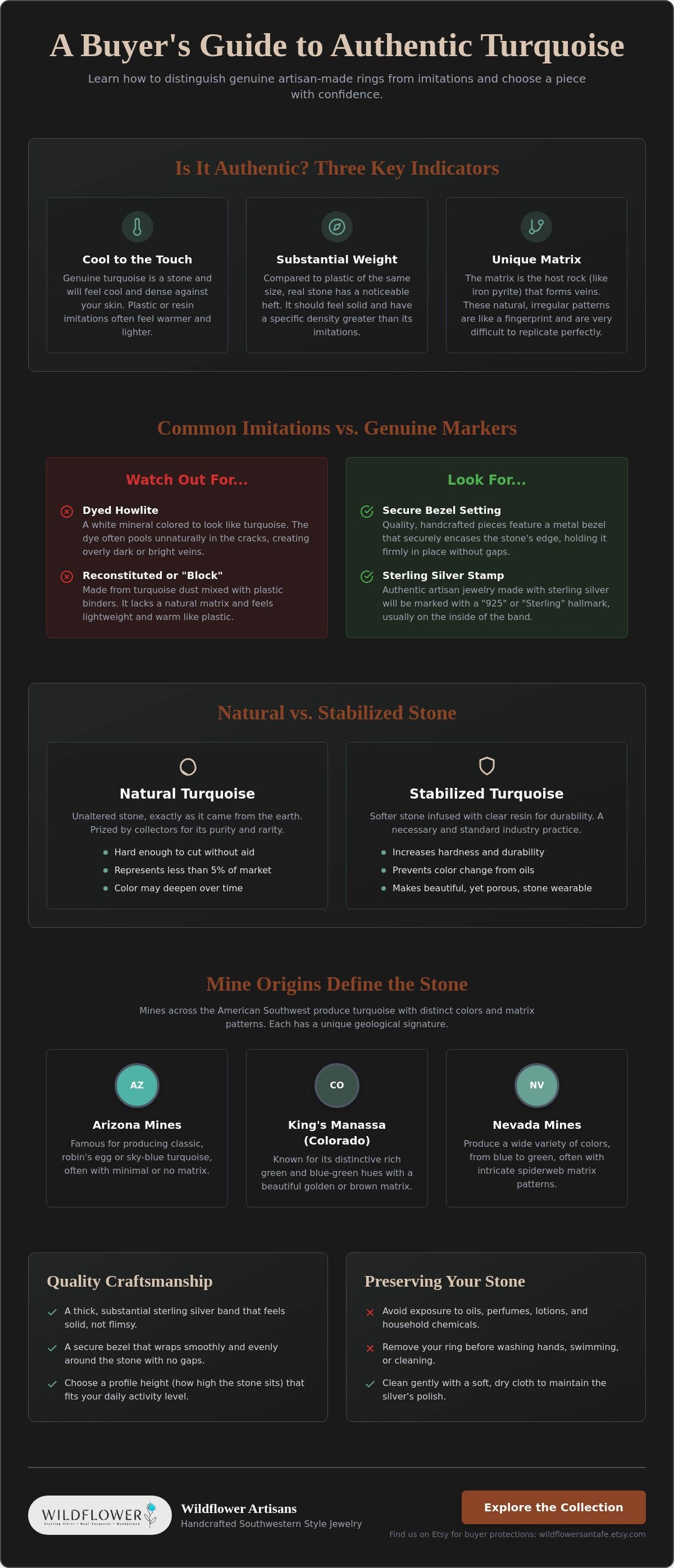
Key Takeaways
- Learn to identify genuine stones by observing the unique matrix and feeling the natural temperature of the hand-cut cabochon.
- Discover how to choose a turquoise ring by understanding how specific mine locations influence the color, hardness, and technical value of the piece.
- Recognize quality artisan-made silver work by inspecting the security of the bezel and the thickness of the sterling silver band.
- Select a setting that balances your personal style with a profile height that comfortably accommodates your daily activity level.
- Understand how to preserve the natural beauty of your ring by protecting the porous stone from oils, perfumes, and household chemicals.
How can you tell if a turquoise ring is authentic?
Authentic turquoise is identified by its specific density, cool temperature, and the presence of a unique matrix. Understanding these physical traits is the first step in learning how to choose a turquoise ring that will last for generations. Real stone feels cold to the touch initially and has a substantial weight compared to plastic block turquoise. You can find more detailed information on the chemical properties of Turquoise on Wikipedia, which explains why this mineral is so distinct from its imitators.
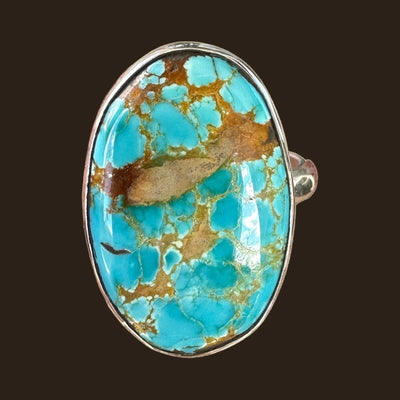
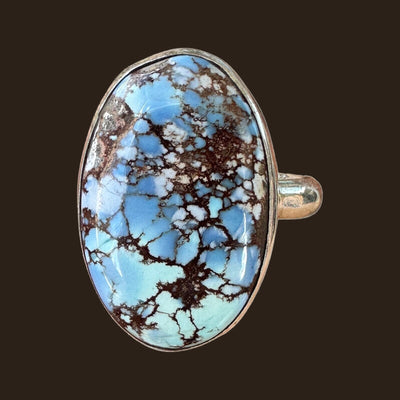
A matrix refers to the host rock remnants that appear as dark veins or intricate spiderweb patterns within the stone. This host rock is often composed of iron pyrite, rhyolite, or chert. These patterns are like a fingerprint. They are impossible to perfectly replicate in mass-produced pieces. When you look closely at a hand-cut cabochon, you should see slight irregularities. Perfection is often a sign of a factory-made imitation.
To better understand this concept, watch this helpful video:
The difference between natural and stabilized stones
Natural turquoise remains exactly as it came out of the ground with no chemical alterations. These stones are rare and highly valued by collectors because they are hard enough to be cut and polished without assistance. Stabilized turquoise has been treated with clear resin to increase the hardness of the stone. Stabilization is a necessary process for softer stones to ensure they don't crumble during the lapidary process. It preserves the color and prevents the stone from absorbing skin oils. At Wildflower Artisans, we appreciate the skill involved in Greg Cordova's professional lapidary work, particularly with stones from his King's Manassa mine, where he ensures each piece is handled with technical precision.
Spotting common imitations in the market
Dyed howlite is a white mineral with dark veins that is chemically colored to mimic turquoise. You can often spot it because the dye pools in the cracks, making the veins look unnaturally dark or bright. Reconstituted or block turquoise is another common imitation. It's made from stone dust and plastic binders rather than solid rock. These pieces feel light and warm like plastic. Always check the setting for quality. A genuine artisan-made ring will feature a secure bezel and a 925 sterling stamp. If the metal feels thin or lacks a hallmark, the stone is likely an imitation as well.
Which turquoise mine origin should you choose?
Mine origin dictates the stone's color, matrix pattern, and hardness, effectively making every ring a wearable piece of geography. Choosing a mine depends on your preference for classic sky blues from Arizona or the earthy green tones often found in Colorado and Nevada. When you're deciding how to choose a turquoise ring, understanding these origins helps you appreciate why one stone looks like a clear desert sky while another looks like a mossy forest floor. Specific mines in the American Southwest are prized for their unique geological signatures, which act as a fingerprint for the stone. According to GIA's guide to turquoise quality, these regional differences are what define the character and technical value of a high-quality cabochon.
Understanding mine history helps you appreciate the rarity of the specific piece you're wearing. Some mines, like the famous Sleeping Beauty in Arizona, have been closed for years, making the remaining stones increasingly difficult to find. Others continue to produce small batches of material that our studio carefully selects for its unique visual narrative. If you are looking for a piece that truly stands out, you might want to browse our current artist-made rings to see how these different mine origins translate into finished jewelry.
Kings Manassa and traditional green hues
Kings Manassa turquoise is known for its rich greens and golden brown matrix, a combination that feels deeply rooted in the Colorado landscape. These stones are a specialty of ours because Greg Cordova cuts these stones from his own family mine, ensuring that every cabochon is handled with personal care and expert lapidary skill. The green tones are a result of higher iron content in the host rock, creating a warm, organic look that contrasts beautifully with polished sterling silver. You can explore the Kings Manassa stone origins for a deeper look at the history of this historic location.
The striking contrast of White Buffalo
White Buffalo is a white stone with a bold black chert matrix often found in the same areas as turquoise in Nevada. It's technically not turquoise because it lacks the copper or aluminum required for that classification, but it's highly prized by collectors for its clean, monochrome look. The stark white against the dark, jagged matrix creates a modern aesthetic that still honors traditional Southwestern style. We often feature this stone in our work for those who prefer a more neutral palette. You can explore the White Buffalo collection to find one of a kind designs that showcase this geological rarity.
What should you look for in sterling silver craftsmanship?
High-quality sterling silver craftsmanship is defined by substantial metal weight, clean solder joints, and a bezel that fits the stone perfectly. Handcrafted rings stand apart from mass-produced versions because the setting is built specifically for the unique dimensions of a hand-cut cabochon.
When you're learning how to choose a turquoise ring, the frame that holds the stone is a testament to the artisan's skill. Small batch production allows us to focus on the fine details that a factory line would miss. We use substantial gauges of sterling silver, which means the ring feels solid and balanced on your finger rather than thin or flimsy. This durability is essential for jewelry meant to be worn daily and eventually passed down as a future heirloom. Citing GIA's guide to turquoise quality reminds us that while the stone's color is vital, the structural integrity of the setting ensures its longevity. Our collection of artisan-made rings showcases the difference that intentional hand-finishing makes in every piece.
Understanding the silver work is a critical part of knowing how to choose a turquoise ring that feels as good as it looks. At Wildflower, we ensure that every setting honors the stone's form. Whether it's a cabochon Greg cut in his studio or a stone Kimberly curated for its specific matrix, the silver must be as authentic as the turquoise itself.
Evaluating the bezel and setting
A bezel is the silver ribbon that wraps around the stone to hold it securely in place. You should look for a smooth bezel that sits flush against the stone without visible gaps. If you see light between the stone and the silver, it indicates a setting that wasn't tailored to that specific cabochon. Artisan touches like scalloped or serrated bezels add texture and highlight the organic edges of the stone. Most importantly, the stone shouldn't rattle or move within its silver housing.
Band construction and comfort
Check for a solid 925 stamp on the inside of the band to confirm the sterling silver content. Comfort is a technical achievement in jewelry design that requires a balanced band. Tapered bands offer more flexibility for daily wear because they allow your finger to move naturally. Wide bands provide a bold statement but require a precise fit to remain comfortable. Artisan-made rings often feature hand-stamped details on the band. These small, intentional marks are the physical signature of the maker and offer a level of detail that mass-produced pieces lack.
How do you select the right ring style for your lifestyle?
Choosing a ring is a practical decision that should reflect how you move through the world. If you spend your day at a keyboard or working in a garden, a high-profile cabochon might catch on sleeves or tools. Selecting a style requires balancing the physical size of the stone with your daily activity level. This is a key part of learning how to choose a turquoise ring that you'll actually enjoy wearing rather than leaving in a jewelry box.
Rings for daily wear should feature lower profiles. This means the stone sits closer to the silver band, reducing the risk of it catching on clothing or snagging on a pocket. Statement rings, by contrast, are designed for visual impact. They often feature larger stones with complex matrix patterns that deserve to be the center of attention. When you choose between these styles, consider the colors you wear most often. Sky blue stones offer a classic contrast to dark denim or white linen. Earthy green stones pair beautifully with warm, autumnal tones and organic textures like wool or leather. If you're ready to find a piece that fits your specific rhythm, explore our current selection of artisan-made rings.
Everyday essentials vs statement pieces
Everyday rings typically feature smaller cabochons and simpler silver work. These pieces are designed to be subtle, providing a touch of Southwestern style without overwhelming your outfit. You can browse the everyday essentials collection to find rings that work well for office environments or casual weekend outings. On the other hand, statement rings use large stones and elaborate silver details to serve as a singular focal point. These are the pieces that start conversations. They showcase the full geological narrative of a specific mine through broad expanses of color and intricate spiderweb matrix.
Determining your ideal ring size
Getting the size right is just as important as the stone itself. Wide bands often require a half size larger than your standard thin band size because they cover more surface area on your finger. They grip the skin differently than a delicate wire band. We recommend measuring your finger at the end of the day when it's at its largest. Temperature and activity can cause your hands to swell slightly. A ring that fits perfectly in the morning might feel uncomfortably tight by dinner. You can consult our rings collection for current sizing availability and to see how different band widths look on the hand.
How do you maintain the beauty of a natural turquoise ring?
Preserve your ring by keeping the stone away from oils, perfumes, and harsh chemicals to prevent color changes in the porous material. Clean the sterling silver setting with a dry polishing cloth rather than liquid jewelry cleaners that could damage the stone's surface. Turquoise is a porous stone, which means it contains microscopic openings that can absorb liquids and skin oils over time. This absorption can lead to a shift in the stone's hue, often turning a bright sky blue into a deeper, more organic green. When you are learning how to choose a turquoise ring, it's helpful to consider that natural, untreated stones are the most susceptible to these environmental changes. Removing your jewelry before you swim, shower, or apply hand lotion is the simplest way to protect the stone's integrity.
The matrix of a stone can also be affected by moisture. Since the matrix is composed of different minerals like iron pyrite or rhyolite, constant exposure to water can cause these elements to oxidize or weaken. This is particularly true for rings with a complex spiderweb pattern where the host rock is more exposed. Treating your jewelry with a gentle hand ensures the technical value and visual narrative of the piece remain intact for years. We often tell our friends that the best way to care for a ring is to make it the last thing you put on in the morning and the first thing you take off at night.
Safe cleaning methods for silver and stone
Avoid using ultrasonic cleaners or steam machines at all costs. The high-frequency vibrations and intense heat can cause the stone to crack or loosen within its silver bezel. Instead, use a dry, soft microfiber cloth to gently buff the silver and the surface of the cabochon. If the stone happens to get wet, dry it immediately with a soft cloth to prevent moisture from seeping into the pores. Never use dip-style silver cleaners. These harsh chemicals are designed for solid metal and can permanently discolor a genuine stone or strip away the intentional oxidation an artisan used to highlight the silver work.
Storing your jewelry properly
Proper storage is just as vital as regular cleaning. Store your ring in a dry place, preferably tucked into a soft pouch to prevent the sterling silver from tarnishing or scratching against other objects. Keep your turquoise separate from harder gemstones like diamonds or sapphires. These harder stones can easily scratch the surface of a softer cabochon if they are tossed together in a drawer. For more specific details on preserving your collection, refer to our care and repair guide for more detailed instructions. By following these small, intentional steps, you ensure your ring remains a vibrant reflection of the Southwestern landscape it came from.
Finding your piece of the Southwest
Finding a ring that resonates with your personal story means looking beyond the surface of the stone to the hands that shaped it. By observing the unique matrix patterns and verifying the technical quality of the sterling silver setting, you can move forward with confidence. Now that you understand how to choose a turquoise ring, you can appreciate the geological history of specific mines and the artisan skill required to set them. We believe that jewelry should be more than an accessory. It's a vessel for emotion and a celebration of natural beauty that lasts a lifetime.
Discover our current selection of artist-made turquoise rings at wildflowerartisans.com, where each stone is hand-selected by Kimberly or features professional lapidary work by Greg Cordova. We guarantee authentic sterling silver and genuine stones in every small batch piece, with national shipping available across the United States. For those who prefer the added protections of a marketplace, we also maintain a presence at wildflowersantafe.etsy.com. We look forward to helping you find a handcrafted piece that feels like home.
Frequently Asked Questions
How can I tell if my turquoise ring is real at home?
Real stone feels cold to the touch and possesses a distinct density that plastic imitations lack. Hold the cabochon against your cheek or wrist to feel its initial temperature. If it warms up instantly, it is likely plastic or resin. Observe the matrix with a magnifying glass to look for depth. Authentic veins have a varied texture, while dyed howlite often shows unnaturally bright color pooling in the cracks.
Is it okay to get a turquoise ring wet?
You should avoid getting your ring wet whenever possible because turquoise is a porous mineral. While a quick splash of water won't cause immediate harm, the stone can absorb moisture and chemicals. Remove your ring before showering, swimming, or washing dishes. Constant exposure to water can weaken the bond between the hand-cut stone and the silver bezel, eventually causing the cabochon to loosen.
Why did my turquoise stone change from blue to green?
Color shifts occur when the stone absorbs skin oils, perfumes, or household chemicals over time. This is a natural evolution for untreated stones. The copper within the mineral reacts with these external elements, often transitioning from a clear sky blue to a deeper, more organic green. This change is part of the stone's unique narrative. It reflects the life the piece has lived with you.
What does stabilized turquoise mean for the value of a ring?
Stabilization involves infusing soft turquoise with clear resin to increase its hardness and durability for daily wear. This process allows beautiful but fragile stones to be shaped into a cabochon without crumbling. While natural, untreated stones are rarer and carry a higher technical value, stabilized pieces are excellent for rings. They resist color changes and physical damage better than softer, untreated material found in some mines.
How do I know what size turquoise ring I need?
The best way to determine your size is to measure your finger at the end of the day when it is at its largest. If you are learning how to choose a turquoise ring with a wide band, you will likely need to go up a half size. A wide band covers more surface area and can feel tighter than a standard thin wire band. Always measure the specific finger where you intend to wear the piece.
What is the best way to clean a sterling silver turquoise ring?
Use a dry, soft polishing cloth to gently buff the sterling silver and the surface of the stone. Avoid liquid jewelry cleaners or ultrasonic machines, as the harsh chemicals and intense vibrations can damage the stone. If the cabochon looks dull, a quick wipe with a clean microfiber cloth will restore its natural luster. This method protects the intentional oxidation an artisan used to highlight the silver work.
Is White Buffalo turquoise actually a type of turquoise?
White Buffalo is technically a white stone with a black chert matrix rather than a variety of turquoise. It lacks the copper or aluminum that define turquoise, but it is highly prized for its striking monochrome appearance. We often feature this stone in our small batch collections for its bold Southwestern style. Much of the White Buffalo lapidary work by Greg Cordova focuses on highlighting these jagged, dark matrix lines.
What is a matrix in a turquoise stone?
A matrix is the remnant of the host rock where the turquoise originally formed over millions of years. These patterns can appear as dark veins, golden brown patches, or delicate spiderweb lines. When you are researching how to choose a turquoise ring, look for a matrix that adds character to the stone. It acts as a geological fingerprint, ensuring that no two artisan-made rings are ever truly identical.
Article by
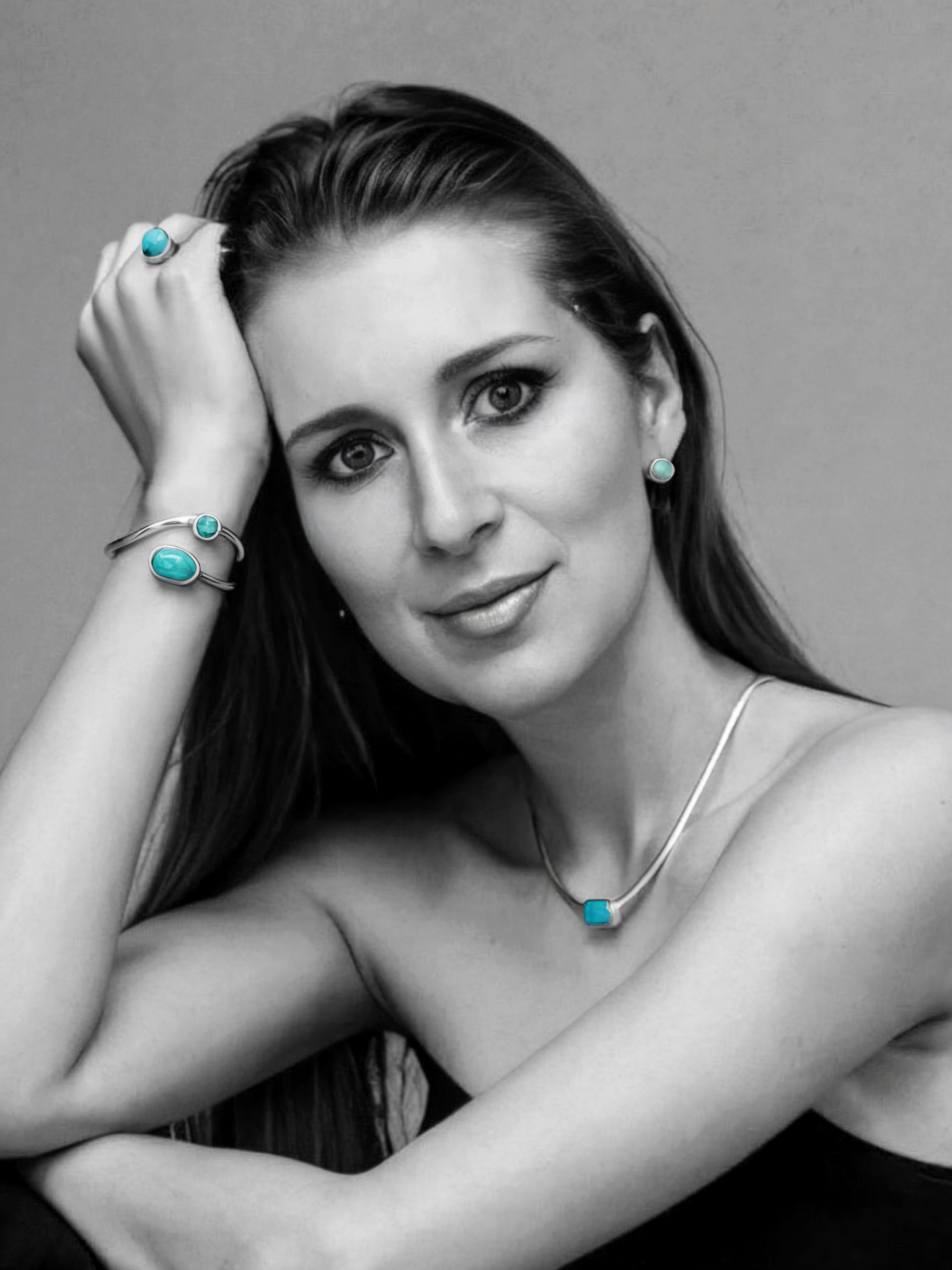
Kimberly Cordova
Kimberly Cordova is the founder and creative director of Wildflower Artisans, a handmade jewelry brand rooted in Santa Fe. Real turquoise, solid sterling silver, and a small line set in solid 14K gold. She built Wildflower around a simple belief: the best jewelry is the kind you actually reach for, not the kind you save for someday.
The collection is built three ways. Some pieces are made in-house, cut by her husband Greg from stones he sources himself, including rough from the family's King's Manassa Mine in Colorado and White Buffalo Mine in Nevada. Some are designed by Kimberly and fabricated by a trusted circle of Santa Fe silversmiths. And some are finished work she curates from artisan makers whose craft meets the same standard, because building a real collection means knowing when to make and when to look.
Turquoise leads, joined by White Buffalo, Wild Horse, Lapis Lazuli, Spiny Oyster, Black Onyx, Opal, and other genuine semi-precious stones. No shortcuts on the stone, the silver, or the story behind either.
Her writing covers everything she has learned along the way: how turquoise forms, how to tell natural from stabilized, what makes one mine different from another, how to read a bezel, and how to shop with confidence in a market that is not always straightforward. It is the kind of plainspoken information she wished someone had laid out for her when she was starting out.
Browse the collection at wildflowerartisans.com. Questions about a stone, a setting, or a specific piece are welcome any time.


0 comments