

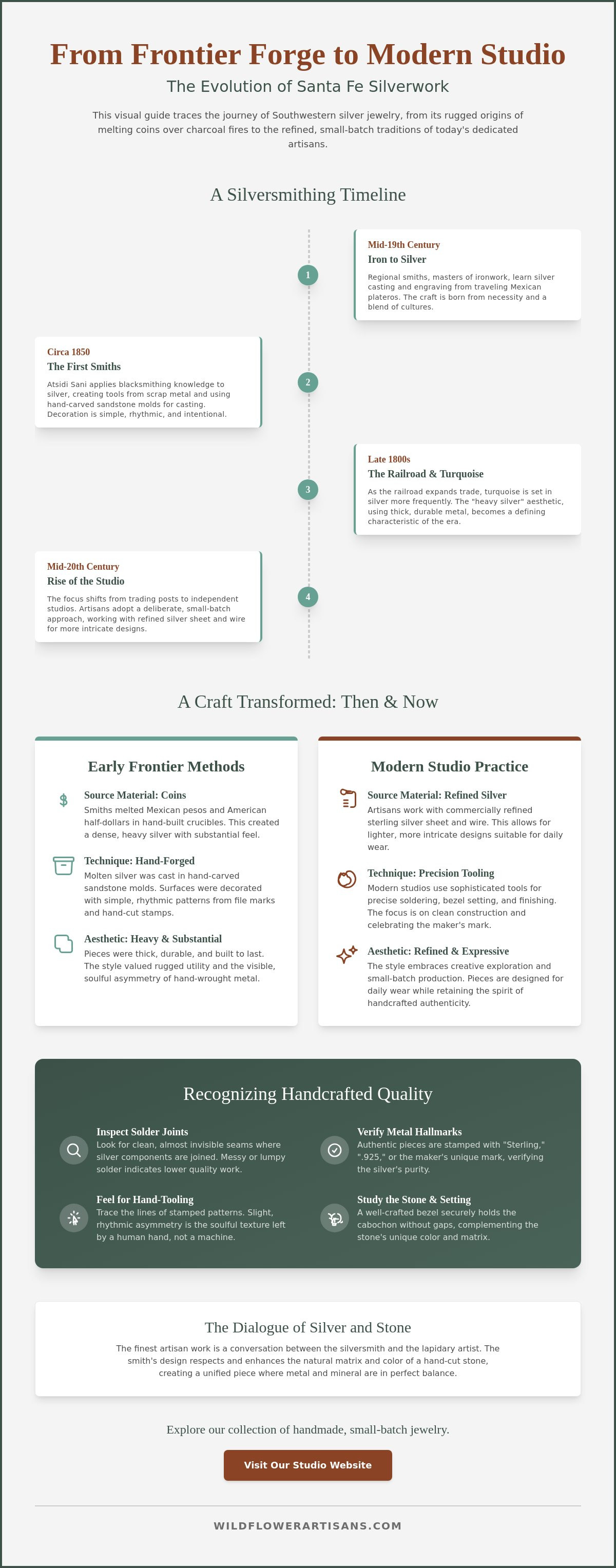
The most telling detail in a piece of sterling silver isn't the high polish of the surface, but the slight, rhythmic asymmetry left by a smith's hand-held punch. It's common to feel a sense of hesitation when faced with cases of bright blue stones, wondering if you're looking at a piece of history or a factory-made imitation. Understanding the history of this distinctive silver jewelry craft reveals a narrative of resilience and technical refinement, moving from the early days of melting silver coins over charcoal fires to the sophisticated studio traditions we celebrate today.
In this article, we'll walk through the evolution of the craft to help you recognize the difference between machine-made uniformity and the soulful texture of hand-tooled work. We'll explore how specific techniques like bezel setting a high-grade cabochon or hand-stamping a heavy cuff define the craft's unique aesthetic. You'll gain a clear understanding of the silversmithing timeline and the confidence to choose authentic, small-batch pieces that carry the true spirit of this rich heritage. Our goal is to turn confusion into a deep appreciation for the intentional details that make each piece a vessel for emotion and a celebration of natural beauty.
Key Takeaways
- Trace the technical shift from early ironwork to the history of Santa Fe silver jewelry to see how regional smiths first learned to tame the metal.
- Develop a discerning eye for quality by learning to inspect solder joints and verify metal hallmarks in contemporary artisan pieces.
- Explore the intentional dialogue between the silversmith and the lapidary artist that brings out the unique matrix and color of every stone.
- Discover how the slow-paced environment of a modern studio preserves hand-tooling traditions while crafting small batch jewelry for daily wear.
History of Santa Fe silver jewelry: The origins of Southwestern silverwork and the early smiths
The history of Santa Fe silver jewelry didn't begin with the polished displays we see in galleries today. It started in the mid-19th century at the smoky intersection of necessity and artistry. Before silver became the dominant medium, regional smiths were masters of iron, forging utilitarian tools and horse gear. This transition from ironwork to silverwork was sparked by the arrival of Mexican plateros. These traveling silversmiths shared their knowledge of casting and engraving, introducing a new visual language to the high desert. The early style was a blend of these imported techniques and the local, grounded aesthetic of the frontier. Metal meets intent.
In the early history of Santa Fe silver jewelry, sourcing raw materials required a mix of ingenuity and trade. Before commercial silver sheet existed, smiths relied on the Santa Fe Trail to bring wealth in the form of silver coins. Mexican pesos and American half-dollars were the primary source of metal. These coins were melted down in small, hand-built crucibles and poured into ingot molds. This process created a dense, heavy silver that felt substantial in the hand. Silver has a memory. To better understand the weight and texture of these early pieces, watch this helpful video:
Atsidi Sani and the first generation of smiths
Atsidi Sani is widely recognized as the first smith to bridge the gap between the blacksmith's forge and the jeweler's bench. Around 1850, he began applying his knowledge of iron to silver, creating his own tools from scrap metal and old files. He didn't have access to modern machinery. Instead, he used hand-carved sandstone molds to cast molten silver into basic shapes. Decoration was equally primitive but deeply intentional. Smiths used simple file marks and hand-cut stamps to create rhythmic patterns on the surface. These markings weren't just decorative; they were the fingerprints of the maker, proving the piece was worked by hand rather than cast in a factory.
From trade goods to wearable art
By the late 1800s, silver jewelry evolved from a personal cultural marker into a significant trade commodity. As the railroad reached the Southwest, the demand for these handcrafted pieces grew. It was during this period that turquoise began to appear more frequently in silver settings. Early smiths would secure a hand-cut cabochon using a simple bezel, often allowing the natural matrix of the stone to dictate the design. This era established the "heavy silver" aesthetic that we still admire. These pieces were thick, durable, and built to last for generations. This foundational period in the history of Native American jewelry set the stage for the technical evolution that would eventually define the history of Santa Fe silver jewelry as a world-class art form. Beauty endures.
The rise of the Santa Fe studio and modern artisan techniques
By the mid-20th century, the landscape of Southwestern craft began to shift. The history of Santa Fe silver jewelry entered a new era where the focus moved from the rugged utility of the frontier to the refined precision of the dedicated studio. This wasn't a rejection of the past. Instead, it was an evolution. Artists began opening independent spaces near the Plaza, moving away from the high-volume trade of the old trading posts. They favored a more deliberate, small-batch approach that allowed for deeper creative exploration. This period in the history of Santa Fe silver jewelry cemented the style as a global aesthetic, one that values the visible mark of the maker over the cold perfection of a machine.
While The origins of Southwestern silverwork were rooted in heavy ingot pieces, modern artisans began working with refined silver sheet and wire. This transition allowed for more intricate designs that were comfortable enough for daily wear. The focus remained on the dialogue between the metal and the stone, but the execution became more sophisticated. It's a tradition we continue today, focusing on the subtle textures that only hand-tooling can achieve.
The Patania influence and the refined aesthetic
Frank Patania and his Thunderbird Shop played a massive role in this technical shift. He introduced a cleaner, more modern look that balanced traditional Southwestern motifs with European design sensibilities. This aesthetic required a high level of skill, which was passed down through a rigorous apprentice system. By teaching young smiths how to use higher gauges of silver, the studio produced pieces that felt delicate yet remained incredibly strong. This move toward refined wearability helped Santa Fe jewelry transition from a souvenir into a legitimate form of fine art.
Preserving the handmade in a digital age
In a world filled with mass-produced, "souvenir" style jewelry, the intentional pace of a Santa Fe studio is a quiet act of rebellion. We don't use high-speed casting to churn out hundreds of identical items. Instead, every bezel is hand-fitted to a specific cabochon. Hand-forged silver retains a structural integrity that machine-made pieces simply can't match. When silver is hammered, the molecules compress, creating a work-hardened metal that resists bending and snapping. This dedication to process ensures that one-of-a-kind artisan pieces aren't just beautiful, but built to survive the rhythms of a lifetime.
Understanding materials: Sterling silver and the lapidary dialogue
The beauty of a finished piece relies on the silent conversation between the metal and the stone. Professional silversmiths in New Mexico work with .925 sterling silver, a standard that ensures 92.5% purity mixed with copper for strength. This reliability was a turning point in the history of Santa Fe silver jewelry, allowing for the precise, fine-lined work we see in modern studios. Unlike the early ingot pieces made from melted coins, sterling silver provides a consistent canvas for the lapidary artist. This partnership is vital. The silversmith builds the house, but the lapidary provides the soul. Understanding stone origins is essential for any collector, as the character of the turquoise, from its deep blue hues to its intricate matrix, is dictated by the specific earth it came from. Greg Cordova works as a dedicated lapidary, cutting high-grade natural turquoise to ensure that every stone retains its raw, organic narrative before it ever reaches the jeweler's bench. This material dialogue is a cornerstone of the history of Santa Fe silver jewelry.
The art of the cabochon and the bezel
In Southwestern style, stones are almost always cut as cabochons. A cabochon is a stone that has been shaped and polished into a smooth, rounded dome rather than being faceted like a diamond. This cut honors the natural flow of the stone's color and pattern. To secure this stone, we use a bezel. This is a thin ribbon of silver that is meticulously hand-fitted around the perimeter of the cabochon. In the evolution of Southwestern jewelry styles, the hand-fitted bezel remains the gold standard for durability. Unlike mass-produced pieces that rely on glue, a properly rolled bezel physically traps the stone in place, ensuring it stays secure through decades of daily wear.
Natural vs. stabilized stones
When we speak of natural turquoise, we are referring to stones that are untreated and chemically unaltered. These stones are pulled from the ground, cut, and polished without the addition of plastics or resins. Natural turquoise is the gold standard for serious collectors because it represents the stone in its purest form. Many stones on the market today are stabilized, a process where pressure and resins are used to harden soft, chalky turquoise. While stabilized stones are common in fashion jewelry, they lack the depth and value of natural material. Look for a vibrant matrix or delicate spiderwebbing. These patterns are the stone's fingerprints, and in natural turquoise, they offer a level of detail that machine-treated stones simply cannot replicate.
Identifying quality in contemporary artisan-made silver
Recognizing high-quality work requires looking beyond the surface of the turquoise. In the history of Santa Fe silver jewelry, the technical integrity of the metalwork has always been as vital as the stone it holds. When you hold a piece, turn it over to inspect the back. You should see clean solder joints and a smooth, snag-free finish. A professional smith takes pride in the hidden parts of their work, ensuring that the structural foundations are as refined as the decorative elements. This commitment to structural integrity is a universal hallmark of craftsmanship; just as a jewelry collector looks for hidden quality, those curating an elegant home often look to Nicholas Wells Antiques for rare furniture that embodies the same artisan excellence. If you see messy globs of metal or rough edges, it is likely a mass-produced item rather than a studio-made piece.
Always check for a hallmark to verify the metal purity. You want to see "925" or "Sterling" stamped clearly into the silver. Next, look closely at the stampwork. Machine-made jewelry is often shallow and perfectly symmetrical. Hand-tooled work, however, reveals slight human irregularities in the depth or spacing of the punch. These subtle variations are the soul of the piece and a primary indicator of the handcrafted process. Finally, assess the weight. Authentic Southwestern style jewelry uses a thicker gauge of silver that feels grounded and substantial. It should not feel flimsy, hollow, or like a lightweight plated base metal.
The importance of finish and patina
Artisans often use intentional oxidation to create visual depth. By darkening the recessed areas of a stamped design, the silver textures become more pronounced. You might find pieces with a high-shine polish that reflects the desert sun, or a brushed, satin finish that offers a more organic, muted glow. Over time, your silver will develop a natural patina. This gradual deepening of color is a record of your history with the piece, adding a layer of character that only comes from regular wear and contact with the skin.
Long-term care for handmade jewelry
Proper care and repair of artisan-made silver ensures it remains a wearable heirloom for generations. Because natural stones are porous, they require gentle handling. You should never submerge your turquoise in water or expose it to harsh household chemicals, as these can permanently alter the stone's color. When you aren't wearing your jewelry, store it in a dry, airtight bag. This simple step prevents excessive tarnishing and protects the silver from the sulfur in the air. Ready to find a piece that meets these high standards? You can browse our collection of artist-made sterling and turquoise to see these quality markers in person.
The Wildflower studio: Continuing the legacy of small-batch jewelry
The Wildflower studio operates as a living extension of the history of Santa Fe silver jewelry. We don't rush the process. Our workroom is a quiet, intentional space that mirrors the slow, steady growth of the high desert landscape. We choose to work in small batches because it allows us to maintain a deep connection to every bezel and every stamp mark. Within these walls, we focus on crafting everyday essentials that honor the technical traditions of the smiths who came before us. These aren't mass-produced items; they are vessels for emotion. We also curate one-of-a-kind pieces that highlight the unique stone matrixes found in the Southwest. Every piece we finish is a celebration of natural, fleeting beauty. If you're ready to see our latest creations, we invite you to explore our recent shop arrivals.
A commitment to authentic materials
Authenticity is the foundation of everything we do. We maintain a strict guarantee against the use of fake jewelry, dyed howlite, or mystery metals that have no place in a professional studio. Our work relies on a direct, transparent connection between the maker and the collector. This begins with the stone. Greg Cordova's lapidary work ensures that every piece of turquoise is natural and untreated, preserving the stone's raw narrative. Kimberly then designs around these stones, balancing artisanal sophistication with a grounded, earthy feel. As artist-gardeners, we find profound beauty in the asymmetrical. We don't strive for the sterile perfection of a factory. Instead, we appreciate the organic variations that prove a piece was touched by human hands. This philosophy ensures that the craft remains a vibrant, breathing practice rather than a museum relic.
The narrative of the handmade object
Why does the history of Santa Fe silver jewelry matter to the modern wearer? It's because a handmade object carries a poetic depth that machine-made items simply cannot possess. When you wear a piece that was forged, filed, and polished in a local studio, you're participating in a story that spans generations. There is an emotional connection forged when you know your jewelry was made with intention and respect for the medium. These pieces aren't just accessories; they are companions for your daily life. Southwestern style jewelry offers an enduring value that transcends the frantic energy of traditional retail. It is a celebration of resilience, a tribute to the earth, and a way to carry a piece of the high desert with you wherever you go. By choosing small-batch, artisan-made silver, you're helping to preserve a craft that finds beauty in the fleeting and the handmade.
Finding your place in the Southwestern tradition
The history of Santa Fe silver jewelry is a living story that continues with every strike of the hammer and every hand-rolled bezel. By looking back at the early smiths and the technical shifts of the mid-20th century, you can better appreciate the intentional details that define a studio-made piece. You now have the tools to distinguish between machine-made uniformity and the soulful, hand-tooled textures that carry a maker's signature. Choosing a piece of jewelry becomes an act of preserving a craft that values authenticity over mass production. It's about finding beauty in the natural matrix of a stone and the enduring strength of 925 sterling silver.
We invite you to explore our curated collection of artisan-made jewelry at wildflowerartisans.com. Every item is handcrafted in our Santa Fe studio with guaranteed natural stones and high-quality sterling silver. We hope you find a piece that resonates with your own narrative and serves as a celebration of the organic and the elegant. Wear your jewelry with the confidence that it was made with respect for the materials and the long lineage of artisans who came before us.
Frequently Asked Questions
Who was the first person to make silver jewelry in the Southwest?
Atsidi Sani is the first documented smith to work with silver in the region, beginning his work around 1850. He was originally a blacksmith who adapted his iron-working skills to the new medium. His transition from forging tools to crafting adornments is a foundational moment in the history of Santa Fe silver jewelry, marking the start of a regional silversmithing tradition.
What is the difference between sterling silver and silver plating?
Sterling silver is a solid metal alloy consisting of 92.5% pure silver mixed with copper for durability. Silver plating is merely a thin layer of silver electroplated over a base metal like brass or copper. While sterling silver is a professional standard that lasts for generations, plating will eventually wear off to reveal the mystery metal underneath.
How did Santa Fe become a hub for artisan jewelry?
Santa Fe became a central hub because of its location on major trade routes and the mid-20th-century shift toward independent artisan studios. As the railroad brought more collectors to the area, smiths moved away from high-volume trading posts to open private workshops near the Plaza. This concentration of talent allowed for a collaborative environment where technical standards for handcrafted work were refined and passed down through apprenticeships.
Is all turquoise used in Santa Fe jewelry natural and untreated?
No, many pieces on the market use stabilized turquoise, which has been treated with resins to harden the stone. Only stones explicitly labeled as natural are untreated and chemically unaltered. In our studio, Greg Cordova cuts natural turquoise to ensure the stone's organic matrix and color remain exactly as they were found in the earth.
What are the most common symbols found in historical Santa Fe silver?
Historical pieces often feature geometric stampwork representing elements of the natural world, such as rain clouds, lightning, and mountain peaks. These motifs were created using hand-forged steel punches, allowing every smith to develop a unique visual signature. These patterns are deeply rooted in the history of Santa Fe silver jewelry and continue to influence the small batch designs we create today.
How can I tell if my turquoise jewelry is handmade or machine-made?
Look for slight human irregularities in the depth of the stampwork and the fit of the bezel around the stone. Machine-made jewelry is often characterized by perfect symmetry and a lightweight, flimsy feel. Handcrafted pieces are typically made from a thicker gauge of silver and will show subtle variations that prove the piece was worked with hand tools rather than cast in a factory mold.
What is a bezel setting and why is it important for stone security?
A bezel setting is a thin ribbon of silver that a smith hand-fits around the perimeter of a cabochon. It is the most secure way to set a stone because the metal is physically rolled over the edge of the turquoise to trap it in place. This method is far superior to the glue-in settings found in mass-produced jewelry, which often fail when exposed to moisture or temperature changes.
How should I clean my artisan-made silver jewelry at home?
The best way to clean your jewelry is to gently buff the silver with a soft, dry microfiber cloth. You should never submerge natural stones in water or use harsh chemical cleaners, as turquoise is porous and can absorb substances that change its color. Storing your pieces in an airtight bag when they aren't being worn will also help prevent excessive tarnishing from the air.
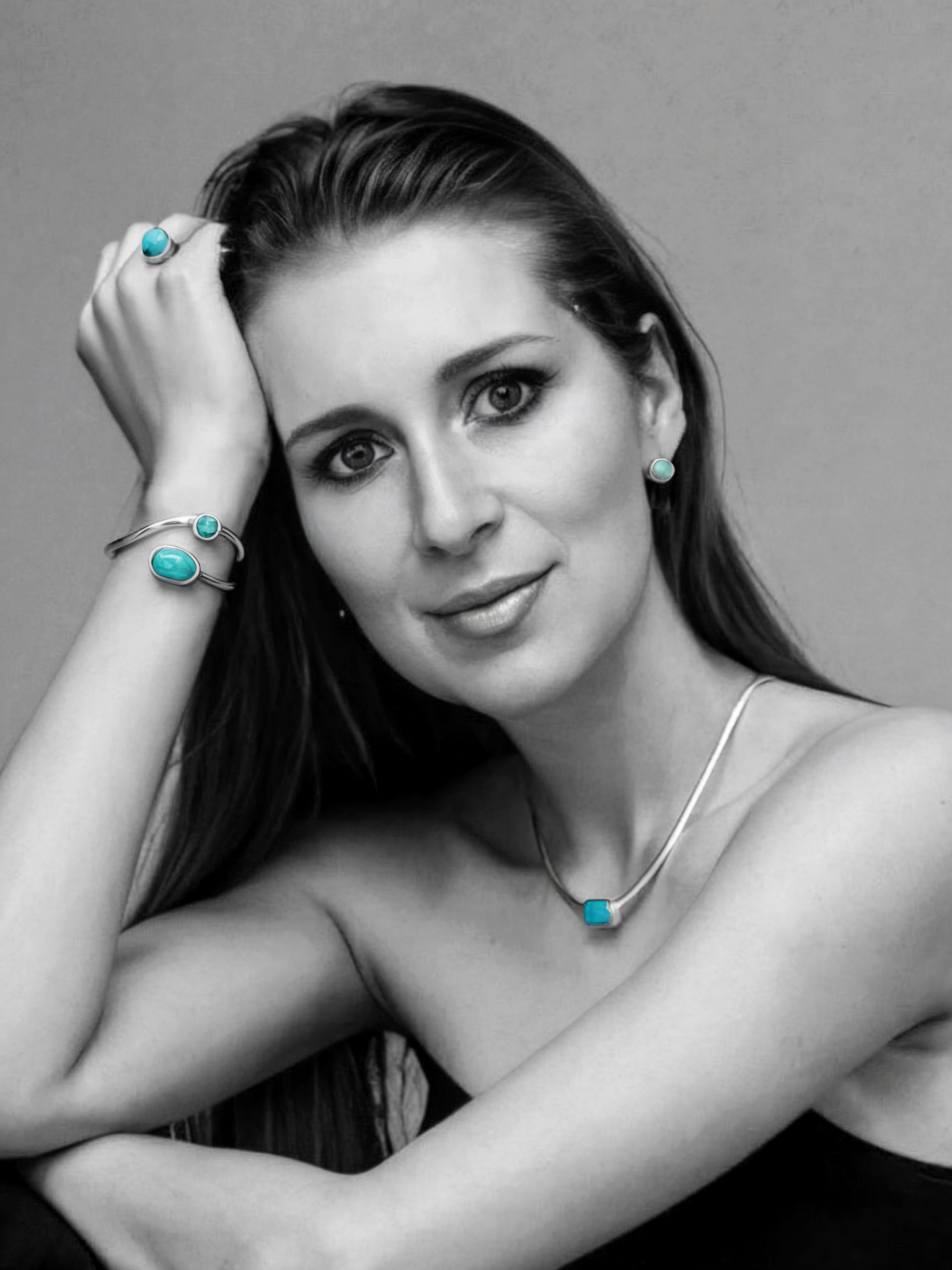
Article by
Kimberly Cordova
Kimberly Cordova is the founder and creative director of Wildflower, a handmade Turquoise and sterling silver jewelry brand based in Santa Fe. She built Wildflower around a simple belief: the best jewelry is the kind you actually reach for, not the kind you save for someday.
Kimberly designs pieces made by hand with a trusted circle of Santa Fe silversmiths, works alongside her husband Greg on in-house lapidary pieces cut from stones including the family's King's Manassa Mine in Colorado and White Buffalo Mine in Nevada, and sources finished work from artisan makers whose craft meets the same standard. The result is a collection with real range and no shortcuts on the stone, the silver, or the story behind either.
Her writing covers everything she has learned along the way: how Turquoise forms, how to tell natural from stabilized, what makes one mine different from another, how to read a bezel, and how to shop with confidence in a market that is not always straightforward. It is the kind of plainspoken information she wished someone had laid out for her when she was starting out.
Shop the Wildflower collection at wildflowerartisans.com, or find us on Etsy at wildflowersantafe.etsy.com if you prefer shopping there. Questions about a stone, a setting, or a specific piece are welcome any time.
0 comments