

Imagine standing in the cool morning air of the high desert as a silver slide catches the sun, resting firmly against the collar of a denim shirt. This simple arrangement of braided cord and stone is more than a piece of jewelry, and it serves as a narrative of the landscape itself. When we look at the history of the bolo tie in western fashion, we see a story that winds through high-altitude workshops and dusty ranch roads. These pieces carry the weight of tradition while remaining light enough for a quiet afternoon in the studio.
You might feel a sense of confusion when hearing the many different stories about who first cinched a leather cord with a silver ring. It is a common worry. We want to help you discover the storied past of the bolo tie, from its debated origins to its status as a staple of modern Southwestern style. By the end of this journey, you will know how to identify the hallmarks of a high-quality artisan piece, such as a hand-cut cabochon and a secure bezel, so you can feel confident wearing a slice of history.
Key Takeaways
- Trace the roots of the bolo tie back to the 1940s when it transitioned from a functional cord to a patented piece of Arizona jewelry.
- Understand the history of the bolo tie in western fashion to distinguish between mass-produced items and high-quality artisan work.
- Learn about the technical evolution of the slide, including how a sterling silver bezel is used to protect a hand-cut cabochon.
- Explore the official recognition of the bolo tie as state neckwear and its modern shift toward a versatile, gender-neutral accessory.
- Identify the hallmarks of authenticity by looking for the unique matrix and color variations that define natural Southwestern stones.
Where did the first bolo tie originate?
The first bolo tie is widely attributed to Victor Cedarstaff, an Arizona silversmith who patented the design in the late 1940s. However, the style likely grew from functional scarf slides and bandana cinches used by residents of the Southwest in the decades prior to its commercialization.
A bolo tie is a distinctive form of neckwear featuring a braided cord, often made of leather, which is secured by a decorative slide and finished with weighted metal tips. This accessory serves as a cornerstone in the history of the bolo tie in western fashion, representing a blend of rugged utility and fine craftsmanship. It is a piece that feels at home on a dusty trail or in a quiet studio, bridging the gap between functional gear and wearable art. It isn't just a tie; it's a piece of the high desert landscape.
To explore the visual evolution of this unique neckwear, watch this helpful overview:
The Victor Cedarstaff patent
Cedarstaff reportedly discovered the concept by accident. While out riding, his hat blew away, and to keep from losing his silver-trimmed hatband, he slipped it around his neck. His companions teased him about his new tie, but the accidental silhouette sparked a business idea. He applied for a patent in the late 1940s to bring this slide-and-cord design to a wider audience. He initially called these pieces "bola ties," a term inspired by the lariats used by South American gauchos. By marketing the accessory as a durable, rugged alternative to silk neckties, he helped it gain a foothold in the wardrobes of ranchers and outdoorsmen who didn't want something that would snag or fray. You can find more details on the broader history of the bolo tie through documented records and regional archives.
The evolution of the Southwestern scarf slide
Long before a formal patent existed, the Southwest was home to a variety of functional neckwear solutions. Many people used simple shells, bone fragments, or small silver rings to cinch their bandanas against the wind and dust. These early slides were tools first and ornaments second. Over time, the transition from a functional tool to decorative jewelry happened within small artisan studios. Silversmiths began to experiment with the slide, adding intricate stampwork or setting stones into the metal. This gradual shift allowed the artisan-made bolo tie to become a vessel for personal expression rather than just a way to hold a scarf in place. It was a slow, organic growth that mirrored the quiet rhythms of desert life, eventually leading to the sophisticated designs we see today in Southwestern style.
How has the design evolved through Southwestern craftsmanship?
The evolution of the bolo tie design saw simple silver slides transformed into complex works of lapidary art through the use of hand-cut stones and heavy-gauge sterling silver. This transition allowed the accessory to move beyond its utilitarian roots into the world of fine jewelry, marking a significant era in the history of the bolo tie in western fashion.
In the early days, a bolo might have been nothing more than a silver coin or a simple stamped disk. As the style grew in popularity, artisans began to focus on the stone as the center of the piece. They started using high-quality materials like King Manassa turquoise, which is known for its rich greens and golden-brown matrix. This shift required a higher level of technical skill, as each stone had to be carefully set to ensure it could withstand daily wear on a moving cord. Today, the resurgence in modern Western fashion shows that these design choices remain just as relevant now as they were decades ago.
The importance of the cabochon
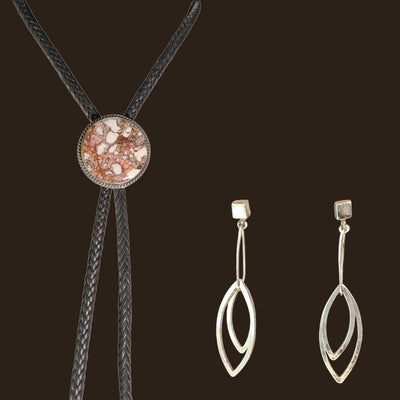
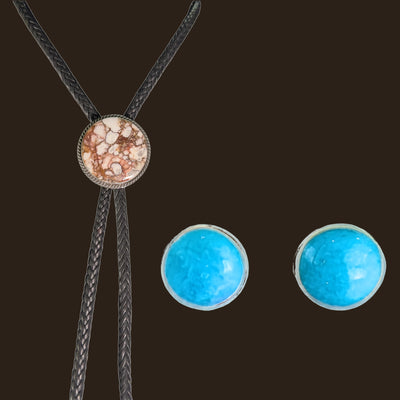
A cabochon is a stone that has been shaped and polished into a smooth, rounded form rather than being cut with flat facets. This specific cut is the standard for bolo slides because it highlights the natural character of the stone. When we look at a hand-cut stone, we are looking for the matrix, which is the host rock pattern that weaves through the turquoise. Whether it is a delicate spiderweb pattern or a bold, chunky matrix, these details ensure that every piece is unique. Greg Cordova at CuttingEdgeTurquoise.com performs the specialized lapidary work required to prepare these genuine stones for our small batch studio work.
Technical components from slide to tips
A bezel is the thin metal rim that holds a stone in place on the slide, and it must be perfectly fitted to the stone's perimeter for security. Beyond the stone, the mechanics of the slide itself are vital. The mechanism must be tensioned correctly so it stays in place without damaging the leather cord. We often see the cord itself evolve from basic bootlace to hand-cut leather or even braided sterling silver. Aiguillettes are the decorative metal tips that provide weight and prevent the cord from fraying at the ends. These components, combined with heavy-gauge silver, give a well-made bolo a substantial, grounded feel that mass-produced retail items simply can't match. If you are ready to find a piece that balances this history with modern style, you can explore our current collection of artisan-made jewelry.
When did the bolo tie become official Western neckwear?
The bolo tie achieved formal recognition as official Western neckwear during the mid-20th century, beginning with Arizona's designation of the accessory as its official state neckwear in 1971. This transition from informal ranch wear to a symbol of regional pride allowed the bolo to be accepted in formal settings, including boardrooms and statehouses, as a legitimate alternative to the traditional silk tie.
Embracing the history of the bolo tie in western fashion means understanding how a piece of braided cord and silver became a statement of identity. In the decades following the second world war, there was a significant shift in how people viewed regional attire. What once felt like strictly utilitarian gear for the high desert began to appear in more formal social circles, often paired with crisp, tailored Western shirts. It wasn't just about holding a collar together; it was about honoring a specific way of life.
The 1940s and 1950s popularity boom
During the late 1940s and into the 1950s, the popularity of Western style surged across the United States. Much of this was driven by the silver screen, where film stars showcased a polished version of the Western look. These figures often wore bolos featuring large, hand-cut stones, which encouraged individuals to seek out unique pieces that reflected their own tastes. The accessory became a canvas for personal expression, allowing the wearer to choose a specific matrix or stone color that resonated with them. This era helped the history of the bolo tie in western fashion move beyond the borders of the Southwest and into the national consciousness.
Statehood and symbolic status
The symbolic weight of the bolo tie is most evident in its legal status within Southwestern states. While Arizona acted early, New Mexico officially designated the bolo as the state tie in 2007 after decades of it being the unofficial standard for local leaders. Texas also recognized the accessory in 2007, declaring it the Official State Tie of Texas. These designations were not merely ceremonial; they honored the long lineage of silver and stone craftsmanship that defines the region. Wearing a bolo in these states today signals an appreciation for this historical and artistic lineage, reflecting a deep connection to the land and its artisans.
Today, choosing to wear a bolo often marks a quiet respect for this heritage. It is a way to honor the small batch traditions of the Southwest while maintaining a professional silhouette. For those looking to build their own collection of these meaningful pieces, our everyday essentials offer a starting point that balances tradition with modern wearability.
Why is the bolo tie resurging in modern Western fashion?
Modern fashion has shifted toward gender-neutral accessories, making the bolo tie a versatile choice for everyone. This movement isn't just about utility; it's about a deeper connection to the history of the bolo tie in western fashion. We see collectors moving away from mass-produced retail items in favor of one of a kind pieces that tell a specific story. Whether it's paired with a crisp button-down or a casual denim jacket, the bolo offers a way to stand out without feeling overdone. This resurgence is supported by recent trends in 2025 and 2026, where luxury brands and high-profile celebrities have brought the accessory back to the forefront of global style.
Collectors now prioritize the origin of the stone and the reputation of the lapidary artist. Knowing exactly where a stone was mined and who cut it adds a layer of value that a factory-made piece can never replicate. For us, this means working with specific mines and ensuring the lapidary work meets our studio standards. Much of the stone cutting for our pieces is done by Greg Cordova at CuttingEdgeTurquoise.com, whose expertise in identifying and shaping high-quality turquoise is well-respected. When you wear a piece with a known provenance, you aren't just wearing jewelry; you are carrying a piece of the high desert's geological history.
Shifting from formal to casual wear
While earlier decades often reserved the bolo for formal Western events or high-level state business, we now see it as a common sight in everyday fashion. It provides a grounded, sophisticated look without the constriction of a traditional silk tie. The use of natural materials like leather and stone appeals to those seeking an organic aesthetic. It feels real. It feels intentional. This shift reflects a broader desire for accessories that can transition from a morning in the studio to an evening out. The bolo tie fits this need perfectly, offering a silhouette that is both professional and relaxed.
The appeal of small batch artisan work
Small batch production ensures that each bolo tie has a specific narrative and a high level of detail. Buyers are increasingly looking for everyday essentials that have a clear connection to the maker. Authenticity is the primary driver for modern collectors. They avoid dyed stones or mystery metals, preferring the weight of sterling silver and the unique matrix of a natural stone. A hand-cut cabochon set in a secure bezel represents a level of care that mass-production cannot match. Understanding this craftsmanship is a vital part of the history of the bolo tie in western fashion. If you're ready to find a piece that reflects this artisanal quality, you can browse our full collection of handcrafted jewelry.

Finding authentic artisan made bolo ties today
Identifying a genuine bolo tie requires looking at the quality of the sterling silver and the stone. Natural stones will have unique variations in color and matrix that imitation materials cannot replicate.
The history of the bolo tie in western fashion is defined by the skill of the silversmith and the lapidary artist. A high-quality slide features a sturdy backplate and a hand-soldered bezel that is perfectly fitted to the perimeter of the cabochon. A bezel is the thin metal rim that holds a stone in place on the slide, and it should be smooth to the touch without any gaps. Mass-produced imports often use thin, plated metals or stones that have been stabilized with plastic resins to make them easier to cut. In our studio, we look for stones that maintain their natural integrity, showcasing the raw beauty of the earth through intricate spiderweb patterns or bold matrix lines.
Selecting genuine stones and metals
It's helpful to refer to a turquoise buying guide to understand the specific characteristics of different mines. Natural, untreated stones are rare and carry a depth of color that imitation materials like dyed howlite or block turquoise can't mimic. When you examine the silver, look for a hallmark. A hallmark is a small stamp placed on the back of the piece that confirms the purity of the sterling silver and ensures you're investing in a piece with lasting value. We avoid stabilized or composite stones to ensure the stone you receive is exactly as it came from the ground, preserving the authentic history of the bolo tie in western fashion.
The Wildflower studio approach
At Wildflower, we prioritize the stone first. This means we allow the unique shape and color of the turquoise to dictate the final design of the slide. Our bolo ties are crafted in small batches, ensuring that every bezel and cord tip receives individual attention. Much of the technical lapidary work is handled by Greg Cordova at CuttingEdgeTurquoise.com, who specializes in hand-cutting stones from specific mines like King Manassa or Royston. We believe in plainspoken expertise, helping you find a piece that honors historical Southwestern style while fitting perfectly into your modern life. It isn't just about the sale; it's about a shared appreciation for the craft.
If you're ready to find a piece that balances this history with modern style, you can browse our full collection of handcrafted bolo ties on our website. For those who prefer the familiar protections of a larger marketplace, you can also find a curated selection of our work at wildflowersantafe.etsy.com.
Honoring the Craft in Your Everyday Style
The journey from a simple silver hatband in Arizona to official state neckwear shows that this accessory is far more than a trend. It is a testament to the enduring nature of Southwestern craftsmanship. By understanding the history of the bolo tie in western fashion, you can better appreciate the technical skill involved in setting a hand-cut cabochon within a sterling silver bezel. These pieces are intended to be worn and passed down, carrying the quiet stories of the mines and the makers with them. We believe that jewelry should be a grounded reflection of the landscape, standing apart from the world of mass production.
We remain committed to small batch studio production, ensuring that every piece features artist-made sterling silver and genuine turquoise from known mines. This focus on authenticity ensures that your jewelry remains a reliable vessel for your personal expression. If you are looking for a piece of history to call your own, browse our collection of artisan-made bolo ties at Wildflower. You can also find a curated selection of our studio work at wildflowersantafe.etsy.com for those who prefer the Etsy platform and its buyer protections. We hope you feel confident in choosing a piece that speaks to your personal narrative and the rich heritage of the Southwest.
Frequently Asked Questions
Who is credited with inventing the bolo tie?
Victor Cedarstaff is the individual most often credited with the invention, having patented the design in the late 1940s. While he commercialized the slide-and-cord style, the history of the bolo tie in western fashion includes a long lineage of similar neckwear used by Southwestern residents. These earlier versions often utilized simple silver rings or shells to secure bandanas, providing the functional foundation for the patented design we recognize today.
Is a bolo tie considered formal or casual wear?
A bolo tie is a versatile accessory that fits both formal and casual settings depending on the materials used. In Southwestern states, it is frequently accepted as a formal alternative to a silk necktie for weddings and government business. When crafted with heavy-gauge sterling silver and a hand-cut cabochon, it carries a sophisticated weight that complements a tailored suit just as easily as a denim jacket.
What are the metal tips on a bolo tie called?
The decorative metal tips found at the ends of the braided cord are called aiguillettes. These components serve a dual purpose by providing necessary weight to help the tie hang properly and preventing the leather or cord from fraying over time. In high-quality artisan pieces, these tips are often made of solid sterling silver and may feature small stamped details that match the main slide design.
How do you know if a bolo tie is authentic?
Authenticity is found in the hallmarks of the silver and the unique characteristics of the stone. Look for a sterling silver stamp on the back of the slide and examine the turquoise for a natural matrix or spiderweb pattern. Mass-produced items often use plastic-based block turquoise or thin, plated metals. A genuine piece will have a secure bezel and a substantial feel that reflects small batch studio production.
Can women wear bolo ties in modern fashion?
Women are a primary audience for the modern resurgence of the bolo tie as a gender-neutral accessory. It functions beautifully as a statement necklace when worn with a blouse or a simple dress. Many women choose to style them lower on the chest for a relaxed look or cinch them tightly at the collar for a more structured, sophisticated appearance that honors the history of the bolo tie in western fashion.
What is the best way to style a bolo tie?
The best way to style a bolo tie is to coordinate the scale of the slide with the weight of your outfit. A larger, one of a kind piece works well with heavy fabrics like wool or denim, while a smaller slide is better suited for lighter shirts. You can wear the slide high at the collar for a traditional silhouette or lower it slightly to create a more casual, open-neck feeling.
Why are some bolo ties so expensive?
The price of a bolo tie reflects the quality of the materials and the level of artisan skill required. High-grade turquoise from specific mines and heavy-gauge sterling silver are significant investments. The time spent on specialized lapidary work, such as hand-cutting a cabochon and soldering a custom bezel, ensures the piece is a durable work of art rather than a fleeting fashion accessory. Quality takes time.
What states have the bolo tie as their official neckwear?
Arizona, New Mexico, and Texas have all designated the bolo tie as their official state neckwear. Arizona was the first to do so in 1971, followed by New Mexico and Texas in 2007. These official recognitions celebrate the deep roots of the accessory in Southwestern culture and its transition from a functional ranch tool to a respected symbol of regional identity and artistic heritage.

Article by
Kimberly Cordova
Kimberly Cordova is the founder and creative director of Wildflower Artisans, a handmade Turquoise and sterling silver jewelry brand rooted in Santa Fe. She built Wildflower around a simple belief: the best jewelry is the kind you actually reach for, not the kind you save for someday.
Kimberly designs pieces made by hand with a trusted circle of Santa Fe silversmiths, works alongside her husband Greg on in-house pieces with stones he cuts, both from the family's King's Manassa Mine in Colorado and White Buffalo Mine in Nevada and from rough he sources from other mines, and curates finished work from artisan makers whose craft meets the same standard. Turquoise leads the collection, joined by White Buffalo, Wild Horse, Lapis Lazuli, Spiny Oyster, and other genuine semi-precious stones. The result is a collection with real range and no shortcuts on the stone, the silver, or the story behind either.
Her writing covers everything she has learned along the way: how Turquoise forms, how to tell natural from stabilized, what makes one mine different from another, how to read a bezel, and how to shop with confidence in a market that is not always straightforward. It is the kind of plainspoken information she wished someone had laid out for her when she was starting out.
Browse the collection at wildflowerartisans.com. Questions about a stone, a setting, or a specific piece are welcome any time.
0 comments