

A single turquoise cabochon rests in the palm of your hand, its surface a map of deep sky blues and a dark, intricate matrix that tells a story older than the high desert itself. Finding a piece that speaks to your soul is a quiet, intentional journey. It's often clouded by the fear of ending up with dyed howlite or a mystery metal that irritates your skin. At Wildflower Artisans, we believe the search for custom turquoise jewelry should be a celebration of authenticity rather than a lesson in skepticism.
You deserve a piece that's as genuine as the landscape it came from, free from the confusion of technical jargon and mass-produced imitations. We promise to help you identify authentic materials and navigate the artisan process so you can find a piece that truly resonates with your personal style. In the following sections, we'll explore the differences between stabilized and natural stones, the significance of known mine origins, and how to ensure your jewelry is built on a foundation of quality sterling silver.
Key Takeaways
- Learn how small batch production and careful stone selection distinguish custom turquoise jewelry from mass-produced items.
- Understand the technical differences between natural untreated stones and stabilized turquoise to ensure your jewelry meets your expectations for durability.
- Discover how professional lapidary work and hand-cut cabochons determine the final shape and light reflection of a finished piece.
- Identify which settings, such as a traditional bezel or a substantial sterling cuff, best showcase the unique matrix patterns of high-quality stones.
- Gain the tools to start your collection by finding artisans who offer transparency regarding the specific mine origin of their materials.
What makes custom turquoise jewelry different from mass-produced pieces?
Custom turquoise jewelry is defined by an intentional, small batch process where an artisan oversees every step from selecting the stone to the final polish. Unlike mass-produced items that often rely on mystery metals or dyed imitations, these pieces prioritize material integrity and the unique character of each stone. An artisan might spend hours deciding which angle of a raw stone best highlights a spiderweb pattern or a deep chocolate matrix. This matrix is the host rock material that appears as patterns or veins within a turquoise cabochon, and it gives the stone its distinct personality. Understanding the Turquoise gemstone properties helps you appreciate why a hand-cut stone holds more value than a plastic imitation.
The importance of sterling silver standards
Choosing authentic turquoise jewelry means looking closely at the metal that holds the stone. Sterling silver is a specific standard, requiring 92.5 percent pure silver mixed with 7.5 percent of another metal, usually copper, for strength. This isn't just a technicality. Solid sterling silver is essential for longevity because it doesn't flake or peel like plated metals. If your jewelry tarnishes or sustains a scratch after years of wear, it can be cleaned and repaired. Base metals often hide under a thin silver wash, eventually revealing a dull, orange-toned core that can't be restored or sized by a jeweler.
Small batch vs mass production
The heart of the artisan process is the lack of a "cookie-cutter" aesthetic. In a small batch environment, we create one piece at a time. This intentionality allows for subtle variations that reflect the natural growth of the stone rather than forcing it into a pre-made mold. Mass production relies on uniform designs, which often requires stones to be crushed and reconstituted with resin to fit identical settings. When you know the hands that worked the metal, the jewelry becomes more than an accessory. It is a vessel for emotion and a celebration of Southwestern style. This connection is lost in the frantic energy of traditional retail, where items are made by the thousands and lack a distinct voice or known origin.
How do you choose the perfect stone for a custom design?
Choosing the perfect stone for custom turquoise jewelry involves balancing the visual appeal of color and matrix patterns with the practical needs of hardness and durability. While natural stones offer rarity and an untreated finish, stabilized stones provide the structural strength necessary for pieces meant for daily wear, such as rings or cuffs. You'll want to consider how the stone's origin influences its look, as mines like Kingman or Royston produce very different color profiles that can change the entire mood of a design.
A stone's journey from the earth to your jewelry begins as a cabochon. A cabochon is a stone that has been shaped and polished into a smooth, rounded top rather than faceted like a diamond. This traditional cut is the best way to display the intricate details that have defined the History of turquoise jewelry for centuries. When you look at a stone, you're seeing a record of the minerals present during its formation. Copper creates the classic robin's egg blues we often associate with the Southwest, while the presence of iron or aluminum results in earthy greens and deep teals.
It's also vital to understand the difference between natural and stabilized materials. Natural turquoise is exactly as it came from the ground, only cut and polished. It's rare and can be quite soft, which is why many stones undergo stabilization. This process involves infusing the porous stone with a clear resin to harden it and lock in its color. It doesn't make the stone "fake," but it does make it more resilient. If you're looking for something to wear every day without worry, a stabilized stone is often the practical choice.
Understanding color and matrix
The matrix is the host rock that remains embedded in the turquoise, creating those famous veins and patterns. Some collectors seek out a spiderweb matrix, which consists of fine, interconnected lines that look like a delicate web across the surface of the cabochon. These patterns occur naturally and ensure that no two stones are ever identical. Whether you prefer a clean, clear blue or a stone heavy with dark, chocolate-toned matrix, the choice is entirely personal. You can explore our current collection of hand-cut stones to see these patterns in person.
Mine-specific characteristics
Collectors often value stones from specific locations because many of these mines are now closed or produce very limited quantities. For example, the deep, mossy greens of King Manassa turquoise are easily distinguished from the bright blues of other Arizona mines. You might also find yourself drawn to White Buffalo stones, which offer a stark, sophisticated contrast of white and black. Understanding these stone origins adds a layer of depth to your collection, turning a simple accessory into a piece of geological history with a known provenance.
What role does professional lapidary work play in jewelry quality?
Lapidary work is the quiet bridge between a raw, dusty mineral and a finished piece of custom turquoise jewelry. It's the art of cutting and polishing stones, a task that requires both a steady hand and a deep understanding of geological structure. This step determines the final shape, the luster, and the physical stability of the jewelry. When you work with expert cutters, like those providing Greg Cordova’s lapidary work, you're ensuring the stone is prepared to last for generations. A poorly cut stone is more than just an aesthetic issue. It may crack during the setting process or sit unevenly in a bezel, leading to a piece that feels unfinished or fragile.
Designing high-quality custom turquoise jewelry requires this level of technical mastery. Without a precise cut, the connection between the stone and the silver is compromised. The artisan must understand the hardness of the specific stone and how it will react to the heat and pressure of the silversmithing process. This technical expertise is what separates a studio piece from something found in a mass-market retail shop.
The stone-first philosophy
In our studio, we follow a stone-first philosophy. This means the jewelry design is built around the natural, organic silhouette of the stone rather than forcing the stone into a pre-determined mold. Most mall jewelry uses calibrated stones, which are machine-cut to identical sizes. While this makes mass production easier, it strips the stone of its character. A hand-cut cabochon preserves the unique narrative of the matrix and the original shape of the rough rock. Achieving a perfect fit for a silver bezel requires immense precision. The metal must wrap tightly around the stone's edge, holding it secure without the need for excessive adhesives.
From rough rock to cabochon
The journey from a rough rock to a polished cabochon involves several deliberate steps. First, the stone is sawn into thin slabs to reveal the internal patterns. From there, it's ground into a rough shape and then refined using progressively finer grits. The final stage is polishing, which brings out the natural luster and depth of color. This entire process happens by hand in an artisan studio. We use traditional techniques to preserve the stone's character, ensuring that the final piece reflects the quiet, steady pace of the creative process rather than the frantic energy of a factory floor. By focusing on these small details, we create jewelry that feels grounded and intentional.
Which jewelry styles work best for showing off unique stones?
Choosing the right setting for custom turquoise jewelry is about finding a balance between protecting the stone and letting its natural light shine. A simple bezel or a substantial sterling cuff provides the perfect stage for a high-quality cabochon. A bezel is a thin strip of metal that the artisan carefully wraps around the edge of a stone to hold it securely in place. This method is preferred in artisan-made work because it highlights the stone's silhouette without distracting the eye with unnecessary prongs or busy metalwork. It creates a clean, intentional frame that respects the organic shape of the material.
Rings and pendants for daily wear
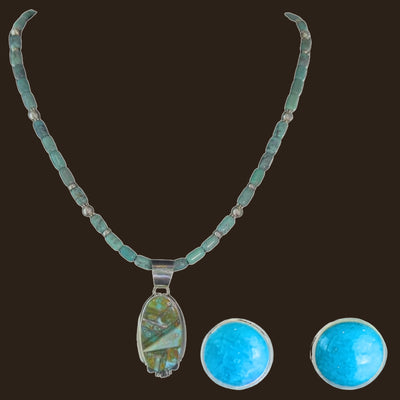
There is a certain intimacy in wearing one-of-a-kind rings. Since your hands are often in your line of sight, a ring allows for constant, close inspection of the stone's matrix and subtle color shifts. You can appreciate the fine spiderweb patterns or the deep, earthy tones of the host rock while you go about your day. Pendants offer a similar versatility. They can be worn alone as a quiet anchor or layered with other Southwestern style pieces for a more curated, textured look. When we design these for daily wear, we prioritize the weight and comfort of the sterling silver. The metal should feel substantial but never heavy enough to become a burden. It's about finding that grounded, comfortable fit that moves with you through the seasons.
Statement cuffs and bolo ties
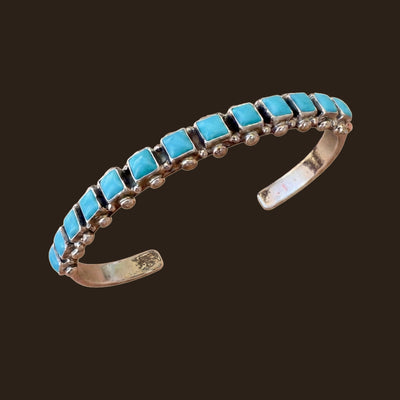
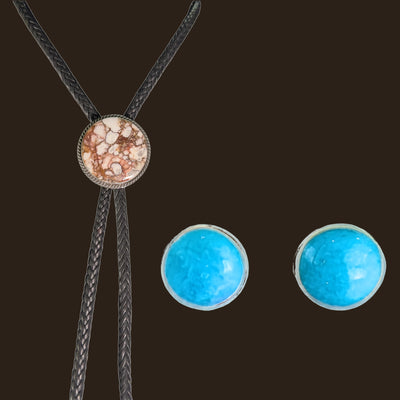
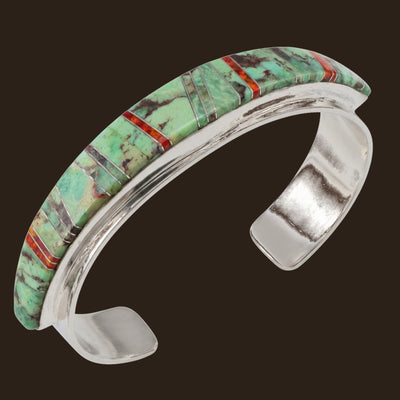
For stones that carry a larger presence, a wide cuff bracelet offers the surface area needed to tell a full geological story. These pieces are often the focal point of an outfit, showcasing a large, hand-cut cabochon that might be lost in a smaller setting. Cuffs require a high level of durability, especially in the gauge of the silver, to ensure the stone stays protected during movement. The silver acts as a protective cradle for the turquoise, ensuring the edges don't chip or wear down. Bolo ties have also seen a shift from traditional wear to modern, genderless accessories. They provide a unique canvas for stones with bold matrix patterns or unusual, asymmetrical shapes. Whether it's a heavy cuff or a refined bolo, these larger designs emphasize the raw, natural beauty of the material, allowing the stone to be the primary narrator. You can explore these different silhouettes in our current collection of artisan-made jewelry to find the style that feels most like you.

How can you start your own custom collection?
Building a collection of custom turquoise jewelry is a slow, intentional journey that often begins with a single piece that captures your attention. It isn't about filling a jewelry box overnight. Instead, it's about curating a small batch of items that carry personal meaning and known origins. You might start with a small pair of studs or a hand-cut ring that feels grounded and honest. By prioritizing one well-made sterling silver piece over several mass-produced or plated items, you ensure your collection has the integrity to last for decades. This approach turns each acquisition into a chapter of your own story rather than just another retail purchase.
Finding your first piece
If you're unsure where to begin, we suggest looking toward everyday essentials that naturally fit into your current wardrobe. These are the pieces you'll reach for on a Tuesday morning, items that feel comfortable and familiar. Consider which stones reflect your personal color preferences. Do you find yourself drawn to the mossy greens of the high desert or the bright, clear blues of a summer sky? A collection is a slow build over many years, and there is no rush to find every style at once. Let your aesthetic eye guide you toward stones that resonate with your own sense of beauty, finding joy in the asymmetrical and the organic details of each cabochon.
Verifying authenticity
Honest communication is the foundation of any reliable artisan relationship. You should always feel comfortable asking questions about stone treatments and the specific origins of the materials used. Avoid mystery metals that can irritate the skin or mystery stones that lack a clear history. A reputable studio will be plainspoken about whether a stone is natural or stabilized. They should also be able to tell you about the lapidary work involved. For instance, knowing that a stone features Greg Cordova’s lapidary work provides a level of certainty about the quality and care taken during the cutting process. Look for a guarantee of authenticity that confirms the silver is 92.5 percent pure and the turquoise is genuine. This transparency transforms the buying process into a thoughtful conversation, ensuring that the piece you bring home is exactly what it claims to be.
Find a piece that speaks to your spirit
Selecting custom turquoise jewelry is a quiet act of intention. It's about looking past mass-produced imitations to find the honest beauty in a hand-cut cabochon. We've seen how expert lapidary work by Greg Cordova ensures a stone's stability and how the right setting highlights a unique spiderweb matrix. By prioritizing guaranteed authentic sterling silver and stones with known mine origins, you're choosing a piece that will age as gracefully as the high desert landscape. Our artist-owned studio remains dedicated to these genuine materials and the slow, rhythmic pace of small batch creation. Fine details matter. Each piece is more than an accessory; it's a vessel for emotion and a celebration of natural, fleeting beauty.
Explore our latest handcrafted pieces at wildflowerartisans.com to find a stone that tells your story. If you prefer the familiar protections of a larger marketplace, you can also browse our studio work at wildflowersantafe.etsy.com. We hope you find a piece that resonates deeply with your personal style and becomes a cherished part of your journey.
Frequently Asked Questions
Is custom turquoise jewelry more expensive than store-bought pieces?
Custom turquoise jewelry usually carries a higher price point than mass-produced pieces because it reflects the cost of genuine materials and dedicated artisan labor. When you choose a handcrafted piece, you're paying for the time spent selecting a specific stone and the skill required to work the metal by hand. Commercial jewelry often lowers costs by using base metals or synthetic stones. Wildflower Artisans prioritizes solid sterling silver and mine-specific stones, ensuring that your investment holds its value and character for years to come.
What is the difference between natural and stabilized turquoise?
Natural turquoise is stone that has been cut and polished exactly as it came out of the ground without any chemical alterations. It's quite rare and often softer than treated varieties, making it a prize for collectors. Stabilized turquoise has been infused with a clear resin to harden the stone and preserve its color. This process is a standard industry practice that makes the material durable enough for daily wear in pieces like rings or cuffs without changing the stone's organic beauty.
Can I wear my turquoise jewelry every day?
You can certainly wear your jewelry every day, provided you take a few simple precautions to protect the stone's surface. Since turquoise is a porous material, it's best to remove your pieces before swimming, showering, or applying lotions and perfumes. Choosing a stabilized stone for items like rings can also provide the extra durability needed for a busy lifestyle. Regular wear actually helps prevent the silver from tarnishing as quickly, as the natural oils from your skin provide a light protective barrier.
How do I know if the silver in my jewelry is genuine?
Genuine sterling silver is traditionally marked with a .925 stamp, indicating that the piece contains 92.5 percent pure silver. This hallmark is the industry standard for quality and ensures the metal won't flake or reveal a different color underneath over time. Wildflower uses only solid sterling silver, which allows your jewelry to be cleaned and repaired for years to come. Avoiding mystery metals is the best way to prevent skin irritation and ensure your piece remains a lasting part of your collection.
What does the term "matrix" mean in turquoise stones?
The matrix is the host rock material that appears as intricate patterns, veins, or splotches within a turquoise cabochon. These markings are remnants of the mother stone where the turquoise originally formed over millions of years. Depending on the mine, the matrix might be a deep chocolate brown, a metallic gold, or a fine black spiderweb. It gives each piece of custom turquoise jewelry a unique narrative and ensures that no two stones are ever identical.
How should I clean my handcrafted sterling silver jewelry?
The best way to clean your jewelry is with a dry, soft polishing cloth designed specifically for sterling silver. Avoid using liquid jewelry cleaners or harsh chemicals, as these can damage the delicate surface of the turquoise stone. If the silver is heavily tarnished, a gentle buffing with a dedicated cloth will usually restore its original luster. Storing your pieces in a cool, dry place when they aren't being worn will also help maintain their finish and prevent unnecessary oxidation.
Why do stones from different mines have different colors?
The color of a turquoise stone is determined by the specific minerals present in the ground where it formed. Copper creates the classic bright blues we see in Arizona mines, while the presence of iron or aluminum results in the earthy greens found in Nevada or Colorado. This geological variety is why stones from the Kingman mine look so different from those found at Royston. Each location offers a distinct color profile that collectors value for its rarity and known origin.
Is White Buffalo actually a type of turquoise?
White Buffalo is not technically turquoise, though it's often grouped with it because it's found in the same geological environments and worked by the same artisans. It's a white stone with black or brown chert matrix that comes from a single mine in Nevada. Because it lacks the copper or iron needed to create blue or green hues, it's classified as a separate mineral. Its stark, sophisticated contrast has made it a favorite for modern Southwestern style designs that prioritize a bold, monochromatic look.

Article by
Kimberly Cordova
Kimberly Cordova is the founder and creative director of Wildflower Artisans, a handmade Turquoise and sterling silver jewelry brand rooted in Santa Fe. She built Wildflower around a simple belief: the best jewelry is the kind you actually reach for, not the kind you save for someday.
Kimberly designs pieces made by hand with a trusted circle of Santa Fe silversmiths, works alongside her husband Greg on in-house pieces with stones he cuts, both from the family's King's Manassa Mine in Colorado and White Buffalo Mine in Nevada and from rough he sources from other mines, and curates finished work from artisan makers whose craft meets the same standard. Turquoise leads the collection, joined by White Buffalo, Wild Horse, Lapis Lazuli, Spiny Oyster, and other genuine semi-precious stones. The result is a collection with real range and no shortcuts on the stone, the silver, or the story behind either.
Her writing covers everything she has learned along the way: how Turquoise forms, how to tell natural from stabilized, what makes one mine different from another, how to read a bezel, and how to shop with confidence in a market that is not always straightforward. It is the kind of plainspoken information she wished someone had laid out for her when she was starting out.
Browse the collection at wildflowerartisans.com. Questions about a stone, a setting, or a specific piece are welcome any time.
0 comments