

The most striking white with turquoise jewelry often features a stone that's not technically turquoise at all. While the high-contrast look of snowy minerals against deep black matrix is a staple of Southwestern style, the mineralogy behind these pieces is frequently misunderstood. You've likely felt the frustration of trying to distinguish a rare, hand-cut cabochon from a piece of dyed howlite or a mass-produced imitation. With the Sleeping Beauty mine closed since 2012, the demand for these alternative white stones has grown, making clear identification more important than ever.
We want to help you navigate these choices with the confidence of a seasoned collector. You'll learn the specific differences between White Buffalo and common substitutes, ensuring your next sterling silver bezel holds a genuine, high-quality stone. We also explore how to integrate these bold, small-batch pieces into a modern wardrobe for a look that feels refined rather than cluttered. This guide provides the technical knowledge and styling perspective needed to grow a collection rooted in authenticity and thoughtful craftsmanship.
Key Takeaways
- Understand the mineral science behind the white with turquoise aesthetic and why stones like White Buffalo are the preferred choice for this high-contrast style.
- Learn to identify high-quality artisan craftsmanship by looking for smooth silverwork and secure bezels that protect your hand-cut cabochons.
- Master the art of styling bold Southwestern jewelry by choosing one meaningful statement piece to anchor your look without overcrowding.
- Distinguish between genuine minerals and common imitations like dyed howlite to ensure your collection holds real value.
- Explore the benefits of small-batch jewelry where the design is intentionally built to showcase the natural character of the stone.
What stones create the white with turquoise aesthetic?
The white with turquoise look is typically achieved through high-contrast stones like White Buffalo or Wild Horse paired with classic blue or green turquoise. This palette relies on a deliberate balance of light and shadow. In Southwestern style, you'll rarely see faceted gems that sparkle under artificial light. Instead, artisans use a cabochon, which is a stone that's been shaped and polished into a smooth, rounded dome. This traditional cut allows the natural character and intricate patterns of the stone to take center stage. To understand the chemistry behind these materials, it's helpful to look at Turquoise mineral properties, which explain why true turquoise is almost always blue or green due to the presence of copper and iron.
The dark patterns you see weaving through these light stones are called the matrix. This host rock provides the necessary contrast that makes the white with turquoise palette so visually effective. Whether it's a fine spiderweb or a chunky, blocky pattern, the matrix is what gives each hand-cut piece its unique fingerprint. It's the grounding element that ties the airy whites and sky blues back to the earth from which they were pulled.
Understanding White Buffalo stone
White Buffalo is a rare find, and ours comes from our family's claim at the White Buffalo mine near Tonopah, Nevada. While it's often called white turquoise in casual conversation, it isn't turquoise. It forms in the same veins as turquoise but lacks the copper required for blue coloration. We prize this stone for its porcelain-white surface and deep black or brown flint-like chert matrix. Because it's found in only one location, it's frequently set in a heavy bezel of sterling silver to protect its edges. You can learn more about the stone origins of White Buffalo to see why collectors value its scarcity. For those looking for specific cuts, you can find professional lapidary work from the White Buffalo mine that highlights these stark contrasts.
Wild Horse and other white minerals
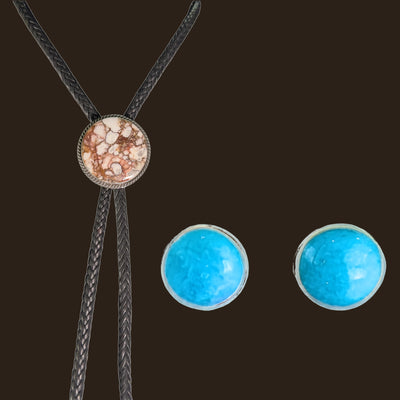
If you're looking for something with a bit more warmth, Wild Horse is an excellent alternative for your collection. This stone is a mixture of magnesite and hematite, which results in a softer white often accented by a reddish-brown matrix. It feels more earthy and grounded than the starker, high-contrast finish of White Buffalo. Artisans often pair these warmer whites with Kingman turquoise to create a traditional Southwestern palette. This combination of sky-blue and desert-white creates a versatile look that bridges the gap between high-contrast modern styles and classic, small-batch artisan designs.
How do you style white and turquoise jewelry?
Styling white and turquoise jewelry involves balancing high-contrast stones with neutral tones to create a clean, intentional look. This combination transitions easily from a morning in the studio to an evening gathering. Sterling silver acts as the neutral bridge in these pieces, connecting the cool, snowy tones of white minerals with the vibrant depth of turquoise. When you choose jewelry from a small batch studio, you ensure that the specific matrix of each stone remains the focal point of your ensemble. This approach to styling draws from the long history of Southwest silverwork, where the focus has always been on the quiet harmony between metal and mineral.
The everyday essentials approach
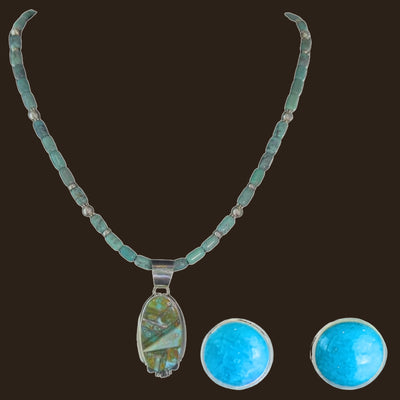
For a subtle daily look, start with turquoise stud earrings that provide a soft pop of color near the face. These smaller pieces are excellent for those who want a hint of Southwestern style without the weight of larger ornaments. You might add a delicate turquoise ring featuring a clean bezel setting to your hand for a touch of artisan detail. Mixing white stones with your turquoise pieces allows for a layered, organic feel that doesn't look overly matched or mass-produced.
Creating a statement for special occasions
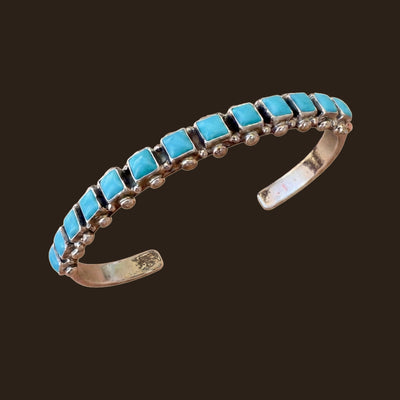
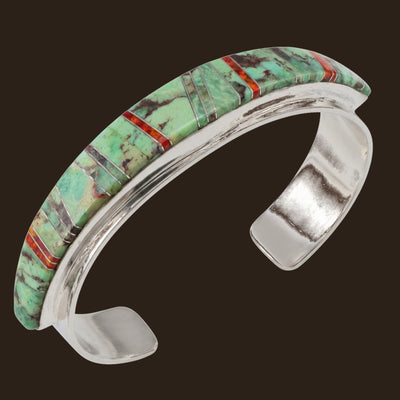
When an occasion calls for something more intentional, choose a bold turquoise cuff bracelet to serve as your primary accessory. A wide cuff provides enough surface area to showcase a complex spiderweb matrix, which often acts as a natural conversation starter. If you're wearing a neutral white shirt, a pendant necklace with a high-contrast white stone provides a striking focal point. Always consider how the scale of the jewelry complements your frame to ensure the piece feels like a natural extension of your personality. You can browse our latest artisan creations to find a piece that resonates with your personal aesthetic.
Is white turquoise a real mineral?
Pure white stones cannot be turquoise by definition because the mineral requires copper or iron to achieve its characteristic blue or green hues. Instead, the term "white turquoise" is a common marketing label used for high-quality white minerals like White Buffalo that are found in similar geological environments and share similar cutting properties. While these stones are beautiful and rare, they're mineralogically distinct from the blue and green stones most people associate with the Southwest. Understanding this distinction is the first step in building a collection that's both authentic and valuable.
Most pieces marketed as white with turquoise are actually distinct minerals that form in the same arid regions as traditional turquoise. These stones often lack the metallic elements needed for color, resulting in a clean, snowy appearance. Natural stones are those that haven't been chemically treated, stabilized, or dyed to alter their appearance. We believe in letting the stone speak for itself, respecting the millions of years it took for these minerals to form. This is why we value the expert lapidary work of Greg Cordova at CuttingEdgeTurquoise.com. He carefully cuts each cabochon to highlight the natural beauty and unique matrix of the material without the need for artificial enhancements. This level of transparency is what separates a collector's piece from a simple fashion accessory.
The Mohs scale and stone durability
When choosing jewelry for daily wear, understanding durability is paramount. The Mohs scale is a 1 to 10 rating system used to determine mineral hardness, where diamonds are a 10 and talc is a 1. White Buffalo typically ranks between 5.5 and 6, which is very similar to genuine turquoise. This level of hardness ensures that your rings and cuffs can withstand the occasional bump without scratching easily. It makes these white minerals a reliable choice for artisan-made pieces meant to be worn and loved for years. Unlike softer stones that might dull over time, a well-set white cabochon retains its polish and sharp contrast, making it an excellent candidate for a sturdy bezel setting.
Avoiding dyed howlite and fakes
The popularity of the white with turquoise aesthetic has led to an influx of imitations, most notably dyed howlite. Howlite is a naturally white, porous stone that is often chemically colored to mimic the look of blue turquoise. You can usually spot these fakes by looking for a matrix that appears too uniform or "painted on." Authentic artisan-made pieces will always disclose the specific mine and stone type. At Wildflower, we prioritize education through our turquoise buying guide so you can recognize the natural irregularities in the matrix that confirm a stone is not mass-produced plastic or block material. A genuine stone will have depth and variation in its matrix that synthetic alternatives simply cannot replicate.
How to identify quality in white and turquoise pieces?
High-quality jewelry is identified by the precision of the lapidary work and the structural integrity of the sterling silver setting. You should look for a securely seated cabochon within a hand-fitted bezel and silverwork that feels smooth and intentional to the touch. Identifying quality in white with turquoise jewelry requires a close look at the physical relationship between the stone and its housing. A well-made piece features a stone that sits flush against the silver, leaving no gaps where dust or moisture might collect over time. The edges should be filed and polished until they feel soft against the skin, a sign that the artisan didn't rush the finishing process. In Southwestern style, we define quality by a quiet respect for the raw materials and the visible "hand" of the maker.
Small batch production allows us to treat every stone as a separate narrative rather than a component in a factory line. When you examine the high-contrast look of white with turquoise, look closely at how the matrix meets the surface of the stone. In genuine artisan work, the matrix is a structural part of the mineral's history, showing natural depth and slight irregularities. Mass-produced imitations often have matrix patterns that look painted on or repeat too perfectly across different pieces. This organic variation is what gives a piece its soul, ensuring your collection remains a personal reflection of the natural world rather than a retail duplicate.
Evaluating the lapidary work
A well-cut cabochon will have a consistent, balanced dome and a high polish without visible scratches or flat spots. The way a stone is hand-cut can significantly impact its value and how it reflects the light of the high desert. Greg Cordova is known for his precision in cutting rare stones like King’s Manassa, and you can observe his professional lapidary work in the sharp, clean lines of his stones. A precise cut ensures the stone is protected by its setting while showcasing the most vibrant parts of its matrix.
The importance of sterling silver
Sterling silver is an alloy containing 92.5 percent silver, known for the specific strength and luster required for daily wear. It's important to avoid mystery metals or plated jewelry, which can irritate the skin and tarnish in ways that are difficult to restore. Quality silverwork often features hand-stamped details or saw-cut bezels that provide a textured, tactile quality you can feel when you run your thumb over the metal. These small, deliberate details are the hallmarks of a piece built to last for generations. You can browse our handcrafted artisan pieces to see these technical details in our latest studio creations.

Why choose artisan-made white and turquoise jewelry?
Artisan-made jewelry represents a direct connection between the person who wears the piece and the artist who brought it to life. This relationship is far removed from the anonymity of mass-market retail, where pieces are often stamped out by the thousands in automated factories. When you choose an artisan-made piece featuring white with turquoise, you're participating in a tradition that values the individual over the identical. At Wildflower, we practice a stone-first philosophy. This means we don't force a stone into a pre-made mold; instead, the silverwork is built around the specific dimensions and personality of the hand-cut cabochon to ensure the mineral is the true protagonist of the design.
Every stone we work with has a narrative written in its matrix over millions of years. Because these minerals are pulled from small, specific veins in the earth, no two pieces can ever be exactly the same. One stone might feature a tight, black spiderweb pattern, while another offers a broad, cloudy white surface. This inherent uniqueness means your jewelry is a one-of-a-kind creation that reflects your own individuality. Supporting independent studios also ensures the continuation of Southwestern style techniques that have been passed down through generations of makers. It's a way to keep the craft alive and grounded in the communities where these styles originated, ensuring that the human element remains at the center of the work.
The Wildflower studio process
Kimberly curates our selection to reflect an aesthetic that is both whimsical and deeply grounded in the natural world. We believe that jewelry should feel like a celebration of fleeting, organic beauty rather than a sterile product. Transparency is central to our process, and we provide clear information regarding stone origins and whether a stone is natural or has undergone stabilization. Our one-of-a-kind collection showcases our most distinctive pairings of white and turquoise, where the contrast of the minerals creates a striking visual balance. This transparency helps you build a collection with the confidence that you're wearing genuine, ethically sourced materials.
Building a collection with intention
Building a jewelry collection is most rewarding when it's done with intention and patience. Each piece should be a discovery that resonates with your personal history or a specific memory of the high desert landscape. Artisan jewelry is an investment in human skill and quality materials like sterling silver and genuine minerals. Instead of following fleeting fashion trends, focus on finding high-contrast white with turquoise pieces that offer a sense of place and a tactile connection to the earth. A well-chosen cuff or pendant becomes a companion over time, gaining character as the silver develops a natural patina and the stone remains a constant reminder of the land's quiet beauty.
Finding Your Perfect Southwestern Pair
Choosing white with turquoise jewelry is an intentional step toward a more refined and personal Southwestern style. You now understand that while these snowy stones aren't chemically turquoise, their rarity and high-contrast matrix make them a valuable addition to any small batch collection. By prioritizing genuine sterling silver and natural materials, you avoid the common pitfalls of mass-produced imitations. Our studio remains dedicated to a stone-first philosophy, featuring authentic minerals from the King's Manassa and White Buffalo mines. Every piece we offer showcases the precision of hand-cut cabochons by lapidary artist Greg Cordova, ensuring the natural narrative of the stone is preserved.
We invite you to explore our latest handcrafted jewelry arrivals at Wildflower to find a piece that speaks to your own sense of wonder, or visit our Etsy shop for additional artisan-made selections. We look forward to helping you find a piece that resonates with your personal journey.
Frequently Asked Questions
Is white buffalo the same as white turquoise?
White Buffalo is mineralogically distinct from turquoise because it lacks the copper and iron required to create blue and green hues. While it is often marketed as "white turquoise" due to its similar cutting properties and shared mining locations in Nevada, it is its own stone. We value it for its stark porcelain finish and deep black matrix, which provides a beautiful contrast in artisan-made pieces. This stone offers a unique aesthetic for those seeking a high-contrast Southwestern style.
How do I clean my turquoise and sterling silver jewelry?
Use a soft, damp cloth with mild soap and warm water to gently clean your jewelry. Avoid ultrasonic cleaners, steam, or harsh chemicals, as turquoise is a porous stone that can absorb liquids and discolor over time. For the sterling silver components, a dedicated polishing cloth works best to remove tarnish without disturbing the surface of the stone. Store your pieces in a dry place away from direct sunlight to preserve the luster of the cabochon and the integrity of the silver.
Can I wear turquoise and white stones every day?
You can wear these pieces daily if you take basic precautions to protect the stones from impact and harsh chemicals. Most minerals used for the white with turquoise look rank between 5 and 6 on the Mohs scale, making them durable enough for regular use in rings and cuffs. It is best to remove your jewelry before swimming, exercising, or using household cleaners. This care ensures the natural matrix and silver finish remain intact through years of wear.
Why does some turquoise have a black matrix?
The black matrix in turquoise and white stones is the host rock, often consisting of iron pyrite, chert, or manganese oxide. This material was present when the stone formed in the earth millions of years ago. We appreciate these dark spiderweb patterns because they provide a grounding contrast to the lighter minerals. This matrix is what makes each hand-cut piece a unique record of the geological history of the specific mine where it was discovered.
What is the best way to tell if turquoise is real?
A genuine stone will have an irregular matrix with visible depth, whereas imitations like dyed howlite often look painted on or too uniform. You can also check the seller's transparency regarding the specific mine origin and the price of the piece. Authentic artisan-made jewelry will feel cool to the touch and won't have the plastic feel of block turquoise. If the color looks unnaturally bright or remains identical across multiple pieces, it is likely a synthetic substitute.
Does white turquoise change color over time?
Natural stones are porous and can gradually change color if they absorb skin oils, perfumes, or lotions over many years. While some collectors appreciate this slow transformation as a sign of the jewelry's history, you can minimize it by putting your pieces on last after applying cosmetics. This organic process distinguishes genuine, untreated stones from stabilized versions that have been chemically sealed. It is a natural characteristic of working with minerals pulled directly from the earth.
What is a bezel setting in Southwestern jewelry?
A bezel setting is a thin band of sterling silver that is hand-fitted around the perimeter of a cabochon to hold it securely. Unlike prong settings used in faceted jewelry, a bezel provides a protective wall that guards the edges of the stone against chips and daily wear. This technique is a hallmark of Southwestern style. It emphasizes the natural shape of the stone while ensuring the piece is sturdy enough to be passed down as a family heirloom.
Where do the best white and turquoise stones come from?
The most sought-after white minerals are White Buffalo, found near Tonopah, Nevada, and Wild Horse, found in Arizona. For traditional turquoise, mines in Arizona like Kingman and Sleeping Beauty, or New Mexico's Cerrillos hills, are world-renowned for their quality. These high-desert locations provide the specific mineral conditions required to produce the vibrant blues and snowy whites found in our small batch studio creations. Each mine produces a distinct matrix that collectors can often identify at a glance.

Article by
Kimberly Cordova
Kimberly Cordova is the founder and creative director of Wildflower Artisans, a handmade Turquoise and sterling silver jewelry brand rooted in Santa Fe. She built Wildflower around a simple belief: the best jewelry is the kind you actually reach for, not the kind you save for someday.
Kimberly designs pieces made by hand with a trusted circle of Santa Fe silversmiths, works alongside her husband Greg on in-house pieces with stones he cuts, both from the family's King's Manassa Mine in Colorado and White Buffalo Mine in Nevada and from rough he sources from other mines, and curates finished work from artisan makers whose craft meets the same standard. Turquoise leads the collection, joined by White Buffalo, Wild Horse, Lapis Lazuli, Spiny Oyster, and other genuine semi-precious stones. The result is a collection with real range and no shortcuts on the stone, the silver, or the story behind either.
Her writing covers everything she has learned along the way: how Turquoise forms, how to tell natural from stabilized, what makes one mine different from another, how to read a bezel, and how to shop with confidence in a market that is not always straightforward. It is the kind of plainspoken information she wished someone had laid out for her when she was starting out.
Browse the collection at wildflowerartisans.com. Questions about a stone, a setting, or a specific piece are welcome any time.
0 comments