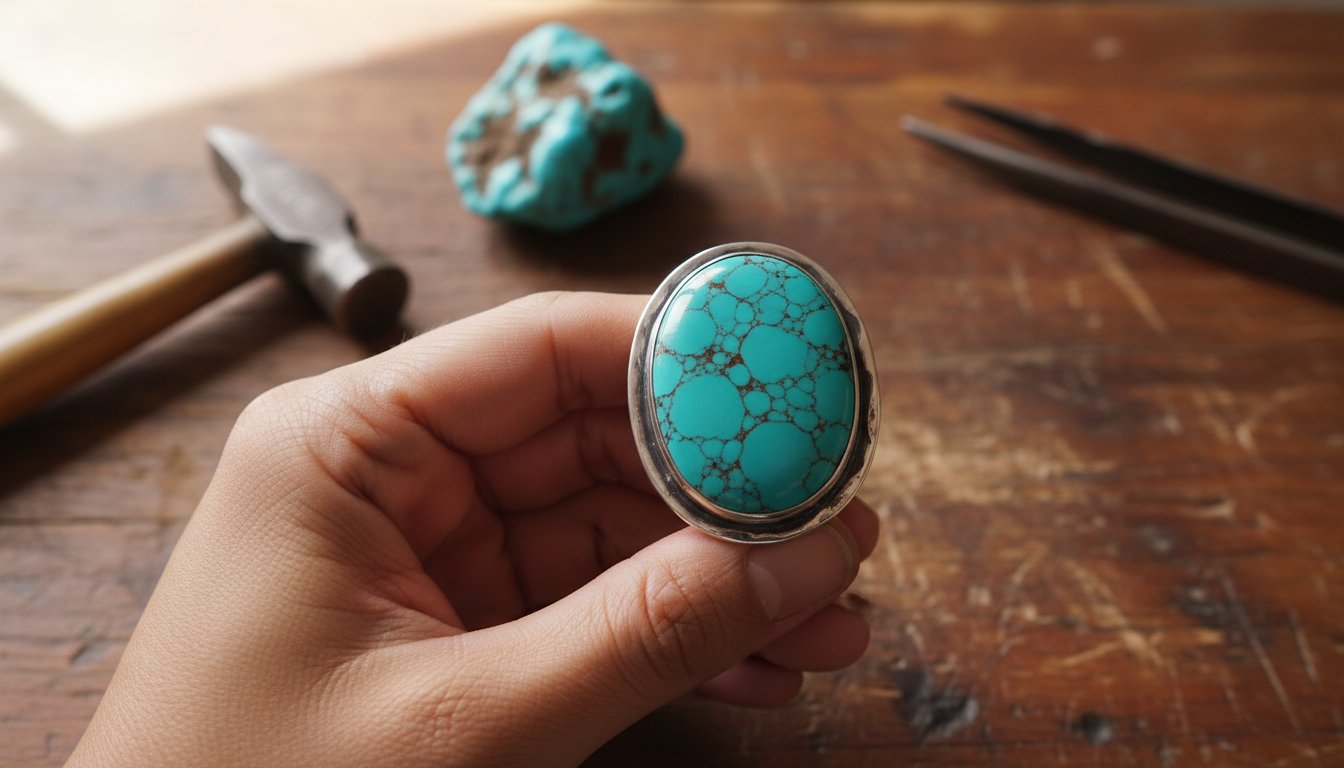
Turquoise rings for women crafted with intentionality and hand-cut stones
Walking through the 2024 Tucson Gem and Mineral Show, Greg Cordova pointed out rows of "stabilized" material that are often more plastic than mineral. It is a frustrating reality for anyone searching for authentic turquoise rings for women among a sea of dyed howlite and mystery stones. You likely want a piece that feels grounded and connected to the high desert, rather than a mass-produced accessory that feels like a costume.
We believe you should know exactly where your stone was mined and who shaped the silver around it. This guide explains how we select hand-cut stones from specific American mines and set them in heavy sterling silver to create jewelry that remains a quietly timeless piece of wearable art. We'll explore the difference between a natural cabochon and a dyed imitation, the beauty of a complex matrix, and the specific lapidary techniques Greg uses in our Santa Fe studio to honor the raw character of the stone.
Key Takeaways
- Learn to distinguish natural, untreated stones from resin-filled imitations and why heavy gauge sterling silver is essential for authentic Southwestern style.
- Discover how Greg Cordova transforms raw nuggets into hand-cut cabochons, bringing the unique story of each specific mine to the studio bench.
- Understand the visual depth of matrix and spiderweb patterns to help you select high-grade turquoise rings for women that resonate with your personal style.
- Explore the intentional design process led by Kimberly Cordova, where secure bezel settings protect the stone for reliable daily wear.
- Peek inside our small batch Santa Fe studio to see how we prioritize artisanal techniques over mass production.
Identifying natural turquoise and sterling silver quality
A heavy sterling silver band feels different when it rests against your skin. It has a weight and a temperature that mass-produced jewelry lacks. When searching for turquoise rings for women, the first thing you notice in our Santa Fe studio is the raw texture of the materials before they are polished. We focus on material integrity because a piece of jewelry should last through decades of daily wear. Authentic Southwestern style relies on the relationship between high grade minerals and heavy gauge metals.
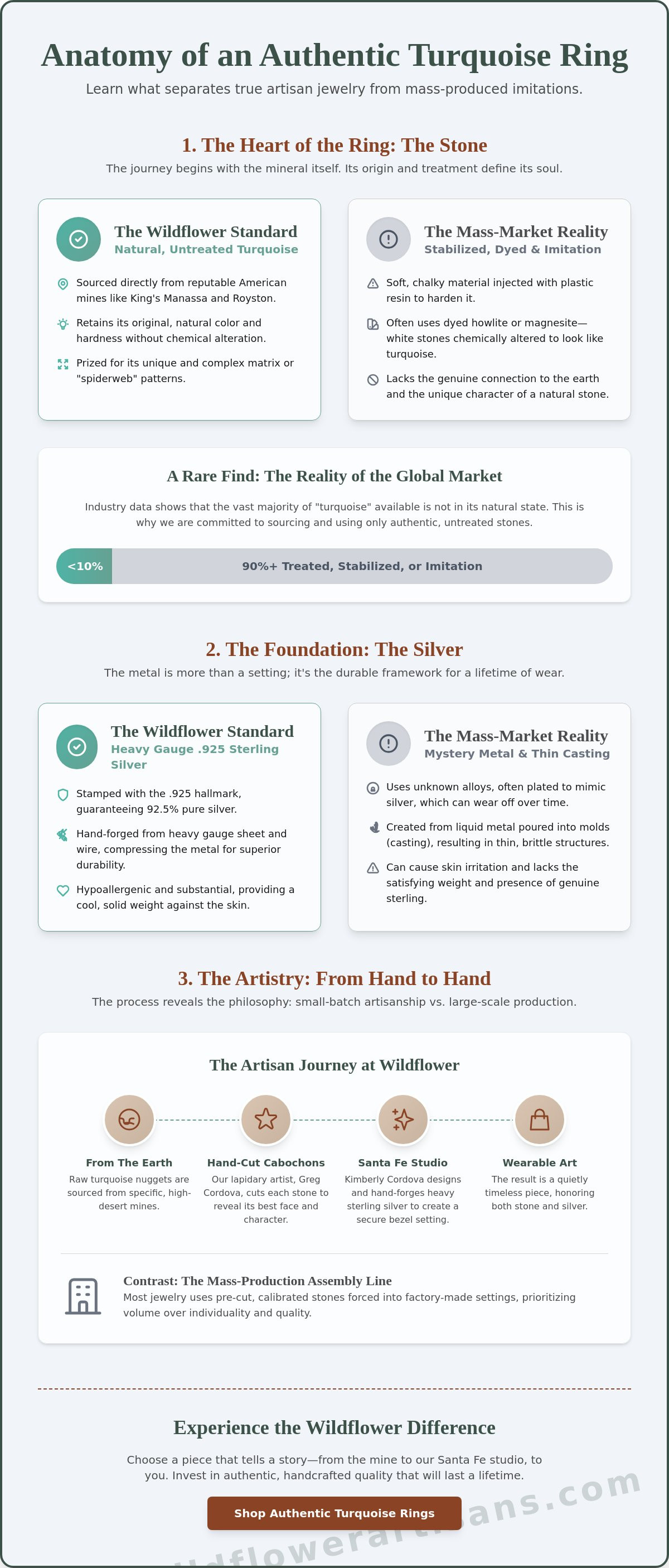
Natural turquoise refers specifically to stone that hasn't been altered by artificial resins or plastic dyes. You can learn more about Turquoise properties and history to understand how this mineral forms in arid climates. Greg Cordova sources these stones directly from mines or reputable collectors to ensure they remain in their original state. The mass market is often flooded with dyed howlite or magnesite, which are white stones chemically altered to look like turquoise. These imitations frequently sit in mystery metal settings that can irritate the skin. Choosing a quietly timeless piece means looking past the surface to the chemical and physical makeup of the ring.
To better understand the process of transforming raw materials into a finished piece, watch this silversmithing tutorial:
The difference between stabilized and natural stones
Stabilization is a common industrial process where soft, chalky turquoise is injected with clear resin under high pressure. This makes the stone hard enough to cut without breaking, but it alters the organic nature of the material. Natural turquoise is rarer and more prized by collectors. Industry data suggests that natural, untreated stone accounts for less than 10 percent of the turquoise available on the global market. Natural turquoise is stone that retains its original color and hardness without chemical intervention. Greg Cordova hand-cuts each cabochon at Cutting Edge Turquoise to highlight the unique matrix and spiderweb patterns found in these untreated specimens.
Sterling silver standards in artisan jewelry
Every piece we create features the .925 hallmark. This stamp confirms the metal is 92.5 percent pure silver and 7.5 percent copper. We avoid casting processes that use thin, brittle metals. Instead, Kimberly Cordova curates designs that utilize heavy gauge sheet and wire. Small batch production ensures better structural integrity because the metal is worked by hand. This hand-forging process compresses the molecules and makes the silver more durable than liquid metal poured into a mold. Wildflower strictly excludes mystery metals from the studio to ensure every ring is hypoallergenic and substantial. Our commitment to these standards ensures that our turquoise rings for women maintain their form and beauty over a lifetime of use.
Explore our latest collection of hand-cut stones at wildflowerartisans.com. You can also browse our curated selections and read customer reviews at the Wildflower Etsy shop.
The story of the stone from mine to studio
The journey of a ring begins long before the silver is ever melted. It starts in the dirt and rock of the high desert. A raw nugget of turquoise looks like a simple, dusty stone until it meets the lapidary wheel. Greg Cordova, a seasoned miner and stone cutter who oversees his own claims, handles this transition from earth to art. You can view his specialized work at CuttingEdgeTurquoise.com. He does not buy pre-cut blanks from mass-market suppliers. Instead, he examines each stone to find the best face before using a diamond saw and grinding wheels to shape a custom cabochon. This intentionality ensures that turquoise rings for women reflect the unique matrix and color of the specific vein. The history of turquoise jewelry confirms that the bond between the cutter and the jeweler is what defines a truly artisan piece. When the stone is hand-cut in-house, the bezel can be built to fit the stone, rather than forcing a stone into a factory-made setting.
Sourcing from King's Manassa and Royston mines
The King's Manassa mine in Colorado is famous for its deep greens and golden-brown matrix. It has been a source of high-quality stone since King P. King rediscovered the site in 1890. Royston stones from Nevada offer a wider palette, ranging from soft blues to emerald greens within a single nugget. These mines provide more than just color; they provide a lineage. When we set these stones into turquoise rings for women, we are working with materials that have a documented geological identity. You can learn more about these specific locations on our stone origins page.
The White Buffalo stone distinction
White Buffalo is a distinct mineral often found in the same regions as turquoise, though it lacks the copper that creates blue hues. It is composed primarily of calcite and dolomite. The appeal of White Buffalo lies in its high-contrast patterns, where stark white stone is interrupted by sharp black chert or manganese matrix. Greg Cordova selects these specimens for their balance and visual weight. Because they aren't technically turquoise, they require a different eye for cutting to highlight the spiderweb patterns that make them so striking in a silver bezel. These stones offer a quietly timeless alternative for those who prefer a neutral palette.
Take a look at our current collection of rings to see how these different stones influence the final design.
Browse our full selection of handcrafted jewelry at wildflowerartisans.com. For those who value the community feedback and additional protections of an established marketplace, we also maintain a curated presence at the Wildflower Etsy shop.
Understanding matrix patterns and spiderweb textures
A piece of raw turquoise often looks like a common rock until it's sliced open on a diamond saw. The intricate webbing or dark patches you see inside the stone is called the matrix. This is the host rock where the turquoise formed over millions of years. It acts as a physical record of the earth, showing where the mineral veins grew into the surrounding rhyolite, limonite, or iron oxide. When we select stones for turquoise rings for women, we look for matrix patterns that tell a clear story of the mine. Some collectors prefer a clear stone, but the matrix provides a grounded, organic feel that connects the wearer to the specific landscape where the stone was found.
Spiderweb matrix is a specific pattern where the host rock creates thin, delicate lines that crisscross the stone like a net. It's a rare occurrence often found in high-grade material from famous locations like the Number 8 or Kingman mines. The geology of turquoise dictates how these patterns emerge based on the pressure and mineral content of the surrounding soil. Choosing a pattern is a personal process. You might find yourself drawn to the bold contrast of dark black matrix against a bright blue stone, or perhaps you prefer the subtle, dappled look of golden brown matrix in a green stone. These patterns make each piece quietly timeless and entirely unique.
Evaluating the cabochon cut
A cabochon is a stone that has been shaped and polished into a smooth, rounded top rather than having facets like a diamond. This is the traditional and preferred cut for this mineral because it highlights the color and matrix patterns without the distraction of sharp angles. Greg Cordova performs the lapidary work for our studio, carefully hand-cutting each stone to maximize its visual depth. The height of the dome and the quality of the polish change how light moves across the surface. A well-cut cabochon should have a smooth, symmetrical dome that sits perfectly within its bezel setting.
Color variations from sky blue to deep green
The specific hue of a stone depends on its chemical makeup. High copper content creates the classic sky blue shades, while the presence of aluminum or iron shifts the palette toward green. These variations are often tied to specific mines. For example, many Southwestern style rings feature the deep, iron-rich greens found in certain Nevada deposits. While some people seek out robin's egg blue, many of the turquoise rings for women we curate feature olive or forest green tones. Color preference is subjective. It often depends on which part of the earth resonates with you, whether it's the high desert sky or the shaded floor of a mountain forest.
If you are looking for a piece that speaks to your personal style, you can explore our small batch turquoise rings for women to find a stone and matrix pattern that fits. We focus on stones that represent the raw beauty of the Southwest, ensuring each ring is a one of a kind specimen of natural history.
Selecting the right bezel and setting for daily wear
Kimberly Cordova curates the design of every setting in our studio, focusing on how a ring moves and feels on your hand during your daily routine. When choosing turquoise rings for women, the setting style dictates how often you will actually wear the piece. A bezel setting is our preferred method for daily wear. Unlike prongs that can snag on knitwear or loosen over time, a bezel is a continuous wall of sterling silver that wraps around the entire perimeter of the cabochon. This creates a protective barrier for the edges of the stone, which are the most vulnerable parts of the turquoise.
Choosing between a bold statement piece and a smaller daily ring depends on your lifestyle and physical comfort. Large rings offer a significant canvas for the stone's matrix, but they can be heavy for long days at a keyboard or in the garden. We often suggest a balance. You might choose a medium-sized stone with a low profile to minimize catching on pockets or bags. Sizing is also a critical factor for comfort. If you select one of our wider artisan bands, consider going up a half size. A band that measures 1/2 inch wide covers more surface area on your finger and will feel tighter than a thin wire band of the same size.
The art of the hand-stamped silver band
Texture tells a story in metal. We use hardened steel stamps and a heavy hammer to strike patterns directly into the silver. This process requires a steady hand and precise pressure to ensure the depth is consistent across the band. These small indentations catch the light and develop a natural patina over time, highlighting the handmade nature of the work. No two stamped bands are identical because the force of the strike and the placement of the tool vary every time. You can see these varied textures across our rings collection.
Proper care for artisan turquoise rings
Turquoise is a porous stone. It absorbs oils, soaps, and chemicals, which can eventually shift the color of the stone. Take your ring off before applying lotion, swimming in chlorinated pools, or using household cleaners. To clean the silver, use a soft polishing cloth rather than liquid dips. Dips can strip the intentional oxidation from the recessed areas of the hand-stamped details, ruining the contrast. For more specific guidance on keeping your jewelry in top condition, our care and repair page offers detailed instructions for long-term maintenance.
View our latest handcrafted turquoise rings at our main studio shop, or visit the Wildflower Etsy shop if you prefer to browse our reviews and collection there.
Finding your handcrafted ring at Wildflower
The Wildflower studio in Santa Fe is a place of constant movement and focused craft. You will often hear the steady hum of the lapidary wheel and the sharp hiss of the torch as silver meets heat. This is a working space, not a factory. We create in small batches to ensure every stone is seated properly and every bezel is smooth to the touch. Greg Cordova handles the lapidary work, often cutting stones sourced directly from his own mines or through CuttingEdgeTurquoise.com. This direct connection to the source allows us to guarantee the quality of the material from the rough stone to the finished setting. Kimberly Cordova leads the design and curation, ensuring each piece remains wildly beautiful and intentionally designed. When you browse our collection of turquoise rings for women, you are seeing the result of a slow, deliberate process that values the character of the stone over mass production.
Quality in our studio isn't a marketing claim. It is a physical reality. We use heavy gauge sterling silver and choose natural turquoise that has not been treated with dyes or artificial stabilizers. This commitment to authenticity means the ring you choose today will age with a grit and grace that reflects its Southwestern style. We focus on creating pieces that are quietly timeless, avoiding the fast-fashion cycle in favor of jewelry that lasts for decades.
One of a kind vs everyday essentials
Choosing a ring often depends on how you move through your day. A high-profile statement piece usually features a large cabochon with a complex spiderweb matrix or deep color variations. These are often one-of-a-kind items designed to stand alone. Everyday essentials are built for a different purpose. They feature lower profiles and streamlined settings that don't catch on clothing, making them ideal for constant wear. Building a curated jewelry collection is a patient process. Many of our collectors start with a simple band and gradually add more intricate work as they find stones that resonate with them. You can explore our latest studio work by visiting our new arrivals section to see the newest hand-cut stones.
Joining the Wildflower community
Because we work in small batches, our most distinct pieces often find homes shortly after they leave the bench. Joining our VIP program is the most direct way to get early access to new collections. It is a simple way to stay informed without the noise of traditional retail. We also maintain a studio journal where we share the history of specific mines and the technical details of our silverwork. This behind-the-scenes look offers a deeper understanding of the labor involved in every piece of jewelry. We invite you to choose a ring that tells a story and serves as a grounded connection to the high desert landscape. Our goal is to provide you with a piece that feels like it has always belonged in your collection.
Explore our full collection of artisan jewelry at wildflowerartisans.com. For those who prefer the protections and reviews of a larger marketplace, you can also find a curated selection of our work at the Wildflower Etsy shop.
Bringing a piece of the high desert home
Choosing turquoise rings for women involves more than just picking a color. It's about recognizing the depth of a spiderweb matrix and the weight of genuine sterling silver. Every stone in our Santa Fe studio is hand-cut by Greg Cordova at Cutting Edge Turquoise, who often sources the rough material directly from the mines he owns. This direct connection ensures you're wearing a natural, untreated stone rather than a stabilized imitation. Kimberly Cordova then curates these cabochons, designing settings that protect the stone while highlighting its unique character. Whether you prefer a simple bezel for daily wear or a more intricate arrangement, these pieces are built to last through years of use. They carry the quiet energy of the lapidary wheel and the intentionality of small batch craft. We invite you to explore our latest collection of handcrafted turquoise rings to find the piece that resonates with you. If you prefer the reviews and protections of a larger marketplace, you can also browse our work in the Wildflower Etsy shop. We hope you find a ring that feels like a quiet, permanent part of your story.
Frequently Asked Questions
How do I know if the turquoise in my ring is real?
Authentic turquoise feels cool to the touch and warms slowly against your skin, unlike plastic imitations that adjust to your body temperature almost instantly. You can often spot fakes like dyed magnesite by looking for dye concentrations in the cracks or a perfectly uniform color that looks manufactured. At our studio, Greg Cordova sources rough stone directly from American mines to ensure every cabochon is genuine and ethically obtained.
Can I wear my turquoise ring every day?
You can wear turquoise rings for women daily if you follow a few simple care steps to protect the stone. Turquoise ranks between 5 and 6 on the Mohs scale, making it softer than many other gemstones. It's best to remove your ring before gardening, swimming, or using household cleaners. Chemicals and oils can seep into the stone over time, potentially altering its color or luster.
What is the difference between sterling silver and silver plated jewelry?
Sterling silver is a high quality alloy containing 92.5 percent pure silver and 7.5 percent copper for added durability. It's a solid metal that won't peel or wear away, and you can easily polish it back to its original shine. Silver plated jewelry only has a thin layer of silver over a base metal like brass. This plating typically wears off within 3 to 6 months of regular use.
Why does some turquoise have brown or black veins in it?
These veins are called matrix and represent the host rock where the turquoise formed over millions of years. This webbing often consists of iron pyrite, limonite, or rhyolite, creating a unique map of the stone's geological history. Many collectors prefer a heavy spiderweb matrix because it proves the stone is organic. Kimberly Cordova curates our collections to highlight these natural patterns, ensuring no two rings look exactly alike.
How should I store my turquoise jewelry when I am not wearing it?
Store your turquoise rings for women in a dry, dark place such as a fabric-lined jewelry box or a small cotton pouch. Keep the pieces separate from harder stones like diamonds or sapphires, which can scratch the surface of a hand-cut cabochon. Avoid leaving your jewelry on a bathroom counter. The humidity from a shower can accelerate tarnish on the silver and may affect the stone over time.
What does it mean when a stone is called natural?
A natural stone is turquoise that hasn't been treated with dyes, resins, or chemical stabilizers. It's pulled from the earth and shaped by a lapidary artist like Greg Cordova without any artificial alterations to its structure. Only about 10 percent of the turquoise mined worldwide is hard enough to be used in jewelry without stabilization. We focus on these rare, high quality stones to maintain the integrity of the material.
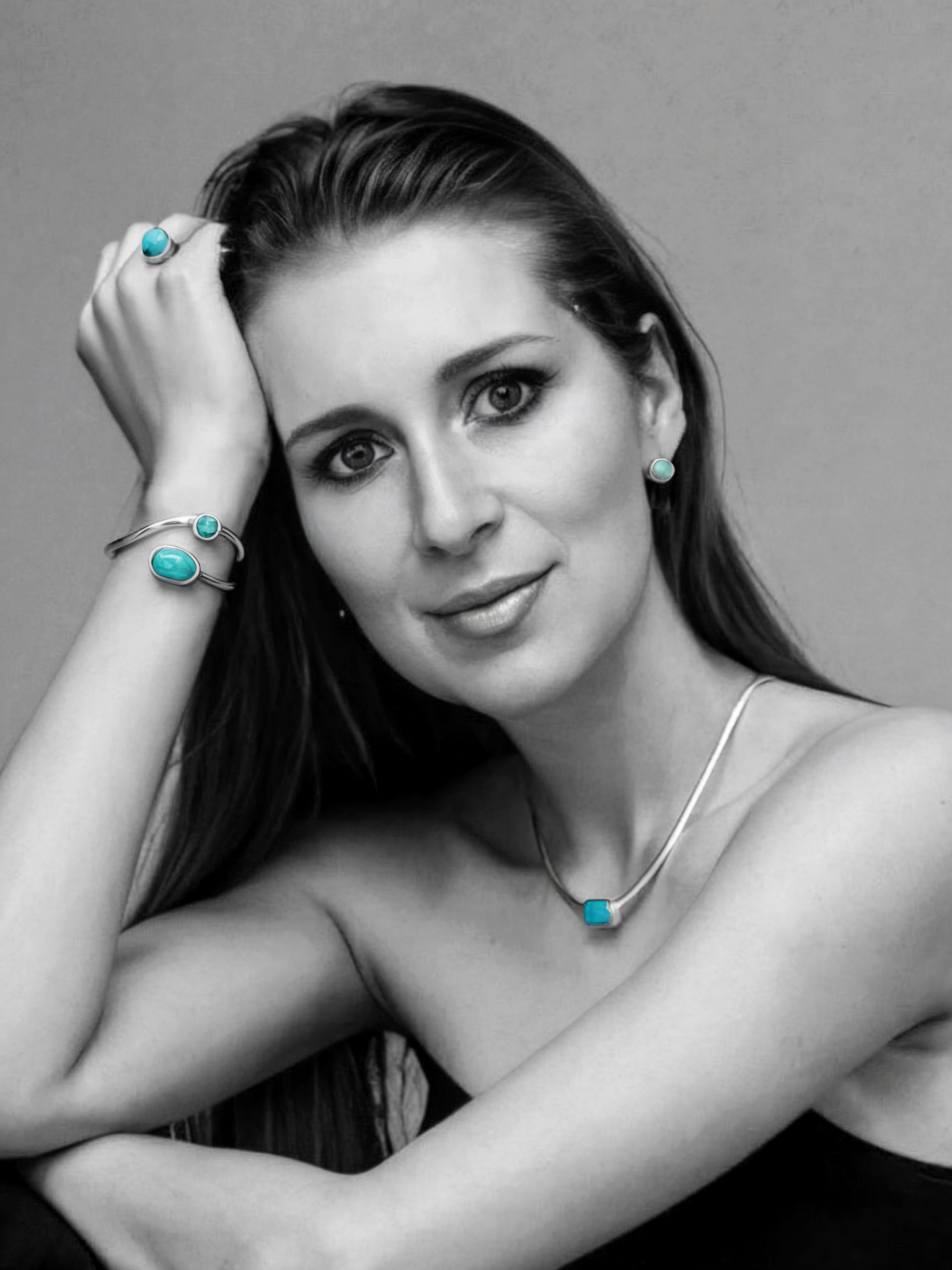
Article by
Kimberly Cordova
Kimberly Cordova is the founder and creative director of Wildflower, a handmade Turquoise and sterling silver jewelry brand based in Santa Fe. She built Wildflower around a simple belief: the best jewelry is the kind you actually reach for, not the kind you save for someday.
Kimberly designs pieces made by hand with a trusted circle of Santa Fe silversmiths, works alongside her husband Greg on in-house lapidary pieces cut from stones including the family's King's Manassa Mine in Colorado and White Buffalo Mine in Nevada, and sources finished work from artisan makers whose craft meets the same standard. The result is a collection with real range and no shortcuts on the stone, the silver, or the story behind either.
Her writing covers everything she has learned along the way: how Turquoise forms, how to tell natural from stabilized, what makes one mine different from another, how to read a bezel, and how to shop with confidence in a market that is not always straightforward. It is the kind of plainspoken information she wished someone had laid out for her when she was starting out.
Shop the Wildflower collection at wildflowerartisans.com, or find us on Etsy at wildflowersantafe.etsy.com if you prefer shopping there. Questions about a stone, a setting, or a specific piece are welcome any time.
