The Artisan Guide to Authentic Turquoise Sterling Jewelry
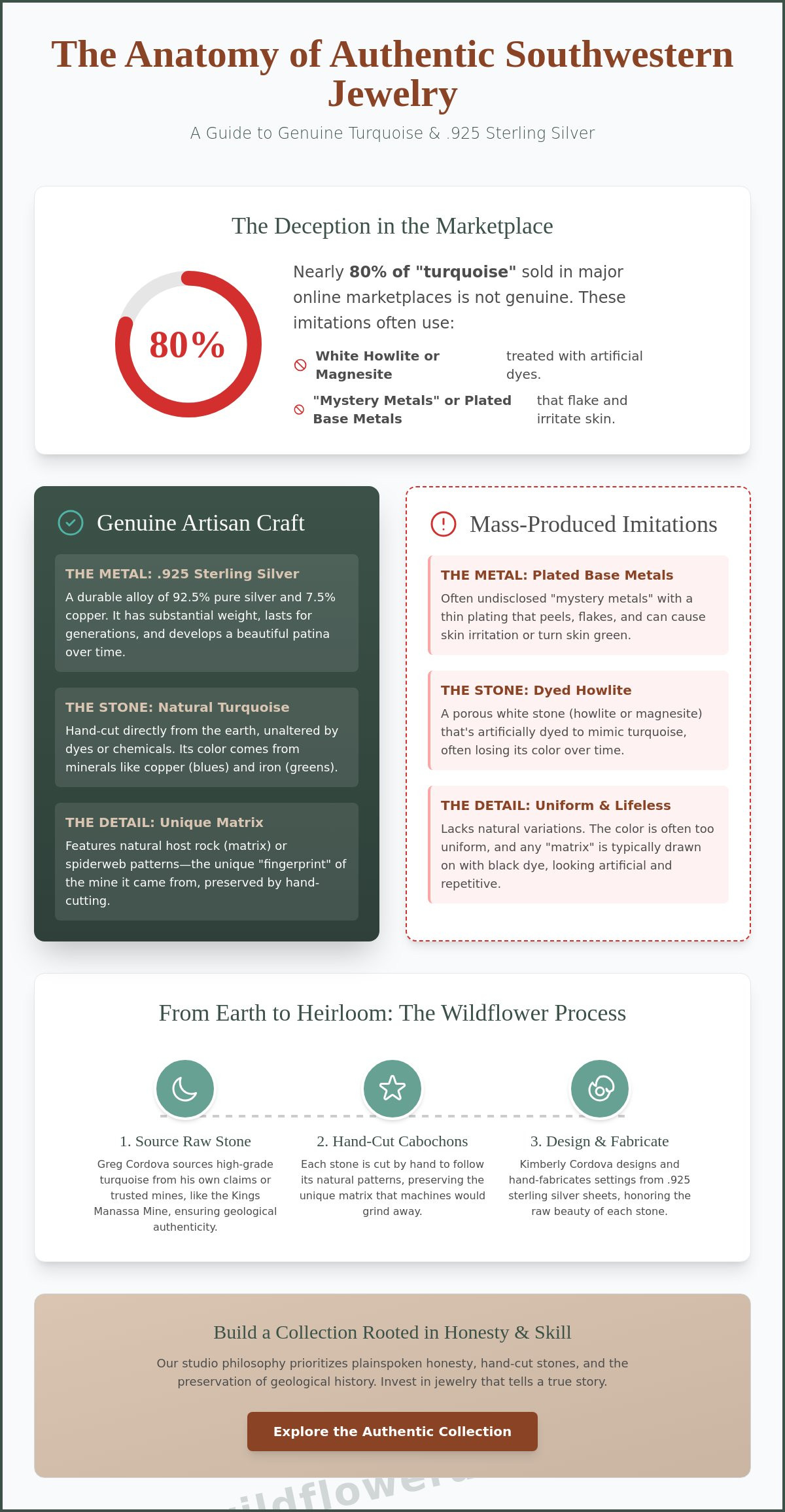
Nearly 80 percent of the vibrant blue stones sold in major online marketplaces are actually white howlite or magnesite treated with artificial dyes. It's a discouraging reality when you're simply looking for authentic turquoise sterling jewelry that won't turn your skin green or lose its color over time. We know the frustration of sorting through mystery metals and mass-produced imports while searching for something that feels grounded and intentional.
You'll learn how to identify genuine stone by understanding the technical artistry of the lapidary process and the geological history that makes each hand-cut cabochon unique. We'll walk through how Greg Cordova sources high-grade matrix from specific mines and how Kimberly Cordova designs settings that honor the raw beauty of the Southwest. This look inside our Santa Fe studio will help you build a collection rooted in honesty and skill.
Key Takeaways
- Understand the technical relationship between .925 sterling silver and hand-cut stones that defines authentic Southwestern style.
- Discover the collaborative studio process between Greg Cordova and Kimberly Cordova as they transform raw material into finished designs.
- Explore how a stone's mine of origin, such as the Kings Manassa Mine owned by Greg Cordova, dictates the unique matrix and value of turquoise sterling jewelry.
- Learn to distinguish between small-batch everyday essentials and one-of-a-kind statement pieces to build a thoughtful, personal collection.
- Gain insight into a studio philosophy that prioritizes plainspoken honesty, hand-cut cabochons, and the preservation of geological history.
What defines authentic turquoise sterling jewelry
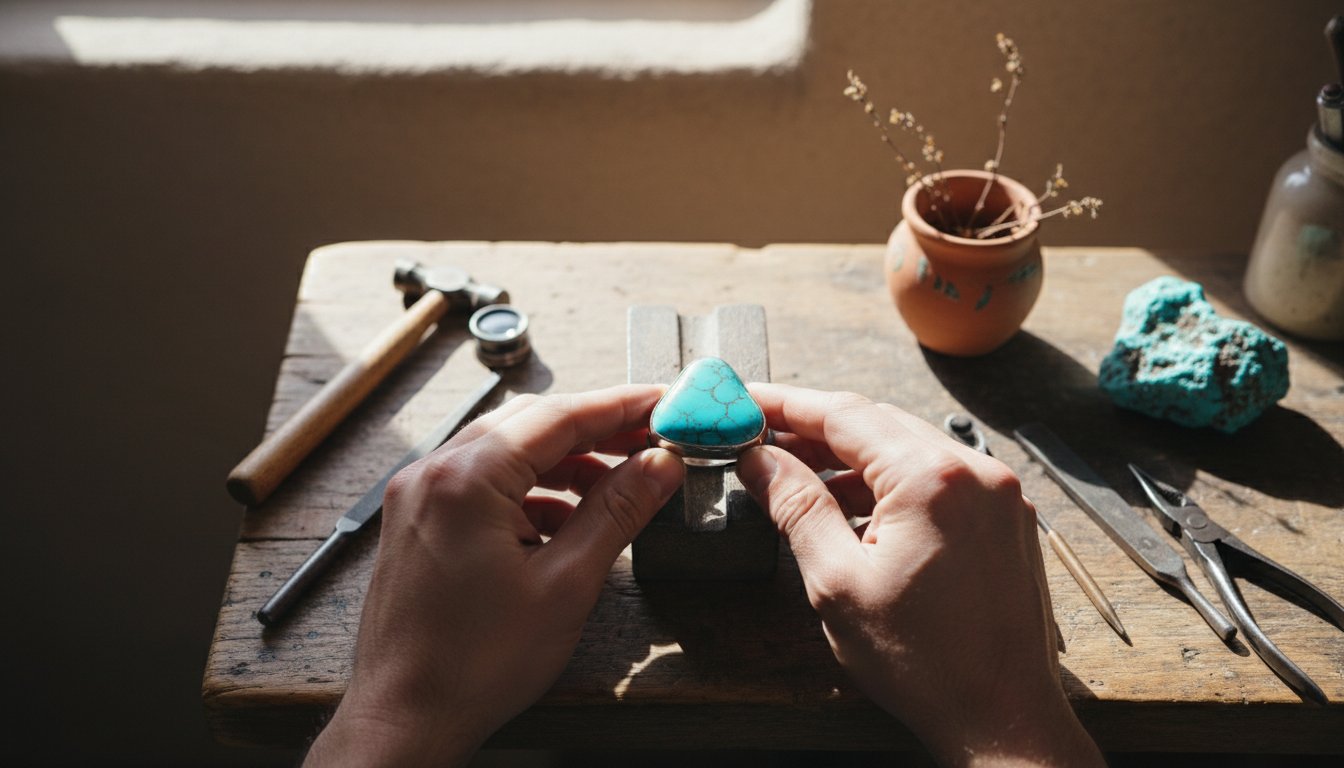
A heavy silver ingot sits on a scarred wooden bench, waiting to be rolled into a sheet that will eventually cradle a blue stone. This pairing of .925 sterling silver and genuine stone defines authentic turquoise sterling jewelry. It's a combination that feels right in the hand because it carries a weight that mass-produced pieces simply lack. Silver is the preferred medium for Southwestern style work because it's forgiving enough for intricate stamp work but strong enough to last for generations.
Choosing a piece of jewelry is often about finding something that feels like it has a soul. Artisan-made pieces are distinct from the rows of identical accessories found in department stores. Every hammer mark and bezel setting tells a story of a specific day in the shop. This is jewelry that earns its place in a collection through its quality and the hands that shaped it, resulting in pieces that are quietly timeless. You can find more about the Turquoise mineral and history to understand why this stone has remained a staple for centuries. Kimberly Cordova focuses on curation and design, ensuring each piece honors the materials rather than just following a trend.
To help you distinguish between genuine materials and imitations, watch this guide on stone identification:
The composition of sterling silver
For a piece to carry the sterling label, it must contain 92.5 percent pure silver. The remaining 7.5 percent is typically copper, which provides the strength that pure silver lacks on its own. We avoid mystery metals and plated base metals because they eventually peel, flake, or irritate the skin. Quality work relies on transparency about what's inside the metal. Sterling silver is durable enough for daily wear while maintaining a luster that develops a beautiful patina over time. If you need help maintaining that finish, our care and repair page offers practical advice for long-term ownership.
The tangible reality of natural turquoise
Natural turquoise is stone that comes out of the ground and goes straight to the grinding wheel without being dyed or chemically altered. The vivid blue hues usually come from copper deposits, while iron creates the deep greens that many collectors look for. Greg Cordova handles the lapidary work for our studio, focusing on hand-cut cabochons that retain the character of the original rock. You can see his process and mine sources at CuttingEdgeTurquoise.com. A hand-cut stone often features a unique matrix or spiderweb pattern that a factory machine would simply grind away. We document these details in our stone origins guide to help collectors understand exactly where their jewelry began.
Explore our current collection of handcrafted pieces at wildflowerartisans.com, or find us at the Wildflower Etsy shop for additional reviews and selections.
The artisan process from lapidary bench to finished design
The Santa Fe studio stays busy with the sound of grinding wheels and the smell of fresh sawdust. Greg Cordova spends his mornings at the lapidary bench, studying raw slabs of rock to find the best color and pattern. He works closely with Kimberly Cordova, who takes those finished stones and builds the metalwork around them. This partnership defines our small batch approach. We focus on Type 1 fabrication. This means every part of the turquoise sterling jewelry is made by hand from sheet metal and raw stone. While we occasionally offer Type 2 items (carefully curated pieces sourced from other makers) our heart is in the dust of the workshop.
Lapidary work and the hand-cut cabochon
Greg Cordova processes raw materials by hand, often sourcing from his own claims or trusted mines. He shapes each hand-cut cabochon to follow the natural lead of the stone rather than forcing it into a standard size. This allows the unique personality of the mineral to dictate the final form. You can see the character of the earth in the matrix (the host rock) or the delicate spiderweb patterns that lace through the blue and green. These details aren't flaws. They're the fingerprint of the mine. Understanding stone origins helps explain why a stone from Nevada looks different than one from Arizona. For more technical details on the cutting process, Greg shares his expertise at CuttingEdgeTurquoise.com.
Silversmithing and the bezel setting
Once the stone is polished, Kimberly Cordova begins the design. She doesn't use pre-made settings. Instead, she wraps a fine silver bezel around the specific perimeter of Greg's cabochon. This ensures a secure fit that protects the stone for decades. The process reflects a long history of Southwest silverwork where the metal serves to honor the turquoise. Her choices are intentional. She looks for weights and textures that feel substantial but remain quietly timeless. It's a slow way to work. It requires patience and a steady hand. The result is a piece of turquoise sterling jewelry that feels human and carries the energy of the hands that made it.
Every piece we create is a singular expression of the materials. We don't mass produce. We don't cut corners. We simply find beautiful stones and give them a place to rest in silver. If you want to see how these elements come together in a finished design, you can browse our new arrivals to see what just came off the bench.
Find your next heirloom at wildflowerartisans.com. You can also explore our curated collection and read customer stories at the Wildflower Etsy shop.
Understanding mine-specific turquoise and stone origins
A slab of rough stone on the workbench tells a specific story about the earth it came from. In the world of turquoise sterling jewelry, the mine of origin is the most critical factor in determining both the aesthetic character and the market value of a piece. Each deposit has a distinct chemical signature. High copper content yields those bright blues we recognize naturally, while iron introduces the mossy greens and earthy browns found in high-grade specimens. When we select a stone, we aren't just looking for color; we are looking for the geological history of the American Southwest.
Kings Manassa and White Buffalo mines
Greg Cordova, the owner of the Kings Manassa Mine in Colorado, provides us with stones that are famous for their deep, vivid greens and heavy golden-brown matrix. These stones feel like a forest floor captured in mineral form. White Buffalo, sourced from the Dry Creek mine area in Nevada, offers a striking contrast with its stark white base and black chert patterns. It's technically a mixture of calcite, dolomite, and magnesite rather than a phosphate of copper, but it's held in the same high regard by collectors for its rarity and visual impact. High-grade stones from these specific locations are finite resources, often recovered from thin veins that require careful, hand-extracted labor.
Comparing Kingman and Royston varieties
The Kingman mine in Arizona is the source of the classic sky blue tones that many people associate with Southwestern style. It's a reliable standard for quality, though we look for the "birdseye" or "water web" patterns to find something truly special for our turquoise sterling jewelry. Royston turquoise, coming from a district near Tonopah, Nevada, is more of a chameleon. A single cabochon can transition from emerald green to a soft blue within the same stone, often framed by a dark brown or gold matrix. Collectors often choose between these based on their personal palette. If you prefer a clean, bright look, Kingman is the choice. For those who love organic, varied tones, Royston is unmatched.
When sourcing these materials, we adhere to the standards set by the Indian Arts and Crafts Act of 1990 to ensure all descriptions are factual and transparent. We focus on natural, untreated stones that retain their original earth-given color and character. You can learn more about how we document these materials on our stone origins page. We believe that knowing the name of the mine connects the wearer to the land in a way that mass-produced stones never can.
Explore our current collection of handcrafted jewelry at wildflowerartisans.com. If you prefer to browse through our community reviews and feedback, you can also find us at the Wildflower Etsy shop.
How to build and care for a turquoise jewelry collection
A jewelry collection often begins with a single stone that catches the light during a morning walk. It might be a narrow band worn while working in the garden or a simple pair of studs for daily use. Over time, these pieces become part of your personal history, reflecting a preference for specific mines or silver styles. Building a collection of turquoise sterling jewelry requires a thoughtful balance between daily comfort and the bold presence of a one of a kind statement piece. Kimberly Cordova curates our studio selections to ensure every piece, from a minimalist ring to a heavy cuff, feels intentional and grounded.
Selecting rings and earrings for daily wear
Comfort is the most important factor for any piece intended for regular wear. We design our artisan-made rings with smooth, hand-finished bands that sit comfortably against the skin during a full day of movement. When choosing earrings, consider the weight of the stone and the gauge of the sterling silver. A heavy cabochon can pull on the earlobe, making it a better choice for an evening event rather than an eight-hour workday. We suggest pairing simple, high-grade turquoise studs with more elaborate pendants to create a balanced look. This allows the individual matrix patterns in the turquoise to stand out without the pieces competing for attention. A well-chosen daily set should feel like a second skin, durable enough for the studio but refined enough for a dinner out.
Care and repair for longevity
Sterling silver is 92.5 percent pure silver, which naturally reacts with sulfur in the atmosphere to create a dark patina known as tarnish. To maintain the luster of your turquoise sterling jewelry, store each piece in an airtight container or a small zip-top bag when it is not being worn. Natural turquoise is a porous mineral, typically falling between 5 and 6 on the Mohs scale of mineral hardness. This porosity means it can absorb oils, soaps, and perfumes. These substances can seep into the stone and permanently alter its color over several years. Always put your jewelry on after you have finished applying lotions or scents.
Greg Cordova, who has spent over 20 years cutting stones and managing lapidary work, advises against using any chemical cleaners or ultrasonic machines. These harsh methods can strip the natural finish or damage the internal structure of the stone. If a piece requires a deep cleaning or a stone needs to be reset in its bezel, refer to our care and repair guide for studio-approved techniques. Regular maintenance ensures that the silver retains its glow and the turquoise remains as vibrant as the day it left the bench.
Browse our current everyday essentials collection to find your next staple piece, or visit the Wildflower Etsy shop for more handcrafted designs.
The Wildflower approach to Southwestern style
Our philosophy at Wildflower Artisans is built on the reality of the workbench rather than the polish of a showroom. We believe in grounded expertise and plainspoken honesty about every piece of turquoise sterling jewelry we create. There is no room for mystery in our process. We use genuine sterling silver and stones that we can trace back to specific mines. This commitment to authenticity means you will not find imitation materials or mass produced components in our studio. Every bezel is hand soldered and every stone is selected for its specific character, ensuring that the final piece reflects the honest labor of the artisan.
Small batch and one of a kind designs
The core of our work lives in one of a kind pieces that respect the variation of the earth. When a stone is hand-cut, its matrix and color dictate the final form of the jewelry. This makes replication impossible. Owning a piece that cannot be duplicated offers a connection to a specific moment in the studio. Because these items move quickly, we encourage collectors to join our VIP list for early access to new releases. It is the most direct way to see our latest small batch arrivals before they are gone.
The legacy of Santa Fe artisans
Santa Fe has served as a center for Southwestern style for generations, and we see our work as a continuation of that history. We do not rely on trends. We rely on the traditions of lapidary work and metalsmithing that have defined this region for decades. Greg Cordova handles the lapidary work and manages our mine interests, often sourcing materials through Cutting Edge Turquoise to ensure high quality cabochons. Kimberly Cordova then leads the design and curation process, translating these raw materials into wearable art. This partnership allows us to maintain control over the quality of our turquoise sterling jewelry from the initial cut to the final polish.
Our studio remains focused on the tangible reality of handmade goods. We invite you to browse our latest studio releases by visiting our full online collection, or explore our curated selection at the Wildflower Etsy shop if you prefer that platform for your shopping experience.
Frequently Asked Questions
Is the turquoise in your jewelry treated?
We focus on high quality stones and specify when a stone is natural and untreated. Most of our turquoise is stabilized to ensure durability for daily wear, which is a standard industry practice for Southwestern style jewelry.
Where is Wildflower jewelry made?
Every piece is handcrafted in our Santa Fe, New Mexico studio. Greg Cordova cuts the stones and Kimberly Cordova designs the settings, ensuring each item is a true artisan product.
What type of metal do you use?
We use .925 sterling silver for all our jewelry. This ensures a quietly timeless look and the durability required for heirloom quality pieces.
Curating Your Own Southwestern Story
Building a collection of turquoise sterling jewelry is an intentional process that starts with knowing the origin of every stone. At our Santa Fe studio, we believe authenticity is found in the details of the lapidary bench and the weight of the silver. Greg Cordova sources material directly from his mines, hand-cutting each cabochon to highlight its unique spiderweb matrix or clear blue hue. Kimberly Cordova then curates these stones into small batch designs that focus on the organic movement of the materials.
Choosing a piece that's handcrafted means you're avoiding mystery metals and treated stones. Our work is grounded in the reality of the craft, ensuring every bezel and band is built to last through years of daily wear. When you understand the mine and the maker, the jewelry becomes more than an accessory; it's a quiet connection to the high desert landscape. We invite you to find a piece that speaks to your own sense of style.
Explore our latest collection of artisan-made turquoise and sterling jewelry at our online studio. If you prefer the platform protections and reviews of a marketplace, you can also browse our curated selection at the Wildflower Etsy shop.
Frequently Asked Questions
Is the turquoise used in Wildflower jewelry natural or stabilized?
We use both varieties, but every piece is clearly labeled so you know exactly what you're buying. Greg Cordova sources and cuts about 90 percent of our stones at his lapidary shop. Natural turquoise remains untreated from the mine to the bezel, while stabilized stones are infused with clear resin to improve durability for daily wear. Most of the turquoise sterling jewelry in our studio features high-grade natural cabochons.
How can I tell the difference between real turquoise and dyed howlite?
You can identify dyed howlite by looking for dye concentrations in the surface cracks or a white interior if the stone is chipped. Real turquoise has a consistent color through the stone and a specific weight that feels cooler to the touch. We verify the authenticity of every cabochon Greg Cordova cuts for our collections. Many mass-produced items use howlite, which lacks the unique mineral structure of genuine turquoise.
What does sterling silver mean and why is it used with turquoise?
Sterling silver is an alloy containing 92.5 percent pure silver and 7.5 percent copper to provide the strength needed for jewelry. Pure silver is too soft for holding a stone securely in a bezel. We use sterling because it provides a durable, bright frame that complements the cool blues and greens of the stone. Kimberly Cordova selects specific gauges of silver to ensure each handcrafted setting protects the stone for decades.
Can I wear my turquoise jewelry in the shower or pool?
You should avoid wearing turquoise in water because the stone is naturally porous and can absorb chemicals or oils. Chlorine in pools and minerals in tap water can cause the stone to shift color or lose its luster over time. It's best to remove your rings and pendants before bathing or swimming. Keeping your jewelry dry is the simplest way to maintain the original look of the hand-cut cabochon.
What is the significance of the matrix in a turquoise stone?
The matrix is the host rock, such as limonite or quartz, that appears as veins or patterns within the turquoise. It tells the story of the stone's geological origin and adds a layer of visual character that collectors often prize. In our Santa Fe studio, we look for spiderweb patterns or deep chocolate matrix that contrasts with the blue. These patterns ensure that no two pieces of turquoise sterling jewelry are ever identical.
How do I know which mine my turquoise came from?
We provide mine attributions for our stones based on Greg Cordova’s direct sourcing from specific claims. Whether it's the deep blues of the Morenci mine or the greens from Royston, each location produces a distinct mineral signature. You can find more details about these specific locations at CuttingEdgeTurquoise.com. Knowing the mine helps collectors understand the rarity and history of their specific piece.
Do you offer repairs for silver and turquoise pieces?
We offer repair services for any jewelry originally purchased from Wildflower Artisans. Our studio can handle tasks like tightening a bezel, polishing the silver, or replacing a damaged stone with a similar hand-cut cabochon. If you have a piece that needs attention, contact us with a photo of the item. We stand behind our artisan-made work and want your jewelry to remain wearable for years.
Browse our current collection of handcrafted jewelry at wildflowerartisans.com. You can also visit the Wildflower Etsy shop to see our latest reviews and small batch releases.
Article by
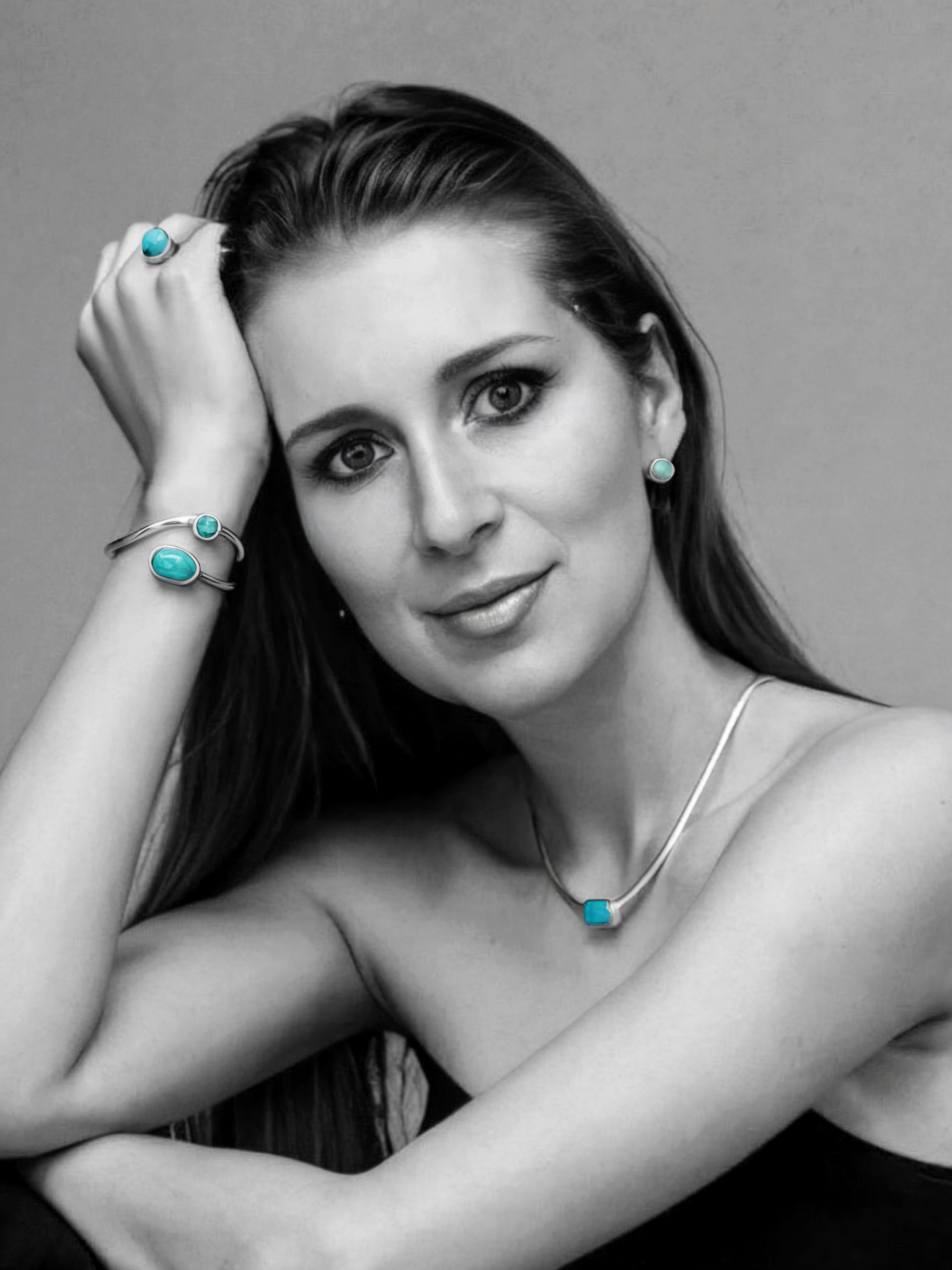
Kimberly Cordova
Kimberly Cordova is the founder and creative director of Wildflower, a handmade Turquoise and sterling silver jewelry brand based in Santa Fe. She built Wildflower around a simple belief: the best jewelry is the kind you actually reach for, not the kind you save for someday.
Kimberly designs pieces made by hand with a trusted circle of Santa Fe silversmiths, works alongside her husband Greg on in-house lapidary pieces cut from stones including the family's King's Manassa Mine in Colorado and White Buffalo Mine in Nevada, and sources finished work from artisan makers whose craft meets the same standard. The result is a collection with real range and no shortcuts on the stone, the silver, or the story behind either.
Her writing covers everything she has learned along the way: how Turquoise forms, how to tell natural from stabilized, what makes one mine different from another, how to read a bezel, and how to shop with confidence in a market that is not always straightforward. It is the kind of plainspoken information she wished someone had laid out for her when she was starting out.
Shop the Wildflower collection at wildflowerartisans.com, or find us on Etsy at wildflowersantafe.etsy.com if you prefer shopping there. Questions about a stone, a setting, or a specific piece are welcome any time.
