Santa Fe Jewelry and the Art of Handcrafted Southwestern Design
Most of the turquoise sold globally today is actually 90 percent plastic resin, a reality that makes finding authentic santa fe jewelry feel like a difficult search. You want a piece that carries the weight of the high desert and the honest marks of the maker's hand, but the market is often crowded with mystery metals and dyed stones. It's exhausting to navigate labels that hide more than they reveal.
We believe that understanding the journey from the mine to the polishing wheel changes how you wear a piece. This article explores the technical artistry behind our small batch process, from the way Greg Cordova identifies a stable matrix in a raw stone to the intentional design choices Kimberly Cordova makes at her bench. You'll discover how to identify genuine hand-cut cabochons and heavy-gauge sterling silver construction so you can find a quietly timeless piece that feels as grounded as the earth it came from. We'll walk through the geological history of regional mines and the specific studio techniques that ensure a bezel is built to last for generations.
Key Takeaways
- Understand how the rugged landscape shapes the aesthetic of small batch, artisan-made pieces. This guide explains the transition from factory-made products to authentic, handcrafted designs.
- Step inside the studio to see how Greg Cordova hand-cuts stones at the lapidary bench. You will learn how mine-direct turquoise is shaped for quality and character.
- Learn to identify natural, untreated turquoise by examining its matrix and color. We provide a clear method for spotting the difference between genuine stones and common imitations.
- Discover the technical silverwork behind a bezel setting. Understanding these artisan techniques helps you choose pieces that are built to last.
- Build a quietly timeless collection of santa fe jewelry starting with foundational rings and earrings. This section covers essential care and repair practices to ensure your pieces remain beautiful over time.
Southwestern Style and the Foundation of Santa Fe Jewelry
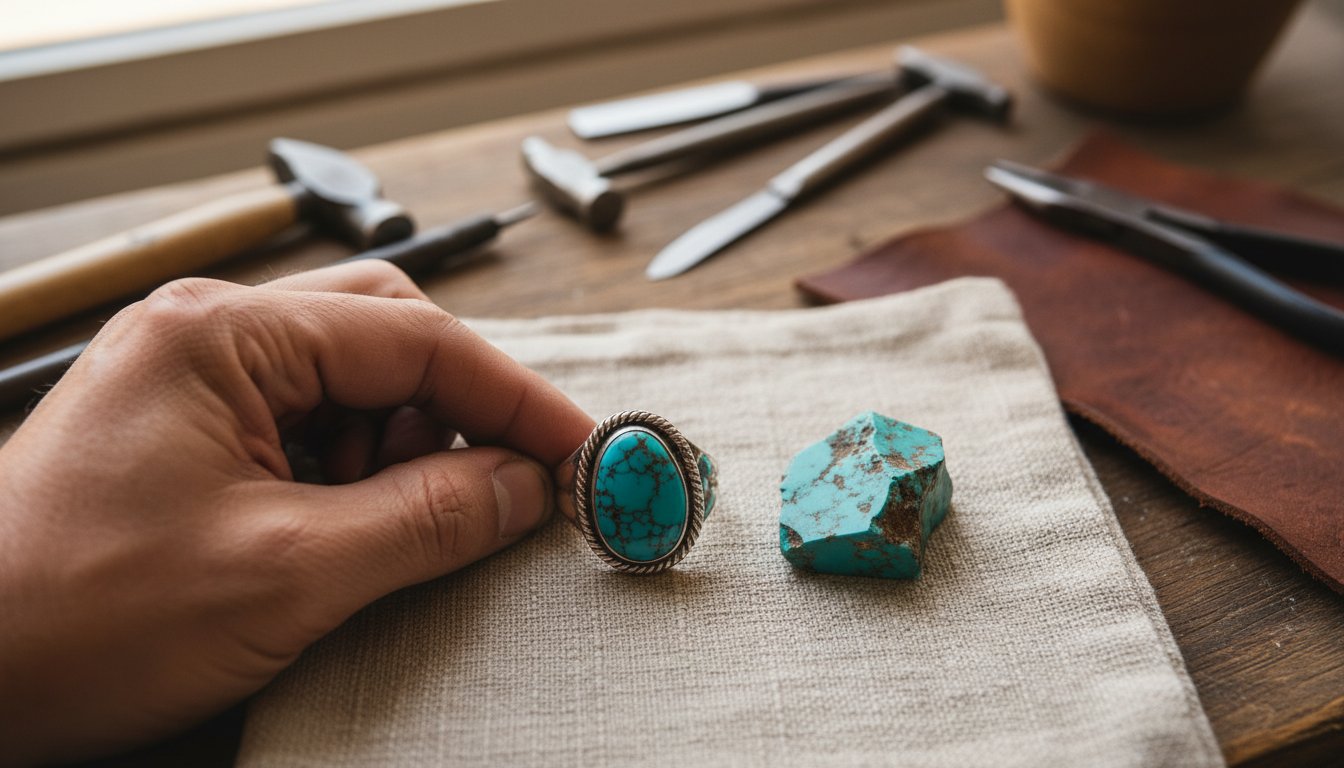
Dust settles on the workbench as the morning sun hits a slab of turquoise. This is the starting point for santa fe jewelry, an art form that mirrors the jagged peaks and high desert palette of New Mexico. The style isn't about flash or temporary trends. Instead, it relies on a balance between the raw texture of the landscape and the disciplined precision of refined silverwork. Every piece acts as a functional art form, designed to be worn daily while carrying the weight of the region's geological history.
For decades, the market has seen an influx of factory-made pieces that mimic this aesthetic using thin metals and stabilized stones. Real Southwestern design has moved in the opposite direction, focusing on small batch production where every hammer strike is intentional. High-quality materials like sterling silver and genuine turquoise are non-negotiable in this craft. While many styles are rooted in the deep history of Native American jewelry, modern Santa Fe artisans continue this legacy by treating each piece as a unique creation. This approach ensures the jewelry remains quietly timeless, serving as a wearable record of the earth's beauty.
To better understand the soul of this craft, watch this helpful video regarding the local tradition:
The Importance of Bench-Made Work
Factory jewelry often hides mystery metals under a thin plating, but bench-made work relies on solid .925 sterling silver. When you hold a hand-forged cuff, you feel the density and the slight variations that come from manual tools. These small marks are the fingerprints of the studio, distinguishing them from the sterile perfection of a machine. A dedicated working studio ensures that every bezel is tight and every cabochon is seated correctly. This hands-on process provides a level of consistency and durability that a mass-production line simply cannot replicate. The tactile nature of a piece that has been forged, filed, and polished by hand creates a physical connection between the wearer and the maker.
A Direct Connection to the Source
Knowing where a stone comes from changes how you wear it. Kimberly Cordova leads the design and curation at Wildflower, ensuring each piece tells a specific story of the earth. We believe in total transparency regarding stone origins, from the specific mine in Nevada to the final polish. Greg Cordova performs the lapidary work, often sourcing material from mines he owns or operates through CuttingEdgeTurquoise.com. This direct line from the mine to the bench creates a piece with a documented history, removing the uncertainty often found in the modern jewelry industry. Transparency isn't just a business practice; it is a commitment to the integrity of the materials.
Explore our latest handcrafted collections at wildflowerartisans.com, or visit the Wildflower Etsy shop for one-of-a-kind finds and verified customer reviews.
The Lapidary Bench: How Greg Cordova Cuts for Quality
The studio hums with a mechanical rhythm. Greg Cordova sits at his bench, leaning into the wheel. The sound of the lapidary wheel is a constant, low-frequency vibration that travels through the hands and into the shoulders, signaling the slow transformation of raw turquoise into a polished gem. This isn't a factory setting. It's where raw earth becomes santa fe jewelry.
Greg is a lapidary expert and mine owner who approaches every stone with a specific technical precision. He knows the difference between a stone that is merely blue and one that carries the weight of history. A machine-tumbled stone is smooth but lacks character, often losing the soul of the matrix in a generic grind. Hand-cutting a cabochon requires a conversation between the artist and the mineral. Greg looks for the way the host rock intersects with the turquoise, preserving the natural beauty of the stone while ensuring its structural integrity.
Sourcing from the Mine
Greg manages the extraction and selection of rough material through his work with specific mines, which can be explored further at CuttingEdgeTurquoise.com. Finding high-grade rough material is a challenge that requires patience and a trained eye. In 2023, the yield of jewelry-quality natural turquoise from many Southwestern mines remained below 10 percent of the total material pulled from the ground. Greg selects only the stones with the right density and color. If a stone is soft or chalky, it doesn't make the cut. It must be durable enough to be set in silver and worn for decades. This selective process ensures that only the most resilient, high-grade pieces reach the studio bench.
The Precision of the Grind
The process starts with a raw chunk of stone. Greg uses a diamond saw to slice it into slabs, carefully choosing the angle to highlight the best patterns. Then, he uses a series of grinding wheels to shape the edges and create a smooth surface. He works with the matrix to create a balanced look, ensuring that a spiderweb pattern feels centered and purposeful rather than accidental. A cabochon is a stone that has been shaped and polished into a smooth, rounded top with a flat back, serving as the foundational centerpiece of traditional Southwestern design. For those interested in the history of these techniques, the Wheelwright Museum of the American Indian offers extensive resources on the evolution of lapidary arts. The final polish reveals the stone's inner depth, a result of small batch production that respects the mineral's origin. You can see these hand-cut stones in their finished form by browsing our one-of-a-kind collection.
Explore our full range of handcrafted pieces at wildflowerartisans.com. If you prefer to shop on a platform with established reviews, you can also find a curated selection in the Wildflower Etsy shop.
Identifying Genuine Stones: Matrix, Color, and Mine Origins
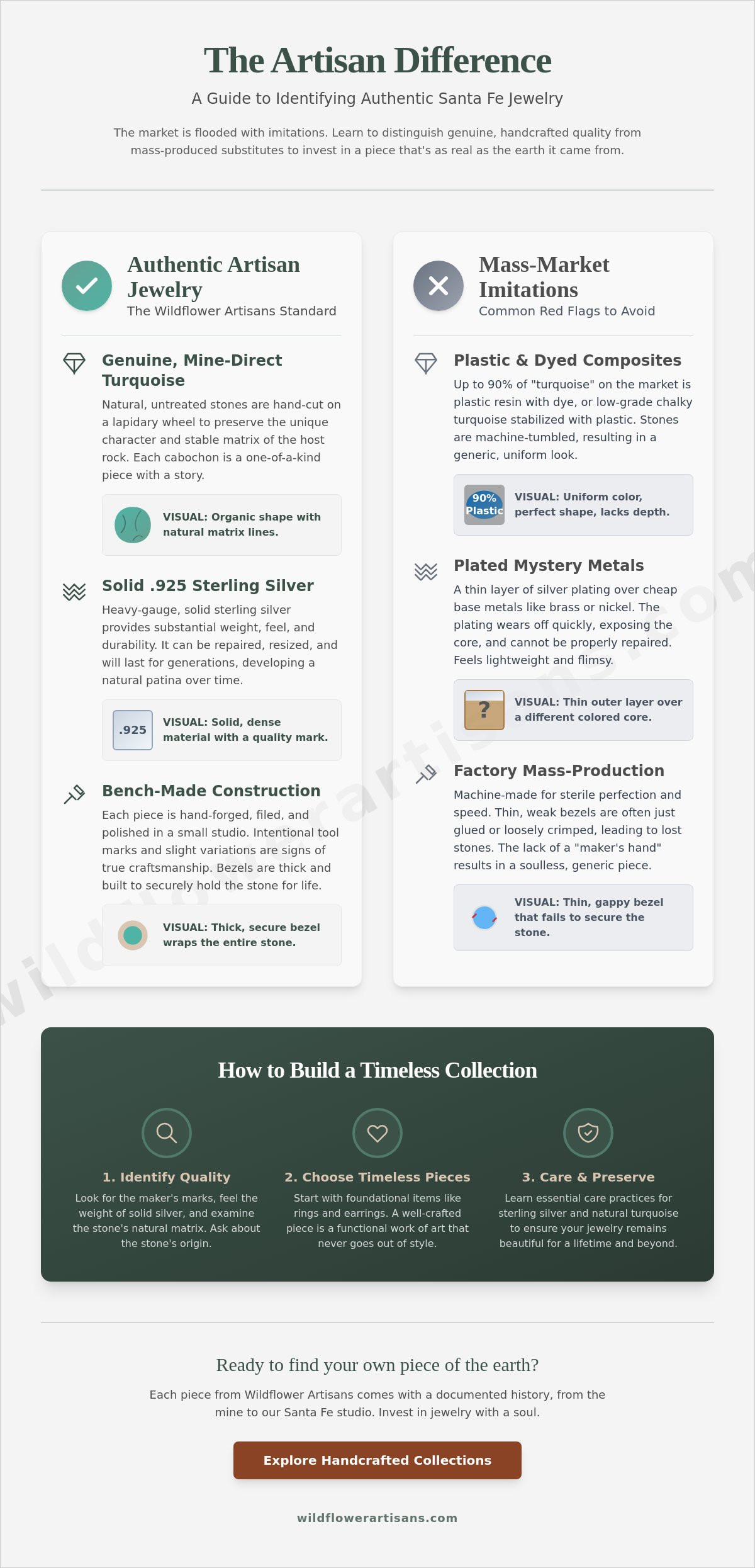
Picking up a hand-cut turquoise cabochon feels like holding a piece of the high desert sky. When you're looking for authentic santa fe jewelry, the ability to distinguish natural stones from mass-produced imitations is a vital skill. Many retail outlets sell dyed howlite or magnesite, which are white minerals injected with blue pigment. You can usually spot these by looking at the cracks. Dye tends to pool in the veins, creating dark, artificial-looking lines while the rest of the stone remains a flat, uniform color. Natural turquoise has a varied density and a weight that feels substantial in your palm. It's a stone that grew slowly over millions of years, and that history is visible in its depth.
The matrix is the host rock that stays with the turquoise after it's mined. It acts as a botanical fingerprint for the stone. A spiderweb matrix features thin, interlocking lines that create a delicate net across the surface. A water web pattern looks like light reflecting off the bottom of a clear stream. Other stones might show heavy chunks of brown, gold, or black host rock. These aren't imperfections. They are signs of a stone's authenticity and origin. We value these natural variations because they ensure no two pieces of santa fe jewelry are ever identical.
Mine-Specific Characteristics
Each mine produces a specific palette. Greg Cordova, who handles the lapidary work and sources our stones through CuttingEdgeTurquoise.com, looks for stones that tell a story of their geography. Kings Manassa turquoise from Colorado is prized for its deep, mossy greens and golden-brown matrix. The Sleeping Beauty mine in Arizona was famous for its clear, sky blue stones that often lacked any matrix at all. Royston turquoise from Nevada offers a beautiful range of greens and blues often found in the same rock. Kimberly Cordova curates these specific cuts for our one-of-a-kind collection to highlight the unique personality of the individual mine.
The Mystery of White Buffalo
White Buffalo is a staple in Southwestern style design, though it's technically not turquoise. Found in the Dry Creek mine area near Austin, Nevada, this stone is famous for its stark black and white contrast. It lacks the copper or aluminum that gives turquoise its blue or green hues. Instead, it features a clean white calcite or dolomite base with dark chert inclusions. It's a hard stone that takes a high polish. Because it's found in the same geological veins as turquoise, it requires the same expert lapidary care. We treat it with the same respect as our finest blue stones, carefully hand-cutting each piece to ensure the black matrix balances perfectly against the white field.
Explore our latest hand-cut stone settings at wildflowerartisans.com. You can also find a curated selection of our small batch designs in the Wildflower Etsy shop.
Sterling Silver Construction: Bezel Settings and Artisan Techniques
Working with sterling silver requires a balance of force and finesse. It is a metal that remembers how it was handled in the studio. In our shop, we use .925 sterling silver because it offers the structural integrity needed for lifelong wear. Unlike thin, plated fashion pieces that lose their finish and reveal base metals within months, artisan-made santa fe jewelry is built to endure. The construction process starts with heavy-gauge sheet and wire, ensuring the foundation of a ring or cuff won't warp under daily pressure. Over years of use, the silver develops a soft, dark patina in the recessed areas of the design. This natural oxidation adds depth and character, highlighting the textures created by hand-stamping or saw work. It is a visual record of the piece being lived in and loved.
The Strength of a Hand-Set Bezel
A bezel is a continuous strip of silver that wraps entirely around the perimeter of a stone. We prefer this method over prong settings, especially for the hand-cut cabochons Greg Cordova produces at CuttingEdgeTurquoise.com. Prongs often snag on knitwear or bend away from the stone, which puts a valuable cabochon at risk of falling out. A heavy-gauge silver bezel provides a protective wall that shields the edges of the turquoise from impact. Kimberly Cordova designs these settings to ensure the metal provides security without crowding the stone. The process involves burnishing, where we use a hardened steel tool to firmly and smoothly press the silver over the crown of the stone. This creates a permanent mechanical bond that keeps the stone seated for decades. It is a slow, manual process that requires a steady hand and a keen eye for symmetry.
Everyday Essentials vs. Statement Pieces
Choosing between different scales of jewelry usually depends on how you move through your day. Our everyday essentials focus on comfort and light weight, making them easy to wear from morning until night. These pieces use thinner gauges of silver that feel substantial but do not hinder movement or feel heavy on the ear. Large statement cuffs, by contrast, rely on heavy plate silver and multiple stones to create a visual and physical anchor. You can feel the weight of high-quality silver on your skin as it quickly warms to your body temperature. These designs remain quietly timeless because they are built on the physical properties of the materials rather than passing fashion trends. Whether it is a simple band or a complex cuff, the goal is a piece that feels like a natural extension of the wearer. This focus on ergonomics and durability is what defines the best santa fe jewelry.
Explore our latest studio work and find a piece that fits your style by visiting the Wildflower Artisans shop. You can also browse our collection and read customer reviews at the Wildflower Etsy shop.
Building a Quietly Timeless Collection of Artisan Jewelry
Holding a piece of santa fe jewelry in your hand feels different than handling mass-produced accessories. You can feel the weight of the sterling silver and the cool, polished surface of a hand-cut cabochon. Starting a collection isn't about buying everything at once. It's about finding those foundational pieces that speak to your personal style and hold their own against changing trends. We suggest beginning with a single signature piece that anchors your daily wardrobe and reflects a specific moment in your journey.
Choosing Your First Piece
A sterling silver ring featuring a high-grade turquoise cabochon is often the best place to start. Look for a stone with a unique matrix that catches your eye. Kimberly Cordova curates our collections to ensure each piece balances weight and comfort. You might prefer a pair of simple sterling earrings with subtle textures that catch the light as you move. These pieces transition easily from a casual denim look to a more structured professional outfit. Coordinating different stones is simpler than it seems. You can pair a deep blue Kingman turquoise with the earthy greens of Royston by focusing on the silver bezel work that ties them together.
Long-Term Care for Your Jewelry
Quality jewelry is a physical record of your life that can be passed down to the next generation. To keep your pieces in good condition, you must understand the materials. Silver naturally tarnishes when exposed to air, but a soft polishing cloth usually restores the luster. Avoid liquid dips or harsh chemicals because they can damage the stone. Natural turquoise is porous and sensitive to oils, perfumes, and household cleaners. We recommend putting your jewelry on last, after your lotions and scents have dried. For more detailed instructions on maintaining your investment, review our guide on care and repair techniques used in our studio. If a stone becomes loose or a setting needs attention, professional maintenance ensures the piece remains wearable for decades.
Every piece coming out of our Santa Fe studio has a documented history. When you know that Greg Cordova cut the stone from a specific mine or that Kimberly spent hours refining the curve of a silver cuff, the jewelry becomes more than just an object. It becomes a story you wear. Owning a piece of handcrafted santa fe jewelry connects you to the physical work of the lapidary wheel and the jeweler's bench. It's a quiet way to appreciate the raw materials of the Southwest and the hands that shaped them.
If you're ready to find a piece that resonates with you, browse our latest handcrafted designs at wildflowerartisans.com. You can also explore our curated selection and read customer stories on the Wildflower Etsy shop.
Cultivating Your Own Southwestern Collection
Choosing a piece of jewelry is an act of curation that connects you to the earth and the hands that shaped it. At our studio, we focus on the raw details that matter, from the specific mine origin of a stone to the weight of the sterling silver bezel. Greg Cordova hand-cuts every cabochon at his lapidary bench to ensure the matrix and color meet our standards for authentic santa fe jewelry. These aren't mass-produced items; they're small-batch pieces designed by Kimberly Cordova to be quietly timeless and durable enough for daily wear. We source our turquoise from verified US mines, so you know exactly where your stone began its journey. Our commitment to quality means no mystery metals and no shortcuts in construction. We invite you to find a piece that resonates with your own story and style.
Explore the current collection of artisan-made jewelry at Wildflower. You can also find our work and read customer reviews at the Wildflower Etsy shop. We look forward to helping you find something truly special.
Frequently Asked Questions
How can I tell if my Santa Fe jewelry is real turquoise?
Real turquoise is naturally cool to the touch and won't show a white interior if you were to scratch it in a hidden spot. Many imitations are made of dyed plastic or magnesite, which feel warmer against the skin and lack the weight of genuine stone. We look for the unique depth of the matrix and the specific luster that only develops in stones formed over millions of years. Authentic santa fe jewelry should feel substantial and show the organic variations found in nature.
What is the difference between natural and stabilized turquoise?
Natural turquoise is stone that's been cut and polished exactly as it came out of the earth without any chemical treatments. Stabilized turquoise has been infused with a clear resin under high pressure to make the stone harder and keep the color from changing over time. About 90 percent of the turquoise on the market is stabilized because the raw stone is often too soft to survive the grinding process. We only use the word natural for untreated stones that are dense enough to hold a polish on their own.
Who cuts the stones for Wildflower jewelry?
Greg Cordova hand-cuts every stone used in our studio, working from his lapidary shop to shape raw turquoise into finished cabochons. He brings a deep understanding of geology to the bench, ensuring each cut honors the natural flow of the stone's matrix. Greg also offers his hand-cut stones and rough material through CuttingEdgeTurquoise.com. This direct connection between the lapidary and the jeweler allows us to maintain a high standard for every piece we create.
Is sterling silver the same as silver plated jewelry?
Sterling silver is a solid metal alloy containing 92.5 percent pure silver, whereas silver plated items only have a microscopic layer of silver over a base of copper or brass. You can check for a .925 stamp on the back of a bezel or ring shank to confirm it's solid sterling. Plated jewelry will eventually wear down to show the yellow or orange metal underneath, but sterling silver is a durable material that can be polished and worn for a lifetime without losing its color.
What makes White Buffalo jewelry unique?
White Buffalo is prized for its stark white color and sharp black chert matrix, creating a high-contrast look that's different from traditional blue stones. While it's often called white turquoise, it's actually a combination of calcite and quartz sourced from a single mine near Tonopah, Nevada. This stone was first discovered in 1993 and has since become a staple of Southwestern style. It offers a clean, monochromatic aesthetic that works well in small batch artisan designs.
Can I wear my turquoise jewelry every day?
You can wear your turquoise daily if you take a few simple precautions to protect the stone's porous surface. Since turquoise sits between a 5 and 6 on the Mohs hardness scale, it can be scratched by harder materials or damaged by harsh household chemicals. We recommend removing your santa fe jewelry before swimming, cleaning, or applying lotions. Wiping the silver and stone with a soft, dry cloth after wearing it will help maintain the original finish for years.
Where do the stones in Wildflower jewelry come from?
Our stones are sourced from reputable American mines like the Kingman mine in Arizona and the various claims in the Royston district of Nevada. Greg Cordova curates this material through his professional network and his work at CuttingEdgeTurquoise.com, often sourcing rough stone directly from the families who own the mines. This ensures that we know the history of every cabochon we set, from the moment it's pulled from the ground to its final polish in our studio.
Article by
Kimberly Cordova
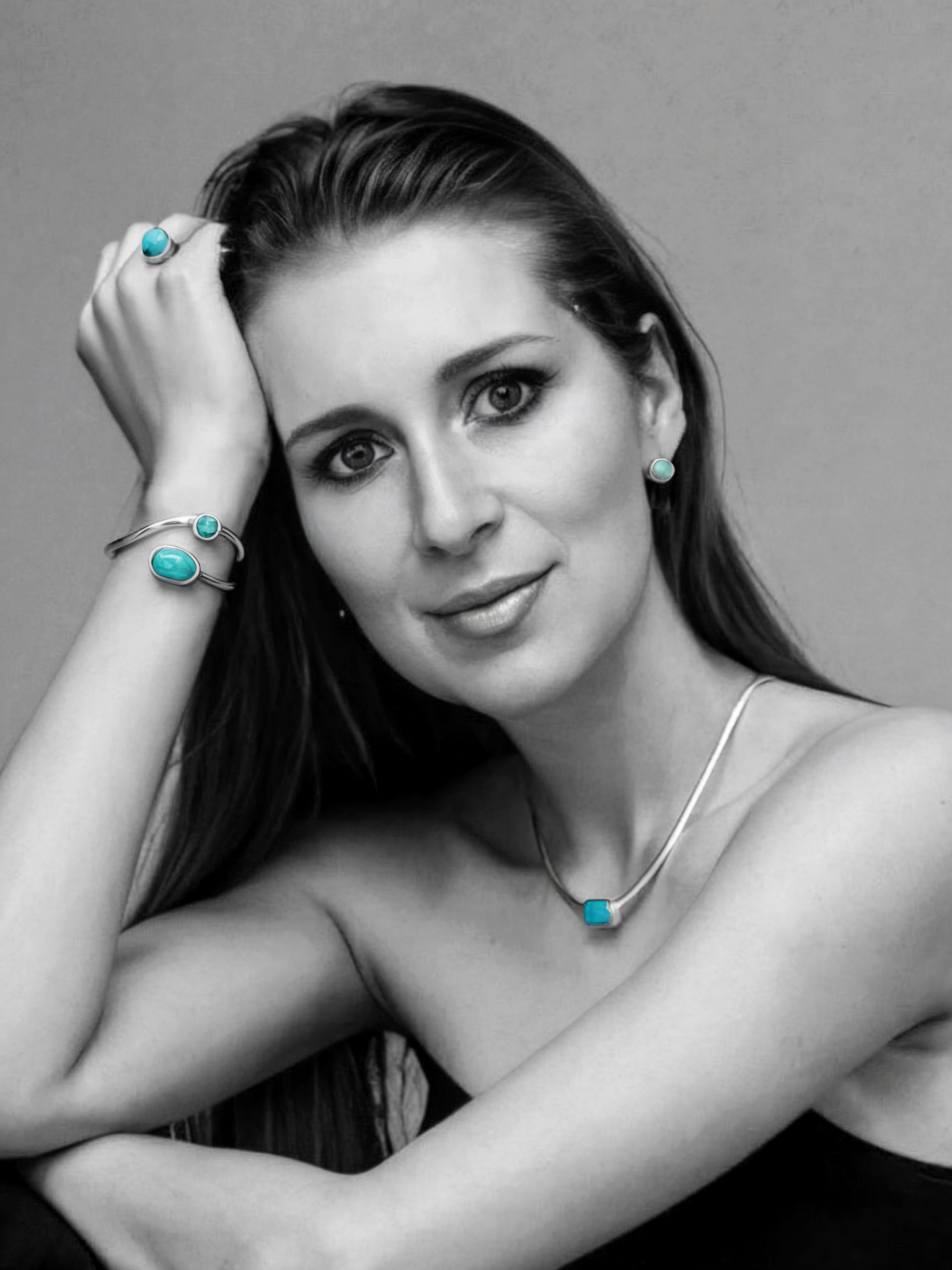
Kimberly Cordova is the founder and creative director of Wildflower, a handmade Turquoise and sterling silver jewelry brand based in Santa Fe. She built Wildflower around a simple belief: the best jewelry is the kind you actually reach for, not the kind you save for someday.
Kimberly designs pieces made by hand with a trusted circle of Santa Fe silversmiths, works alongside her husband Greg on in-house lapidary pieces cut from stones including the family's King's Manassa Mine in Colorado and White Buffalo Mine in Nevada, and sources finished work from artisan makers whose craft meets the same standard. The result is a collection with real range and no shortcuts on the stone, the silver, or the story behind either.
Her writing covers everything she has learned along the way: how Turquoise forms, how to tell natural from stabilized, what makes one mine different from another, how to read a bezel, and how to shop with confidence in a market that is not always straightforward. It is the kind of plainspoken information she wished someone had laid out for her when she was starting out.
Shop the Wildflower collection at wildflowerartisans.com, or find us on Etsy at wildflowersantafe.etsy.com if you prefer shopping there. Questions about a stone, a setting, or a specific piece are welcome any time.
