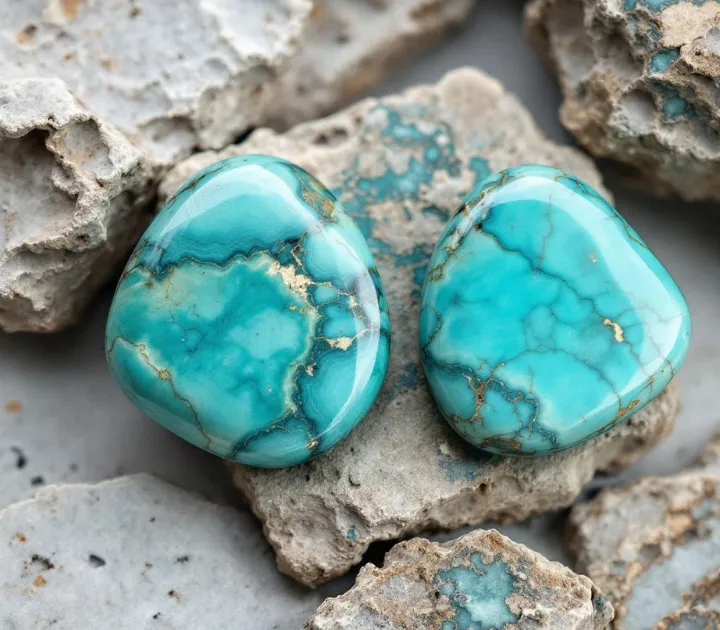
How Turquoise Cabochons Are Made: From Rough Stone to Heirloom Jewelry
Ever wondered how a raw piece of turquoise becomes the centerpiece of your favorite Wildflower ring or cuff? Here’s a behind-the-scenes look at our handcrafted process—from mine to masterpiece—and why it matters for collectors and everyday wearers alike.
Sourcing the Stone
Every Wildflower cabochon begins with a story.
We source turquoise directly from our own King’s Manassa and White Buffalo mines, along with trusted partners who share our commitment to quality and ethics. Each stone is chosen for its color, matrix, hardness, and natural character—no shortcuts, no mass-produced stones.

Slabbing & Backing
Once selected, Greg—our resident lapidary (and my husband)—uses a precision diamond saw to cut the rough turquoise into slabs. For stability and longevity, each slab is professionally backed, ensuring your jewelry stands the test of time and daily wear.
Shaping & Grinding
Each cabochon is hand-shaped using diamond wheels to refine the dome, symmetry, and clean edges. This stage is where artistry meets precision, balancing the natural beauty of the stone with the high standards collectors expect.

Polishing
After shaping, the stone is polished by hand.
No harsh chemicals. No shortcuts. Just patience, skill, and the dedication to bring out the stone’s natural depth and glow.

Setting in Sterling Silver
Once polished, the cabochon is ready to meet its setting. Our silversmiths set every stone in .925 sterling silver, each piece stamped with the maker’s hallmark for authenticity and provenance. No two pieces are ever alike—each one is crafted to be worn, loved, and passed down.

This process isn’t just tradition—it’s your guarantee of authenticity, quality, and true heirloom craftsmanship.
When you wear Wildflower, you’re not just wearing jewelry; you’re carrying a story from the Southwest and the hands that shaped it.
