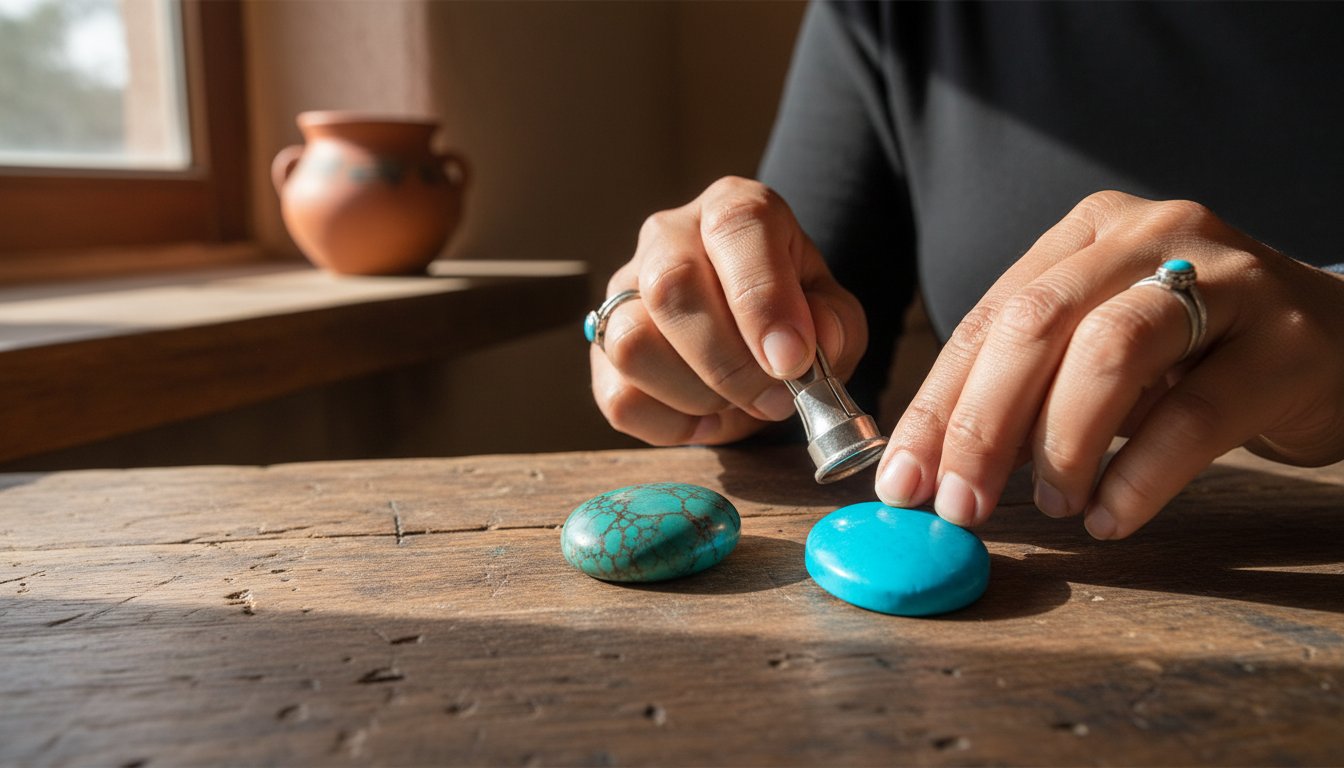
How to Spot Fake Turquoise Jewelry and Identify Authentic Stones
Last October, a visitor brought a vibrant sky-blue pendant into our studio, hoping to confirm its heritage. Beneath the surface of that "perfect" stone lay a core of white plastic; it's a quiet tragedy we see too often. Understanding how to spot fake turquoise jewelry is essential when the Gemological Institute of America notes that turquoise is among the most commonly imitated gems in the world. You likely believe that jewelry should be a vessel for emotion and a celebration of nature's fleeting beauty. We agree. The weight of a stone should feel like a piece of the earth's history.
In this guide, we'll offer a studio-led perspective on distinguishing genuine mineral specimens from dyed imitations using professional lapidary insights. You'll gain the confidence to identify high-grade matrix and perform simple, non-destructive tests in your own home. We'll explore the nuanced definitions of "natural" and "stabilized" to ensure your next heirloom is truly bespoke. Authentic. Intentionally chosen. We'll help you move past the confusion of factory imports to find the soulful, artisan-made pieces you deserve.
Key Takeaways
- Learn to distinguish the soulful, complex chemistry of genuine minerals from the common imitations of dyed stones that often flood the market.
- Discover how the intricate spiderweb matrix and organic color zoning reveal the stone's unique story and natural, unrefined origin.
- Master simple studio techniques, such as the scratch and acetone tests, to understand how to spot fake turquoise jewelry and uncover hidden dyes.
- Understand the delicate balance of stabilized stones, where clear resin preserves the ephemeral beauty of softer specimens while maintaining their value.
- Explore how the intentional artistry of handcrafted silverwork serves as a hallmark for identifying stones of true, enduring quality.
Understanding the Landscape of Imitation Turquoise Jewelry
Authentic turquoise is a rare gift, a hydrous phosphate of copper and aluminum formed over millennia in the quiet dark of arid earth. It's a stone that breathes with the history of the land, carrying a soft, sky-blue whisper that has captivated makers for centuries. However, the modern market is crowded with echoes and imitations. To truly appreciate a piece, one must understand the properties of turquoise and how its unique chemistry separates it from mere glass or plastic. We believe every stone tells a story; genuine turquoise speaks in a cool, substantial weight that imitations simply can't mimic.
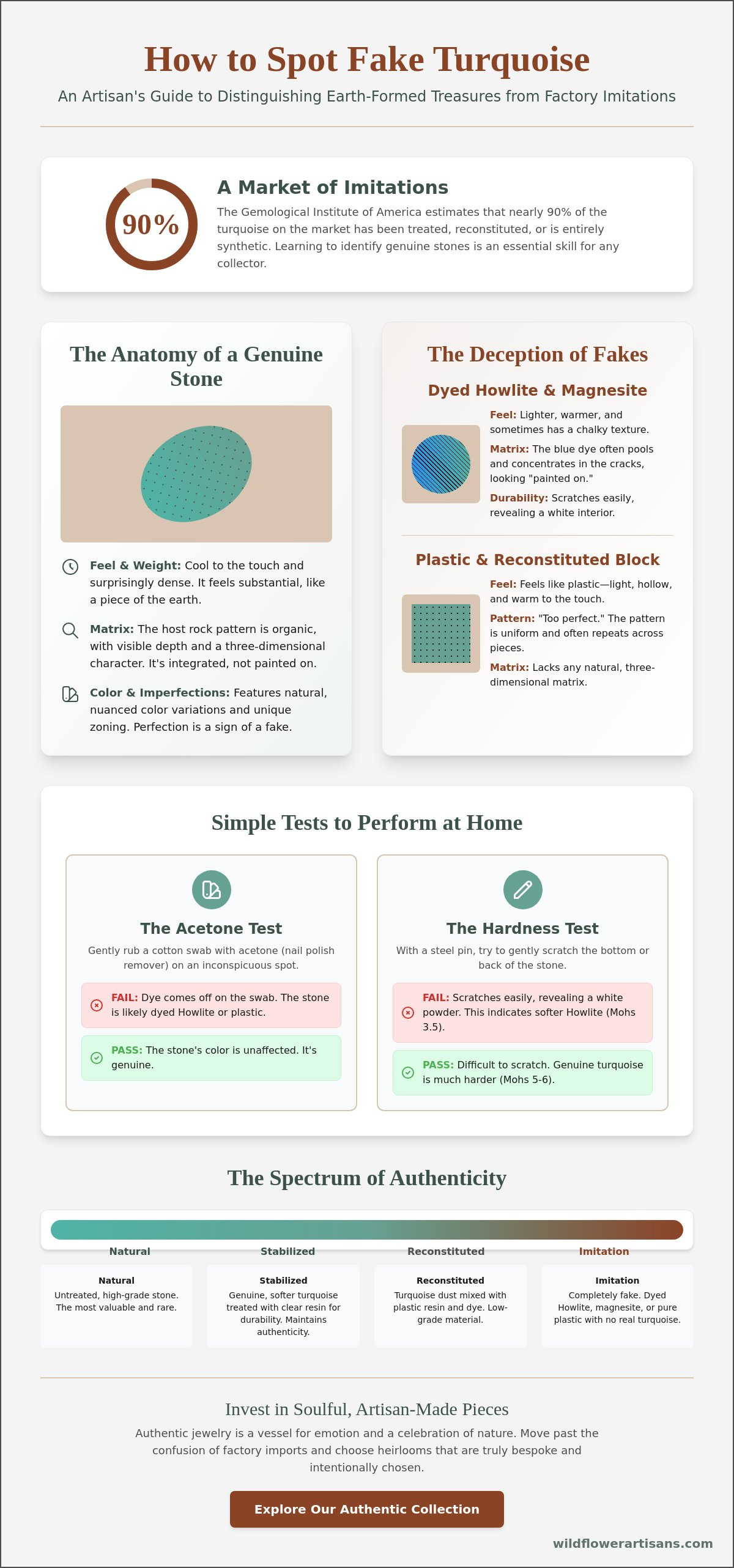
The Gemological Institute of America estimates that nearly 90% of the turquoise currently on the market has been treated or is entirely synthetic. This staggering reality makes learning how to spot fake turquoise jewelry an essential skill for any collector who values authenticity. Genuine stones possess a quietly timeless character. They are imperfect. They are soulful. When you hold a piece from our stone origins collection, you feel the difference between a curated mineral and a factory-pressed substitute.
To better understand this concept, watch this helpful video:
The Rise of Dyed Howlite and Magnesite
Howlite and magnesite are the most common masqueraders in the jewelry world. Howlite is naturally white and extremely porous, a blank canvas that drinks up blue dye with ease. You can often see the deception by looking closely at the veins. In a natural stone, the matrix is a deep, structural part of the mineral; in dyed howlite, the color often pools in the cracks, creating a surface-level dye job that looks painted on. These materials feel lighter and warmer to the touch than genuine stone. They don't hold the desert's chill.
Plastic and Reconstituted Block Materials
Block turquoise became a commercial staple around 1970, offering a cheap way to mass-produce the look of the Southwest. These slabs are essentially tinted plastic resin mixed with leftover turquoise dust. They are uniform and "too perfect," lacking the rhythmic variations found in nature. Factory-made blocks are static; they have no movement. A hand-cut cabochon, by contrast, celebrates the asymmetrical and the organic. Knowing how to spot fake turquoise jewelry often comes down to trusting your eyes. If the pattern repeats perfectly across several pieces, it's a product of a machine, not the earth. It lacks the ethereal energy of a bespoke treasure.
- Authentic Stone: Cold to the touch, heavy, unique matrix patterns.
- Dyed Minerals: Warmer feel, color concentrated in cracks, scratches easily.
- Block Material: Plastic texture, repetitive patterns, feels "cheap" or hollow.
The Physical Anatomy of Genuine Turquoise
To understand how to spot fake turquoise jewelry, one must first learn to listen to the stone's own story. Authentic turquoise isn't a uniform slab of manufactured color; it's a topographical map of the earth's history. It carries a quiet, dense presence that plastic or resin simply cannot mimic. When you hold a hand-cut cabochon, you feel a cool weight that speaks of mineral deposits formed over millions of years. This weight is a primary indicator of authenticity. According to the Gemological Institute of America, turquoise is judged on three basic qualities: its color, texture, and the presence or absence of matrix. These elements are the fingerprints of the desert, unique to every foraged find.
Examining the Matrix and Spiderweb Patterns
The matrix is the host rock, a remnant of the stone's long slumber within its mother mountain. In genuine specimens, this matrix has visible depth. If you look closely with a jeweler's loupe, you will see where the turquoise mineral has grown into the crevices of the host rock. It is an organic, sometimes messy marriage. Fake stones often feature a "painted" matrix. This looks flat and sits on the surface like an afterthought, lacking the three-dimensional character of the real thing. In a stone like King’s Manassa turquoise, the dark, rich matrix provides a grounding contrast to the verdant hues of the mineral. It is a curated chaos that nature perfected long before we arrived.
Luster and Surface Texture
Natural stones possess a waxy to sub-vitreous luster. They don't shine with the aggressive glare of glass; they glow with a soft, ethereal light from within. Artist Kimberly Cordova often speaks of looking for the "life" within a stone, a quality found in the subtle movement of color zoning. Natural stones rarely exhibit a singular, perfect hue. Instead, you'll find a palette where sky blue melts into sea-foam green, creating a rhythmic visual experience.
The texture of a stone also reveals its secrets. You can perform a simple check at home to help determine how to spot fake turquoise jewelry. Plastic imitations are soft and often feel "warm" to the touch. The fingernail test is a classic method; if your nail leaves a mark or feels like it is catching on a soft, gummy surface, you are likely holding a resin-heavy imitation. Real turquoise is resilient, ranking between a 5 and 6 on the Mohs scale. It feels substantial and cool against the skin. Our stone origins guide offers a deeper look into how these physical traits vary from mine to mine, celebrating the beautiful imperfections of the earth.
- Natural Weight: Mineral specimens are significantly denser than plastic or hollowed fakes.
- Color Zoning: Look for organic transitions in shade rather than a flat, monochromatic surface.
- Surface Feel: Authentic stones maintain a cool temperature and a waxy, stone-like texture.
Every stone we select is a vessel for emotion, intentionally designed to highlight these natural variations. When you choose a bespoke piece, you aren't just buying jewelry; you're preserving a fragment of the wild, raw world.
Simple Tests to Spot Fake Turquoise Jewelry at Home
Holding a piece of authentic turquoise feels like cradling a fragment of the desert sky. It's grounded and cool. When you're learning how to spot fake turquoise jewelry, the process is less about skepticism and more about a deep, intentional appreciation for the stone’s true nature. Authentic turquoise possesses a soul that synthetic imitations simply cannot replicate. To honor the artistry of your one-of-a-kind treasures, you can perform a few gentle observations in your own studio or home.
The Acetone and Scratch Tests
Nature rarely offers perfection in uniform shades. Many imitators use howlite or magnesite, porous stones that drink up blue dye to mimic the celestial hues of the Southwest. To reveal this artifice, dampen a cotton swab with a small amount of acetone or nail polish remover. Gently wipe an inconspicuous area of the stone. If the swab returns with a faint blue or green stain, you've uncovered a surface dye rather than a natural mineral. Genuine turquoise holds its color deep within its crystalline structure; it won't bleed when touched by spirits.
Hardness offers another clue to the stone's identity. On the Mohs scale, authentic turquoise sits between a 5 and 6, making it relatively soft but still substantial. You can attempt to scratch a hidden area with a steel needle. If the stone scratches with the ease of a fingernail or feels like soft plastic, it's likely a resin-based composite. For a deeper understanding of these physical properties, the Turquoise Buying Guide from the International Gem Society provides an essential map for navigating these mineral landscapes. We believe every collector should understand the bones of their jewelry.
Inspection Under Magnification
A jeweler’s loupe acts as a window into the stone’s history. When you peer through the lens, look for tiny, spherical air bubbles trapped just beneath the surface. These are the telltale signatures of resin or plastic "block" turquoise. Natural stones are dense and organic. They lack the "granulated sugar" texture often found in dyed imitations, where the dye settles into the microscopic cracks of a lesser mineral. This creates a speckled appearance that feels forced and unnatural.
- Examine the edges where the stone meets the silver bezel.
- Look for "dye pooling," which appears as darker, concentrated lines of color in the stone's crevices.
- Observe the back of the stone if the setting allows to see the raw matrix.
Be gentle with your heirloom pieces. We strongly advise against destructive methods like the hot needle test on high-value artisan jewelry. While a hot needle will melt plastic or resin, it can permanently mar a genuine stone or damage a delicate silver setting. True beauty deserves protection. Trust your eyes and your tools. Seek the subtle rhythms of the earth rather than the frantic perfection of the factory. Authenticity has a weight you can feel.
Identifying Treated and Stabilized Stones
The journey of a stone from the deep earth to a finished setting is a story of transformation. In our studio, we view stabilization not as a deception, but as a preservation of nature's fleeting beauty. Understanding the difference between a treated stone and a synthetic imitation is essential when learning how to spot fake turquoise jewelry. Stabilization is a specific value tier. It bridges the gap between raw, earthy minerals and wearable art.
Most turquoise unearthed today is "chalky" and porous. It's too soft to survive the intense heat of a jeweler’s torch or the friction of a polishing wheel. To honor these stones, artisans use a process of clear resin pressure-infusion. This method forces a liquid binding agent into the stone’s microscopic pores. It hardens the material without altering its chemical soul. Natural turquoise remains the ultimate prize. It's a stone born with enough density to be cut and polished with zero intervention. Only about 10% of the turquoise mined globally meets this standard of natural perfection. Greg Cordova focuses his work on specific mine origins to ensure every piece maintains its structural integrity. He seeks out stones that tell a clear, honest story of their birth.
Stabilization vs Dyeing
There's a vital distinction between stabilizing a stone and dyeing it. Stabilization is about strength. It locks in the natural, ethereal palette the earth provided. Dyeing is an act of masking. It uses pigments to force a vibrant blue onto inferior stones or even different minerals like howlite. Most turquoise found in high-quality rings and cuffs is stabilized for daily durability. These pieces resist the oils of your skin and the wear of time. Natural, untreated stones are rare treasures. They're curated for collectors who value the raw, unyielding character of the desert. They command a significant premium because they're becoming harder to find every year.
Sourcing and Provenance
A stone's history is its heartbeat. Knowing whether a cabochon hails from the Royston district or the Kingman mine adds layers of meaning to your jewelry. These locations offer distinct visual signatures, from the lush greens of Nevada to the sky-blues of Arizona. You can dive deeper into these narratives on our stone origins page. When you're trying to figure out how to spot fake turquoise jewelry, the absence of sourcing information is a loud warning. A reputable artisan will always know where their stones were foraged. If a seller can't name the mine, the stone’s authenticity is likely a shadow of the real thing. Authenticity is found in the details. It's in the specific matrix and the weight of a stone that has a home.
Ready to find a piece with a true story? Explore our one-of-a-kind collection
Investing in Artisan-Made Quality and Trust
We often find ourselves peering through a jeweler's loupe, searching for the tiny imperfections that prove a stone's origin. Yet, the most profound evidence of authenticity often lies in the craftsmanship surrounding the gem. When you are learning how to spot fake turquoise jewelry, look at the silver. Handcrafted silverwork, with its intentional weight and delicate textures, serves as a sanctuary for genuine stones. Mass-produced imitations typically use thin, cast molds that feel hollow and light. In contrast, a piece forged in a working studio carries the energy of the artisan. The time required to hand-saw a bezel or stamp a traditional pattern is a significant investment. It's rare for a creator to devote such effort to a counterfeit stone. Genuine Southwestern style jewelry is defined by this commitment to the tactile and the permanent.
Hallmarks and Studio Ethics
Authenticity leaves a trail. Look for the artist's hallmark or a .925 stamp hidden on the reverse side of a cuff or pendant. These markings are more than just legal requirements; they are symbols of accountability. In our studio, the curation process is guided by Kimberly Cordova, who ensures that every piece reflects a standard of excellence rooted in Southwestern tradition. We prioritize transparency about stone treatments. Whether a stone is natural or stabilized, we share that story openly. This clarity is essential for building established E-E-A-T, or expertise and trustworthiness, within the community of collectors. A reputable jeweler will always be a storyteller, never hiding the origins or the journey of the materials they use.
The Longevity of Genuine Materials
A genuine stone possesses a quiet, enduring spirit. Unlike plastic block turquoise that remains stagnant and dull, real turquoise is porous and reactive. It develops a rich patina over time, shifting slightly in hue as it interacts with the wearer's life. This transformation is a beautiful, slow-motion dialogue between the earth and the human body. To preserve this delicate balance, proper maintenance is vital. You can find detailed instructions on preserving your jewelry's luster in our care and repair guide. Authentic materials don't just last; they evolve. A genuine stone is a timeless investment that carries the whispers of the high desert into the future. It's a piece of art that breathes with you.
- Hand-stamped details: Look for slight variations in stamp depth that indicate a human hand.
- Weight: Authentic sterling silver and stone have a cooling, substantial presence on the skin.
- Transparency: Ask for the specific mine origin; authentic pieces often come with a known history.
Choosing a piece from a dedicated artisan ensures that the beauty you see is the beauty you receive. By focusing on the soul of the craftsmanship, you can confidently navigate your journey of collecting. Authentic stones are more than mere accessories. They are fragments of history, shaped by hand and heart, designed to be passed down through generations.
Honoring the Earth’s Rare Blue Treasures
Mastering how to spot fake turquoise jewelry is a quiet act of reverence for the desert’s most soulful offerings. By observing the stone’s intricate matrix and performing mindful home tests, you protect the integrity of your collection. Authentic turquoise carries a cool, grounded weight that dyed howlite or plastic composites simply can't replicate. It's an intentional choice to embrace the organic over the artificial.
At Wildflower Artisans, we believe your jewelry should tell an honest story. Every stone is hand-selected for its unique personality before Greg Cordova begins the delicate lapidary work. Kimberly Cordova then designs each piece to mirror the fluid, rambling grace of nature. We maintain a strict standard of purity, using no dyed howlite and no mystery metals in our studio. We honor the 30 million years of geological history held within these sky-colored gems. Your connection to the earth is precious; your jewelry should be too.
Browse our curated collection of authentic, artisan-made turquoise jewelry
Trust your intuition and your eye as you seek out pieces that resonate with your spirit. The right stone is waiting to find its way home to you.
Frequently Asked Questions
Is all turquoise with a black matrix real?
No, a dark matrix doesn't guarantee authenticity. Many imitations use dark epoxy or paint to mimic the intricate spiderweb patterns found in nature. To understand how to spot fake turquoise jewelry, look for depth. Authentic matrix is an organic part of the stone's history. It should show varied textures and slight depressions where the mineral meets the turquoise host. The Gemological Institute of America notes that synthetic matrix often looks flat or uniform.
Can I use a hot needle to test my jewelry?
You can use a hot needle, but we strongly advise against it for your cherished pieces. While a heated tip will melt resin or plastic imitations, it's a destructive method that leaves a permanent scar. A 2022 report from the American Gem Trade Association highlights that such tests can ruin the surface of a genuine, porous stone. We prefer gentle observation. Preserving the integrity of your jewelry is a celebration of its lasting, soulful story.
What is the difference between natural and stabilized turquoise?
The primary difference lies in the stone's inherent strength. Natural turquoise is rare and hard enough to be cut and polished without any chemical assistance. Stabilized turquoise has been infused with clear resin to improve its durability for daily wear. This is common; industry data from the International Gem Society suggests that 95 percent of turquoise used in jewelry today is stabilized. It ensures the stone remains vibrant and whole through the many seasons of your life.
Why does my turquoise stone look like it's changing color?
Your stone is likely changing color because it's a living, breathing piece of the earth. Genuine turquoise is naturally porous. It absorbs the oils from your skin or the perfumes you wear, which causes the hue to deepen or shift toward green. This transformation is a beautiful sign of a natural or lightly treated stone. Studies in the Journal of Gemmology confirm that untreated stones are susceptible to these atmospheric and chemical changes over time.
Is White Buffalo a type of turquoise?
Technically, White Buffalo isn't turquoise at all. It's a combination of aragonite and calcite found in the Dry Creek Mine near Austin, Nevada. It lacks the copper content that gives turquoise its signature blue. We often pair it with turquoise because they share a similar, rugged beauty. With a Mohs hardness of 3.5 to 4.5, it requires the same gentle care as its sky-colored siblings. It's a rare, monochrome treasure born from the desert's quiet depths.
How much should a real turquoise ring cost?
Pricing depends on the rarity of the mine, but suspiciously low prices are a clear warning. If you see a large stone set in silver for under 50 dollars, it's likely a dyed imitation or a mass-produced import. High-grade specimens, such as those from the Lander Blue mine, have sold for over 300 dollars per carat at auction. Learning how to spot fake turquoise jewelry involves recognizing that quality craftsmanship and rare minerals carry a fair, artisanal value.
Article by
Kimberly Cordova
Kimberly Cordova is the founder and creative director of Wildflower, a handmade Turquoise and sterling silver jewelry brand based in Santa Fe. She built Wildflower around a simple belief: the best jewelry is the kind you actually reach for, not the kind you save for someday.
Kimberly designs pieces made by hand with a trusted circle of Santa Fe silversmiths, works alongside her husband Greg on in-house lapidary pieces cut from stones including the family's King's Manassa Mine in Colorado and White Buffalo Mine in Nevada, and sources finished work from artisan makers whose craft meets the same standard. The result is a collection with real range and no shortcuts on the stone, the silver, or the story behind either.
Her writing covers everything she has learned along the way: how Turquoise forms, how to tell natural from stabilized, what makes one mine different from another, how to read a bezel, and how to shop with confidence in a market that is not always straightforward. It is the kind of plainspoken information she wished someone had laid out for her when she was starting out.
Shop the Wildflower collection at wildflowerartisans.com, or find us on Etsy at wildflowersantafe.etsy.com if you prefer shopping there. Questions about a stone, a setting, or a specific piece are welcome any time.
