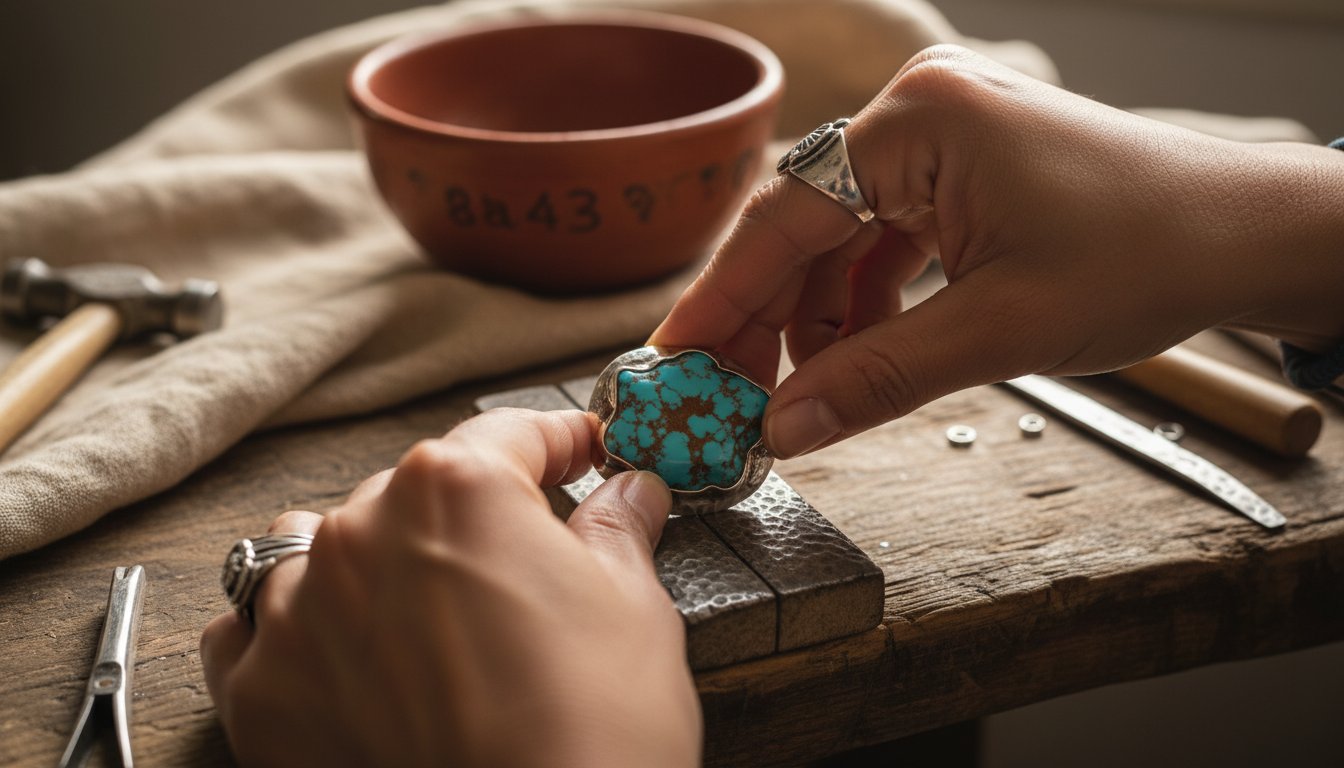
Hopi Tribe: Discovering the Sovereignty and Artistry of the Peaceful People
The high desert of Northern Arizona isn't just a backdrop for tourism; it's the sovereign home of the hopi tribe, a people whose history on these mesas stretches back over a thousand years. You've likely felt the pull of the high desert, yet found yourself lost in a sea of mass-produced trinkets that fail to capture the soul of the land. It's difficult to find the line between a souvenir and a piece of living history when so many narratives are oversimplified for a quick sale.
We believe that understanding the maker is just as important as the piece itself. This article offers a grounded exploration of Hopi history and the unique sovereign structure of their twelve independent villages. You'll learn about the philosophy of peace that guides their daily life and how this quiet intentionality translates into handcrafted silverwork. From the intricate overlay techniques to the specific motifs found in artisan-made jewelry, we'll give you the tools to identify true craftsmanship. By the end, you'll see how these ancient traditions continue to shape the quietly timeless Southwestern style we curate in our own small batch studio.
Key Takeaways
- Look into the history of the Mesa villages and the ancestral lands that have sustained the people for centuries.
- Explore how the Hopi Tribe manages its sovereign government and how the Council works for the people.
- See how a philosophy of peace and humility guides life in the high desert, from dry farming to daily rituals.
- Get to know the meaning behind symbols like clouds and rain found in artisan-made Southwestern style jewelry.
- Learn what to look for in studio-made pieces, including hand-cut stones like Kingman turquoise with a distinct matrix.
The Foundation of the Hopi Tribe and the Mesa Villages
The high desert of northeastern Arizona stretches out in shades of ochre and dust. Sandstone cliffs rise sharply against a wide sky, marking the ancestral home of the hopi tribe. This sovereign nation has maintained a presence here for centuries, living on lands they call Hopitutskwa. It isn't just a territory on a map. It's a sacred geography that has sustained their culture since time immemorial. Deeply rooted. Constantly enduring.
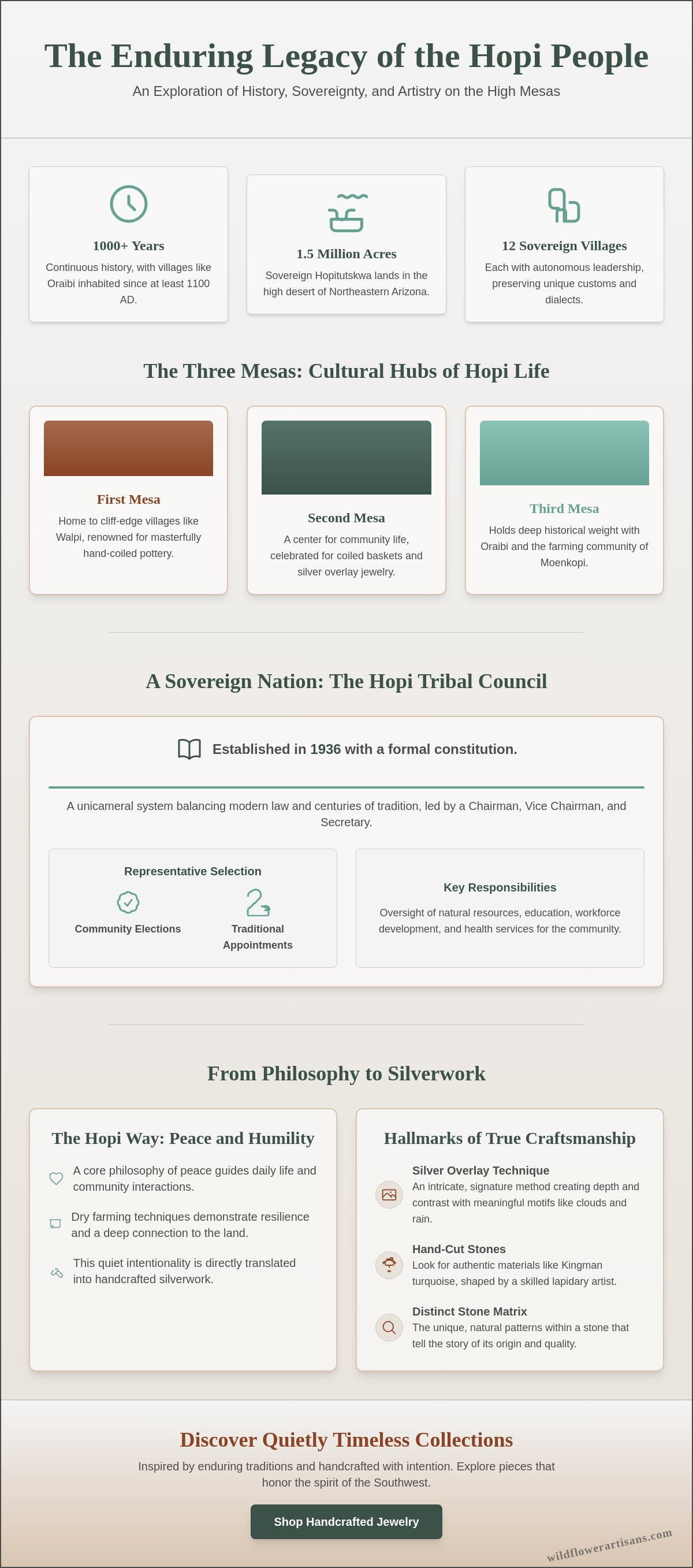
Life here centers on three massive finger-like projections at the southern edge of Black Mesa. These landforms define the physical and spiritual boundaries of the community. In the village of Oraibi on Third Mesa, people have lived continuously since at least 1100 AD. That makes it one of the oldest inhabited spots in the United States. It's a place where the past isn't a memory; it's the ground you walk on. Wildly beautiful. Intentionally designed.
The Significance of the Three Mesas
The mesas act as distinct cultural hubs. First Mesa is home to villages like Walpi, perched on the cliff edge, where artisans are known for hand-coiling pottery. Second Mesa serves as a center for community life and the creation of artisan-made silver overlay jewelry and coiled baskets. Third Mesa holds the deep historical weight of Oraibi and the farming community of Moenkopi. Each mesa has its own rhythm and specific artistic focus.
The Twelve Sovereign Villages
Governance within the hopi tribe is rooted in the autonomy of twelve individual villages. Each settlement operates with its own leadership, often guided by a traditional Kikmongwi or village chief. This decentralized structure ensures that local customs and specific dialects remain intact. While the central government handles broader administrative duties, the heart of the culture beats within these individual village squares. It's here that the Hopi language is spoken and religious ceremonies are performed, keeping the connection to the land alive. At our Santa Fe studio, Kimberly Cordova often draws inspiration from these enduring traditions when curating our quietly timeless collections. Greg Cordova handles our lapidary work at Cutting Edge Turquoise with a similar respect for the raw material, ensuring every stone reflects its origin. You can find more stories about the materials we use in our studio journal.
Explore our collection of handcrafted jewelry at wildflowerartisans.com to find your next piece. If you prefer the Etsy platform, you can also browse our work and read reviews at our Wildflower Etsy shop.
Sovereignty and the Modern Hopi Council
The high mesas of Northern Arizona are the site of a sophisticated government that balances modern law with centuries of tradition. In 1936, the hopi tribe adopted a formal constitution. This established a unicameral system where the Hopi Council holds the authority to manage the welfare of the people. This government oversees approximately 1.5 million acres of land, handling everything from local schools to the protection of natural resources. It is a practical, working system designed to protect the autonomy of the people while navigating the complexities of the modern world. Representatives are chosen through a mix of community elections and village appointments, ensuring that the diverse voices of the mesas are heard in the central chambers.
The Structure of the Council
The Council is led by a Chairman and a Vice Chairman who manage the daily operations of the government. A Secretary assists with the administrative needs of the body. The selection of representatives is not always uniform across the villages. Some communities choose their members through democratic elections, while others rely on appointments made by traditional village leaders. This leads to a unique challenge. Some villages currently lack a seated council member because they prioritize traditional leadership over the modern system. Balancing these two worlds requires a steady hand and a deep respect for the history of the mesas. It is a constant dialogue between the past and the present.
Managing Resources and Services
The Department of Natural Resources is tasked with the vital job of overseeing water and wildlife across the reservation. Water is a scarce and sacred resource in this high desert environment. The department monitors groundwater levels and manages wildlife populations to ensure long-term sustainability for the 1.5 million acres. Education and workforce development programs are also central to the government's mission. These initiatives focus on community growth and providing residents with the skills needed to thrive without having to leave their ancestral lands.
Health and human services are specifically tailored to the mesa residents, ensuring medical care is available in even the most remote areas. We often see the influence of this grounded, organized culture in the way artisans approach their work. You can see this same dedication to tradition and resourcefulness in the Southwestern style and stories we share in our studio journal. This commitment to the land and the community remains a constant thread through the history of the hopi tribe.
The Philosophy of Peace and Dry Farming
The high desert mesas of Northern Arizona offer a harsh environment for any living thing. Wind scours the rock. Water is a rare gift. Within this landscape, the hopi tribe follows a path known as Hopituh Shi-nu-mu. This name translates to the Peaceful People, but it carries a weight far beyond simple tranquility. It is a cultural blueprint for living with humility and purpose. This philosophy is rooted in a covenant with Maasaw, the earth's guardian, which emphasizes a life of hard work and stewardship. It is a grounded way of being that rejects ego in favor of community health.Hopituh Shi-nu-mu: The Way of Peace
Living in harmony with nature is the primary goal for the community. This isn't a vague concept. It influences how people interact and how they create. In our studio, we often talk about the intentionality of Southwestern style work. The same focus is found in the artistry of the mesas. Even with five centuries of outside influence, these traditions remain intact. The peace they practice is a form of resilience. It shows in the steady, patient hands of the makers and the quiet strength of their community structures.Resilience through Agriculture
Dry farming is the ultimate test of this spiritual connection. Farmers in this region don't rely on irrigation systems or diverted rivers. They depend on the rain and the natural moisture held within the sand. They plant their seeds up to 12 inches deep to find the water table. It is a deliberate, manual process. They use small brush fences to shield young plants from the wind. This cycle of planting and harvesting is a spiritual journey that dictates the rhythm of the year. Corn is the center of this world. It is a symbol of survival and a direct link to the ancestors. The different varieties, like the deep blue or vibrant red corn, are treated with the same reverence we might give a rare cabochon or a fine piece of silver. The farmer is a caretaker. He watches the clouds and the soil with an expert eye. This agricultural tradition has sustained the hopi tribe for over 2,000 years, proving that a peaceful life is also a deeply resilient one.Common Symbols in Artisan-Made Southwestern Style Jewelry
The weight of a handcrafted cuff rests on the wrist with a quiet authority, its surface etched with lines that mirror the jagged horizon of the high desert. In this arid landscape, every mark made in silver carries a specific intention. The hopi tribe has long utilized these visual markers to communicate a deep relationship with the environment, turning jewelry into a narrative of survival and spirit. Artisan-made silverwork often incorporates motifs derived from the natural world and history, ensuring that the stories of the mesas remain tangible. Artistry within the hopi tribe is often a generational gift, passed down through the observation of the land and its cycles.
Cloud and rain symbols appear frequently, representing the vital importance of water in a region where rainfall is a rare blessing. These aren't merely decorative flourishes; they are a visual language of necessity. Similarly, the sun forehead motif signifies life, warmth, and the creative force that sustains all things. Geometric patterns frequently mirror the textures of the mesas and woven textiles, creating a rhythmic harmony between the wearer and the earth. These designs are grounded in the reality of desert life, where the shape of a mountain or the curve of a stream dictates the flow of existence.
Interpreting Natural Motifs
The migration symbol, often appearing as a spiral or a series of interconnected lines, represents the historic journey of the people across the land. Animal motifs carry their own weight, with the bear symbolizing strength and protection, while the parrot often represents a petition for moisture and growth. The rain symbol acts as a prayer for abundance. These symbols connect the artisan to a lineage of observation, where every bird or weather pattern is a part of a larger, lived experience. The motifs are small batch by nature, as each artist interprets the story with their own hands.
Southwestern Style Techniques
Creating these pieces requires more than just an eye for design. It demands a mastery of heavy gauge sterling silver, which provides the necessary structural integrity for deep etching. Overlay techniques are particularly significant, involving two layers of silver where the top layer is meticulously hand-cut and soldered to a darkened base. This creates a sense of depth and narrative in metalwork that is hard to replicate with modern machinery. Kimberly Cordova curates pieces that honor these traditional motifs, ensuring each selection reflects the authentic spirit and technical precision of the region.
Discover the intentional beauty of these designs in our one of a kind collection.
Explore our full range of handcrafted designs at wildflowerartisans.com, or visit the Wildflower Etsy shop to see our latest reviews and artisan collections.
Preserving Authenticity in Handcrafted Southwestern Style Silverwork
A jeweler's bench holds more than just tools and metal. It holds the weight of a tradition that refuses the speed of a factory line. Authentic Southwestern style jewelry lives in the quiet details of studio-made pieces rather than the repetitive output of mass production. While the hopi tribe is celebrated for their specific overlay techniques, the broader region shares a commitment to heavy silver and superior stones that define true artistry.
The Studio Process
Selecting high-quality cabochons is where the story begins. Greg Cordova focuses his lapidary work on stones like Kingman or Royston turquoise, choosing them for their distinct matrix and color. He processes these stones at CuttingEdgeTurquoise.com, where he respects the natural state of the material. Hand-cut stones are essential for creating one-of-a-kind pieces that haven't been calibrated by a machine. We prioritize stones with distinct spiderweb patterns or deep character. You can find more information on material sourcing on our stone origins page.
Kimberly Cordova handles the design and curation of these materials. She looks for a balance between the raw beauty of the stone and the structure of the silver. The precision of the bezel is a hallmark of quality. It should be smooth, tight, and protective of the stone it holds. Collectors should also pay attention to the weight of the silver. A piece that feels substantial in the hand often indicates a commitment to durability and traditional methods. This isn't about flash. It's about a piece that survives the seasons.
Building a Meaningful Collection
A collection should feel like a narrative of the high desert. Small batch items carry a weight that fleeting fashion trends simply can't match. These quietly timeless designs rely on technical precision and the inherent voice of the materials. We believe in jewelry that tells a story of place and process. The hopi tribe has long understood that art is an extension of sovereignty and culture, and that same spirit of intentionality should guide every purchase. For those looking to add a singular piece to their jewelry box, our one-of-a-kind collection offers work that won't be replicated.
We invite you to explore our full range of handcrafted jewelry at wildflowerartisans.com. If you prefer the community and protections of a marketplace, you can also browse our work at the Wildflower Etsy shop.
Honoring the Legacy of the High Mesas
The story of the hopi tribe is etched into the very sandstone of the mesas and reflected in the patient cycles of dry farming. It is a legacy of sovereignty and a deep, quiet peace that continues to shape the cultural landscape of the Southwest. Understanding the history behind these villages and the symbols used in handcrafted jewelry helps preserve the integrity of the craft.
At Wildflower, we believe in honoring these traditions through honest materials and careful work. Each piece in our studio is curated by Kimberly Cordova to ensure authentic design and quality. The stones tell their own story. Greg Cordova handles the lapidary work, featuring hand-cut stones sourced from his mines at Cutting Edge Turquoise. We stand by a strict guarantee against fake materials or mystery metals. There's no room for shortcuts when creating something meant to last.
Explore our collection of artisan-made Southwestern style jewelry at Wildflower to find work that carries this same spirit of intentionality. You can also find our work at the Wildflower Etsy shop for those who prefer that platform's protections and reviews. We hope you find a piece that speaks to you.
Frequently Asked Questions
Where is the Hopi tribe located?
The hopi tribe lives on a 1.5 million acre reservation located in the high desert of northeastern Arizona. This land is entirely surrounded by the Navajo Nation and is centered around three primary mesas, which are steep-sided plateaus known as First, Second, and Third Mesa. These communities sit at an elevation of roughly 6,000 feet and have been the center of the people's world for over 1,000 years.
What does the word Hopi mean?
Hopi is a shortened version of the name Hopituh Shi-nu-mu, which translates to the Peaceful People. This name represents a philosophy of living that emphasizes humility, respect for all living things, and a deep stewardship of the land. It isn't just a label for a group of people, but describes a moral and religious code that guides daily life and interactions within the community.
How many villages are on the Hopi reservation?
There are 12 distinct villages spread across the three mesas, each maintaining its own traditional government and unique personality. Old Oraibi, located on Third Mesa, was established around 1100 AD and is recognized as one of the oldest continuously inhabited settlements in North America. These villages serve as the foundation for the social and ceremonial life of the hopi tribe today.
What is the Hopi Tribal Council?
The Hopi Tribal Council is the central governing body established under the 1936 Hopi Constitution to manage the legal and business affairs of the people. It's a unicameral body with representatives from the different villages, though some villages still choose to govern themselves through traditional religious leaders. The council oversees modern administrative needs, including land management and law enforcement, while respecting the autonomy of individual village structures.
What are common symbols used in Southwestern style jewelry?
Southwestern style jewelry frequently utilizes symbols that reflect the desert landscape, such as rain clouds, lightning bolts, and corn stalks. You'll often see the sun face or the "Man in the Maze" motif integrated into silverwork to represent life journeys and the natural world. In our studio, Kimberly Cordova often looks for these geometric patterns to frame a hand-cut cabochon or a piece of high grade turquoise in a small batch setting.
Is Hopi jewelry the same as other Southwestern styles?
Hopi jewelry is distinct from other Southwestern styles because of the silver overlay technique that became popular after 1938. Instead of using heavy stampwork or large stone clusters, these artisans solder two layers of silver together after cutting a design into the top sheet. The bottom layer is then darkened with oxidation to create a high-contrast, shadowed effect that makes the silver patterns stand out with sharp precision.
How do the Hopi people farm in the desert?
The people use a specialized method called dry farming to grow crops like corn, beans, and squash without the use of irrigation systems. They rely on deep planting techniques to reach moisture held far below the surface of the sandy soil in an environment that receives less than 10 inches of annual rainfall. This agricultural practice is a testament to their deep understanding of the local ecology and their commitment to preserving heirloom seeds.
Can you visit the Hopi mesas?
You can visit the mesas, but the community maintains strict rules to protect their privacy and the sanctity of their ceremonies. Visitors are welcome at the Hopi Cultural Center on Second Mesa, which opened in 1971 and offers a museum and restaurant. However, photography, sketching, and audio recording are strictly prohibited in all villages to respect the traditions and daily lives of the residents.

Article by
Kimberly Cordova
Kimberly Cordova is the founder and creative director of Wildflower, a handmade Turquoise and sterling silver jewelry brand based in Santa Fe. She built Wildflower around a simple belief: the best jewelry is the kind you actually reach for, not the kind you save for someday.
Kimberly designs pieces made by hand with a trusted circle of Santa Fe silversmiths, works alongside her husband Greg on in-house lapidary pieces cut from stones including the family's King's Manassa Mine in Colorado and White Buffalo Mine in Nevada, and sources finished work from artisan makers whose craft meets the same standard. The result is a collection with real range and no shortcuts on the stone, the silver, or the story behind either.
Her writing covers everything she has learned along the way: how Turquoise forms, how to tell natural from stabilized, what makes one mine different from another, how to read a bezel, and how to shop with confidence in a market that is not always straightforward. It is the kind of plainspoken information she wished someone had laid out for her when she was starting out.
Shop the Wildflower collection at wildflowerartisans.com, or find us on Etsy at wildflowersantafe.etsy.com if you prefer shopping there. Questions about a stone, a setting, or a specific piece are welcome any time.
