Handcrafted Turquoise Rings: A Guide to Authentic Southwestern Style (2026)
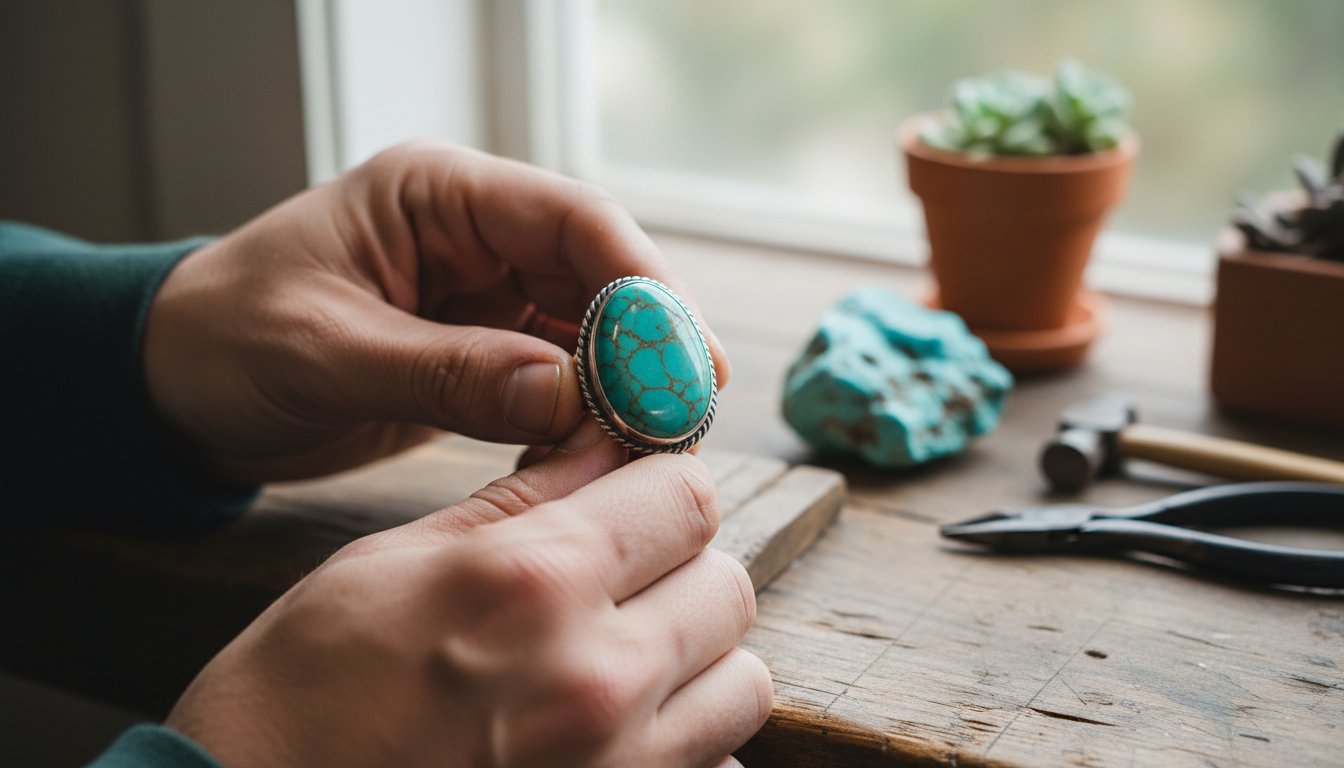
Last Tuesday, a visitor stopped by our Santa Fe studio carrying a piece they bought years ago, hoping we could repolish the surface. When Greg Cordova examined the cabochon under the loupe, he found the telltale white streaks of dyed howlite hidden beneath a thin layer of blue pigment. It's a common, disappointing experience for many collectors who simply want an authentic piece of the high desert to wear, but it doesn't have to be your story.
We believe you deserve to know exactly what you are wearing. We will show you how to identify genuine stones and artisan craftsmanship so you can invest in turquoise rings that stay beautiful for decades. This guide explores the unique matrix patterns of specific mines, the technical details of a hand-cut bezel, and the silver hallmarks that signify a quietly timeless piece of Southwestern style. By the end, you'll have the confidence to choose a small batch, artisan-made ring that tells a real story.
Key Takeaways
- Learn how to identify high-quality turquoise rings by examining the gauge of the sterling silver and the physical properties of the stone.
- Understand how the specific mine and matrix patterns define a stone’s character through the lapidary work of Greg Cordova.
- Recognize the markers of artisan craftsmanship, focusing on secure bezel settings and the design curation of Kimberly Cordova.
- Balance personal style with practical needs to choose a piece that functions as well as it looks for daily wear.
- Discover the studio process for maintaining honest materials so your handcrafted jewelry remains quietly timeless.
Understanding the Foundation of Quality Turquoise Rings
A heavy sterling silver band rests on a wooden workbench in our Santa Fe studio, waiting for a hand-cut cabochon to be set within its bezel. Choosing quality turquoise rings involves looking past the surface color to understand the physical integrity of the materials. Authentic Southwestern style isn't about trends. It's about the marriage of verified stones and high-grade metals that survive decades of wear. We focus on the raw data of the stone and the purity of the silver to ensure every piece is built for a lifetime.
To help you distinguish between various grades of jewelry, watch this helpful video:
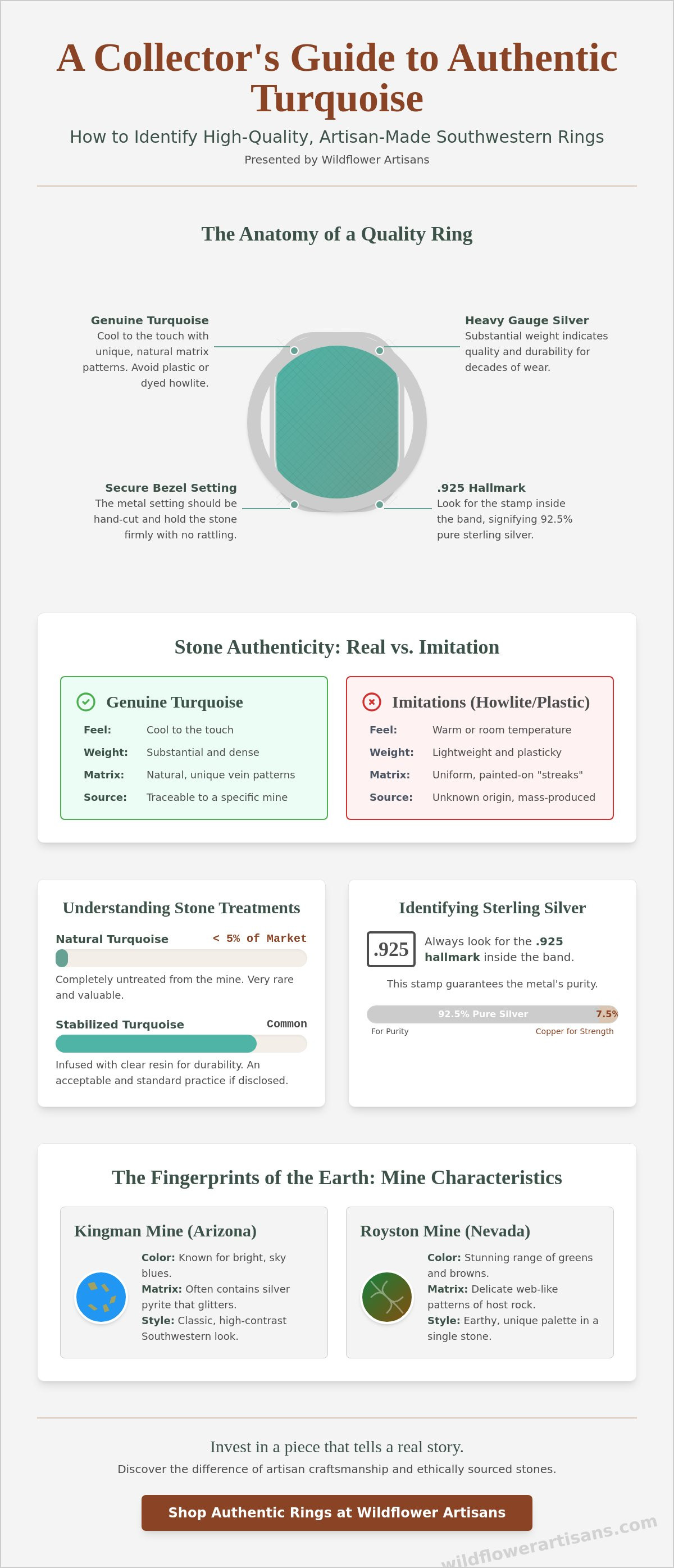
A ring is only as good as its foundation. We rely on Greg Cordova at Cutting Edge Turquoise for lapidary work because he tracks stones from the mine to the final polish. Understanding turquoise mineral properties is essential for identifying a stone that won't crumble or fade. Verified stones from known mines like Royston or Kingman provide a factual history that mystery stones lack. Authenticity isn't a marketing claim; it's a result of lapidary testing and known origins. Avoid plated options. They lose their finish quickly and cannot be easily repaired in a working studio.
The Difference Between Natural and Treated Stones
Natural turquoise remains completely untreated from the moment it leaves the mine. It's rare and accounts for a small percentage of the global market. Stabilized stones are more common. These are infused with clear resin to make the stone harder and more durable for daily wear. This process is a standard industry practice, but it must be disclosed clearly to the buyer. We avoid dyed howlite and plastic imitations. These fakes lack the weight and unique matrix of the real mineral. They often feel warm to the touch, while genuine stone stays cool.
Identifying Genuine Sterling Silver
Always check the inside of the band for a .925 hallmark. This stamp is the industry standard for sterling silver. It means the metal is 92.5 percent pure silver and 7.5 percent copper for added strength. We prefer heavy gauge silver for our handcrafted turquoise rings because it holds a bezel more securely than thin, cast bands. Hand-wrought silver has a specific weight. It feels substantial on the finger. This thickness ensures the ring can be resized or repaired decades from now without the metal becoming brittle or snapping.
Explore our current collection of small batch jewelry at wildflowerartisans.com. You can also browse our latest designs and read customer reviews at the Wildflower Etsy shop.
Exploring Stone Origins and Lapidary Excellence
A rough piece of turquoise feels heavy and cool before it meets the grinding wheel. It carries the weight of the mountain where it grew. When we select stones for our turquoise rings, we look for the specific personality of the mine. The character of a ring starts deep underground, defined by the minerals surrounding the copper deposits. Matrix patterns, those delicate webs of host rock, tell the story of the earth's pressure and time. These veins of iron or quartz aren't imperfections. They are the fingerprints of the earth, making every cabochon a unique document of geological history.
Expert lapidary work is essential to revealing these hidden details. Greg Cordova provides the precision hand-cut work for many of the stones found in our studio. He balances the raw material against the wheel to create the perfect shape while preserving the stone's integrity. Because Greg owns several mines, he has a direct connection to the source. This transparency is rare in the jewelry world. It allows us to know exactly where a stone began its journey, helping collectors appreciate the rarity and heritage of their specific piece.
The Character of Kingman and Royston Mines
The Kingman mine in Arizona is one of the oldest and most productive sites in the American Southwest. Kingman stones are known for their bright blues and occasional silver pyrite that glitters like a hidden treasure. These stones often provide a crisp, high-contrast look that defines the classic Southwestern style. Royston turquoise offers a different palette. It provides a stunning range of greens and browns in a single stone. This variety comes from the way minerals shifted during the stone's formation, creating a landscape of color that feels grounded and organic. You can explore our guide to stone origins for deeper histories of these famous locations.
The Rarity of White Buffalo and King’s Manassa
White Buffalo is a unique find that often surprises new collectors. It is technically a calcite and aragonite stone rather than a turquoise. While it lacks the copper that creates blue hues, it is prized for its bold, monochromatic black and white patterns. We often pair it with traditional turquoise for a striking visual balance. King’s Manassa is another collector favorite, sourced from one of the oldest mines in Colorado. It is prized for deep greens and a rich, golden brown matrix that feels warm and established. Greg Cordova manages these rare materials, providing the high-quality stones that Kimberly Cordova then curates for our small batch designs.
If you are looking for a piece that captures this geological history, you might enjoy browsing our latest collection of handcrafted turquoise rings to find a stone that speaks to you.
Evaluating Artisan Craftsmanship in Southwestern Style
Walk into any working studio in Santa Fe and you will see the difference between a mass-produced piece and one born from a jeweler's bench. A factory uses molds that churn out thousands of identical units. Handcrafted turquoise rings reveal their story through subtle variations. You might spot a slight asymmetry in the silver work or the faint mark of a hand tool. These are not flaws. They are the fingerprints of the maker.
Kimberly Cordova approaches every design with a specific stone in mind. She focuses on curation and intentional design rather than high-volume output. Small batch production means we monitor quality control at every stage of the build. We do not just assemble parts; we build each piece from the ground up. This process allows us to catch tiny imperfections that a factory line would miss. Every stone is seated with intention.
Bezel Settings and Decorative Silver Work
The bezel is the thin ribbon of silver that holds the stone in place. A skilled silversmith ensures the bezel is smooth and tight against the stone. There should be no gaps where dirt or moisture can settle. Decorative elements like twist wire or saw-cut borders add individual character to the piece. Look closely at the solder joints where the band meets the ring head. A clean joint shows that the artisan took the time to file and polish away excess material. If you see a messy blob of silver where the band joins the bezel, it often indicates a rushed process. High-quality Southwestern style jewelry feels solid and balanced.
The Importance of Hand-Cut Cabochons
Most commercial jewelry uses calibrated stones cut by machines to fit standard settings. We do things differently. Greg Cordova cuts our stones at CuttingEdgeTurquoise.com to follow the natural shape and strength of the rough material. Hand-cut cabochons often have more height and better proportions than bulk-cut stones. This professional lapidary work ensures the stone will not crack or wiggle in the setting. It honors the rock's original form. Machine-cut stones can look flat or lifeless because they are forced into a specific size. A hand-cut cabochon retains the unique character of the mine it came from. This attention to detail results in a piece that is quietly timeless.
Explore our latest collection of handcrafted jewelry at wildflowerartisans.com. You can also find our unique pieces and read customer reviews on the Wildflower Etsy shop.
Finding Your Perfect Turquoise Ring Fit and Style
A heavy silver band feels different in the morning than it does after a day spent working in the studio or garden. Choosing turquoise rings requires looking past the initial spark of a beautiful stone to see how it fits into your actual life. It's about finding a balance between the visual weight you want and the physical comfort you need for daily tasks. We often see collectors fall in love with a piece on a tray, only to realize later that the height of the setting doesn't work with their winter coat or their desk job. Finding the right match is a matter of honest assessment.
Statement Rings vs. Everyday Essentials
Large turquoise rings often act as the anchor for an entire outfit. These pieces usually feature high-grade cabochons set in heavy bezels, making them better suited for gallery openings or dinners where your hands aren't constantly in motion. Kimberly Cordova curates our rings collection to include both these bold focal points and more subtle options. For those with active lifestyles, everyday essentials are a better fit. These designs prioritize lower profiles and smaller stones to prevent catching on pockets or clothing. A ring that sits four millimeters off the finger feels much different than a high-domed cabochon that sits ten millimeters high. Consider how often you reach into bags or work with your hands before committing to a high-profile setting.
Sizing and Comfort for Daily Wear
Sizing isn't just a number. It's a measurement of how a piece of silver interacts with your anatomy throughout the day. Wider bands cover more surface area on the finger, which creates more friction against the skin. Because of this, we recommend ordering a half size larger than your standard thin-band measurement for any ring wider than six millimeters. Professional sizing tools are far more accurate than paper or string methods, which often lead to incorrect orders. A well-fitted ring should slide over the knuckle with slight resistance but sit comfortably at the base without spinning. If you're between sizes, always opt for the larger fit, as fingers tend to swell slightly in warmer weather or after physical activity. Greg Cordova often notes that the thickness of the silver plate also impacts the internal diameter, so a heavy-gauge band will always feel tighter than a thin one of the same numerical size.
Explore our latest handcrafted designs at wildflowerartisans.com to find a piece that matches your rhythm. You can also browse our curated selection on the Wildflower Etsy shop for additional reviews and artisan details.
Preserving Your Collection and the Wildflower Studio Process
A dusting of silver filings on a wooden workbench marks the end of a day's work in our Santa Fe studio. Proper care ensures that your sterling and turquoise rings remain quietly timeless as they pass through your hands. The Wildflower studio operates with a focus on grounded expertise and honest materials. We prioritize the physical connection between the wearer and the earth. Kimberly Cordova curates each collection to reflect a refined Southwestern aesthetic, ensuring every piece feels intentional and weighted with purpose. Investing in artisan-made pieces supports the continuation of traditional craft skills that have defined this region for generations.
Caring for Untreated Stones and Sterling Silver
Natural turquoise is a living stone. Because it's porous, it can change over time based on how it's handled. Avoid exposing turquoise rings to chemicals, perfumes, or excessive moisture. These substances can seep into the stone and alter its color or luster. When you're applying lotion or washing your hands, it's best to set your jewelry aside. Clean your silver with a soft polishing cloth rather than harsh liquid dips. These dips can strip the intentional oxidation from the recessed areas of the silver, flattening the visual depth of the handcrafted metalwork. For more detailed instructions on maintaining the longevity of your pieces, visit our care and repair guide.
The Wildflower Studio Philosophy
We believe in plainspoken expertise and high-quality materials. Every stone has a narrative that begins in the earth and ends in your collection. Greg Cordova handles the lapidary work, often cutting stones from his own mines or sourcing from trusted domestic locations to ensure the integrity of the material. You can explore his specialized lapidary work at CuttingEdgeTurquoise.com. Our studio processes prioritize the raw beauty of the cabochon and the structural strength of the bezel. Small batch production allows us to focus on the fine details of every hand-cut stone and hand-stamped band. This approach keeps the focus on the materials rather than the trends. The earth provides the palette, and we simply frame it. When you wear handcrafted jewelry from our studio, you carry a piece of the high desert with you. Our work is about the connection between the maker, the material, and the person who eventually calls the piece their own.
Explore our current selection of artisan-made jewelry at wildflowerartisans.com. If you prefer the protections and reviews of a larger marketplace, you can also find our work at the Wildflower Etsy shop.
Selecting a Piece Built to Last
Finding a piece that resonates with you requires looking past the surface to the hands that shaped the metal and stone. Every cabochon we use is hand-selected and verified for authenticity before Greg Cordova performs the lapidary work in our professional studio. These stones are then set into heavy gauge sterling silver frames designed and curated by Kimberly Cordova. We prioritize small batch production to ensure that each piece reflects the specific character of its origin. We focus on the weight of the silver and the unique matrix of the stone. This process results in jewelry that feels substantial and honest. You can view our current collection of handcrafted turquoise rings at our main studio website to find your next piece. For those who prefer the protections of a larger marketplace, we also maintain a curated selection in the Wildflower Etsy shop. We hope you find a piece that feels like it has always belonged to you.
Frequently Asked Questions
How can I tell if my turquoise ring is real?
Genuine turquoise rings feel cool to the touch and won't melt or smell like burnt plastic under a hot needle. Many imitations are made of dyed magnesite or plastic. If you rub a cotton swab soaked in acetone on the back of the stone and color comes off, it's dyed. Greg Cordova notes that 90 percent of the turquoise on the global market is stabilized or treated to improve durability. You can find more details on stone origins at CuttingEdgeTurquoise.com.
Can I wear my turquoise ring every day?
You can wear your turquoise rings daily if you protect them from chemicals and hard impacts. Turquoise ranks between 5 and 6 on the Mohs scale, making it softer than quartz or sapphire. Avoid wearing it while gardening or using household cleaners. Kimberly Cordova suggests putting your jewelry on last, after hairspray and perfume have dried, to prevent the stone from absorbing oils that might change its color.
What is the difference between green and blue turquoise?
The color of the stone depends on the minerals present during its formation over millions of years. Copper creates the vivid blues found in certain mines, while iron or aluminum results in earthy green hues. These variations are natural and depend on the specific chemistry of the earth. In our studio, we curate a palette that celebrates both vibrant teals and deep forest greens.
Why is some turquoise more expensive than others?
Pricing is determined by the rarity of the mine and the quality of the cabochon. Stones from closed mines like Bisbee or Number 8 carry a premium because the supply is finite. A tight spiderweb matrix or high-grade natural hardness also increases value. Greg Cordova sources specific specimens from small batches that represent the top 5 percent of a mine's output, ensuring the stone's integrity.
How do I find my correct ring size for a wide band?
You should typically order a half size larger than your standard measurement for bands wider than 10 millimeters. Wide bands cover more surface area on the finger and can feel tighter than a thin wire shank. We recommend using a wide-band sizer for accuracy. If your finger measures a size 7 on a thin ring, a 7.5 usually provides the most comfortable fit for a wide Southwestern style band.
Is White Buffalo actually a type of turquoise?
White Buffalo is not turquoise but a combination of dolomite and aragonite discovered in the Otteson family's Royston mine in 1992. It lacks the copper or aluminum required to be classified as turquoise. However, it's often set in similar handcrafted styles because its stark white color and black matrix create a striking contrast. It remains a staple in our studio for its unique, monochromatic aesthetic.
What does the .925 stamp on my ring mean?
The .925 stamp signifies that the metal is sterling silver, containing 92.5 percent pure silver and 7.5 percent copper for strength. Pure silver is too soft for daily wear in a bezel or shank. This industry standard ensures your piece is durable enough to hold a hand-cut stone securely. We use this alloy in all our small batch production to balance luster with longevity.
How should I store my turquoise jewelry when not in use?
Store your jewelry in a cool, dry place away from direct sunlight to preserve the stone's color. Keep each piece in a separate soft pouch to prevent harder gemstones like diamonds from scratching the turquoise surface. Since turquoise is a porous phosphate mineral, it shouldn't be kept in airtight plastic bags for years. A fabric-lined jewelry box in a room with stable 40 percent humidity is ideal.
Explore our latest collection of hand-cut stones and silver at wildflowerartisans.com. For those who prefer the protections and community reviews of a larger marketplace, you can also find our work at the Wildflower Etsy shop.
Article by
Kimberly Cordova
Kimberly Cordova is the founder and creative director of Wildflower, a handmade Turquoise and sterling silver jewelry brand based in Santa Fe. She built Wildflower around a simple belief: the best jewelry is the kind you actually reach for, not the kind you save for someday.
Kimberly designs pieces made by hand with a trusted circle of Santa Fe silversmiths, works alongside her husband Greg on in-house lapidary pieces cut from stones including the family's King's Manassa Mine in Colorado and White Buffalo Mine in Nevada, and sources finished work from artisan makers whose craft meets the same standard. The result is a collection with real range and no shortcuts on the stone, the silver, or the story behind either.
Her writing covers everything she has learned along the way: how Turquoise forms, how to tell natural from stabilized, what makes one mine different from another, how to read a bezel, and how to shop with confidence in a market that is not always straightforward. It is the kind of plainspoken information she wished someone had laid out for her when she was starting out.
Shop the Wildflower collection at wildflowerartisans.com, or find us on Etsy at wildflowersantafe.etsy.com if you prefer shopping there. Questions about a stone, a setting, or a specific piece are welcome any time.
