What if the weight of silver against your collarbone wasn't just a fashion choice, but a 150-year-old conversation between the earth and the artisan? For many, the squash blossom necklace is the ultimate symbol of the American Southwest, yet finding an authentic piece often feels like searching for a single wildflower in a desert storm. You've likely felt that pull toward the turquoise, only to be stopped by the fear of purchasing a mass-produced imitation or a chemically dyed stone. It's a common hesitation; industry experts at the Indian Arts and Crafts Association estimate that a staggering amount of "Native-style" jewelry on the market today is actually fraudulent.
You deserve a piece that carries the rhythm of the high desert and the intentional touch of a master silversmith. We understand that the search for a true heirloom should feel like a discovery, not a transaction. In this guide, we'll reveal the hidden language of the Naja, share the three essential markers of high-grade sterling silver, and trace the history of this iconic design back to its 19th-century roots. You'll gain the clarity needed to choose a squash blossom necklace that speaks to your own narrative; this ensures your investment is as enduring and soulful as the landscape that inspired it.
To drape a squash blossom necklace around your neck is to carry the heavy, beautiful pulse of the high desert. It's a masterpiece of silversmithing that tells a story of cultural intersection, blending the profound artistry of the Diné (Navajo) people with echoes of Spanish history. This piece serves as a dialogue between silver and stone. It's a vessel for emotion. Wildly beautiful. Intentionally designed. We see it as more than an accessory; it's a statement of artisanal pride that has endured for over 150 years. Every link and every bead represents a choice to value the slow, the handmade, and the authentic.
The Evolution of a Wearable Legend
The story begins in the mid-1800s, specifically around 1850, when Navajo smiths began adapting Spanish motifs into their own unique visual language. The crescent-shaped Naja pendant didn't originate in the Southwest; it traveled from 13th-century Moorish horse bridles to the Spanish conquistadors, eventually finding its home as the centerpiece of Navajo adornment. While the beads are often called blossoms, they're likely inspired by the pomegranate motifs found on Spanish colonial clothing. By the late 1800s, these necklaces became essential markers of wealth and status within the community. Understanding the history of Native American jewelry reveals how these designs evolved from simple silver trade beads into the complex, turquoise-laden masterpieces we cherish today. They represent a survival of culture through exquisite craft.
Why Authenticity Matters in Every Link
There's a vast, hollow chasm between a soul-filled, artist-made piece and a soulless factory replica. A genuine squash blossom necklace carries the vibration of the earth itself. When you choose a piece featuring a treasured turquoise variety, first discovered in historic deposits during the late 19th century, you're holding a fragment of the landscape. These stones aren't uniform; they're mossy, deep, and alive with natural variation. Mass-produced versions lack the slight, beautiful imperfections that reveal the artist's hand. We believe in becoming curators rather than just consumers. Choosing an authentic piece means:
Supporting the 100% manual labor of traditional silversmiths.
Preserving the heritage of the 1880s smithing techniques.
Owning a palette of stones that can never be exactly replicated.
A curated collection isn't built on trends. It's built on the weight of silver that feels like home against your skin.
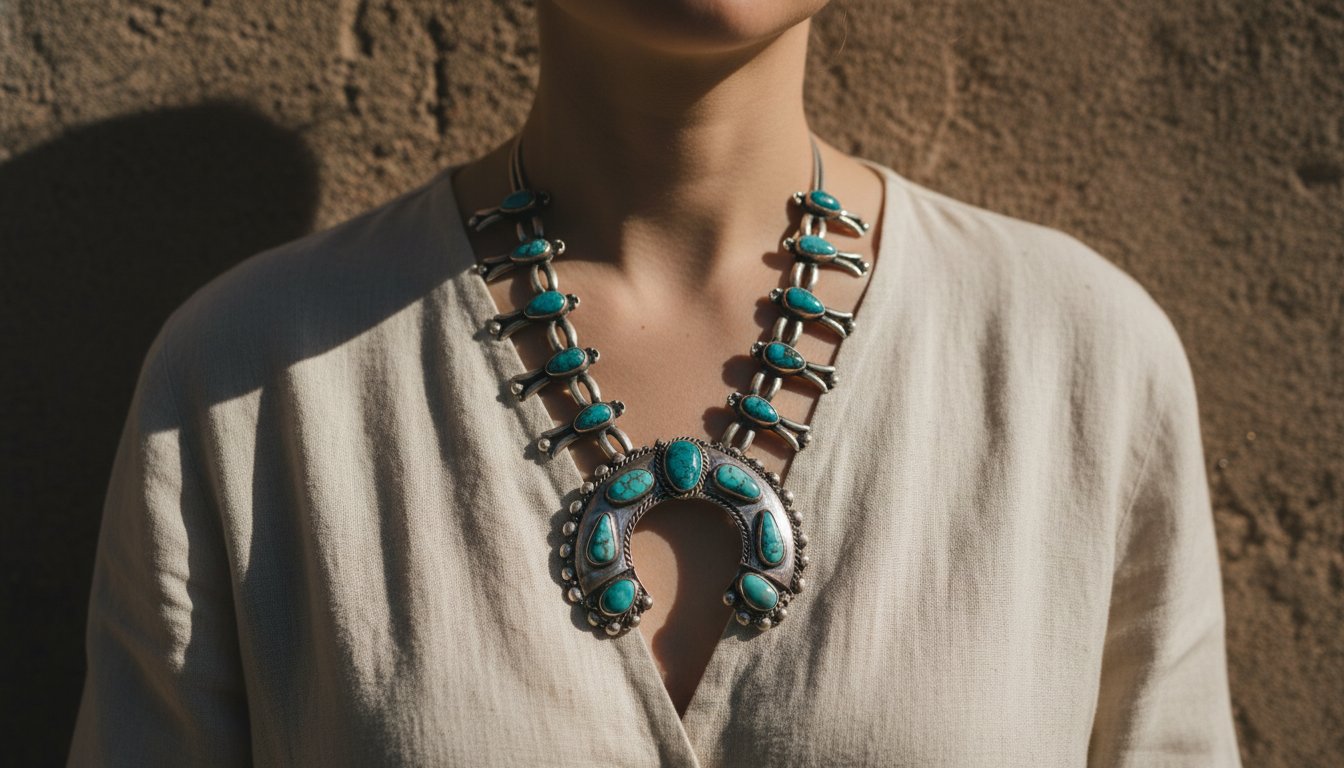
To hold a squash blossom necklace is to hold a landscape in your hands. It's a masterwork of silver storytelling, where every curve and bead echoes the high desert's quiet strength. This iconic piece isn't a singular object but a trinity of elements: the protective Naja, the rhythmic beads, and the delicate blossoms. Each component carries a weight that's both physical and spiritual, reflecting a history that began in the late 1800s when Navajo silversmiths first began blending Spanish motifs with their own lived experiences. It's a rhythmic dance of metal and meaning. Ethereal yet grounded.
The Naja: The Soul of the Necklace
The Naja serves as the gravitational center of the piece, a crescent-shaped pendant that hangs with a deliberate, heavy grace. Its origins are a tapestry of global influence, tracing back to Moorish horse bridles brought to the Americas by Spanish explorers. By the 1880s, Indigenous artisans had reimagined this symbol, transforming it into a hallmark of protection and prestige. Because of its deep cultural resonance, it was designated as New Mexico's official state necklace in 1973, forever anchoring the design to the spirit of the Southwest.
Design variations in the Naja offer a glimpse into the artisan's personal vocabulary. You'll often find single or double bars, sometimes featuring a "sandcast" texture created by pouring molten 925 sterling silver into hand-carved volcanic tuff molds. This technique leaves a porous, organic finish that feels foraged from the earth. The open ends of the crescent are frequently finished with small, stylized hands or seeds, symbolizing a protective embrace that remains open to the universe's energy.
The Blossoms and Beads: Rhythms in Silver
The "blossoms" that give the necklace its name present a beautiful botanical mystery. While they're called squash blossoms, many historians point to the Spanish "granada" or pomegranate as the true visual ancestor. On a classic piece from the early 1900s, you'll see four distinct silver petals flaring from a central bead. Whether they represent the life-giving squash or the resilient pomegranate, they evoke a sense of seasonal growth and abundance. The number of petals on a squash blossom necklace dictates its weight and how it drapes against the collarbone, with most traditional designs featuring 10 to 20 blossoms for a lush, full aesthetic.
The Bench Bead: Often called Navajo Pearls, these beads are hand-raised and soldered. A thin, visible seam is the mark of the human hand, a signature of authenticity we value in our own bespoke collections .Movement: The way the blossoms sit between the beads creates a fluid, swaying motion that mimics the way a wildflower bends in the wind.Symmetry: While the overall piece is balanced, the slight variations in hand-stamped patterns ensure no two petals are identical.
The artistry of the bench bead is a meditative process. Each sphere is hand-punched from a flat sheet of silver, domed, and then joined. This creates a hollow, lightweight feel that belies the necklace's visual mass. It's a curated balance of shadow and light, where the oxidized crevices of the silver highlight the brilliance of the polished surfaces. Intentionally designed. Wildly beautiful.
A genuine squash blossom necklace carries a weight that transcends its physical mass. It's a heavy, rhythmic presence against the collarbone, acting as a reminder of the hours an artisan spent at the bench. In a market where some estimates suggest up to 70 percent of turquoise jewelry sold in high-traffic tourist areas is actually synthetic or heavily treated, discerning the real from the manufactured is a quiet act of reverence. You're looking for the soul of the piece, not just a souvenir. Cheap imitations often rely on mystery metals or dyed howlite, which lack the thermal conductivity of true silver and the organic depth of genuine stone.
Authentic sterling silver feels different against your skin. It warms to your touch almost instantly, reflecting your own body heat back to you in a way that base metals never will. Machine-pressed patterns are perfect, cold, and repetitive, while hand-stamped details show the subtle, beautiful variations of a hammer's strike. Intentional oxidation, that dark patina tucked into the silver's recesses, isn't just a design choice. It creates a visual narrative, highlighting the silver's luster and giving the piece an ethereal, lived-in quality that factory finishes can't replicate.
Inspecting the Silver Craftsmanship
The hallmark is your first clue. While the 925 stamp confirms the metal is 92.5 percent pure silver, the artist's personal signature is the true prize. Under the 1990 Indian Arts and Crafts Act, authentic work must be clearly identified to protect the heritage of the maker. Look closely at the edges. A factory piece has a clinical, sharp smoothness. An artist-made piece features hand-filed edges that feel soft and organic, much like a stone tumbled in a creek. These tiny imperfections aren't mistakes; they're the whispers of the maker's hand.
The Truth About the Stone
Real turquoise possesses a porous, organic soul that dyed stones simply lack. Look for the unique personality of specific mines, like the lush greens of King's Manassa, which has been pulled from the earth since 1890, or the stark, ghostly beauty of White Buffalo. The matrix is the host rock that creates a one-of-a-kind map within the stone. If the color looks too uniform or the matrix seems painted on, it's likely a mass-produced imitation. A genuine squash blossom necklace should celebrate the beautiful asymmetry of nature's own design, capturing a moment of geological history that can never be perfectly repeated.
Finding a piece that mirrors your inner landscape requires a slow, deliberate eye. It's about more than mere adornment; it's a quiet conversation between the artist's hands and your own silhouette. When you select a squash blossom necklace , you're choosing a companion for a lifetime of stories. The scale should feel like an extension of your stature. For those with an ethereal, smaller frame, a delicate strand featuring 8mm bench beads offers a whisper of tradition. Conversely, a grand, double-strand piece creates a rhythmic, grounding weight that commands the room. It's a balance of presence and poetry.
Investment tiers reflect the rarity of the materials and the lineage of the maker. You might begin with "Everyday Essentials," typically priced between $850 and $1,600, featuring hand-stamped silver and vibrant, stabilized stones. For the seasoned collector, museum-quality statements often exceed $5,500. These one-of-a-kind treasures utilize heavy-gauge silver and rare, high-grade minerals from closed mines. They're heirlooms. Intentionally crafted. Forever resonant.
A Spectrum of Earthly Hues
The stones are the heartbeat of the piece. Royston turquoise, pulled from Nevada soil since 1902, offers a lush, mossy green that feels like a damp forest floor. If your wardrobe leans toward the celestial, Kingman turquoise provides that iconic, sky-blue clarity. Natural, untreated stones are foraged treasures; only 10% of turquoise mined globally is hard enough to be used without chemical stabilization. These stones breathe. They absorb the natural oils of your skin, deepening in hue over a twenty year period. They grow with you.
For a modern, monochromatic look, White Buffalo stone provides a sophisticated, minimalist contrast. While technically a dolomite, its stark white surface and black chert matrix offer an avant-garde aesthetic. It's a bold choice for the collector who values a sophisticated, neutral palette. You can curate your bespoke collection by selecting stones that resonate with your specific energy.
Scale, Weight, and Presence
The physical sensation of an authentic piece is unmistakable. Minimalists often gravitate toward "pendant" styles, where a single Naja sits on a simple strand. These are lightweight, often weighing under 120 grams, making them effortless for daily movement. A true statement piece, however, can weigh upwards of 380 grams. You'll feel the cool, steady gravity of the sterling silver against your collarbone. This weight is a hallmark of quality; it signals that the silver hasn't been thinned or mass-produced.
Small-scale: 16 to 18 inches, ideal for layering with silk or linen.Mid-range: 24 inches, hitting the mid-chest for a classic, balanced look.Grand Statement: 28 to 32 inches, often double-stranded for maximum visual impact.
Every choice is personal. There's no wrong way to wear a piece of history. Whether it's a whisper or a shout, the squash blossom necklace remains a testament to the enduring beauty of the Southwest.
Owning a squash blossom necklace is an act of stewardship. It’s a commitment to carrying a piece of the earth’s narrative into your daily life. You don't just wear it; you inhabit it. Whether you’re walking through a morning flower market or attending a candlelit dinner, this piece anchors your presence. It’s a grounded masterpiece. Soulful. Timeless. Intentionally designed to bridge the gap between ancient tradition and your personal, modern story.
The Modern Artisan Aesthetic
Styling such a bold statement requires a delicate balance of whimsical wonder and intentional restraint. For a summer look, pair the heavy silver with a crisp, flax-colored linen blouse. The contrast between the cool metal and the warm, raw fabric creates a sensory experience that feels both ethereal and earthy. In the winter, let the necklace rest against a 100% merino wool turtleneck in charcoal or cream. Layering is an art form here. Try nesting your squash blossom necklace with a strand of 8mm hand-bench Navajo pearls to create a rhythmic, waterfall effect. You might also add a thin, 20-inch silver chain to elongate the silhouette. Don't be afraid to mix textures. A well-curated look might include:
A heavy sandcast cuff bracelet to balance the visual weight on your wrist.
Simple silver studs that allow the Naja to remain the focal point.
A bespoke silk scarf knotted loosely to add a pop of floral color.
This versatility allows the piece to transition from a formal gala to a simple, $20 vintage white t-shirt with ease. It’s about building a visual narrative that feels curated rather than cluttered.
Tending to Your Silver Garden
Sterling silver and organic stones require a gentle touch to maintain their glow. Avoid "mystery" cleaning dips at all costs. These harsh chemicals often have high acidity levels that strip the natural oxidation from the crevices of the silver, erasing the depth that gives the piece its soul. They can also permanently damage porous stones like turquoise, which typically sits at a 5 to 6 on the Mohs hardness scale. Instead, use a soft, untreated microfiber cloth. Polish the high points of the silver while leaving the dark patina in the recessed areas. This contrast is intentional. It’s the shadow that defines the light.
When you aren't wearing your heirloom, store it in a tarnish-resistant cloth pouch. Keep it away from humid environments like bathrooms. A 2022 study by jewelry conservationists suggests that keeping silver in a low-oxygen, dry environment can extend its luster by 40% between cleanings. Treat it with the same reverence you'd give a rare wildflower. It’s a legacy meant to last for generations to come. Wildly beautiful. Carefully preserved.
Owning a piece of the Southwest is about more than fashion; it's an act of preservation. By understanding the 19th-century history of the Naja and the intricate anatomy of the blossom, you connect with a lineage of Navajo and Zuni craftsmanship that spans over 150 years. Choosing an authentic squash blossom necklace ensures your collection remains a true reflection of artisanal soul rather than a mass-produced imitation. We believe in the power of the handmade. Every piece we offer features 925 sterling silver and genuine, handpicked stones that mirror the rugged beauty of the desert. You won't find dyed howlite or factory-stamped metal here. Instead, you'll find art that breathes. It's time to find the piece that speaks to your specific rhythm. Explore our curated collection of artist-made squash blossom necklaces to discover a one-of-a-kind treasure that carries its own unique narrative. Let your jewelry be as wild and intentional as the life you lead.
What is the meaning behind the Naja symbol on a squash blossom necklace?
The Naja symbol represents a crescent moon and traces its lineage back to Moorish horse bridles introduced to the Southwest in the 1800s. It’s a protective emblem, often shielding the wearer with its curved, silver embrace. We see this as a bridge between cultures. It’s not just a pendant; it’s a piece of history that grounds the squash blossom necklace in an ancient, nomadic tradition.
This iconic shape serves as a focal point for the entire design. While it originated as a decorative piece for Spanish horses, Navajo silversmiths transformed it into a soulful expression of beauty. It captures the light and reflects the wearer's connection to the earth and sky.
How can I tell if my squash blossom necklace is made of real turquoise?
You can identify real turquoise by checking for a Mohs hardness of 5 to 6 or observing natural matrix patterns. Authentic stones feel cool to the touch, unlike plastic imitations which warm quickly against your skin. If you see a uniform, "perfect" blue without any variation, it’s likely dyed magnesite. Genuine stones tell a story of the earth, possessing unique inclusions that no machine can replicate.
Try the "scratch test" on an inconspicuous area with a pin. Real turquoise won't scratch easily, while plastic or resin will show a mark immediately. Look for the 100 percent unique character in every stone. Nature rarely produces identical twins.
Is it okay for a non-Native person to wear a squash blossom necklace?
It’s widely considered respectful for non-Native people to wear these pieces if they're purchased directly from indigenous artisans. The Indian Arts and Crafts Act of 1990 ensures that jewelry sold as "Native American" is authentic. Wearing these items is a form of cultural appreciation rather than appropriation. It supports the 574 federally recognized tribes who rely on their craft for economic survival.
When you choose a piece made by a Native artist, you're participating in a cycle of support. It's a way to honor the craftsmanship and history behind the art. Your purchase ensures these traditional techniques continue to thrive for generations.
What is the difference between a Navajo and a Zuni squash blossom necklace?
Navajo necklaces focus on heavy silverwork and large stones, while Zuni designs feature intricate needlepoint and stone inlay. Around 1920, Zuni artists began specializing in fine, delicate stone cutting that creates a mosaic effect. Navajo pieces often feel more organic and bold. In contrast, Zuni work is meticulously detailed, often resembling a lush garden of tiny, hand-cut petals.
Both styles celebrate the squash blossom necklace as a canvas for storytelling. The Navajo style highlights the raw beauty of the turquoise nugget. The Zuni style showcases the artist's precision and patience. Each approach offers a different rhythm and texture to the wearer.
How much should I expect to pay for an authentic, artist-made squash blossom necklace?
An authentic, artist-made necklace typically costs between $1,500 and $8,000 depending on the materials and the maker’s reputation. Rare stones like Bisbee or Lander Blue can push prices above $15,000. These aren’t just accessories; they’re investments in heritage. When you pay for a bespoke piece, you’re honoring the 40 to 60 hours of labor required to hand-forge the silver.
Price reflects the quality of the silver and the rarity of the stones. A vintage piece from the 1970s might carry a premium due to its age and patina. Always look for a hallmark to verify the artist's identity and ensure the value of your investment.
What are 'Navajo Pearls' and why are they used in these necklaces?
Navajo Pearls are hand-rolled, seamed silver beads that provide a rhythmic, metallic foundation for the necklace. Artists craft them in sizes ranging from 4mm to 20mm. These beads aren’t mass-produced; they’re carefully shaped and oxidized to create a vintage patina. They offer a grounded texture that balances the ethereal glow of the turquoise. Each bead is a small, silver sculpture.
The process of making these beads is incredibly labor-intensive. An artist must cut, dome, and solder two halves together before filing the seams. This creates a strand that feels substantial yet fluid. They move with the body like water.
How do I clean my vintage squash blossom necklace without damaging the stones?
Use a soft, 100 percent cotton cloth to gently buff your vintage necklace, avoiding all liquid cleaners or harsh chemicals. Turquoise is a porous stone with a 15 percent water content, so chemicals can permanently alter its color. Never use an ultrasonic cleaner, as the vibrations can crack older stones. A light touch preserves the natural patina that has developed over decades.
Store your necklace in a dry, dark place to prevent the silver from tarnishing too quickly. If the silver needs more attention, use a specialized polishing cloth designed for jewelry. Avoid getting any oils or perfumes on the stones to keep them vibrant and clear.
What does 'White Buffalo' turquoise mean and is it actually turquoise?
White Buffalo is technically a mixture of calcite and dolomite, not a variety of turquoise. It’s sourced from the Otteson family mine near Tonopah, Nevada, which opened in 1992. While it lacks the copper that gives turquoise its blue hue, it’s prized for its striking black and white contrast. This stone feels modern and sophisticated. It offers a monochrome palette that complements organic silver designs.
Because it's found in the same veins as turquoise, it's often grouped with it in the jewelry world. Collectors love it for its rare, ethereal appearance. It’s a beautiful alternative for those who prefer a neutral, bespoke aesthetic.
Article by
Kimberly Cordova
Kimberly Cordova is the founder and creative force behind Wildflower, a turquoise and artisan jewelry brand rooted in a love for bold, one-of-a-kind pieces with real character. What started as a personal obsession with turquoise and handcrafted design turned into a business built on authenticity, craftsmanship, and the belief that jewelry should tell a story. She curates and creates every collection with intention, drawn to stones and styles that feel as individual as the people who wear them. When she's not sourcing stones or styling new pieces, you'll find her writing about the stories behind the craft right here on the Wildflower Journal.