
Our Latest Articles
Notes from the bench side of Santa Fe—stone guides, styling ideas, and maker spotlights.
The Living Spectrum: A Guide to the Turquoise Color in Nature and Art
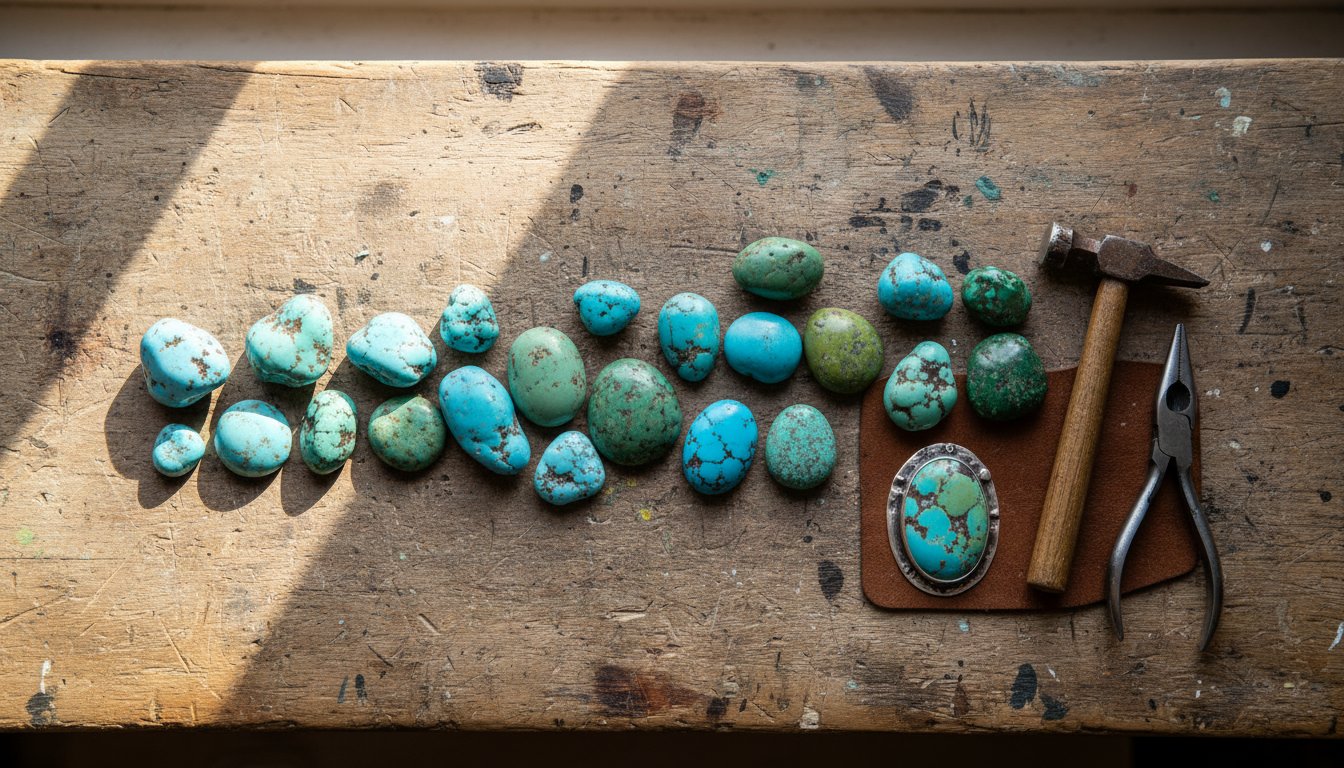
Most of what we see as the turquoise color on a digital screen is a flat, synthetic lie. It's often a uniform, neon blue that lacks the soul and grit of the actual mineral found in the American Southwest. You've likely felt that sense of disappointment when a bright bead from a big box store feels light and hollow in your hand. We believe that color should have a story, a weight, and a history that stretches back through layers of stone.
It is frustrating to shop in a market filled with dyed imitations that mimic the surface of a gem without any of its character. You'll learn to understand the mineral origins of these shades and how to distinguish a natural stone from a laboratory creation. Seeing the distinct green hues from the King's Manassa Mine, which the Cordova family has stewarded since 1890, helps you choose pieces that carry the quiet, artisanal spirit of the desert into your own collection.
Key Takeaways
- Trace the history of the stone from the dry hillsides of ancient trade routes to the modern workshop. You will learn how the name itself connects the earth to the sky.
- Understand how elements like copper and aluminum create a vast spectrum of the turquoise color. This includes the unique webs of the host rock known as the matrix.
- Identify the weight and depth of genuine stones to distinguish them from common dyed howlite or plastic composites. This knowledge ensures your collection remains authentic and rooted in the earth.
- Find your own rhythm when choosing a piece of jewelry by listening to your gut reaction to a specific shade. You can see how different hues interact with the soft luster of sterling silver.
- Explore the direct line of provenance from the King’s Manassa and White Buffalo mines to the hands of the maker. You will appreciate the intentionality behind small batch artisan work that honors the stone.
The origin of the turquoise color in the earth
Picture yourself on a sun-baked hillside in the high desert, where the fine dust of the trail meets the expansive blue of the horizon. You reach down and pull a raw stone from the parched earth, feeling its cool, dense weight against your palm. This is the birthplace of the turquoise color, a pigment born from the very bones of the planet. Earthy and bright.
The name itself travels through time, originating from the Old French word for Turkish because the stones first arrived in Western markets through ancient trade routes across the Mediterranean. The turquoise color is a mineral-based hue ranging from robin egg blue to deep forest green. It is a shade that captures the breath of the earth.
To better understand how these natural shades are captured by the human hand, watch this helpful video:
This color exists because of a specific chemical dance between water, copper, and aluminum in the soil. Rainwater trickles through host rock, carrying minerals into crevices where they settle and crystallize over thousands of years. It is a quiet transformation that requires the perfect balance of chemistry and patience. The Turquoise mineral is the result of this slow, ancient conversation happening deep underground.
More than just a name
In the American Southwest, this color has moved beyond a simple pigment to become a staple of local style and a marker of global history. It carries the emotional weight of the elements, serving as a physical piece of the sky and the water held in the hand. The shade acts as a bridge between the heavens and the soil.
Many cultures across the globe have traditionally associated these shades with protection and a sense of deep tranquility. It is a color that feels like a quiet sanctuary. For those who appreciate one of a kind treasures, the variation in each stone represents a unique moment in geological history. We see it as a celebration of nature's fleeting beauty.
The chemical signature of a shade
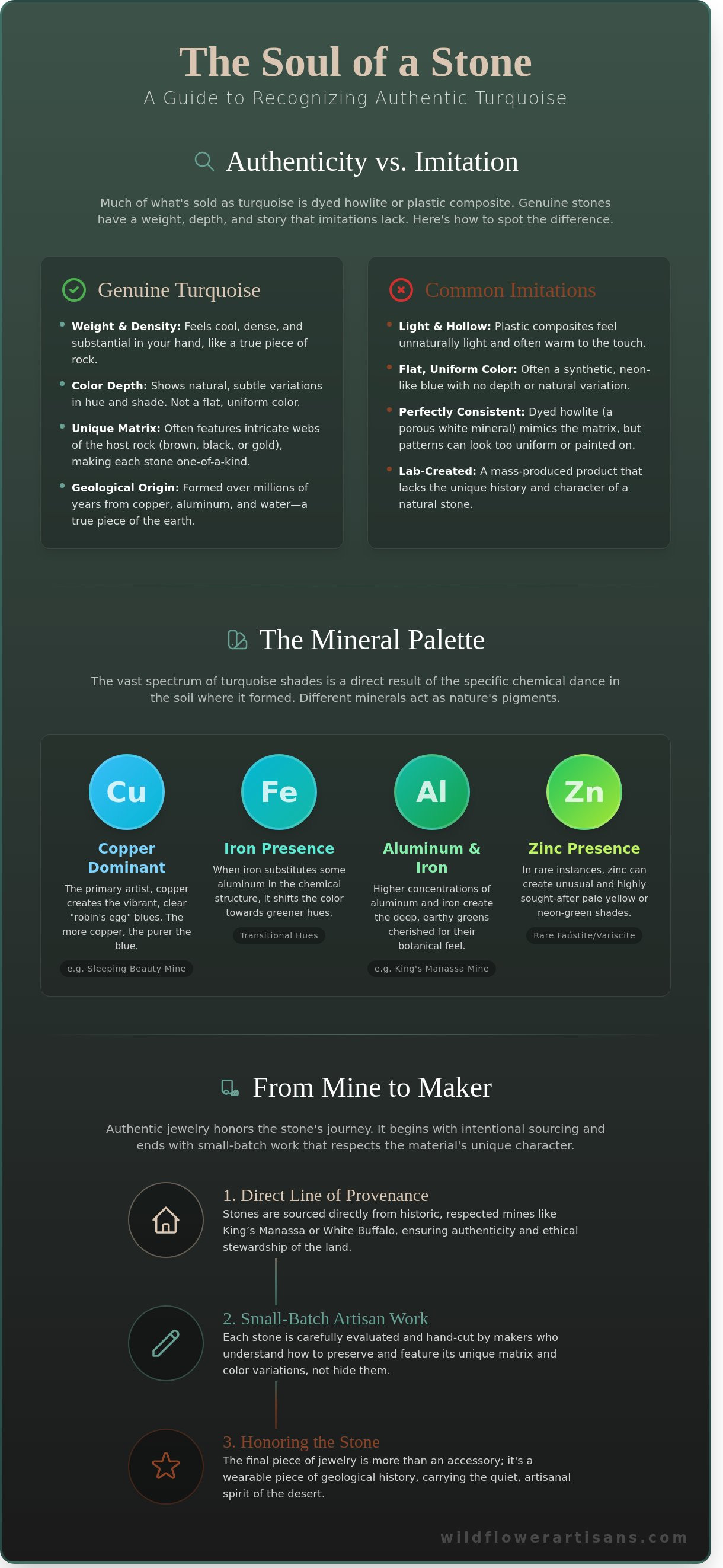
The specific character of each stone depends on the ingredients present during its formation. Copper is the primary artist behind the bright, clear blues found in places like the Sleeping Beauty mine. It creates a vibrant clarity that mimics a summer sky at noon. This mineral creates the foundation for the most sought-after blue tones in the lapidary workshop.
When aluminum takes a larger role in the chemistry, the stone shifts toward the earthy greens found in various regional mines. These variations are not flaws but stories told by the land through different mineral concentrations. We see this diversity in the stones Greg Cordova pulls from the King's Manassa Mine, where the Cordova family maintains stewardship over the claims. The green hues reflect the unique mineral makeup of the Manassa hills, offering a grounded, botanical feel to every hand-cut stone.
If you're curious about the specific places our stones are gathered, you can explore our stone origins page for more details. Every piece we curate tells a story of the earth.
A spectrum of shades from copper and aluminum
Natural turquoise color is rarely a solid or flat shade like a digital paint swatch. It is a complex reflection of the minerals present during its formation over millions of years. Copper and aluminum provide the base for those bright blues we recognize instantly. Iron content can shift a blue stone toward a deep olive green.
When you look at a raw stone, you are seeing a specific geological recipe. The presence of zinc can even push the stone toward a rare, pale yellow or neon green. This chemical variety is why no two stones from different locations look exactly the same. The stone is often judged on its color, texture, and matrix to understand its quality and history.
This grading isn't just about finding a flawless surface. It is about the story the stone tells through its imperfections. A collector can often tell where a stone was found just by the specific tilt of its hue.
The influence of the host rock
The matrix or host rock creates intricate webs of brown, black, or gold across the surface of the stone. This visual texture adds a grounded character that solid stones often lack. A brown or black matrix is a sign of a stone that grew in a specific environment, often surrounded by iron oxide or manganese.
In a lapidary workshop, these patterns are carefully preserved. We treat these stones as small batch treasures because the matrix can change entirely just a few inches deeper into the vein. This handmade approach ensures that the host rock becomes a deliberate part of the design rather than something to be cut away. These patterns are the fingerprints of the earth.
Variations across the Southwest
The landscape of the American West is painted into these stones. You can explore the stone origins to see how different mines produce distinct palettes. Arizona is famous for the pale sky blue of the Sleeping Beauty mine. Nevada offers a different mood with deep greens and rich, chocolate-colored matrix patterns.
These regional variations are what make each piece of artisan made jewelry unique. Every stone carries the weight and the color of the soil it was pulled from. If you want to see these colors in their natural state, our one of a kind pieces showcase the full range of the Southwestern desert.
Natural variations versus the flat look of synthetic stones
When you hold a piece of genuine stone in your palm, there is an immediate sense of weight and temperature. It feels substantial and cool. It feels like the earth. The market is often flooded with dyed howlite or plastic composites that attempt to mimic the turquoise color. These synthetic materials feel warm to the touch almost immediately and lack the density of a mineral formed in a copper-rich vein over millions of years. Natural stones have a depth and weight that synthetic materials cannot replicate.
Mystery metals are another concern for any collector. Many mass-produced pieces use base metals like nickel or lead-filled alloys that can cause skin irritation or tarnish quickly. We focus on sterling silver and high-quality settings because jewelry should be a gentle companion to your skin. Building a collection should be an intentional process where you know exactly what is sitting against your heart or around your wrist.
We need to talk about the difference between natural and stabilized stones. Natural turquoise is often porous. It can change color over time as it absorbs oils from your skin. Stabilization involves pressure-treating a stone with clear resin to make it durable enough for daily wear. This is a standard practice in the jewelry world, but these stones should always be labeled correctly. They are not the same as untreated, natural stones that are hard enough to be cut without help. Honesty in the workshop is the foundation of everything we do.
Spotting dyed imitations
Howlite is a naturally white, porous borate mineral with a Mohs hardness of 3.5. Because it has a matrix pattern that looks similar to turquoise, it's frequently dyed to fool the eye. You can often tell a piece is an imitation because the turquoise color looks too perfect or uniform. Natural color shifts and breathes within the stone. If you were to crack a dyed bead open, you would see a white center. The dye only sits on the surface. For those who want to learn more about identifying genuine materials, check our faq for more details on stone authenticity.
The beauty of imperfection
Artisan made pieces celebrate the asymmetrical and organic nature of the stones. We don't look for stones that fit a pre-made, calibrated mold. Instead, we build the sterling silver bezel around the unique shape of the stone. This creates a piece with a narrative and a soul. You can see the mark of the tool and the intent of the maker in every curve. Mass-produced settings often look sterile and flat. They are designed for efficiency rather than character. Authenticity is more valuable than a perfect digital match. Real beauty is found in the slight variations that tell you a piece was made by human hands.
Choosing a stone is like choosing a friend. You look for character, history, and a certain spark that speaks to you. Whether it is a deep sky blue or a mossy green, the stone should feel alive. If you are looking for something that carries this kind of spirit, we invite you to browse our one-of-a-kind collection to find a piece that resonates with your own story.
Choosing the right shade for your personal collection
Picking a piece of jewelry often starts with a single, quiet moment of connection. You might find yourself drawn to a sky-blue nugget or a deep, mossy green stone without knowing exactly why. Trust that first instinct. The turquoise color exists on a vast spectrum, and your eye usually knows which frequency resonates with your own style.
Selecting a stone is a personal process that mirrors how we might choose a single flower from a garden. Some days require the boldness of a clear, saturated blue. Other times, the muted tones of a stone with a heavy matrix feel more appropriate for your mood. There is no wrong choice when the stone speaks to you directly.
Pairing with sterling silver
Silver has been the traditional partner for this stone in the Southwestern style for over 150 years. This pairing is not accidental. The cool, reflective surface of the metal acts as a quiet stage for the stone’s vibrancy. It does not compete for attention, it simply supports the natural beauty of the mineral.
High-quality sterling silver also changes as you wear it. Over the years, the metal will develop a soft, dark patina in the recessed areas of a bezel or a stamped design. This darkening adds a sense of history and depth to your collection. It makes the bright turquoise color pop even more against the aged metal.
Everyday wearable shades
Lighter, clear blues often feel right for a Tuesday morning spent at a desk or meeting a friend for coffee. These shades offer a bright point of interest that feels light and approachable. You can find these subtle tones in our everyday essentials collection, which features pieces designed for frequent wear.
If you prefer something more grounded, look for stones with a heavy matrix. These dark veins of host rock create a mosaic effect that makes a bold statement. They work well as anchor pieces in a collection. A single ring with a dark green stone can carry enough visual weight to stand alone against a simple outfit.
Your wardrobe provides the canvas for these different shades. A robin’s egg blue pendant looks right at home against the texture of a well-worn denim jacket. For more formal settings, a deep teal stone set in a polished cuff provides a sophisticated contrast to a charcoal suit or a black dress. The versatility of the stone allows it to transition from a morning hike to a gallery opening without feeling out of place.
Finding the right piece is about how the stone makes you feel when you put it on. Browse our latest handcrafted arrivals to find the specific shade that speaks to your personal story.
Honoring the stones through small batch artisan work
The journey of a stone finds its quiet conclusion in the hands of a maker. It is here that the raw energy of the earth is refined into something wearable and intimate. Greg Cordova manages this transition personally as the owner of the claims to the King’s Manassa Mine and the White Buffalo Mine. This direct line of provenance means every piece starts with a known history and a respected origin. It is a rare thing to know exactly which pocket of earth a stone called home.
Stewardship of the mines
In the lapidary workshop, the labor is slow and rhythmic. Raw stones are sliced with diamond saws, then shaped and polished with a patience that mirrors the geological time it took to form them. The Cordova family maintains a deep commitment to preserving the integrity of their specific claims in Colorado and Nevada. This stewardship creates a bridge between the deep earth and the finished jewelry. We lean into a handcrafted Southwestern style that values the weight of the silver and the clarity of the stone. This approach avoids the noise of the mass market to focus on the quiet reality of the craft. Every cabochon is cut to highlight the specific character of the mine, whether it is the golden matrix of Manassa or the stark contrast of White Buffalo.
The art of the bezel
A silversmith approaches each stone as an individual puzzle. They build a custom sterling silver frame, known as a bezel, to fit the exact, often asymmetrical contours of the rock. This precise fit is necessary to protect the turquoise color from shifts caused by daily wear or environmental factors. When the silver is carefully pushed over the edge of the stone, it creates a permanent bond between metal and earth. This process ensures the stone remains secure for decades of use. Our Type 1 pieces represent this complete cycle, combining Greg’s lapidary work with local Santa Fe silversmithing. Choosing a piece of artisan jewelry is a way to carry a physical part of the high desert landscape with you. It is a reminder of the quiet, sun-drenched places where these stones first began.
The final result is a collection of objects that feel grounded and intentional. You can see the results of this labor in our one of a kind pieces that highlight these rare stones. Every item reflects the specific turquoise color and unique matrix found only in these historic mines. Each one tells a story of the soil and the hands that shaped it.
Carrying the Earth's Palette With You
The story of a stone begins deep in the soil where copper and aluminum meet to create the specific turquoise color we recognize. Unlike the flat uniformity of synthetic materials, natural stones carry a map of their origin in every vein and matrix. These organic variations are the thumbprints of the earth, telling a story that spans millions of years. When you hold a piece of authentic stone, you're holding a physical record of the high desert's history.
We believe in honoring these gifts through careful stewardship and honest craftsmanship. Greg Cordova owns the claims to the King’s Manassa and White Buffalo mines, which allows us to provide a strict guarantee of provenance and quality. Every stone is hand-selected and set in high-quality sterling silver by artisans who understand the weight of their materials. This small batch approach ensures that the stone's natural character remains the focal point of every design.
Choosing a piece of jewelry is a personal way to connect with the landscape. It's about finding a shade or a pattern that resonates with your own story. Find a handcrafted piece that speaks to you at Wildflower Artisans!
Common Questions About the Turquoise Color
Is turquoise considered a blue or a green color?
Turquoise sits right in the middle of the color spectrum because its chemistry includes both copper and iron. Copper creates the sky blue tones while iron or aluminum introduces a mossy green hue. Most stones found in the American Southwest contain a blend of these minerals, making the turquoise color a bridge between the sky and the earth.
What determines the specific shade of a turquoise stone?
The mineral composition of the ground where the stone formed determines the final palette. If the soil has high copper content, the stone will lean toward a bright blue. When iron or magnesium is present in higher concentrations, the stone shifts toward a deep, sage green. These variations are the result of water leaching through the host rock over millions of years.
Can the color of a turquoise stone change over time?
Natural turquoise is a porous stone that can absorb oils from your skin or chemicals from soaps and perfumes. This absorption can shift a light blue stone toward a darker green over several years of frequent wear. Many collectors appreciate this change as a record of the jewelry's history, though keeping stones dry and clean helps maintain the original turquoise color.
How can I tell if a turquoise color is natural or dyed?
You can often spot a dyed stone by looking closely at the matrix or the cracks where the pigment tends to pool in darker concentrations. A simple test involves wiping a small, hidden area with a cotton swab dipped in rubbing alcohol to see if any color transfers. Natural stones will never lose their color when wiped, whereas dyed magnesite or plastic composites will leave a stain on the cotton.
What colors of clothing pair best with turquoise jewelry?
The vibrant turquoise color stands out beautifully against warm earth tones like terracotta, sienna, or deep ochre. For a softer look, pair your jewelry with natural fibers like white linen or oatmeal wool. These neutral backgrounds allow the intricate details of the stone and the handcrafted sterling silver bezel to take center stage.
Does the specific shade or color of the stone affect its value?
Specific hues can drive the market value of a stone based on rarity and current demand. While clear robin's egg blue has been a standard for decades, rare lime greens from specific mines have seen a 15 percent increase in demand among collectors since 2010. The rarity of the specific mine and the clarity of the color are the primary factors that determine the value of a specimen.
Is White Buffalo technically a type of turquoise?
White Buffalo is not technically turquoise because it lacks the copper and phosphorus that define the mineral. It is a unique white stone with a black chert matrix found in the same geological veins as turquoise. Greg Cordova owns the claims to the White Buffalo Mine, ensuring that each piece we work with comes from a documented and authentic family source.
Why does some turquoise have brown or black veins in the color?
Those brown or black veins are called the matrix, which is the host rock where the turquoise originally grew. These patterns are often made of limonite, iron oxide, or quartz that became trapped in the stone as it formed. A heavy matrix provides a grounded, organic look that many artisans prefer over a completely clear stone because it tells the story of the earth.
Article by
Kimberly Cordova
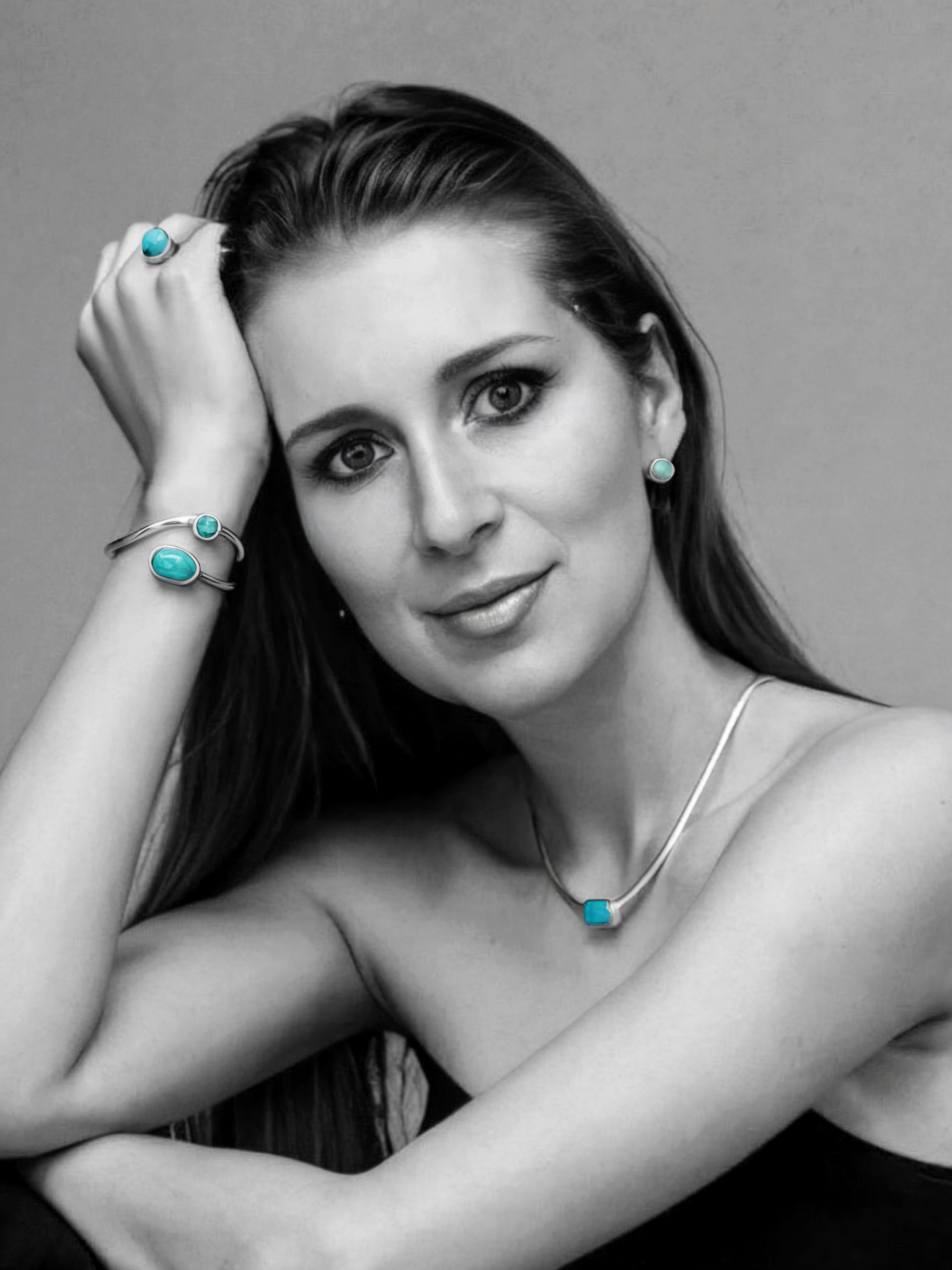
Kimberly Cordova is the founder and creative director of Wildflower, a turquoise and sterling silver jewelry brand based in Santa Fe. She built Wildflower around a simple belief: that the best jewelry is the kind you actually reach for, not the kind you save for someday.
Kimberly designs pieces that are made by hand with local Santa Fe silversmiths, works alongside Greg on in-house lapidary pieces, and carefully sources finished work from artisan makers whose craft meets the same standard. The result is a collection that has range, without cutting corners on the stone, the silver, or the story behind either.
Her writing covers everything she has learned along the way: how turquoise forms, how to spot the real thing, what makes one mine different from another, and how to shop with confidence in a market that is not always straightforward. It is the kind of information she wished someone had laid out plainly when she was starting out.
Shop the Wildflower collection at wildflowerartisans.com, or send a message any time with questions about the stones or the craft.
Elegant Guidance
Our Promise, Your Peace of Mind
Every piece is chosen for quality, authenticity, and care—so you can shop with confidence.
Be First in Line
New drops go to VIP members first. If you've ever missed a piece you loved, this is how you don't do that again.
Always Sterling Silver
Authentic Turquoise Only
Makers Credited & Celebrated
Fast, Reliable Shipping
Easy, Hassle-Free Returns


