
Our Latest Articles
Notes from the bench side of Santa Fe—stone guides, styling ideas, and maker spotlights.
The Art of the Bolo Tie: A Guide to Artisan Crafted Southwestern Style
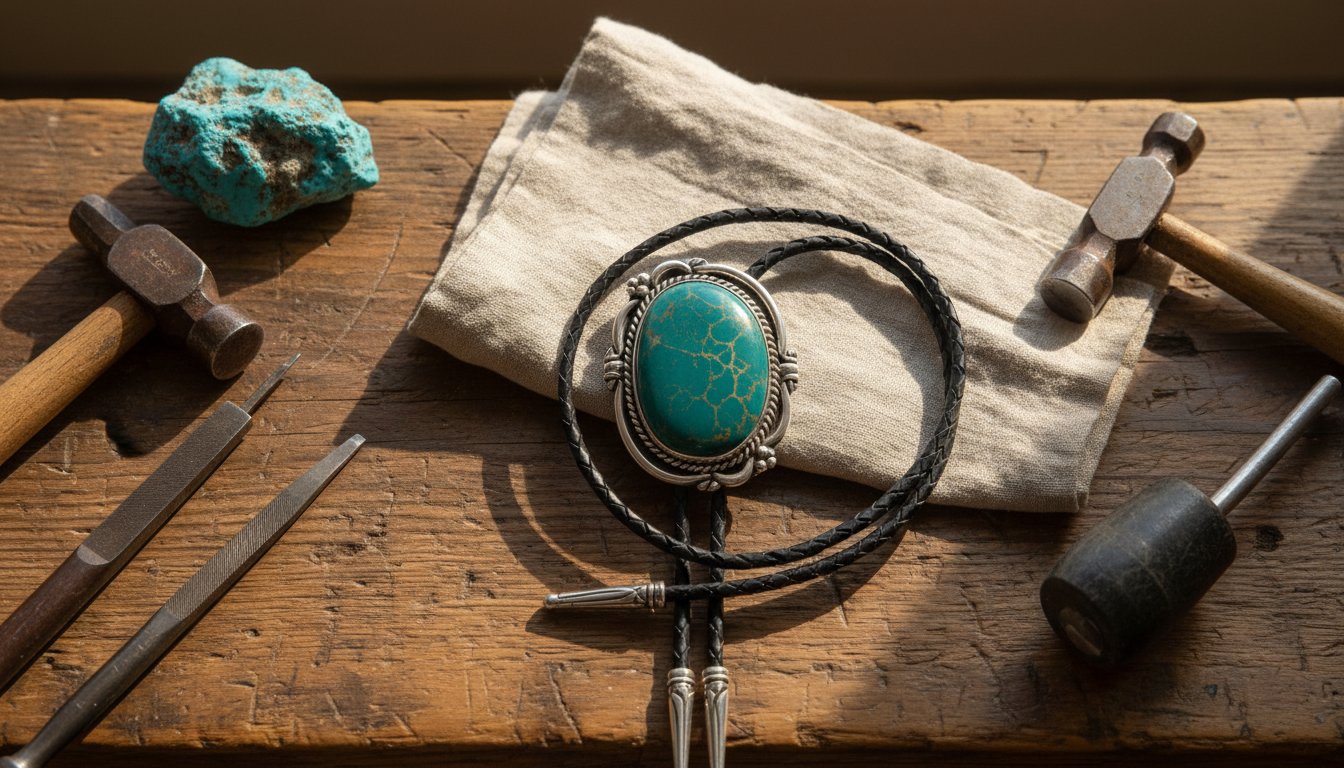
In a small workshop near Santa Fe, a single piece of King's Manassa turquoise rests on a wooden bench, its deep greens and gold matrix telling a story that began decades ago. When Greg Cordova shapes these stones for our bolo ties, he follows the natural rhythm of the rock to ensure the final piece feels balanced and intentional. You might feel a deep connection to this Southwestern style but worry about the prevalence of plastic stones or silver-plated mystery metals found in modern markets.
It is common to feel unsure about how to wear such a distinct accessory without feeling like you are wearing a costume. We want to help you understand the specific components of a quality artisan piece, from the weight of the sterling silver to the provenance of the stone. This guide explains the history of the craft and provides practical ways to style your bolo for a contemporary look.
Learning the difference between stabilized and natural stones is easier when you understand the Cordova family's stewardship of the White Buffalo mine. The details of a handmade bezel and the proper way to adjust your tie for different occasions ensure your piece remains a favorite for years.
Key Takeaways
- Learn how the weight and balance of a slide ensure it sits correctly on the chest. This understanding helps you appreciate the transition of this neckwear from a practical tool to a form of hand-wrought art.
- Explore the distinct character of various turquoise mines and the striking presence of White Buffalo stones. These materials carry a specific provenance that adds depth and value to every piece.
- Master the placement of the slide for a comfortable and intentional fit. Discover how to style bolo ties with traditional collared shirts or more relaxed, modern necklines.
- Recognize the details of fine silversmithing and the importance of curation when choosing a handmade piece. You will learn to identify the craft that turns sterling silver and raw stone into a personal narrative.
Understanding the Heritage of the Bolo Tie
A heavy piece of King's Manassa turquoise sits on a workbench, its deep greens mapped with golden brown matrix. It waits for the right silver frame and a length of braided leather. This assembly of a slide, a cord, and two weighted tips is what we recognize as the bolo tie. It is a piece of jewelry that carries the weight of the high desert and the quiet strength of the people who live there.
While some see a simple necktie, others recognize a tradition that became the official neckwear of Arizona in 1971 and New Mexico in 1987. You can find more about the History of the Bolo Tie to see how it transitioned from a rugged necessity to a refined statement. Today, bolo ties serve as a symbol of an independent spirit, favoring the organic over the formal.
To better understand how these components come together in a workshop setting, this video offers a look at the assembly process:
The Origins of the Southwestern Slide
Long before they were a staple of Western wear, similar slides appeared as Victorian scarf rings. In the American Southwest, these functional pieces evolved into a canvas for silversmiths to display their most impressive stones. The open landscapes of the West demanded something more durable than a silk four-in-hand tie. This led to the modern design we see today, where the slide serves as a focal point for the natural beauty of the earth.
These pieces are more than accessories; they are wearable art. Silversmiths use the broad surface of the slide to showcase the intricate patterns of a stone, allowing the natural matrix to tell its own story. The design reflects a connection to the land, mirroring the rugged textures of the desert and the vastness of the sky.
Why Artisan Made Matters
A factory-made tie feels hollow and light, often cast from mystery metals that lack the warmth of real silver. We believe the soul of a piece lives in the small details, like a bezel hand-fitted to the unique curves of a specific stone. In our lapidary workshop, Greg Cordova works with material from the family's own claims, including the White Buffalo Mine. This connection to the source ensures that every piece tells a story of the land rather than a story of a machine.
Small batch production allows for a level of care that mass production cannot replicate. When a silversmith works with sterling silver, they are creating something meant to endure for generations. Every solder joint and hand-stamped detail is a testament to the artisan's skill and the Cordova family's stewardship of the craft. Choosing a handcrafted piece means preserving a tradition that values the human touch over cold uniformity.
You can explore our current work in our collection of artisan bolo ties to find a stone that speaks to your own journey.
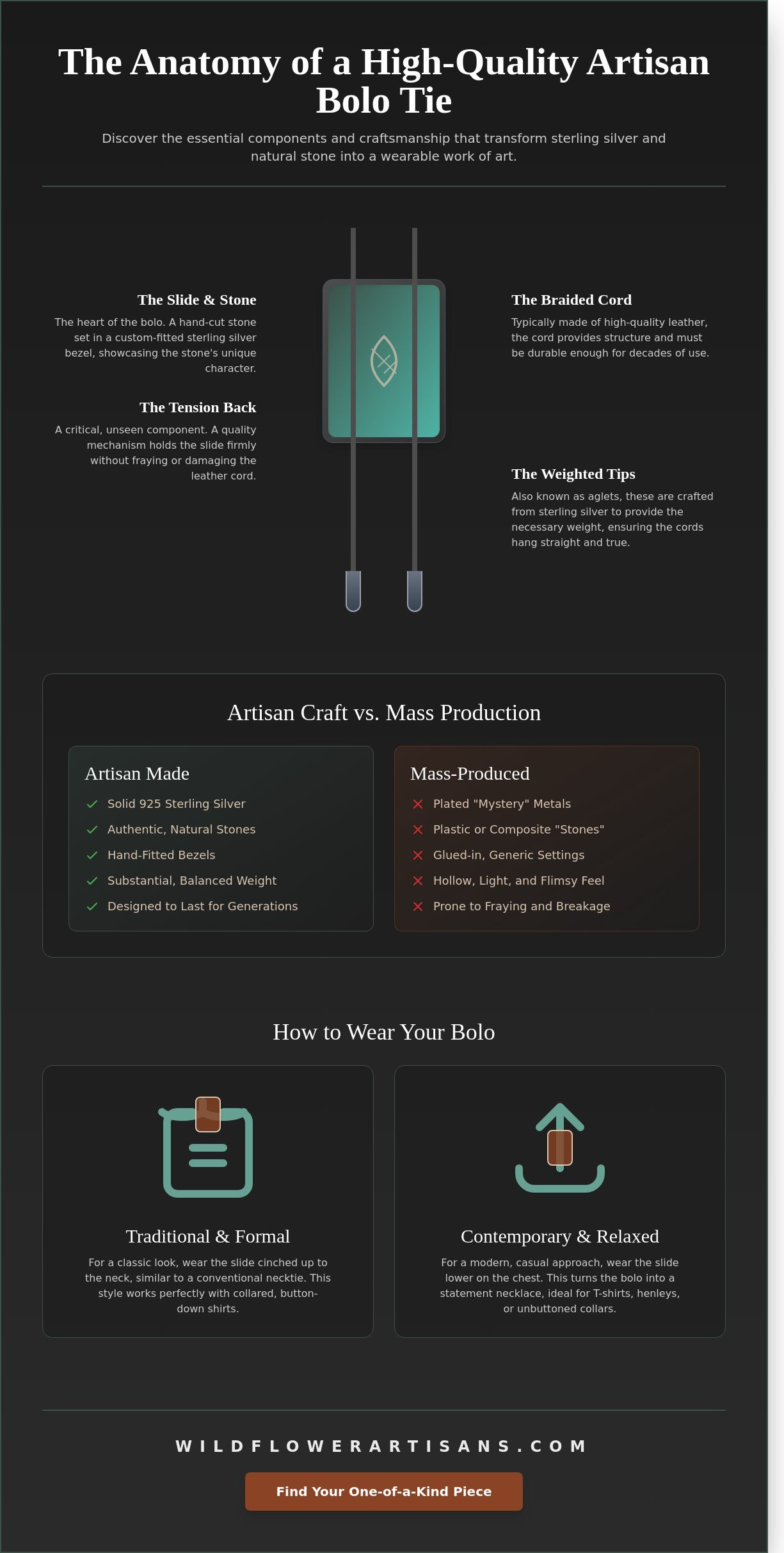
The Anatomy of a High Quality Artisan Bolo
A well made bolo tie feels substantial before you even put it on. It has a gravity that comes from honest materials and intentional construction. When you hold a piece in your hand, the weight of the sterling silver and the texture of the braided leather tell you something about the hands that shaped it. Balance is the silent hallmark of a master silversmith.
Every quality bolo consists of three essential components: the slide, the cord, and the tips. These parts must work in harmony to ensure the piece sits correctly on the body. If the slide is too light, it will wander. If the tips lack weight, the cord will curl away from your shirt. High quality bolo ties are designed to hang with a specific verticality that anchors an outfit.
The tension back or locking mechanism on the reverse of the slide is a small but vital detail. It holds the slide at the desired height without chewing through the leather. A high quality mechanism protects the cord from fraying, allowing the piece to last for decades of regular use. It is a functional bridge between the art on the front and the utility on the back.
The Slide and the Stone
The slide is the focal point where the lapidary work takes center stage. In our workshop, Greg Cordova often selects a specific cut of White Buffalo or turquoise from the family claims to serve as the heart of the design. These stones are secured with serrated or smooth bezels that grip the edges firmly, ensuring the stone remains safe through years of movement.
Artisan slides usually feature a heavy gauge of sterling silver for durability. This thickness provides a sturdy canvas for the silverwork and gives the piece the necessary weight to stay centered. You can feel the difference between a thin, stamped piece and a slide that was built to endure. The silver acts as a frame, highlighting the unique matrix and color of the stone within.
Cords and Materials
We prefer genuine braided leather for our cords because it has a natural memory. Over months of wear, the leather softens and begins to curve to the shape of your neck and shoulders. Synthetic or vinyl alternatives stay stiff and never quite feel like they belong to the wearer. Genuine leather ages with a grace that plastic can never replicate.
The length of the cord should always be proportional to your height. A standard 38 inch cord works for most, but taller individuals often require a 42 inch length to ensure the tips hit the right spot. When the proportions are correct, the jewelry feels like a natural extension of your own style. You can explore our current collection of handcrafted bolos to see how different lengths and stones come together.
Weighted sterling silver tips are the final anchor for the entire piece. They provide the necessary pull to ensure the cord hangs straight and true against your chest. Without that slight weight at the ends, the leather might curl or sit unevenly. These tips are often finished with small details that mirror the design of the slide, creating a cohesive look from top to bottom.
Selecting the Right Stone and Setting for Your Style
A single piece of turquoise can hold an entire landscape within its borders. When you hold a stone from the King's Manassa mine, you are looking at geological history that collectors have prized since the mine was first claimed in 1890. These stones often show deep, mossy greens that feel like a forest floor after a summer rain. Choosing a stone for your bolo ties is about finding a piece of the earth that speaks to your own story. It is a quiet, personal process of discovery.
The Legacy of the Mine
Greg Cordova holds the claims to the King’s Manassa Mine and the White Buffalo Mine, ensuring a direct line of provenance for every piece we create. The King's Manassa is famous for its rich greens and golden brown matrix, a palette that feels grounded and ancient. In contrast, White Buffalo stones provide a striking monochromatic alternative to traditional blue. These stones were first discovered in 1992 and are prized for their stark white surfaces and dark, jagged patterns. We invite you to explore our stone origins to understand how these materials travel from the high desert soil to our workshop.
The matrix of a stone acts as its unique fingerprint. This webbing of host rock creates patterns that can never be replicated by a machine or a mold. Some people prefer a clean, clear blue, while others are drawn to the chaotic beauty of a heavy matrix. There is no right or wrong choice here. We believe in choosing a stone that resonates with your personal aesthetic rather than following the shifting winds of fashion. Authenticity lives in the details that you find beautiful.
Everyday Essentials versus Statement Pieces
Size and setting play a significant role in how a piece fits into your life. A smaller, simpler slide is an ideal choice for daily wear with denim or light linen. These pieces are modest yet intentional. They add a touch of handcrafted character without demanding center stage. A well chosen artisan bolo tie can become a signature part of your wardrobe for years.
For formal events or special occasions, a larger statement piece is often more appropriate. These slides usually feature more elaborate silver work and larger, high grade stones that catch the light. They carry a different weight and presence. Whether you are looking for something for a quiet morning at the studio or a celebratory evening, the right setting will balance the stone's natural energy with your personal style. We take pride in the small batch nature of our work, ensuring every setting is as unique as the stone it holds.
How to Wear and Maintain Your Southwestern Neckwear
A bolo tie carries a certain weight that feels grounded and intentional. It is more than a simple accessory; it is a focal point that anchors an entire outfit. The placement of the slide is the first decision you make when putting one on. For a formal setting, the slide should sit high and tight against the collar. This replaces the traditional fabric tie with something far more tactile and expressive. It creates a focused silhouette that mirrors the structure of a standard necktie while offering a glimpse into a more artisanal world.
Styling for the Modern Wardrobe
Styling for the modern wardrobe means finding a balance between tradition and your own personal rhythm. When the slide sits lower, perhaps at the mid-chest, it creates a relaxed and artistic silhouette. This look works beautifully with an unbuttoned denim shirt or a soft linen layer during the warmer months. We recommend pairing sterling silver bolo ties with neutral tones like slate, sand, or deep navy. These quiet colors do not compete with the stone. Instead, they provide a calm background that lets the turquoise tell its own story. The contrast between the cool silver and a warm, earthy shirt creates a palette that feels both sophisticated and connected to the landscape.
The leather cord itself is a living material. It softens with the heat of your skin and develops a supple texture over time. If the ends begin to curl, you can gently hang the tie over a hook or a hanger overnight to let gravity straighten the strands. The sterling silver tips, often called aglets, add a necessary weight to the piece. They ensure the leather hangs straight and provide a subtle, rhythmic movement as you walk through your day.
Preserving the Sterling and Stone
Preserving the sterling and stone is a matter of consistent, gentle care. Silver naturally develops a patina over time, which many collectors appreciate for the depth and history it adds to the metal. If you prefer a brighter finish, a soft polishing cloth is your best tool. Avoid harsh chemical dips at all costs. These can damage the delicate surface of the turquoise and strip away the intentional oxidation in the silverwork. Turquoise is a porous stone and is sensitive to its environment. It is wise to keep it away from perfumes, soaps, and lotions. For long-term maintenance and specific cleaning steps, you can review our care and repair guide to ensure your piece remains an heirloom.
Adjusting the slide requires a mindful hand to avoid damaging the leather. Most artisan-made slides feature a tension flip or a simple compression fit. Always check the back of the piece before moving it. If there is a lever, flip it open before sliding the ornament up or down. This prevents the metal from scraping the leather and causing premature fraying. A bolo tie often seeks company. It pairs naturally with other Southwestern elements, such as a wide silver cuff or a ring with a prominent matrix. Keeping the metal tones consistent creates a cohesive look that feels curated and deeply personal.
Explore our latest collection of artisan bolo ties to find a piece that resonates with your personal style.
Finding Your One of a Kind Artisan Piece
Selecting one of our bolo ties is a quiet, intentional act of self-expression. It involves more than just picking a color or a shape. You are looking for a piece that carries the steady heartbeat of the person who shaped the silver and set the stone. This connection between the wearer and the maker is what gives a piece its lasting weight and presence.
Every artisan piece is brought to life through a series of deliberate choices. A silversmith might choose a heavy, serrated bezel to protect a soft turquoise stone or add hand-stamped details that reflect the movement of the high desert wind. These small, intentional marks of the hammer and file ensure that the piece you wear is the only one of its kind in existence. Small marks of a life lived. Art you can hold. There is a profound joy in knowing that your jewelry is as unique as your own thumbprint.
The Curated Collection
We follow a strict, patient process when sourcing finished pieces for our shop. Every item is hand-selected by Kimberly to ensure it meets our rigorous standards for sterling silver quality and stone authenticity. This eye for detail is rooted in our own family history with the earth, including the Cordova family’s stewardship of the King’s Manassa and White Buffalo mines. We look for the way the natural light hits the intricate matrix of a stone and the clean precision of the solder joints.
These one of a kind pieces often capture a specific chapter in an artist’s creative journey. They might represent a new technique the maker was exploring or a particularly rare stone they had been saving for years in their lapidary workshop. Owning such a piece means holding a fragment of that history and that specific creative spark. It is a quiet way to honor the labor of the studio.
Joining the Artisan Community
Choosing handmade jewelry is a departure from the world of mass-market retail. It is an invitation to slow down and value the human hands behind the craft. When you wear one of our bolo ties, you aren't just wearing an accessory. You are participating in a living tradition of Southwestern art and connecting with a community that values authenticity over perfection.
For many, a single piece is the start of a lifelong appreciation for the textures and colors of the desert. It is a way to bring a bit of the wild landscape into your everyday life through small batch, artisan-made treasures. We invite you to explore our full shop to find the piece that speaks to your own story and helps you feel more grounded in your personal style.
Wear Your Story in Silver and Stone
Choosing a piece of jewelry is about more than fashion. It's about a connection to the earth and the hands that shaped the metal. A high quality artisan piece represents decades of tradition, whether it features a stone from Greg Cordova’s King’s Manassa Mine or a hand-stamped sterling silver bezel. These items are built to last and carry stories that bridge the gap between the high desert landscape and your personal style.
Taking care of your jewelry ensures it remains a staple in your wardrobe for years. Proper storage and occasional cleaning preserve the luster of the silver and the integrity of the stone. It's a way to bring a piece of the desert's quiet strength into your daily life. We hope you find a piece that resonates with your own journey through the landscape.
We invite you to explore our curated collection of artisan-made bolo ties and find a piece that feels like home. Our selection features authentic stones with guaranteed provenance and handcrafted settings chosen by experts who appreciate the nuances of the craft. We look forward to helping you find something truly special.
Frequently Asked Questions
What is a bolo tie and where did it originate?
A bolo tie is a neckpiece made of a cord or braided leather that is secured with a decorative sliding clasp. This style emerged from the American Southwest in the 1940s, with Victor Cedarstaff of Wickenburg, Arizona, filing for the first patent in 1947. In 1971, it became the official state neckwear of Arizona, marking its transition from a regional craft to a symbol of Western formal wear.
How do I know if the turquoise in my bolo tie is real?
Real turquoise is distinguished by its cool temperature to the touch and a Mohs hardness scale rating of 5 to 6. You can often identify genuine stones by looking for the matrix, which appears as delicate veins of host rock running through the blue or green surface. If a stone feels warm like plastic or lacks any variation in its color and texture, it is likely an imitation or a composite material.
How high up should I wear the slide on a bolo tie?
Most people wear the slide of a bolo tie between the second and third buttons of a shirt for a relaxed appearance. For a formal event, you should pull the slide up to the top button so it sits snugly against the collar. This flexibility allows the weight of the stone to hang comfortably while the leather cords drape naturally against your chest.
Can I wear a bolo tie with a casual t-shirt or only with collared shirts?
You can wear a bolo tie with a casual t-shirt just as easily as you can with a traditional collared shirt. While they are often associated with Western button-downs, these pieces work beautifully as a focal point over a simple cotton top. A smaller, bespoke slide can add a layer of intentionality to a simple outfit without feeling overly formal.
What is the difference between turquoise and White Buffalo stone?
Turquoise is a hydrous phosphate of copper and aluminum, while White Buffalo is a distinct white stone with a black chert matrix. The White Buffalo mine in Tonopah, Nevada, is under the stewardship of the Cordova family, who first discovered the material in 1992. Because it contains no copper, the stone remains a pure white rather than the blue or green found in traditional turquoise mines.
How do I clean the sterling silver on my bolo tie without damaging the stone?
You should clean the sterling silver on your bolo ties with a soft polishing cloth rather than liquid jewelry cleaners or harsh chemicals. Many stones used in these pieces are porous and can absorb liquids, which leads to permanent discoloration or damage to the bezel. A gentle rub with a dry cloth will remove tarnish and maintain the luster of the silver without disturbing the organic beauty of the stone.
Is it appropriate to wear a bolo tie to a formal wedding or event?
It is entirely appropriate to wear a bolo tie to a formal wedding or event, especially within the American Southwest. Arizona, New Mexico, and Texas recognize this accessory as legitimate formal wear for state functions and celebrations. Choosing a piece with high-grade stone and sterling silver creates an elegant alternative to a silk tie that honors the artisanal traditions of the region.
What length should the leather cord be for my height?
A leather cord should typically measure 36 to 38 inches for an individual of average height. If you are over 6 feet tall, a 42-inch cord is often more suitable to ensure the silver tips rest about 3 inches below the sternum. We find that the right length allows the piece to move with you, acting as a grounded anchor for your personal style. Visit our Santa Fe studio or browse our curated collection to find a piece that speaks to your own journey.
Article by
Kimberly Cordova
Kimberly Cordova is the founder and creative director of Wildflower, a turquoise and sterling silver jewelry brand based in Santa Fe. She built Wildflower around a simple belief: that the best jewelry is the kind you actually reach for, not the kind you save for someday.
Kimberly designs pieces that are made by hand with local Santa Fe silversmiths, works alongside Greg on in-house lapidary pieces, and carefully sources finished work from artisan makers whose craft meets the same standard. The result is a collection that has range, without cutting corners on the stone, the silver, or the story behind either.
Her writing covers everything she has learned along the way: how turquoise forms, how to spot the real thing, what makes one mine different from another, and how to shop with confidence in a market that is not always straightforward. It is the kind of information she wished someone had laid out plainly when she was starting out.
Shop the Wildflower collection at wildflowerartisans.com, or send a message any time with questions about the stones or the craft.
Elegant Guidance
Our Promise, Your Peace of Mind
Every piece is chosen for quality, authenticity, and care—so you can shop with confidence.
Be First in Line
New drops go to VIP members first. If you've ever missed a piece you loved, this is how you don't do that again.
Always Sterling Silver
Authentic Turquoise Only
Makers Credited & Celebrated
Fast, Reliable Shipping
Easy, Hassle-Free Returns


