
Our Latest Articles
Notes from the bench side of Santa Fe—stone guides, styling ideas, and maker spotlights.
King's Manassa Turquoise: Discover the Unique Beauty and Heritage
Long before it was known for its brilliant greens and blues, the land held a secret. The mine was first called Lick Skillet, a curious name for a place that would one day produce some of the most sought-after turquoise in the American Southwest. It’s a stone with a story, one that begins deep in the earth and continues today through the hands of artisans. This is the story of King's Manassa turquoise.
The mine's modern history began in 1890 when I.P. King rediscovered the old workings. He saw the potential in the stone’s unique character, and its legacy was reborn under his family’s name. Today, the King's Manassa mine is under the stewardship of the Cordova family, connecting our work at Wildflower directly to the source of this incredible stone.
[Image: A close-up shot of a raw, uncut piece of King's Manassa turquoise, showing its vibrant green color and golden-brown matrix.]
The Rich History of King's Manassa Turquoise
Every piece of true turquoise carries the history of its origin. For King's Manassa, that history is written in its distinctive colors, from rich, grassy greens to soft sky blues, often woven with a golden-brown or reddish-brown matrix. This unique appearance makes it a favorite among collectors and designers who appreciate a stone with depth and personality.
The mine itself is no longer active, which adds to the stone's rarity. The King's Manassa turquoise available today comes from a finite supply, carefully preserved and passed between miners, lapidaries, and jewelers. Each piece is a small piece of Colorado history.
According to turquoise mineral properties, this is a well-documented area of ongoing research and practical application.
A Stone with a Story
The transition from Lick Skillet to the King's Mine marks a pivotal chapter in this stone's journey. The King family recognized its value and brought it to the attention of the wider world. Their efforts established its reputation, and the Cordova family continues that legacy, ensuring the stone is handled with the respect it deserves.
Cultural Significance in the Southwest
Turquoise has long held a significant place in the cultural traditions of the Southwest. While we honor its historical importance, we focus on its role in contemporary artisan-made jewelry. Its vibrant colors fit perfectly within the palette of Southwestern style, creating pieces that feel both grounded and expressive.
Identifying Authentic King's Manassa Turquoise
With so many imitations on the market, knowing how to identify authentic turquoise is essential. King's Manassa is prized for its specific color range and matrix. Look for the characteristic greens and blues, often with a warm, earthy web of host rock running through it. The patterns are natural and imperfect, which is a good sign of authenticity.
Be cautious of stones that look too uniform or plastic-like, as these are often dyed howlite or composite materials. The best way to ensure you are buying genuine King's Manassa turquoise is to purchase from a trusted source that is transparent about where their stones come from. You can learn more about our commitment to authentic stone origins on our website.
Research published by turquoise history and lore shows that this is a well-documented area of ongoing research and practical application.
[Image: Two turquoise stones side-by-side: one authentic King's Manassa and one piece of dyed howlite to show the difference in texture and color.]
Recognizing the Genuine Article
Genuine Manassa turquoise has a depth that imitations lack. The color is not just on the surface but feels integrated into the stone. The matrix should look like a natural part of the stone, not a painted-on pattern. Holding a piece often reveals a cool, dense feel that is difficult to replicate with synthetic materials.
The Craftsmanship Behind the Stone
Authenticity is also preserved through craftsmanship. Skilled artisans know how to cut and set the stone to highlight its best features. When a piece is handmade, the artist’s connection to the material is evident. This careful, intentional work is a hallmark of genuine, high-quality jewelry.
Artisan Jewelry: Celebrating Manassa Turquoise
We see King's Manassa turquoise as more than just a material. It’s a centerpiece, a focal point for an artist’s vision. In our collection, some pieces begin in Greg Cordova’s lapidary workshop, where the raw stone is cut and shaped before being passed to a Santa Fe silversmith. Other times, Kimberly Cordova designs a piece around an already finished stone, curating it for our collection.
This process ensures that every piece of jewelry is thoughtfully created. It’s a partnership between the stone, the lapidary, the designer, and the silversmith, all working together to create something truly special.
Styles and Settings for Manassa Turquoise
The distinct look of King's Manassa turquoise lends itself to a variety of jewelry styles. It is particularly striking in sterling silver settings that allow its colors to stand out. Simple bezel settings are popular because they protect the stone while showcasing its unique matrix and shape. You’ll find it in everything from bold cuff bracelets to delicate pendant necklaces.
Explore our collection to see how we incorporate this beautiful stone into our one-of-a-kind designs.
Incorporating Manassa Turquoise into Your Style
Adding King's Manassa turquoise to your personal style is about choosing a piece that speaks to you. Its earthy greens and golden matrix pair well with neutral tones like cream, sand, and brown, but can also provide a beautiful contrast against black or deep blues. A single ring or pendant can add a touch of personal history to an everyday outfit.
Caring for Your Turquoise Jewelry
Turquoise is a relatively soft and porous stone, so it requires gentle care. Avoid exposing it to harsh chemicals, lotions, and oils. To clean it, simply wipe it with a soft, dry cloth. Proper storage is also important. Keep it in a separate pouch or box to prevent it from being scratched by harder gemstones.
For more detailed instructions, you can visit our complete care and repair guide.
The Future of Manassa Turquoise: Preservation and Legacy
With the mine no longer in operation, the future of King's Manassa turquoise lies in preservation. Artisans and collectors play a crucial role in this process by valuing and caring for the stones that are already in circulation. Each piece of jewelry becomes an heirloom, carrying the mine’s story forward to a new generation.
At Wildflower, we are committed to this legacy. By working directly with the family who stewards the mine, we ensure our sourcing is ethical and our connection to the stone is genuine. We believe in honoring the journey of each stone, from the earth to the artist’s bench, and finally, to you.
Preserving a Legacy Through Art
The continued interest in King's Manassa from collectors and jewelry lovers helps preserve its legacy. When you choose a handmade piece, you are not just buying an accessory. You are supporting the small-batch artisans who keep these traditions alive and becoming a part of the stone’s ongoing story.
We invite you to explore our journal to learn more about the stories behind our stones and the artists we work with.
Frequently Asked Questions
What makes King's Manassa turquoise unique?
King's Manassa turquoise is known for its distinctive color range, which includes rich emerald and grassy greens as well as sky-blue hues. It often features a beautiful golden-brown or reddish-brown matrix, giving each stone a unique, earthy character.
How can I tell if Manassa turquoise is authentic?
Look for its signature colors and matrix patterns. Authentic stones have a natural, varied appearance, unlike imitations like dyed howlite, which can look flat or overly uniform. The most reliable method is to purchase from a reputable seller who is transparent about their sourcing.
What types of jewelry feature Manassa turquoise?
Its versatility makes it suitable for many types of Southwestern-style jewelry. It is commonly found in sterling silver rings, pendants, cuff bracelets, and earrings, often set in simple bezels that highlight the stone itself.
How should I care for my Manassa turquoise jewelry?
Turquoise is a porous stone, so it's best to avoid contact with chemicals, perfumes, and lotions. Clean it with a soft, dry cloth and store it separately to prevent scratches. Avoid ultrasonic cleaners and harsh detergents.
Is Manassa turquoise still being mined today?
No, the King's Manassa mine is currently inactive. This makes the existing supply of this turquoise increasingly rare and valued by collectors and artisans.
Where can I buy genuine Manassa turquoise jewelry?
You can find authentic, artisan-made King's Manassa turquoise jewelry right here at Wildflower. Our direct connection to the mine's stewards ensures the provenance and quality of every piece we offer.
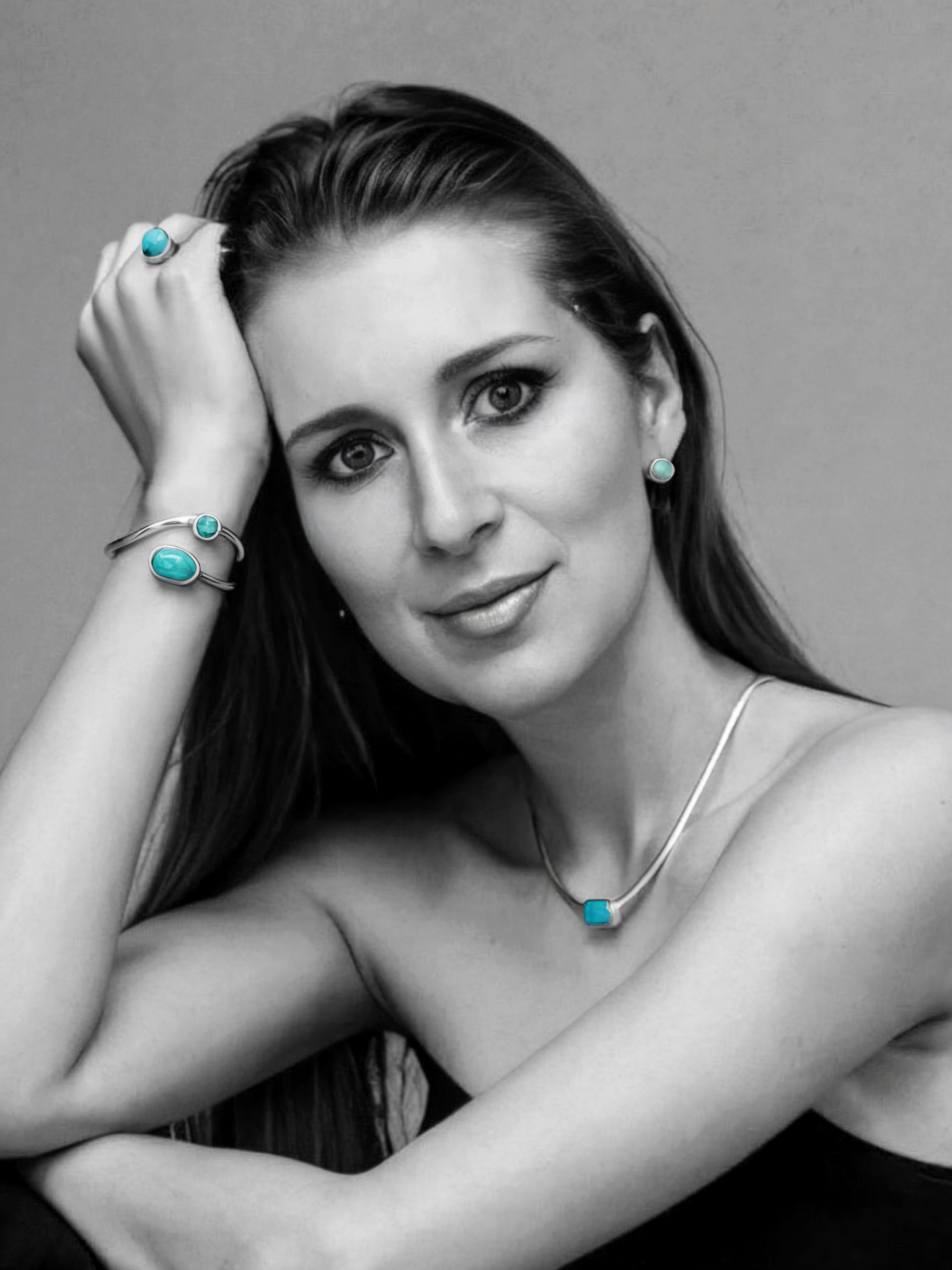
Article by
Kimberly Cordova
Kimberly Cordova is the founder and creative director of Wildflower, a turquoise and sterling silver jewelry brand based in Santa Fe. She built Wildflower around a simple belief: that the best jewelry is the kind you actually reach for, not the kind you save for someday.
Kimberly designs pieces that are made by hand with local Santa Fe silversmiths, works alongside Greg on in-house lapidary pieces, and carefully sources finished work from artisan makers whose craft meets the same standard. The result is a collection that has range, without cutting corners on the stone, the silver, or the story behind either.
Her writing covers everything she has learned along the way: how turquoise forms, how to spot the real thing, what makes one mine different from another, and how to shop with confidence in a market that is not always straightforward. It is the kind of information she wished someone had laid out plainly when she was starting out.
Shop the Wildflower collection at wildflowerartisans.com, or send a message any time with questions about the stones or the craft.
Elegant Guidance
Our Promise, Your Peace of Mind
Every piece is chosen for quality, authenticity, and care—so you can shop with confidence.
Be First in Line
New drops go to VIP members first. If you've ever missed a piece you loved, this is how you don't do that again.
Always Sterling Silver
Authentic Turquoise Only
Makers Credited & Celebrated
Fast, Reliable Shipping
Easy, Hassle-Free Returns


